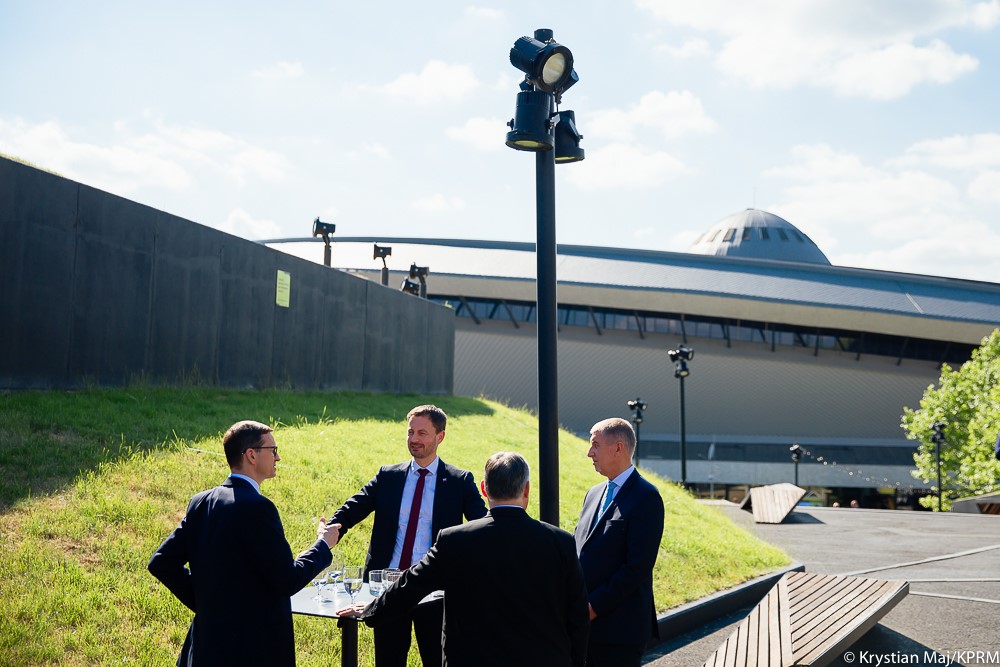
Prime Minister after the V4 Summit: Polish Presidency has shown its unifying power. We are playing as a team and can achieve more together
30.06.2021
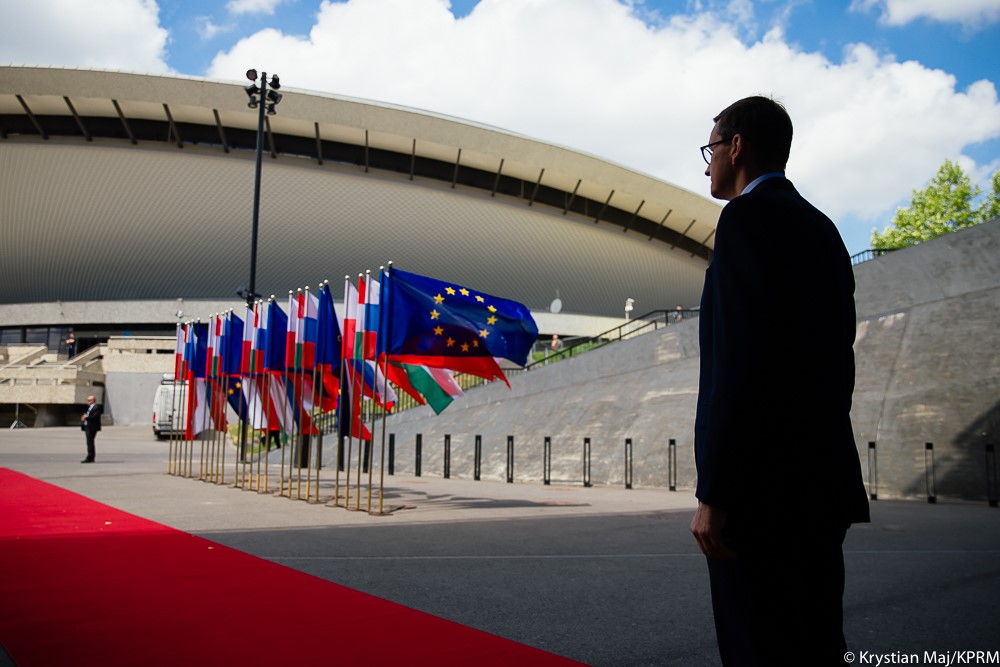
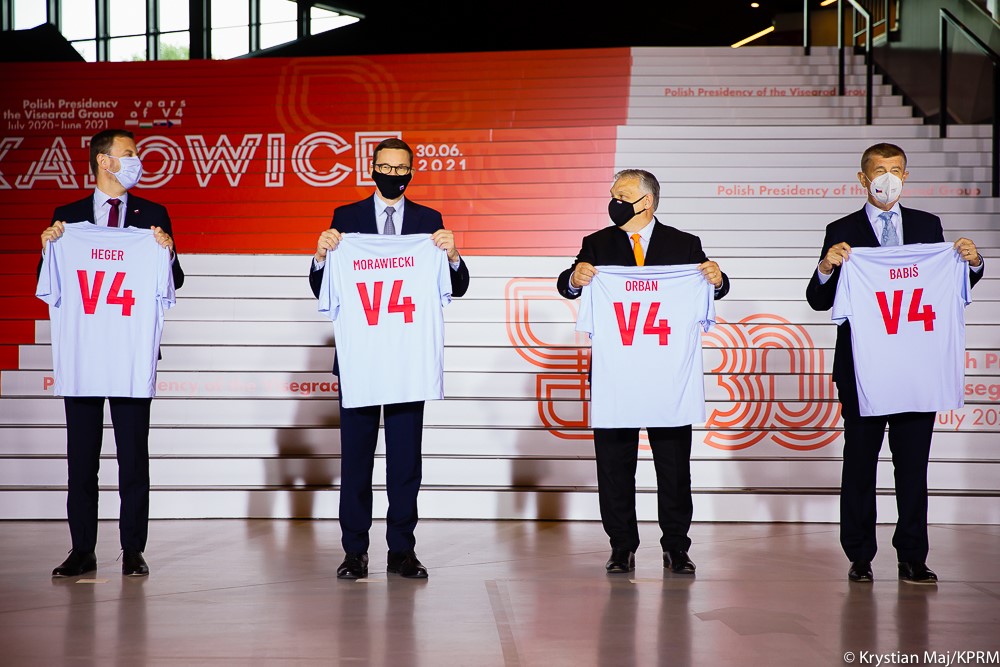
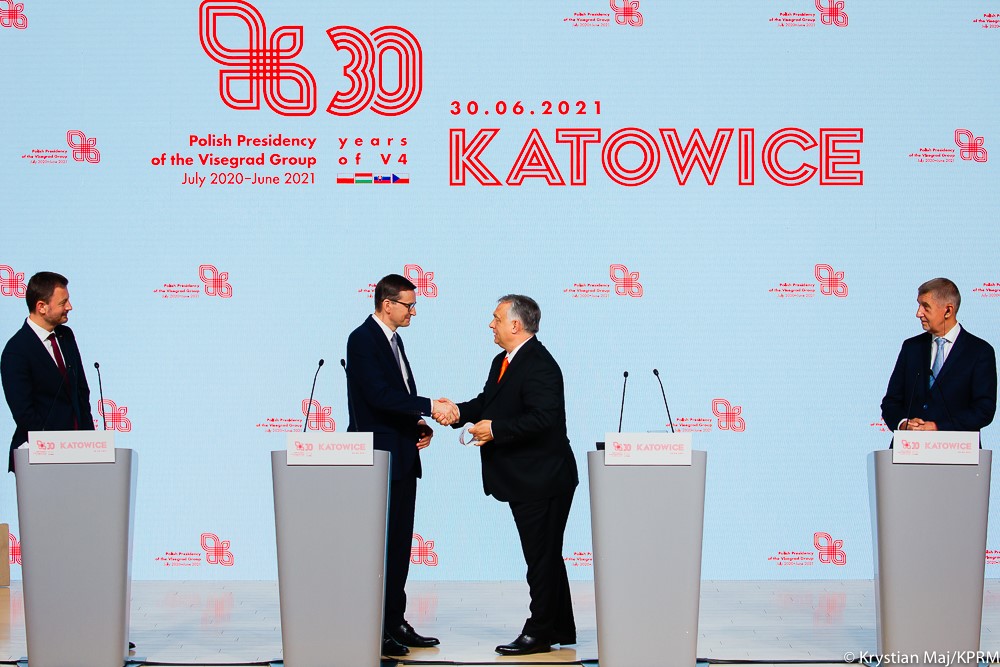
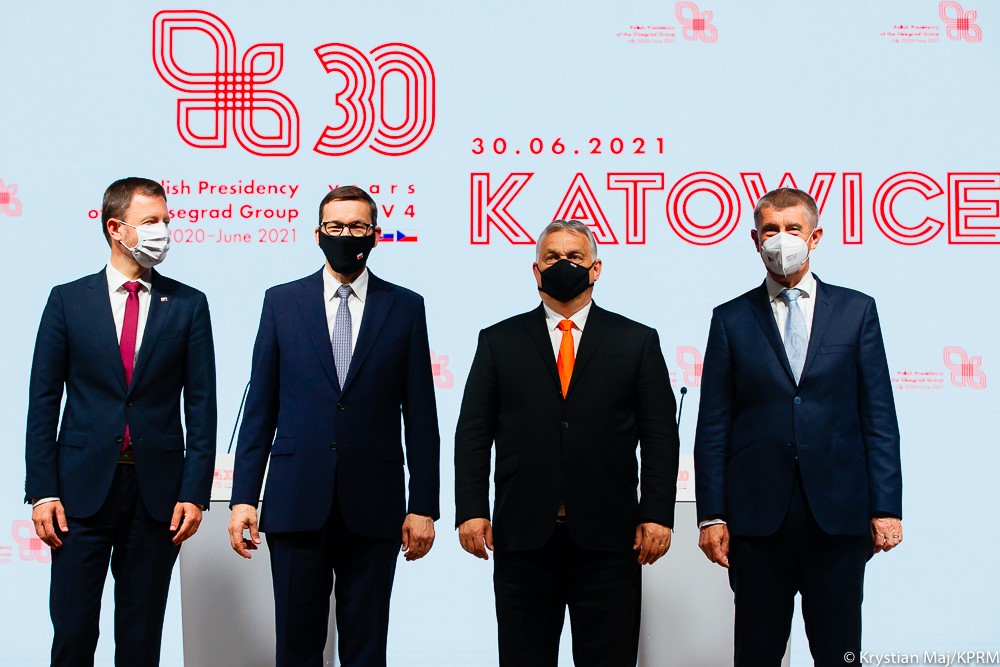
The meeting in Katowice marked a symbolic ending to the Polish Presidency of the Visegrad Group and its handover to Hungary. Apart from the opportunity to sum up the last 12 months of cooperation and to present Hungary’s plans for the coming year, the meeting also offered an opportunity to discuss the most important topics on the current EU agenda. The prime ministers discussed issues such as the planned migration and asylum reform, the Schengen system, the COVID-19 coordination efforts and the Conference on the Future of Europe.

“We have been assigned the difficult task of working together within the Visegrad Group and with the European Union on major changes related to COVID-19. It has not been an easy year,” the Prime Minister said after the V4 Summit. Poland assumed the rotating Presidency of the Visegrad Group on 1 July 2020. The motto of the Polish Presidency was “Back on track,” which accurately reflected not only the goals formulated for those 12 months but also the challenges arising from the unprecedented situation in the world due to the coronavirus pandemic. Therefore, the goal of the Polish Presidency was not only to restore the status of V4 cooperation before the outbreak, but also to give it a new momentum in view of the extraordinary circumstances in the world.
Challenges and achievements of the Polish Presidency of the Visegrad Group
“In the EU, everyone counts with our opinion as a partner,” said Prime Minister Mateusz Morawiecki. During the 12 months of presidency, many events and projects focused on crucial topics for Visegrad and European cooperation despite the ongoing pandemic and the resulting restrictions.
Coordination of positions on EU matters
The meetings of the Visegrad prime ministers during the Polish Presidency were aimed to ensure the customary coordination of positions on EU issues. The V4 countries unanimously called for the negotiated Reconstruction Fund to be ambitious and to take into account the needs of the countries most affected by the social and economic consequences of the pandemic. “One of the main objectives was to make sure that the Reconstruction Fund is large, significant and flexible, helping different sectors of the economy to recover from the pandemic as quickly as possible,” the Prime Minister said. He added that the joint combating efforts within the V4 helped to obtain unprecedentedly high amount of funds for the entire Visegrad Group.
Solidarity in the face of the challenges arising from the Russian Federation’s aggressive policy
The Visegrad Group under the Polish presidency showed solidarity in the face of the challenges arising from the Russian Federation’s aggressive policy. During the summit of prime ministers in Lublin, a joint statement of the Visegrad Group was adopted, condemning the poisoning of the Russian opposition activist Alexei Navalny and calling on Russia to conduct a fair investigation into the case. After the involvement of Russian services in the attack on the ammunition depot in the Czech town of Vrbětice in 2014 was revealed, Poland initiated an urgent video conference of prime ministers, which adopted a declaration of solidarity with the Czech Republic and offered diplomatic and consular support to the Czech Republic following the expulsion of Czech diplomats by Russia.
The V4 group was also active in supporting the democratic opposition in Belarus. “The Polish Presidency has shown its unifying power. We are playing as a team and can achieve more together. One example was our reaction to the difficult situation of Belarus last year – we developed the EU-approved Plan for Belarus in Lublin,” Prime Minister Mateusz Morawiecki emphasised. The economic plan for a democratic Belarus included solutions such as the creation of a stabilisation fund of at least EUR 1 billion, support for small and medium-sized entrepreneurs, opening of the EU single market to Belarus entrepreneurs and visa facilitation.
Digital, cultural and scientific cooperation
The Polish Presidency culminated at the summit organised on 17 February 2021 in Krakow to celebrate the 30th anniversary of the Visegrad Group, with the participation of the prime ministers of the V4 countries and the President of the European Council Charles Michel. Summit participants adopted a declaration concerning collaboration on digital projects and a declaration on the occasion of the 30th anniversary of the Visegrad Group. The declaration contains a commitment to increase the annual budget of the International Visegrad Fund by 25 percent to EUR 10 million, starting from 2022.
The Fund supports activities in areas such as cultural and scientific cooperation and promotion of mobility among young people. Since its inception in 2000, the Fund has awarded approx. 2,400 scholarships and supported nearly 6,000 projects submitted by NGOs, local governments, scientists and artists, not only in the Visegrad Group countries, but also within the Eastern Partnership and Western Balkans.
V4 Virtual Centre for COVID-19
The pandemic has been, and still is, a major challenge to the world. It was thus crucial not only for individual countries but also for the V4 region to inform each other about actions taken and planned, and to exchange experience and knowledge in order to tackle COVID-19 more effectively.
During their meeting on 11 September 2020 in Lublin, prime ministers agreed to establisha virtual V4 Centre for COVID-19. It improved the exchange of information and experience between the Visegrad Group countries on the management of the health care system, the existing border restrictions or the vaccination process.
Consultation at ministerial level
Moreover, within the framework of the cooperation, cyclical consultations were held at the level of foreign affairs ministers, EU ministers and heads of ministries of agriculture, finance, economy, national defence, internal affairs and transport. The consultations produced joint positions and initiatives, such as the position of the Ministers of Interior of the V4 countries with Estonia and Slovenia on the reform of the asylum package, or a list of crucial infrastructural projects for the region, adopted by the ministers of transport. The list includes the CPK (Central Transport Hub), Via Carpatia, high-speed railway and improved navigability of waterways connecting the V4 countries. In their letters and positions, the ministers of foreign affairs unanimously raised the issue of EU accession of the Western Balkans countries and stressed its importance for the success of the entire European integration project.
Photo: Krystian Maj / Chancellery of the Prime Minister