The 57th Conference of Directors of EU Paying Agencies
05.05.2025
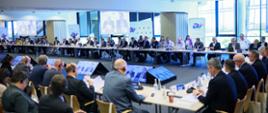
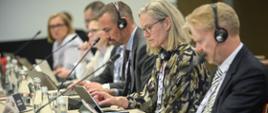
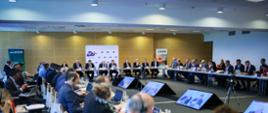
On May 5th to 7th, 2025, Agriculture Restructurisation and Modernisation Agency hosted in Warsaw the 57th Conference of Directors of EU Paying Agencies, organized as part of Poland's Presidency of the Council of the European Union. This exceptional event provided a platform for in-depth exchange of experiences, presentation of best practices, and discussions on the future of the Common Agricultural Policy in light of evolving geopolitical and economic challenges.

The conference took place at a significant moment – Poland assumed its second-ever Presidency of the Council of the EU, marking 20 years of active membership in the European Union. This year’s Presidency comes during a time of ongoing war in Ukraine and increasing geopolitical tensions around the world. As such, the foundation of Poland's actions is the broad concept of security – including external, energy, economic, food, health, information, and internal security.
In the field of agriculture, food security remains a key horizontal priority. Discussions focused on strengthening the competitiveness and resilience of European agriculture while supporting the sustainable development of rural areas. Emphasis was placed on simplifying CAP rules, ensuring adequate funding, and taking into account the EU's future enlargement.
A wide range of key topics were addressed, including the stability and accuracy of LPIS reference data. Presentations explored the scope and structure of annual changes in LPIS databases, and the need to establish stable rules for defining eligible areas while maintaining high data accuracy. During the workshops, Member States exchanged experiences in setting tolerances within LPIS, and issues related to debt management were also discussed.
The IRZPlus system was presented as an effective tool for registering and tracking the movement of animals. It played a crucial role in keeping foot-and-mouth disease outside Poland’s borders, serving as an example of efficient action in the area of food security.
Poland showcased solutions implemented by the Agency for Restructuring and Modernisation of Agriculture (ARMA) to improve debt management, including best practices collected from Member States through questionnaires. Discussions with representatives of European institutions also highlighted areas requiring further clarification within the European Commission's guidelines.
Participants had the opportunity to experience practical applications of precision agriculture during a visit to the Experimental Field of the Institute of Horticultural Sciences in Wilanów. Highlights included an autonomous tractor operated via a mobile app and a drone capable of spraying 20 hectares of orchards in just one hour, adapting treatment type and frequency to real-time needs.
A visit to the Center for Translational Medicine demonstrated the potential of interdisciplinary collaboration between agricultural science and medicine. Scientists presented the Center's mission and research methods based on testing procedures and disease progression using animal organs—knowledge that contributes to developing innovative treatments for human illnesses.
The event also featured a cultural program, including a concert by the choir and orchestra of the Warsaw University of Life Sciences and a performance by the renowned folk ensemble “Mazowsze,” which took guests on a vibrant musical journey through Poland’s regional traditions.
ARMA, which celebrated its 30th anniversary in 2024, presented key achievements including nearly half a trillion PLN distributed to support rural development in Poland. These funds enabled the purchase of almost 862,000 new machines and devices, over 2.5-fold increase in farm household incomes, the establishment of 3,700 modern food processing facilities, a tenfold rise in agri-food exports, the construction of 9,000 km of local roads and 30,000 km of water and sewage networks, and a drop in unemployment from 17.6% to 3.3%. These results reflect the transformation of Polish agriculture and rural areas, made possible through ARMA’s financial support.
The conference served not only as a platform for dialogue among EU paying agencies, institutions, and candidate countries, but also as a moment of reflection on the evolving role of paying agencies in developing agriculture and rural areas in Europe. International cooperation was underscored as a vital opportunity to share knowledge and jointly develop solutions for the challenges facing modern agriculture.