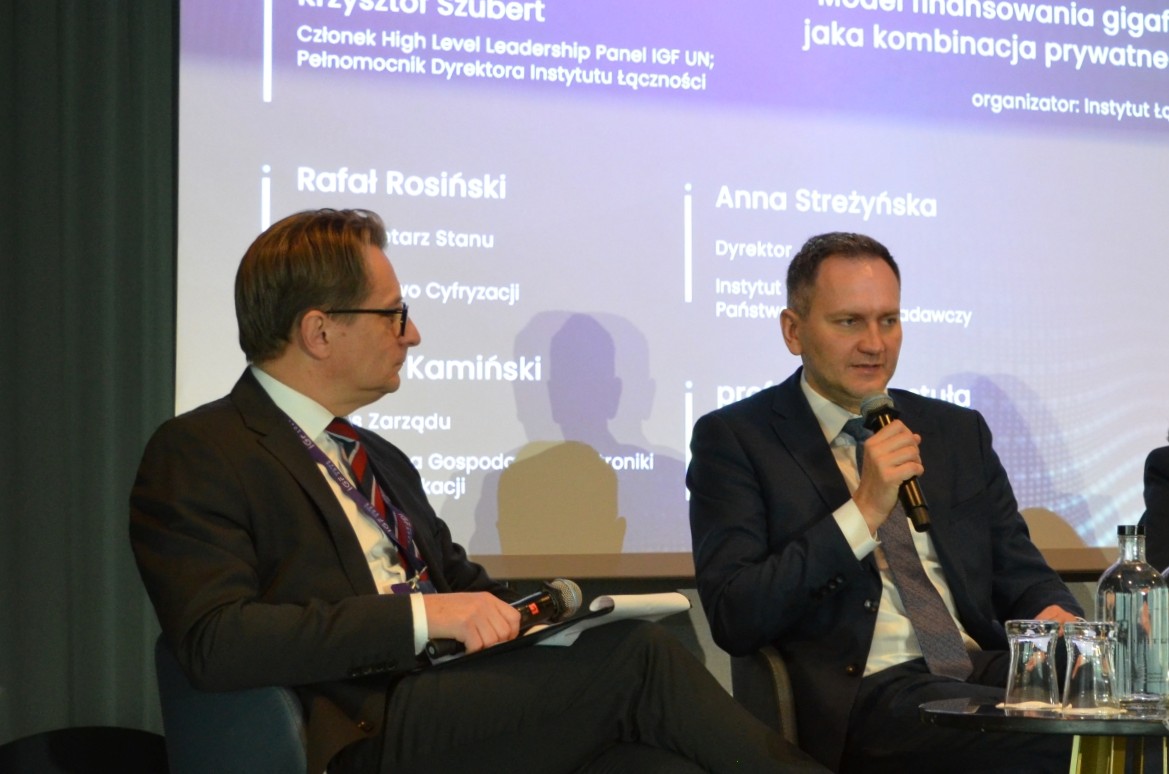
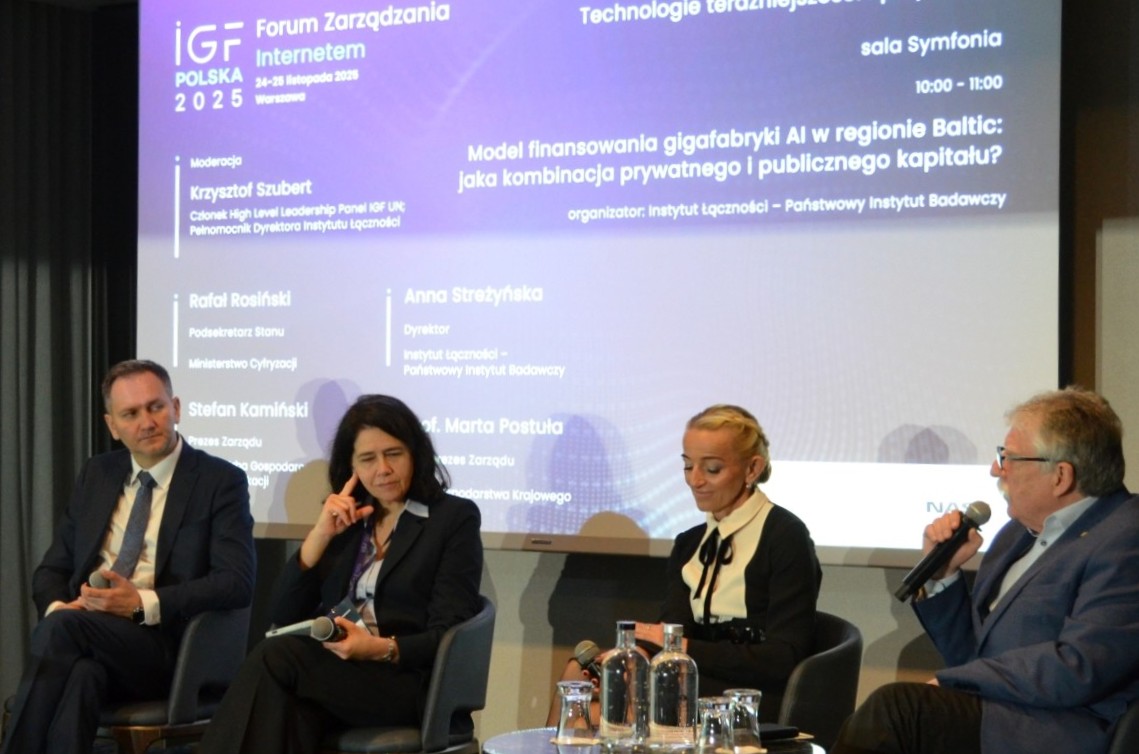
National Institute of Telecommunications at IGF Poland 2025: how to finance the Baltic AI GigaFactory?
26.11.2025
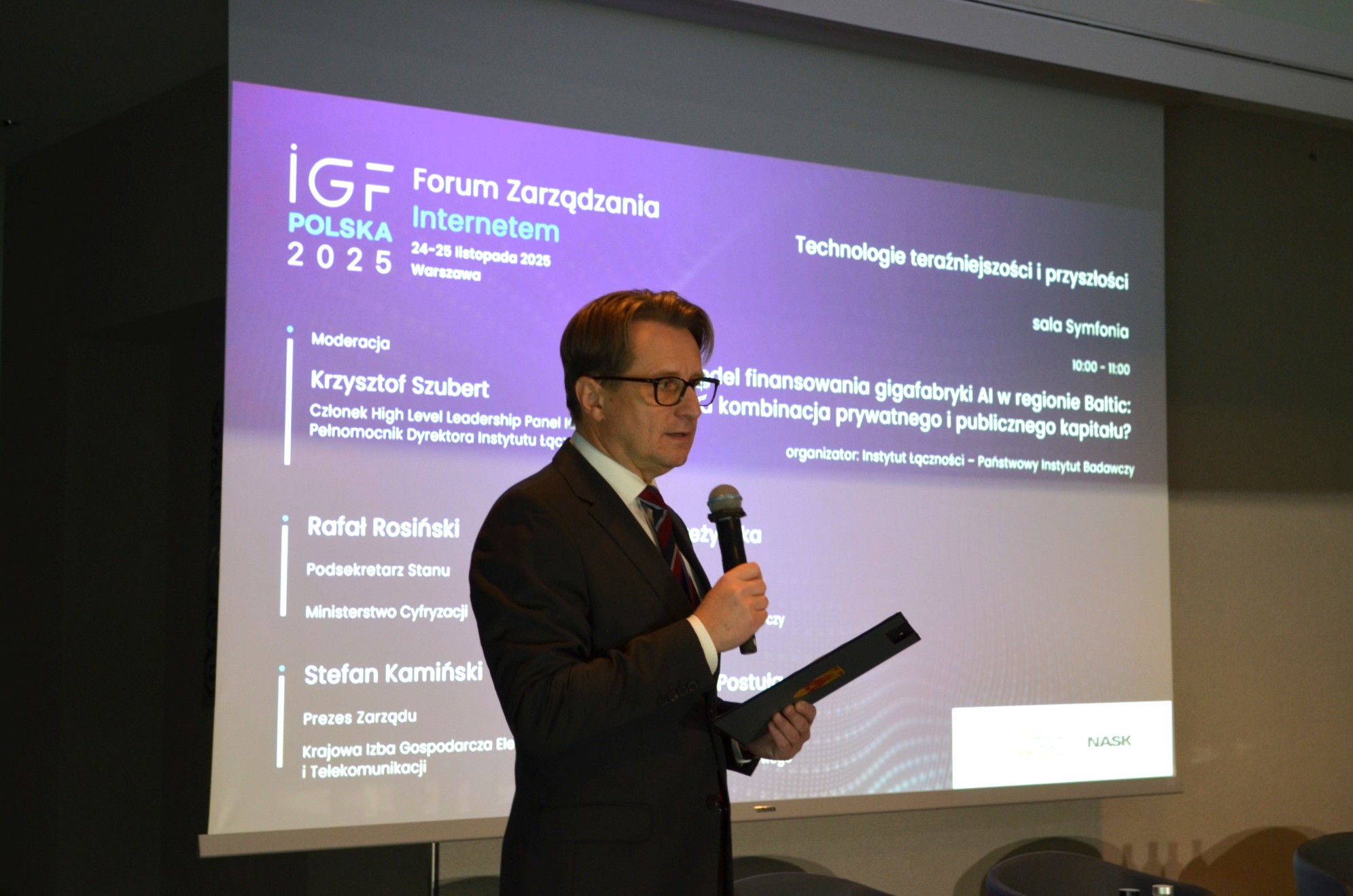
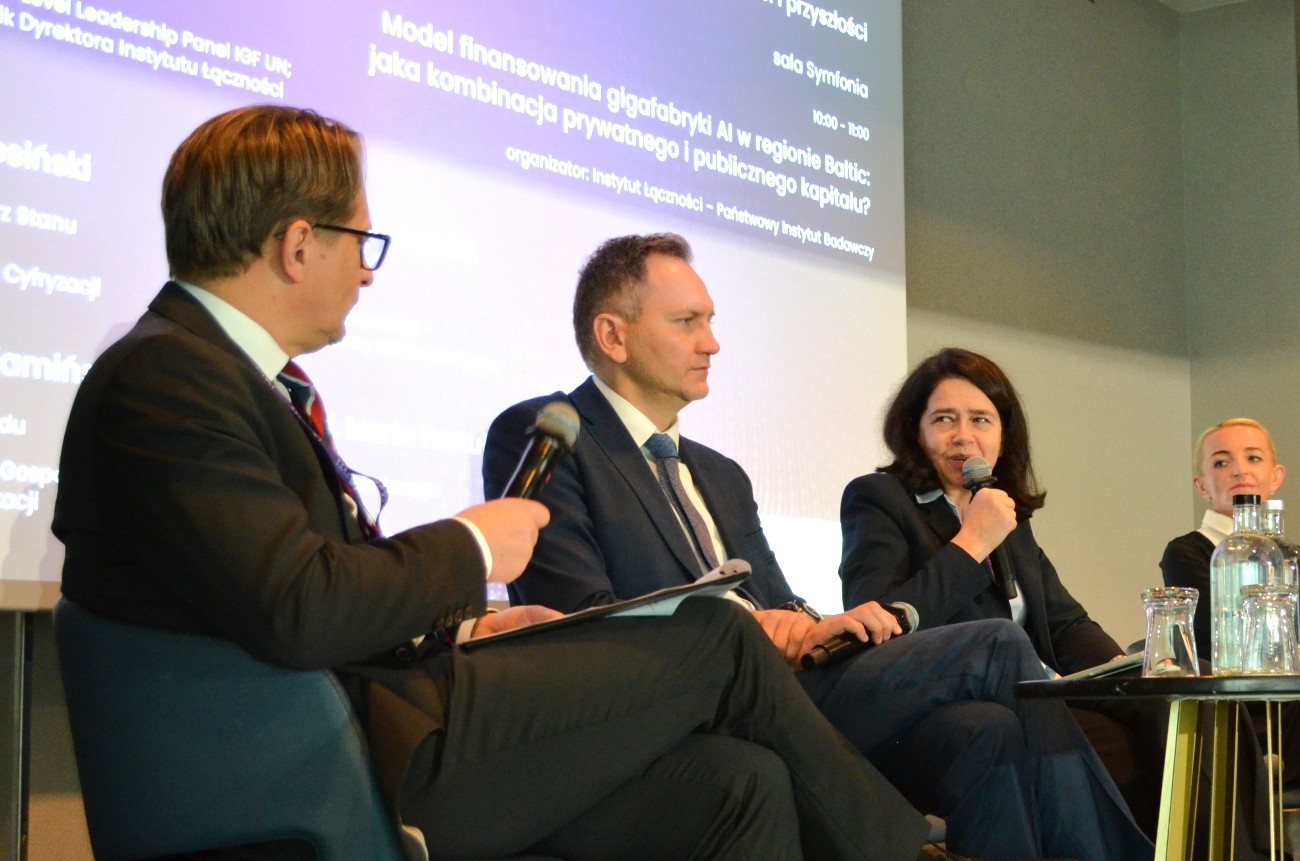
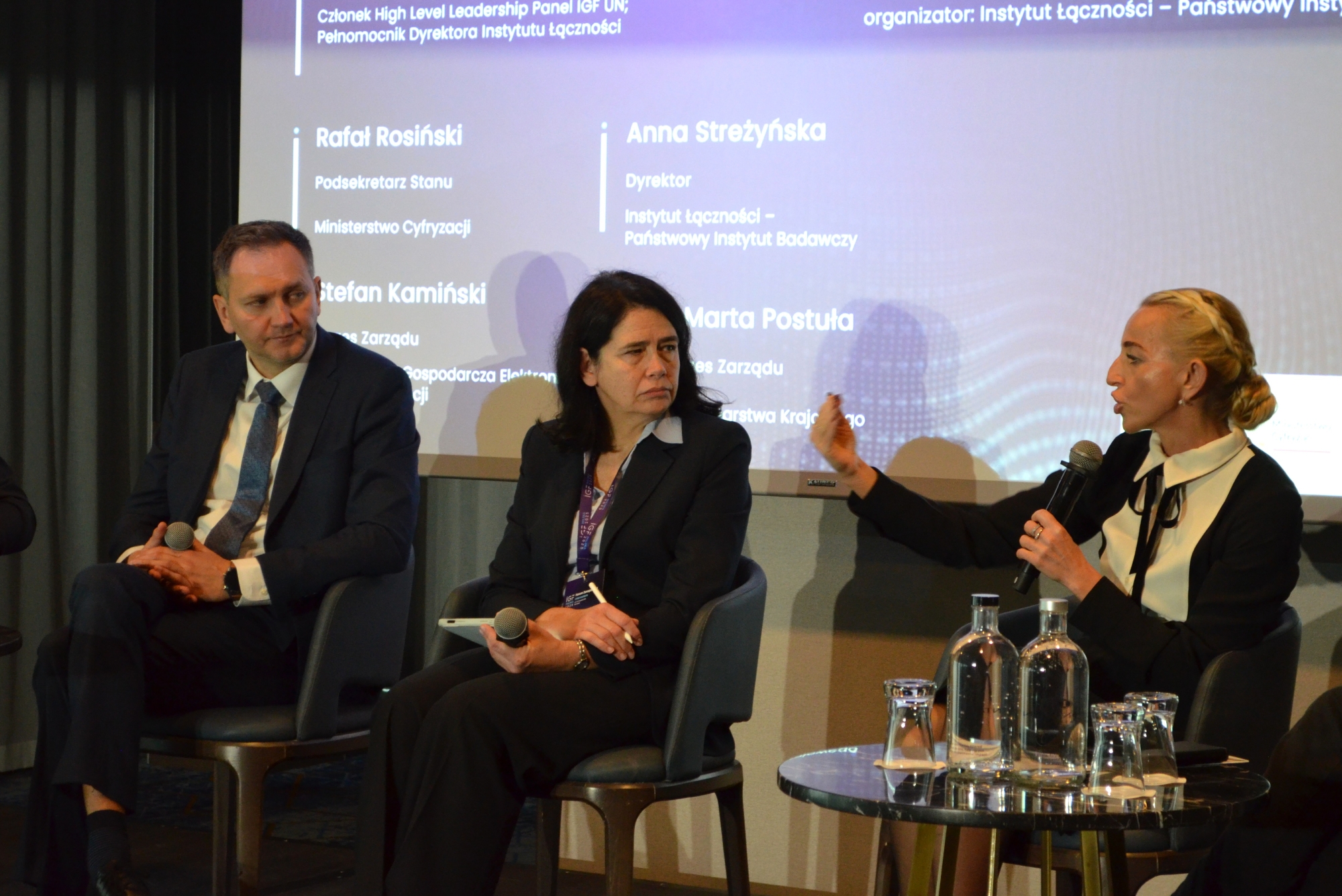
During the IGF Poland 2025 forum, the National Institute of Telecommunications organized a discussion panel titled "Financing Model for the AI GigaFactory in the Baltic Region: What Mix of Private and Public Capital?”. The focus was on the Baltic AI GigaFactory project, which aims to position Poland and the Baltic countries as leaders in artificial intelligence. A key role in the debate was played by Anna Streżyńska, Director of the National Institute of Telecommunications.

A strategic project for the Baltic Sea Region
Baltic AI GigaFactory is a joint initiative of Poland, Lithuania, Latvia, and Estonia, with an estimated value of €3 billion. Its goal is to create world-class computing infrastructure to support AI development in science, administration, and business. Poland acts as the consortium leader, and the National Institute of Telecommunications is one of the key partners responsible for coordination and expert support.
Anna Streżyńska: “AI is the new energy and the new steel”
Anna Streżyńska emphasized the strategic importance of the project for Poland’s and the region’s technological sovereignty:
Artificial intelligence is the new energy and the new steel. Countries that achieve independence in this area will shape their future, rather than buying it from others.
Currently, 90% of computing power is purchased from external providers, making the construction of the GigaFactory crucial for digital independence. Streżyńska also noted:
Every hour of operation for such a factory is extremely costly, which is why we must define computing power recipients in advance—both in Poland and beyond the region. The entire mechanism must be preceded by real analyses of AI development in our region and globally.
Panel participants
In addition to Anna Streżyńska, the discussion featured:
- Rafał Rosiński – Undersecretary of State, Ministry of Digital Affairs
- Stefan Kamiński – President, National Chamber of Electronics and Telecommunications
- Prof. Marta Postuła – Vice President, Bank Gospodarstwa Krajowego
The panel was moderated by Krzysztof Szubert, Plenipotentiary of the Director of the National Institute of Telecommunications for Commercialization and International Cooperation.
Key takeaways from the panel
- Financing Structure: 65% of funds will come from the private sector, and 35% from public sources—half provided by Baltic countries, the other half by the European Commission.
- Role of the State: State capital involvement signals to investors that the project is strategic and stable.
- Long-Term Contracts: To ensure profitability, it is essential to secure computing power buyers through agreements with defense, healthcare, administration, and business sectors.
- Regulations and Incentives: The panel highlighted the need for regulatory simplifications and support mechanisms for companies implementing AI solutions.
Why Baltic AI GigaFactory could be a breakthrough
The Baltic AI GigaFactory is not just a technology investment—it is a civilizational leap for the Baltic Sea region. Thanks to this project:
- We will ensure digital sovereignty—reducing dependence on foreign computing power providers.
- We will create thousands of jobs in high-value sectors.
- We will attract private investments and strengthen the region’s position on the innovation map.
- We will develop key sectors—healthcare, defense, public administration, and business.
- We will build an AI ecosystem based on data security and modern infrastructure.
As Anna Streżyńska emphasized:
We want to grow as an AI competence center and a network connecting artificial intelligence hubs. This means new budgets, new tasks, and access to computing infrastructure on an unprecedented scale.