High Winds - How to Prepare

When discussing gusty winds, they are typically classified by the speed at which air masses move and the extent of potential damage. A windstorm with speeds up to 88 km/h can break trees, dislodge roof tiles, and damage buildings. Stronger winds up to 102 km/h can strip roofs, uproot trees, and topple power poles. Winds above 103 km/h may be life-threatening.
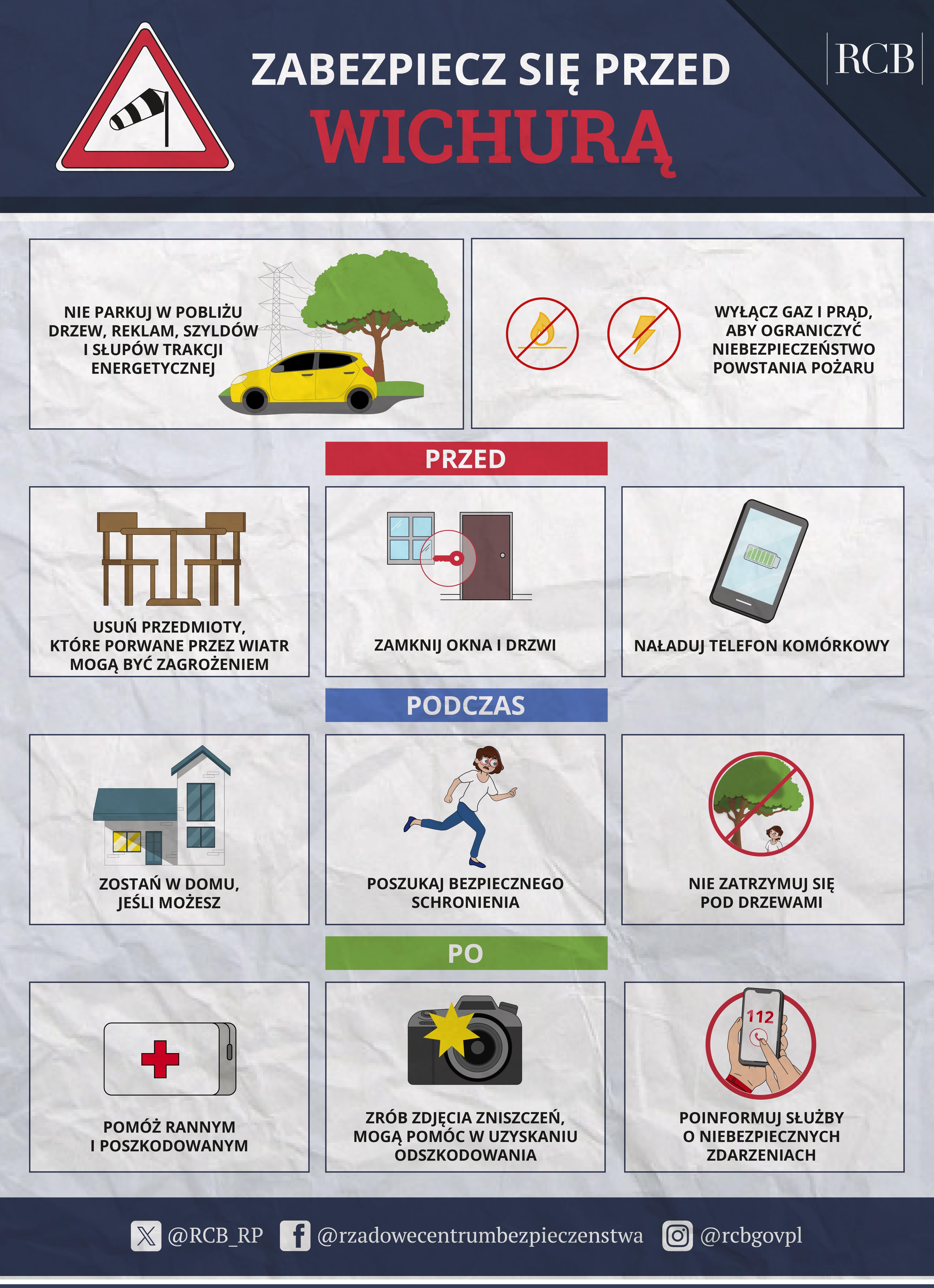
PROTECTION AGAINST HIGH WINDS:
- Remove items from windowsills, balconies, and yards that could be swept up by the wind and become hazardous.
- Close windows and doors, securing them if needed.
- Prepare alternative lighting, such as flashlights with spare batteries.
- Ensure the safety of outdoor animals.
- Park your vehicle in a safe place away from trees, signs, and power poles.
DURING A WINDSTORM:
- Stay indoors unless absolutely necessary.
- If outside, seek safe shelter.
- Avoid standing under trees; turn off gas and electricity to reduce fire risk.
- Do not use elevators, as power outages could trap you inside.
- Exercise caution while driving, avoiding areas with breaking branches and open spaces where high winds may affect vehicle control.
AFTER THE WINDSTORM:
- Report incidents affecting public safety to emergency services.
- Assist injured or affected people and provide first aid.
- Avoid fallen or dangling power lines, do not touch them, and do not attempt to remove them yourself.
- Document any damage to your property for insurance claims.
- Call technical services if you see sparking wires, burnt wires, or smell burnt wiring, after turning off gas and electricity.
Materials
Guide – WindstormPoradnik_–_wichura_ENG.pdf 63.73MB Infografika – Zabezpiecz się przed wichurą