Traces of Anders' Army Preserved in Beit Guvrin National Park
20.08.2026
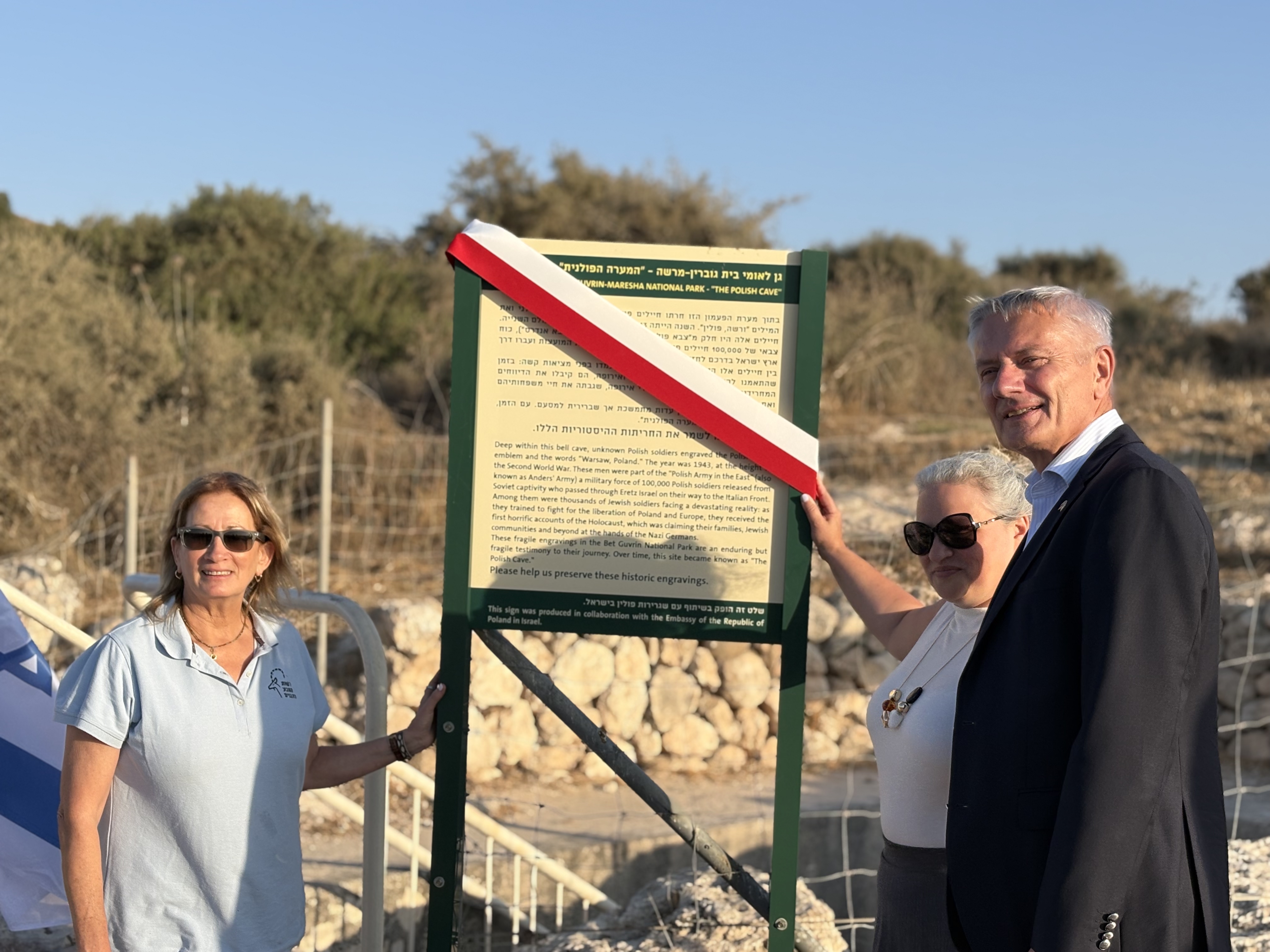
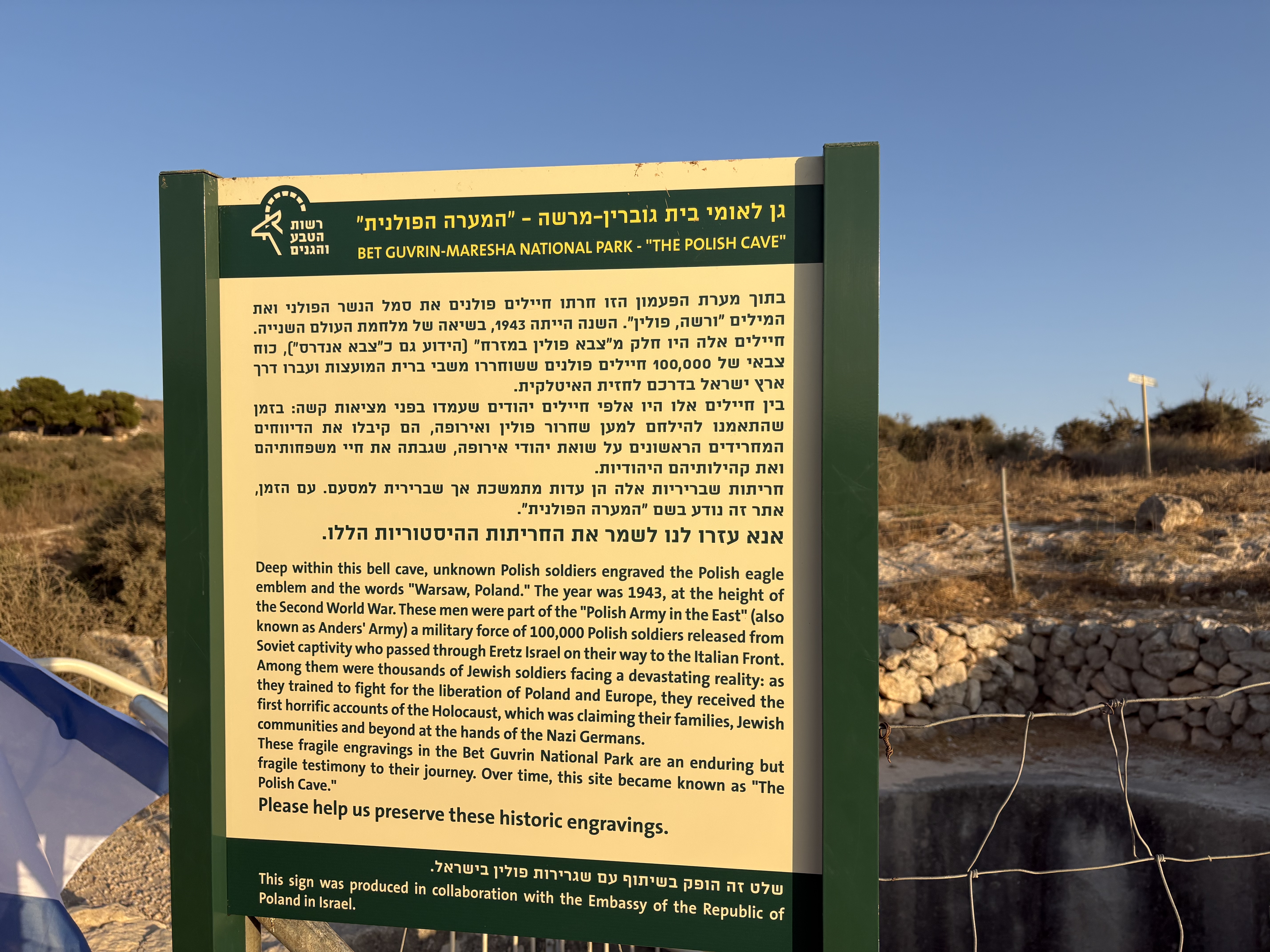
Visitors to Beit Guvrin National Park - the ancient region of Maresha - can now learn that the Polish eagle carved into the rock, together with the inscription "Warsaw. Poland”, found in one of the five caves in the area, is a lasting trace of the presence of soldiers of Anders' Army, which was formed in Palestine in 1943. A new information plaque now commemorates this history.

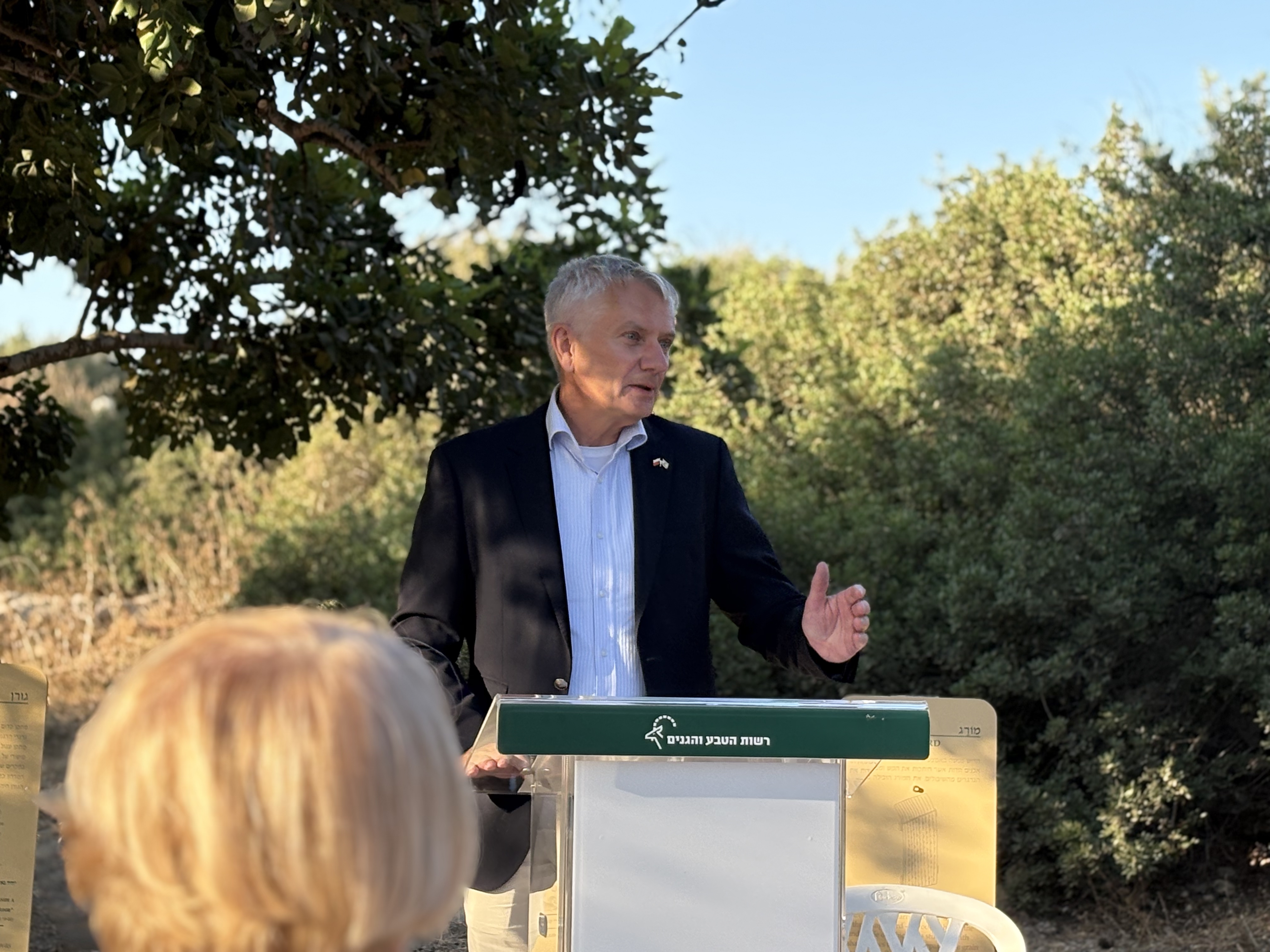
On 19 August, a month in which we commemorate with particular pride the bravery and achievements of the Polish armed forces, a symbolic ceremony was held to unveil the plaque. The ceremony was attended by Poland’s Ambassador to Israel, Maciej Hunia, a representative of the Israeli Ministry of Foreign Affairs and the Director of the Israel Nature and Parks Authority.
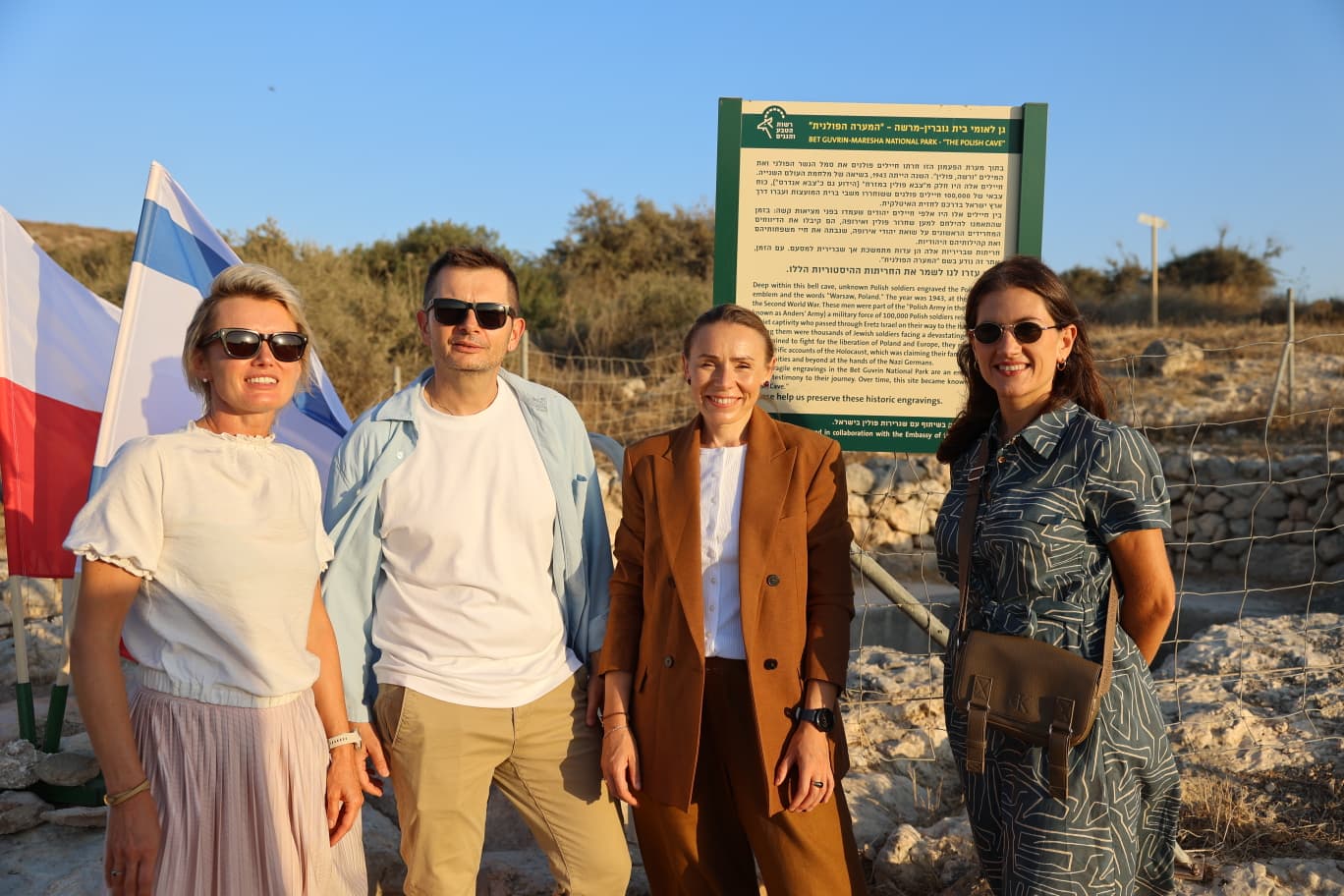
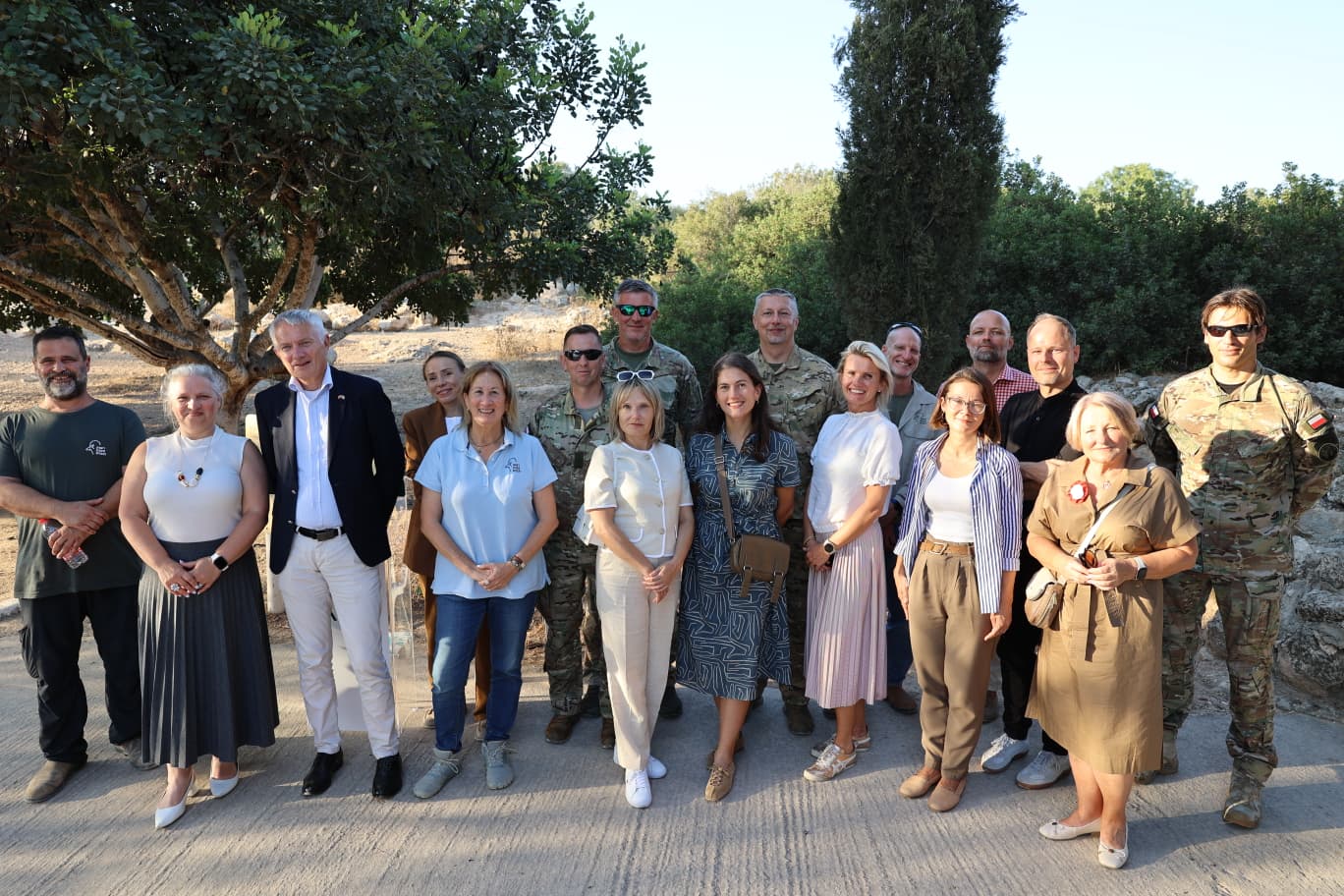
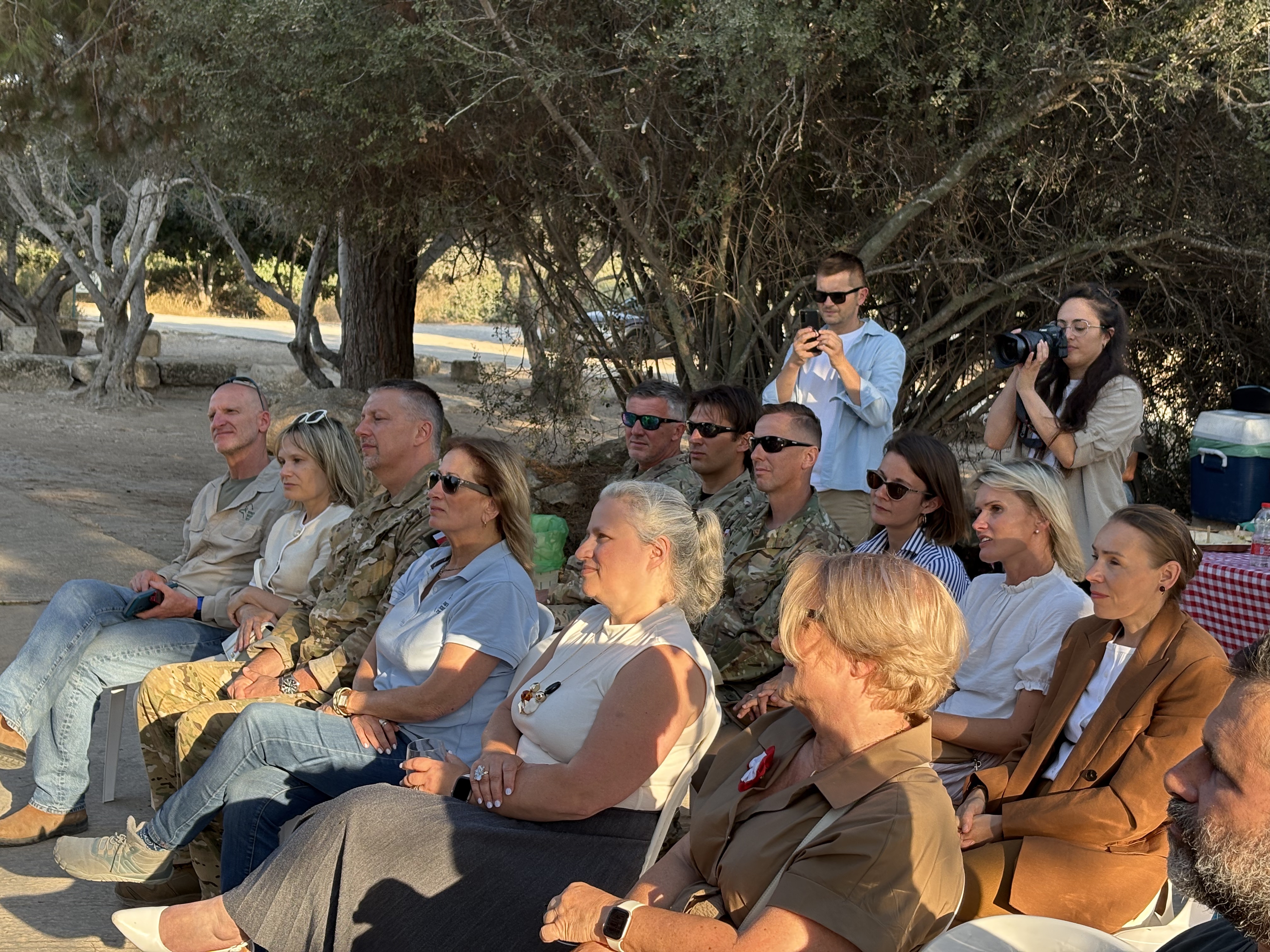
The modest ceremony was also attended by Polish Defence Attaché Adam Godlewski, distinguished guests, Polish soldiers stationed in neighbouring Jordan, representatives of the Polish Institute in Tel Aviv and diplomats from the Embassy of the Republic of Poland.
In their remarks, representatives of both sides stressed that mutual respect and the preservation of historical heritage are important pillars of cooperation between Poland and Israel. Ambassador Hunia noted that among the “builders” of the State of Israel were many Polish Jews who had arrived in Palestine as soldiers of Anders’ Army.
Memory does not disappear
The information plaque, installed at the entrance to the so-called Polish Cave, recalls that the graffiti still visible today – including the Polish eagle and inscriptions in Polish – are not accidental. They were carved by Polish soldiers travelling across the Middle East after being released from the Soviet Union. In the territory of what is now the State of Israel, they helped form the legendary 2nd Polish Corps, which would go on to become renowned for its role in the Battle of Monte Cassino.
Anders’ soldiers, together with their families, established important centres of Polish life throughout Mandatory Palestine. In Tel Aviv, for example, Polish could reportedly be heard more often than Hebrew on Allenby Street during the 1940s, while a Polish school operated in Rehovot.
Today, traces of this history are gradually fading from the memory of local residents and visitors alike. That is why we are committed to ensuring that the memory of the Polish soldiers and their remarkable story does not disappear – including here, in the heart of ancient Maresha.