Roundtable of Polish and Swedish think tanks at the Polish Embassy in Stockholm
16.05.2025
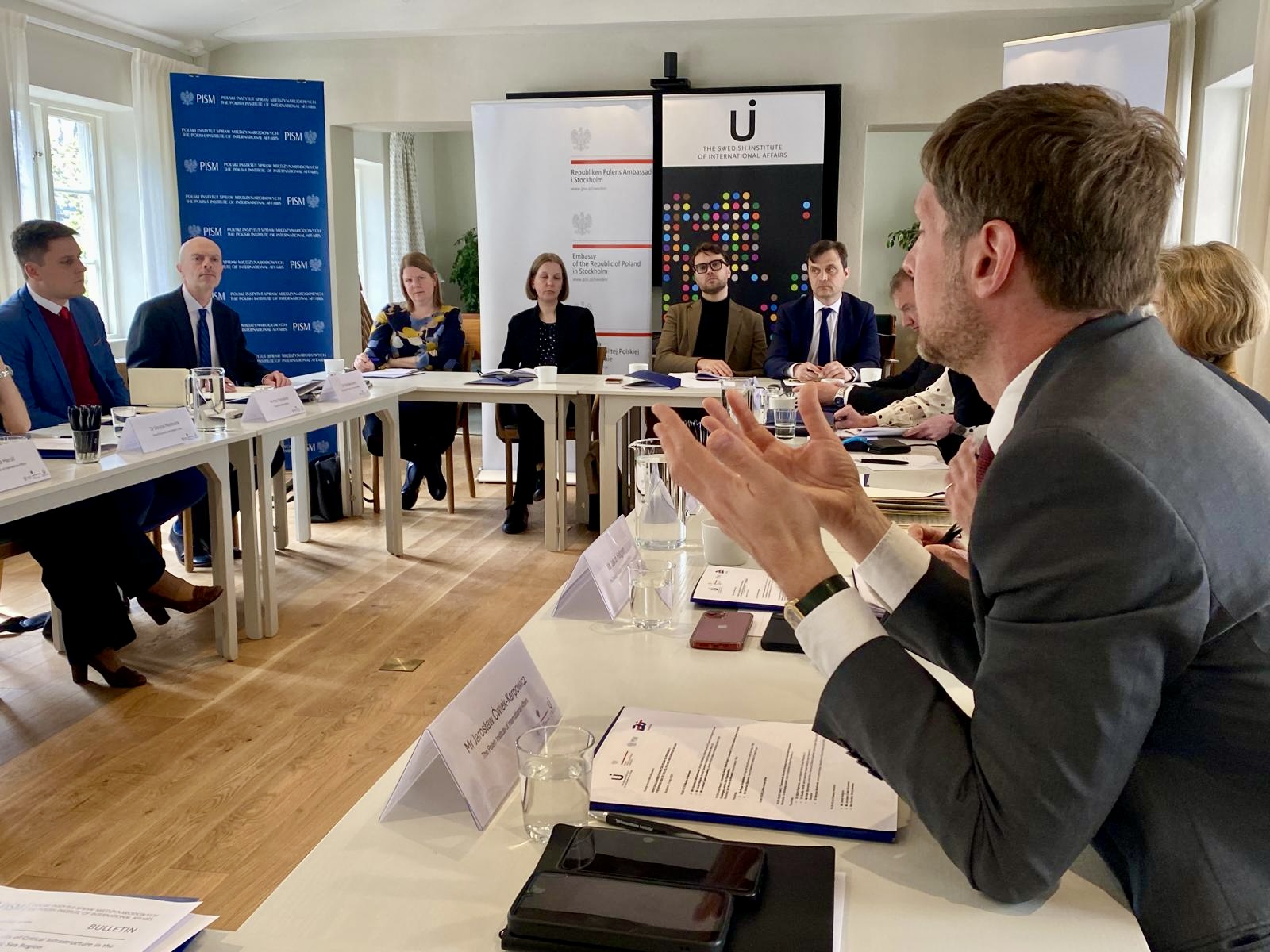
Hybrid warfare in the Baltic Sea region and the challenges posed by the new US foreign policy were the two main axes of a roundtable discussion involving representatives of leading think tanks from Poland and Sweden.

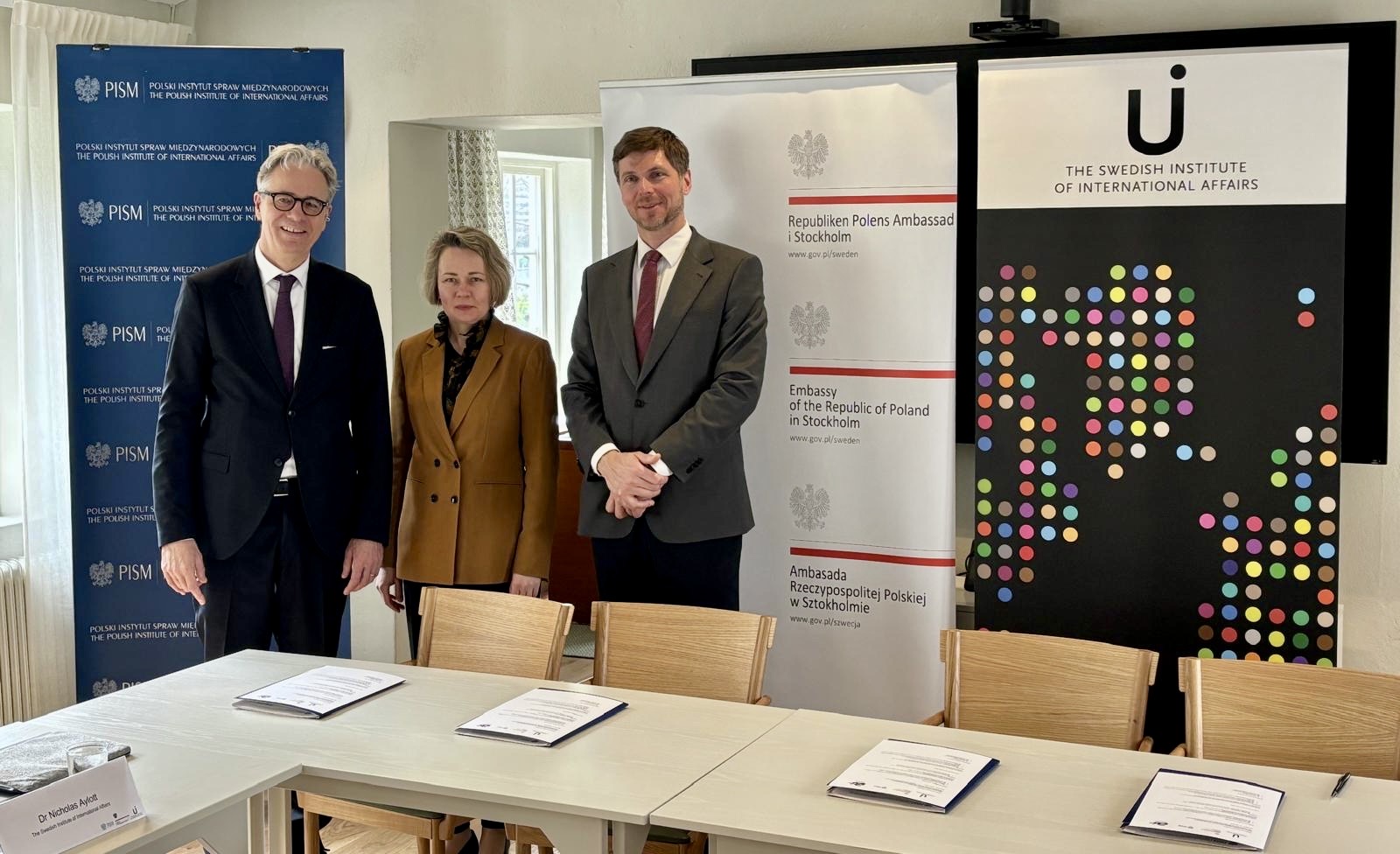
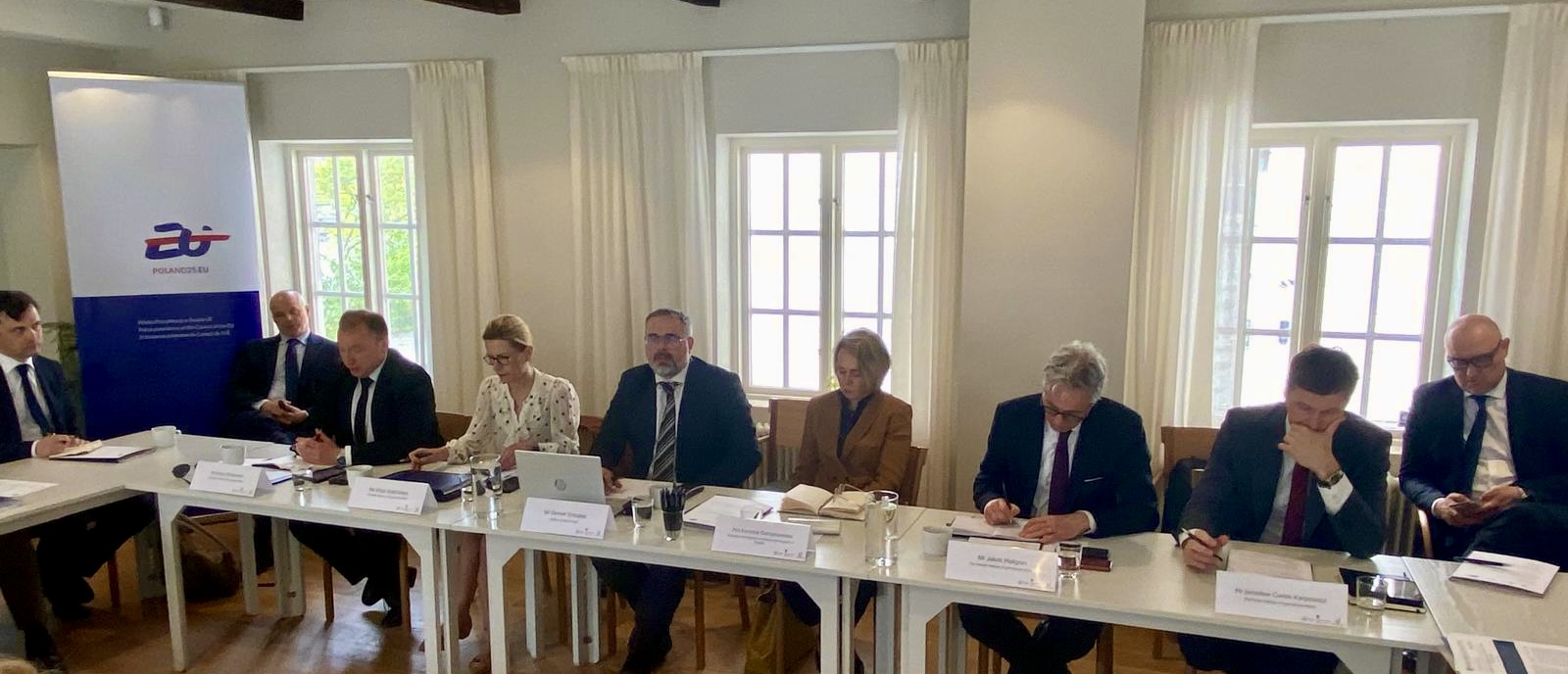
The event, titled "New Challenges During the Polish Presidency of the EU Council: Nordic and Baltic States, Poland and European Security," was co-organized by the Embassy of the Republic of Poland in Stockholm and the Swedish Institute of International Affairs (UI), which also hosted the debate at its premises.
The think tank roundtable formed part of the initiatives carried out by the Polish Embassy in Stockholm in the framework of Poland’s presidency of the Council of the European Union. It also fulfilled the provisions of the strategic partnership between Poland and Sweden, signed by the Prime Ministers of both countries in November of last year. The agreement provides for regular contacts between leading research and analytical institutions from Poland and Sweden to support joint projects, with particular focus on the security of the Baltic Sea region.
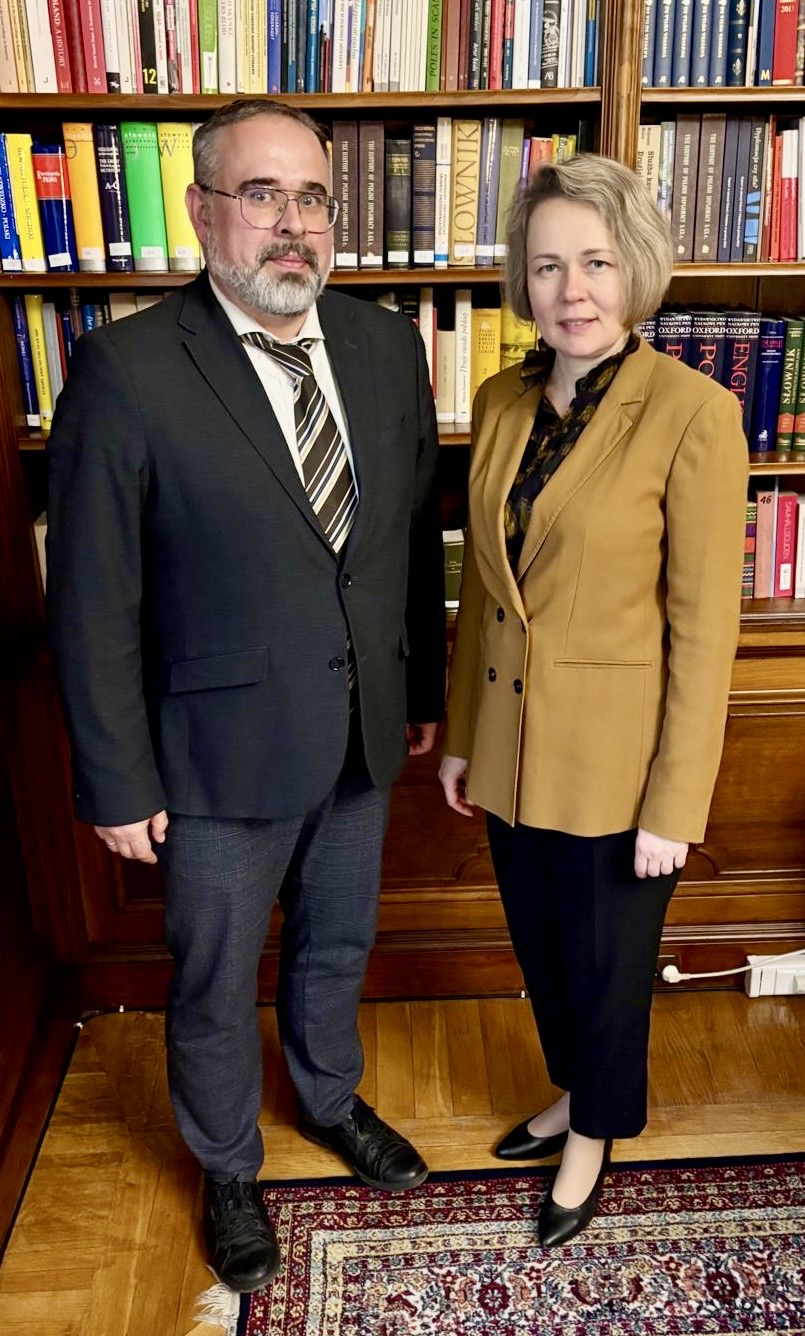
The debate was opened by the event organizers: Karolina Ostrzyniewska, Chargé d’affaires a.i. of the Republic of Poland to the Kingdom of Sweden; Jakob Hallgren, Director of the Swedish Institute of International Affairs; and Jarosław Ćwiek-Karpowicz, Director of the Polish Institute of International Affairs (PISM).
The first panel focused on the prospects for cooperation between Poland and the Nordic and Baltic states. The panel featured contributions from Kinga Dudzińska and Marcin Terlikowski (both from PISM), as well as Damian Szacawa (Centre for Eastern Studies, Lublin). The experts discussed the most effective and sustainable model for regional security cooperation in the Baltic Sea area, emphasizing the need for greater political-level decision-making and strengthened resilience against threats. Polish priorities in the context of Northern Europe were also highlighted: reinforcing regional security and defense cooperation, energy transition, technological and innovation partnerships, and engagement in both regional and EU policy frameworks.
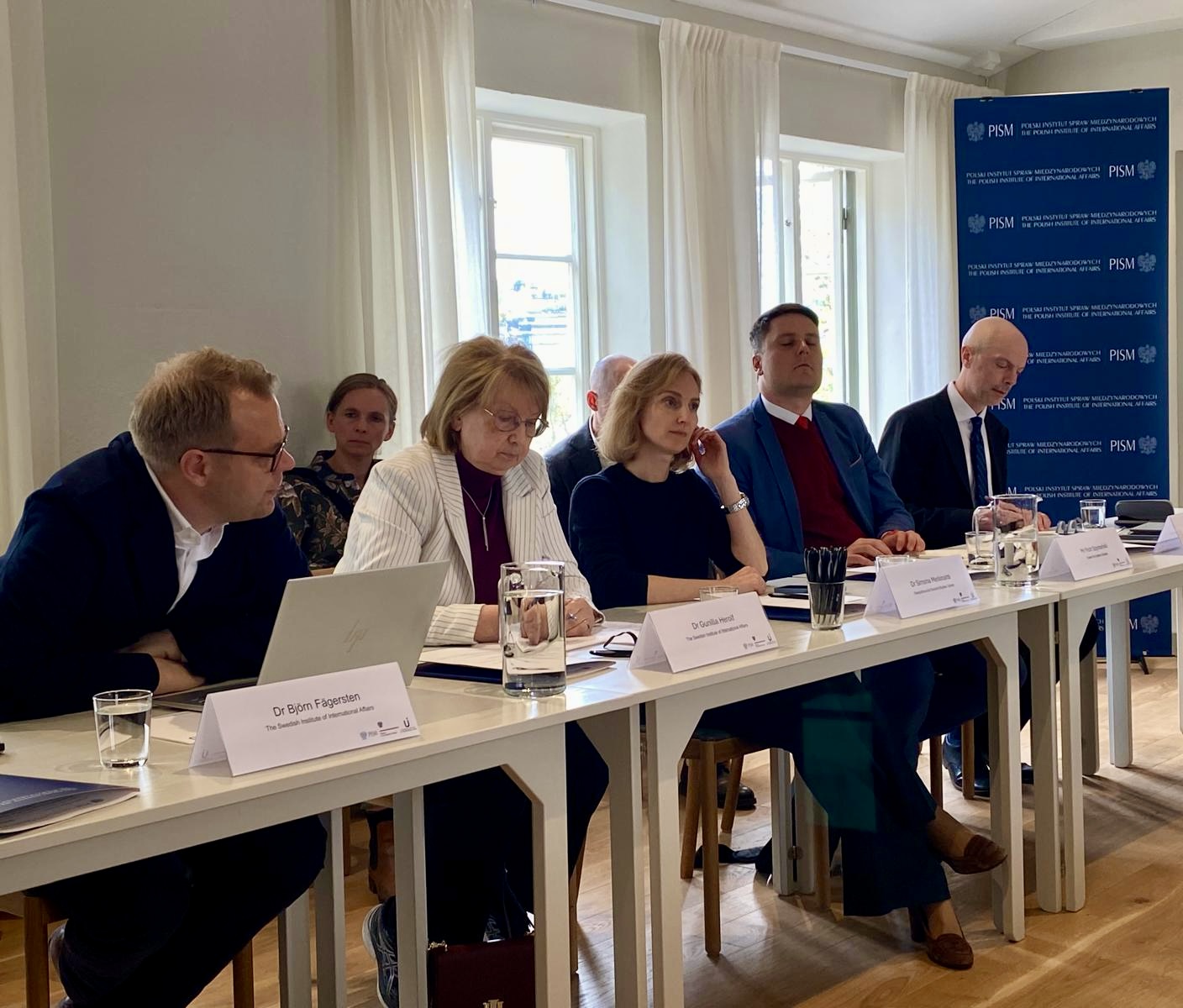
The second part of the discussion was devoted to transatlantic security relations from the perspective of the Baltic Sea states. Panelists included Nicholas Aylott, Björn Fägersten, and Gunilla Herolf (UI), Piotr Szymański (Centre for Eastern Studies, Warsaw), and Simona Merkinaitė from the Vilnius-based Center for Geopolitical and Security Studies. They discussed the region’s role in addressing the implications of potentially reduced US engagement in European defense. Topics included strengthening EU sanctions on Russia, phasing out dependence on Russian gas, and building a cohesive EU security and defense policy.
Participants included experts from Polish, Swedish and Lithuanian think tanks (including analysts from the Swedish Defence Research Agency/FOI and the Stockholm Centre for Eastern European Studies/SCEEUS), representatives of the NB8 and Polish diplomatic corps accredited in Sweden, as well as officials from the Polish Ministry of Foreign Affairs.