CAP, trade and enlargement of the EU - common priorities of Poland and France
04.02.2026
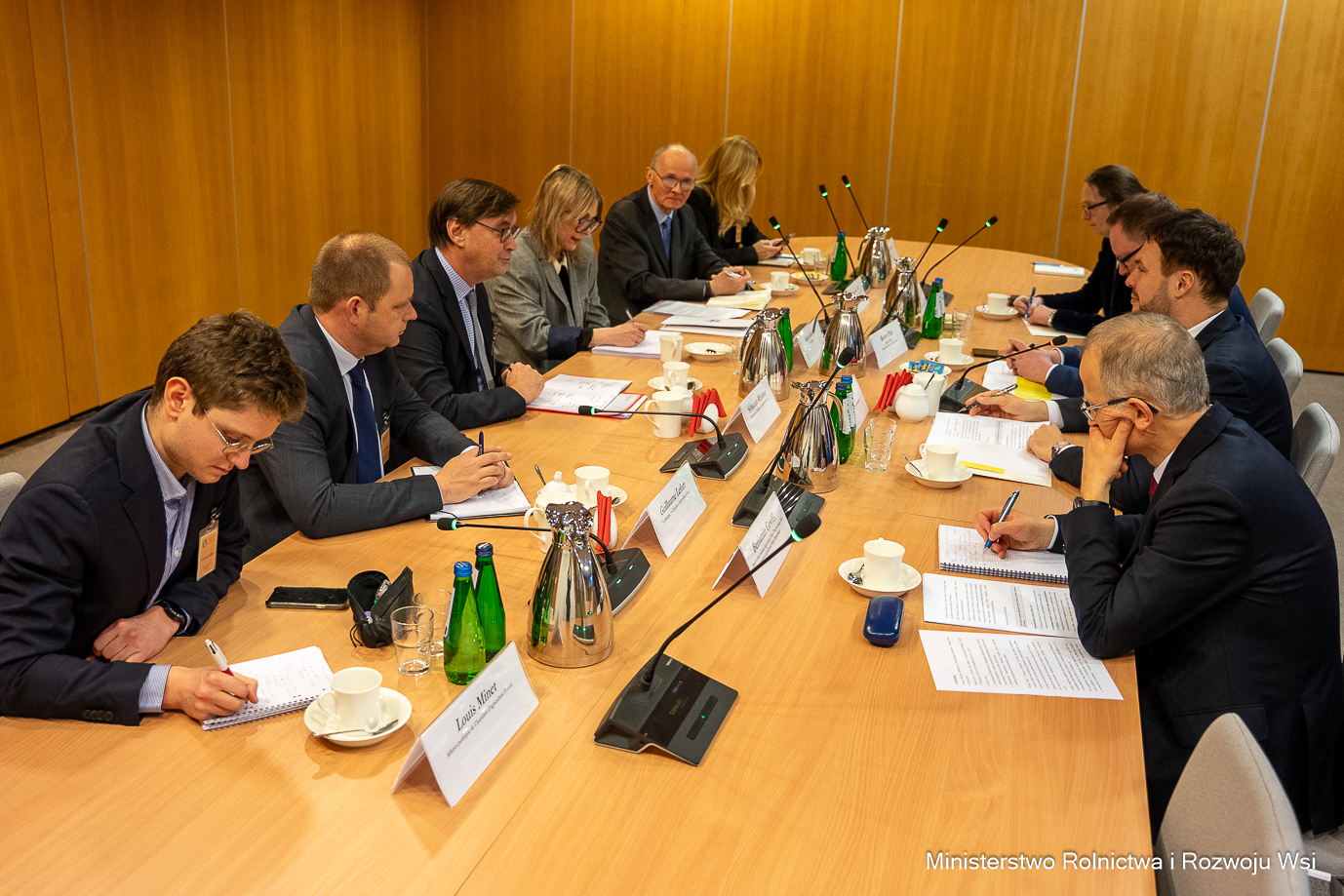
Common Agricultural Policy, trade agreements and the enlargement of the European Union are three processes that will determine the shape of European agriculture in the coming years. During the meeting at the Ministry of Agriculture and Rural Development, Poland and France clearly confirmed their common position on the protection of producers and food security of the EU.

– We need a Common Agricultural Policy that really addresses the problems of farmers. A strong, separate and well-financed policy, not the one that adds further obligations and does not provide any tools to deal with crises – stressed the Undersecretary of State Adam Nowak.
Common challenges, common interests
Undersecretary of State Adam Nowak met with the President of the Chambers of Agriculture of France, Sébastien Windsor, and the accompanying delegation. The talks focused on the most important challenges facing agriculture in the European Union – from the future shape of the CAP to the consequences of trade policy and the functioning of the single market.
Both parties stressed that Poland and France had similar interests in those areas and a similar view on what the protection of European producers should look like.
CAP post-2027: less bureaucracy, more real support
Deputy Minister Adam Nowak noted that Poland consistently advocated maintaining the Common Agricultural Policy as a strong, separate and financially autonomous policy with two pillars. As he indicated, neither the provision of food security nor real support for rural development would be possible without an adequate budget.
The debaters agreed that the future CAP had to allow the Member States to respond quickly to crises and really simplify procedures rather than increase administrative burden on farmers.
EU-Mercosur: opposition to an uneven playing field
One of the key topics of the meeting was the EU-Mercosur agreement. Undersecretary of State Adam Nowak stressed that Poland did not accept that agreement in its current form and from the very beginning Poland and France had pointed to the risk of an uneven playing field for European producers.
It as highlighted that the European Union should not open the market for products produced according to the standards lower than those applicable to farmers in the EU. In this context, the need for a ban on importing and placing on the market of products containing residues of substances prohibited in the European Union has been stressed.
Following the decision of the European Parliament on referring the Mercosur agreement to the Court of Justice of the EU, the parties expressed their hope that the European Commission would withhold its decision on its temporary application.
Enlargement of the EU and the stability of agricultural markets
During the talks, the subject of the future enlargement of the European Union was also discussed. It was stressed that that process should be carried out in a responsible and predictable manner, so as not to disturb the functioning of the single market and not to take place at the expense of agriculture in the Member States.
For Poland, of critical importance is to meet food safety and quality requirements as well as transparency of the flow of funds and effective market management.
Generational renewal: a prerequisite for competitive agriculture
Deputy Minister Adam Nowak and President Sébastien Windsor also pointed to demographic challenges. They unanimously indicated that without effective generational renewal it would be difficult to talk about long-term food security and competitiveness of European agriculture.
Solutions are required to genuinely encourage young people to stay in agriculture, empower women in rural areas and facilitate the transfer of farms to successors.