The EU announced a temporary suspension of duty-free sugar import
02.02.2026
The European Commission's decision is to support the EU sugar sector, including Polish sugar beet growers, by increasing demand for sugar produced in the EU and reducing pressure on the prices to fall. - The temporary suspension of the sugar processing procedure is to reduce pressure on sugar producers - said Christophe Hansen, EU Commissioner for Agriculture and Food.

The decision after the talks in Brussels
– The point is to protect the agri-food sector through active and regular monitoring of markets. In the current sensitive situation of many raw materials, cumulative “health checks” of markets and rapid response to emerging challenges are required. We are looking for alternative ways out of this difficult situation – said Christophe Hansen, EU Commissioner for Agriculture and Food.
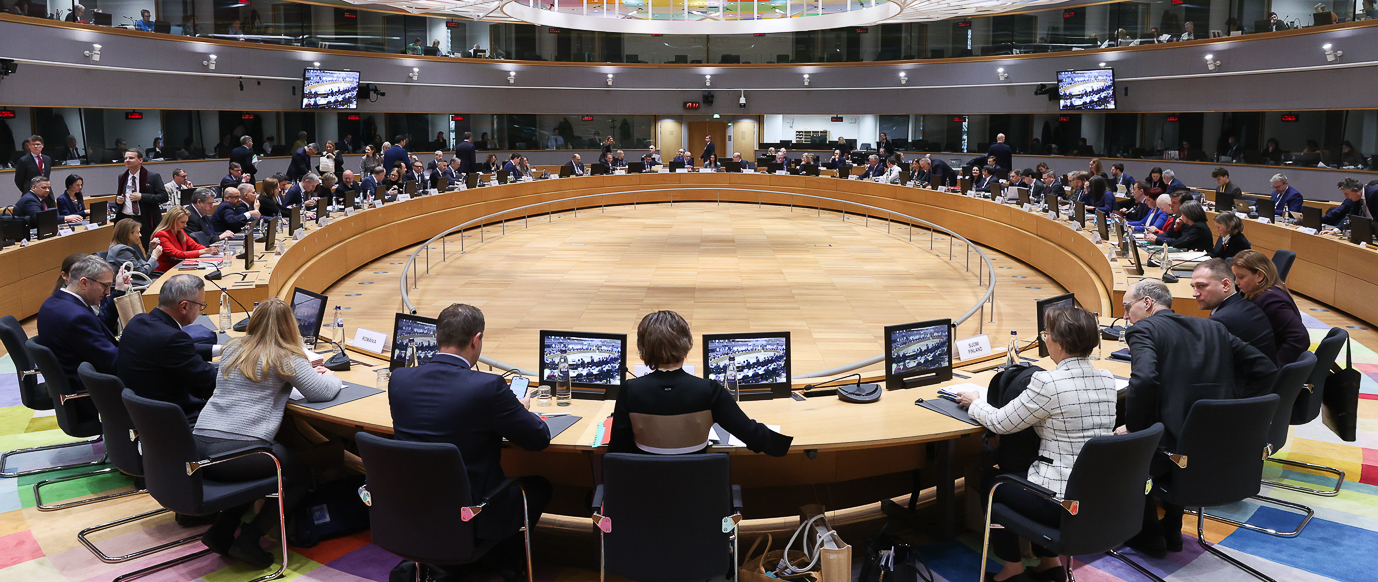
During the last meeting of the EU Agriculture and Fisheries Council in Brussels, with the participation of the Minister of Agriculture and Rural Development Stefan Krajewski, the European Commission announced the temporary suspension of the possibility of importing sugar into the European Union at a zero-duty rate under the so-called inward processing procedure.
This procedure allows to import non-EU sugar free of duty for its use in the production of products to be exported outside the Union. The suspension of this mechanism is to make the processing industry use more EU sugar, including sugar produced in Poland.
Response to the fall in the prices of sugar and sugar beet
The European Commission’s decision is a response to the deteriorating market situation in the sugar sector. In the 2025/26 season, sugar companies offered growers the basic prices of sugar beet which were lower by about 30% year-on-year. This was a consequence of the fall in the prices of sugar on the world and EU markets when compared to the record high price levels recorded in 2023.
In 2025, the prices of sugar on the domestic market remained low. In December 2025, the average sales price of packaged white sugar (1 kg) in Poland amounted to PLN 2 223 per tonne and was by almost 9% lower when compared to the price of sugar before the outbreak of the war in Ukraine, despite a simultaneous significant rise in the costs of production (fertilisers, energy).
Production of sugar in the EU and the importance of Poland
In the 2024/25 season, the production of sugar in the EU amounted to 16.6 million tonnes, of which 2.6 million tonnes were produced in Poland. According to preliminary forecasts, in the 2025/26 season the EU production will decrease to around 16.0 million tonnes, including in Poland to 2.3–2.4 million tonnes.
Poland is responsible for about 15% of the production of sugar in the EU, is the third producer in the EU and a net exporter. Each year, domestic producers export from 700 to 900 thousand tonnes of sugar, which accounts for about 30% of domestic production. Low prices of sugar in the world result in the deterioration of the industry’s situation, which was highlighted in the EU forum.
Import and export of sugar in the EU
In the 2024/25 season (October 2024 – September 2025), the import of sugar into the EU amounted to 615 thousand tonnes and – according to forecasts – will remain at a similar level in the 2025/26 season. For comparison, in the 2023/24 season the import reached 1.36 million tonnes, which was the result of the decrease in the production of sugar in the EU by about 1 million tonnes.
At the same time, the export of sugar contained in processed products plays an important role. According to the European Commission, the export of sugar from the EU in processed products in the 2024/25 season amounted to 2.6 million tonnes and in the 2025/26 season it is to reach about 2.5 million tonnes.
Support for growers and further EC measures
The suspension of the inward processing procedure for sugar should encourage companies that produce products for export to choose sugar produced in the European Union, including Poland. The European Commission hopes that such measures will result in the increase in the prices paid to farmers for sugar beet and stabilise the economic situation of growers. The EC also does not rule out the implementation of further support instruments for the sugar sector, responding to current market challenges.