Deputy Prime Minister Sikorski attends 62nd Munich Security Conference
15.02.2026
Hybrid threats in the Baltic, strengthening Europe's security, and challenges to the West were the main issues addressed by the head of Polish diplomacy during the Munich Security Conference on 12 to 15 February 2026. Held annually in the Bavarian capital, the Conference is one of the most prestigious events in international politics and a venue for the exchange of views and strategic consultations between world leaders and security experts.

During the four days of the Conference, Deputy Prime Minister Radosław Sikorski attended nearly 50 meetings. His interlocutors included US Secretary of State Marco Rubio. The heads of Polish and US diplomacy discussed G20, support for Ukraine, transatlantic relations, and the Polish model of political transition. Poland’s top diplomat also talked about supporting Ukraine with UN High Commissioner for Refugees Barham Salih. According to UNHCR, there are around six million refugees from Ukraine across the world. Russia's aggression against Ukraine is weakening UNHCR's ability to respond to crises in other parts of the world. During the conversation, Deputy Prime Minister Sikorski also pointed to the problem of the instrumentalisation of migration. In 2025, over 29,000 attempted illegal border crossings were recorded along the entire Polish-Belarusian border. Poland’s top diplomat discussed security issues with representatives of the E5 Group (Germany, the United Kingdom, Italy, France, and Poland) and the Supreme Allied Commander Europe, General Alexus G. Grynkewich.
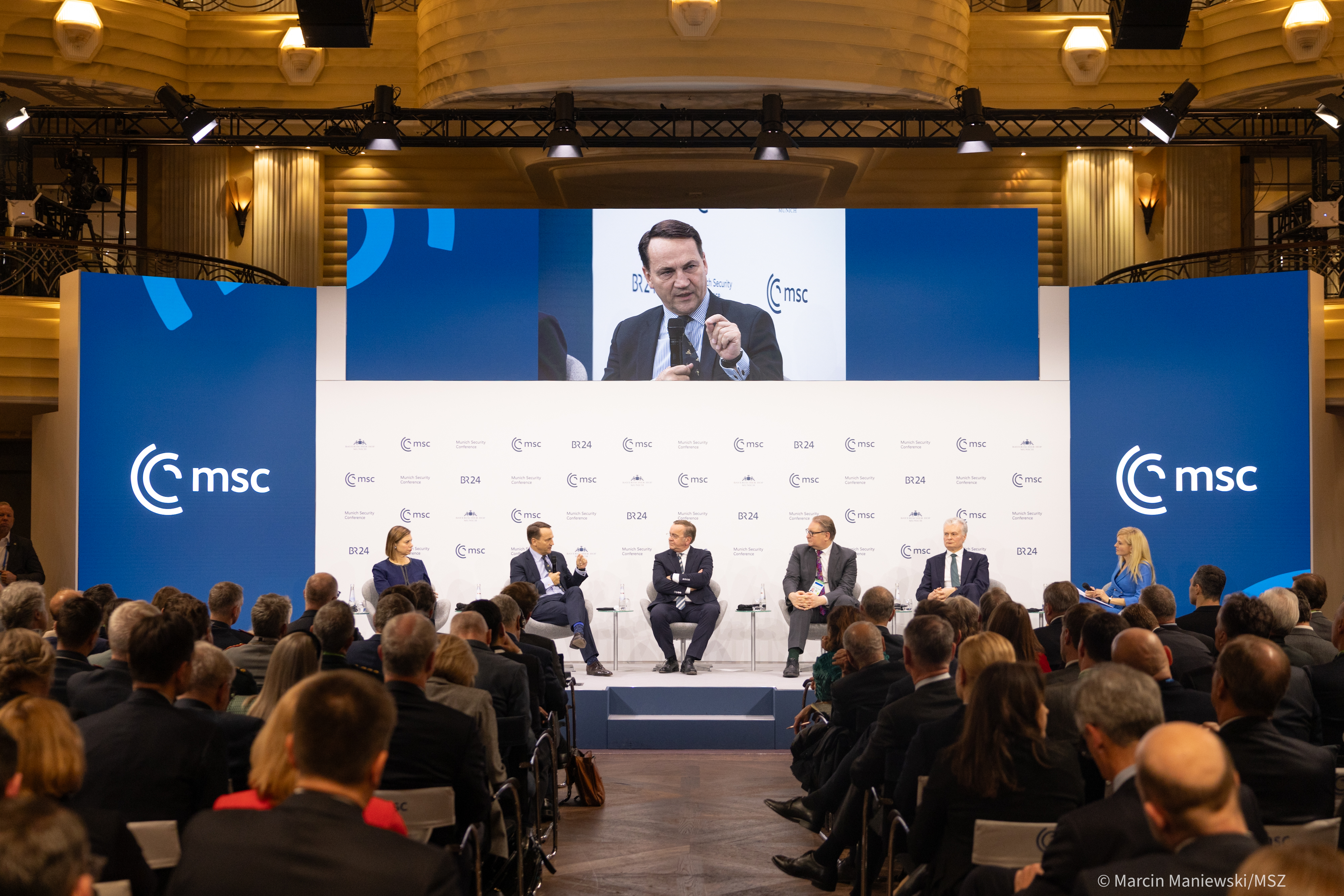
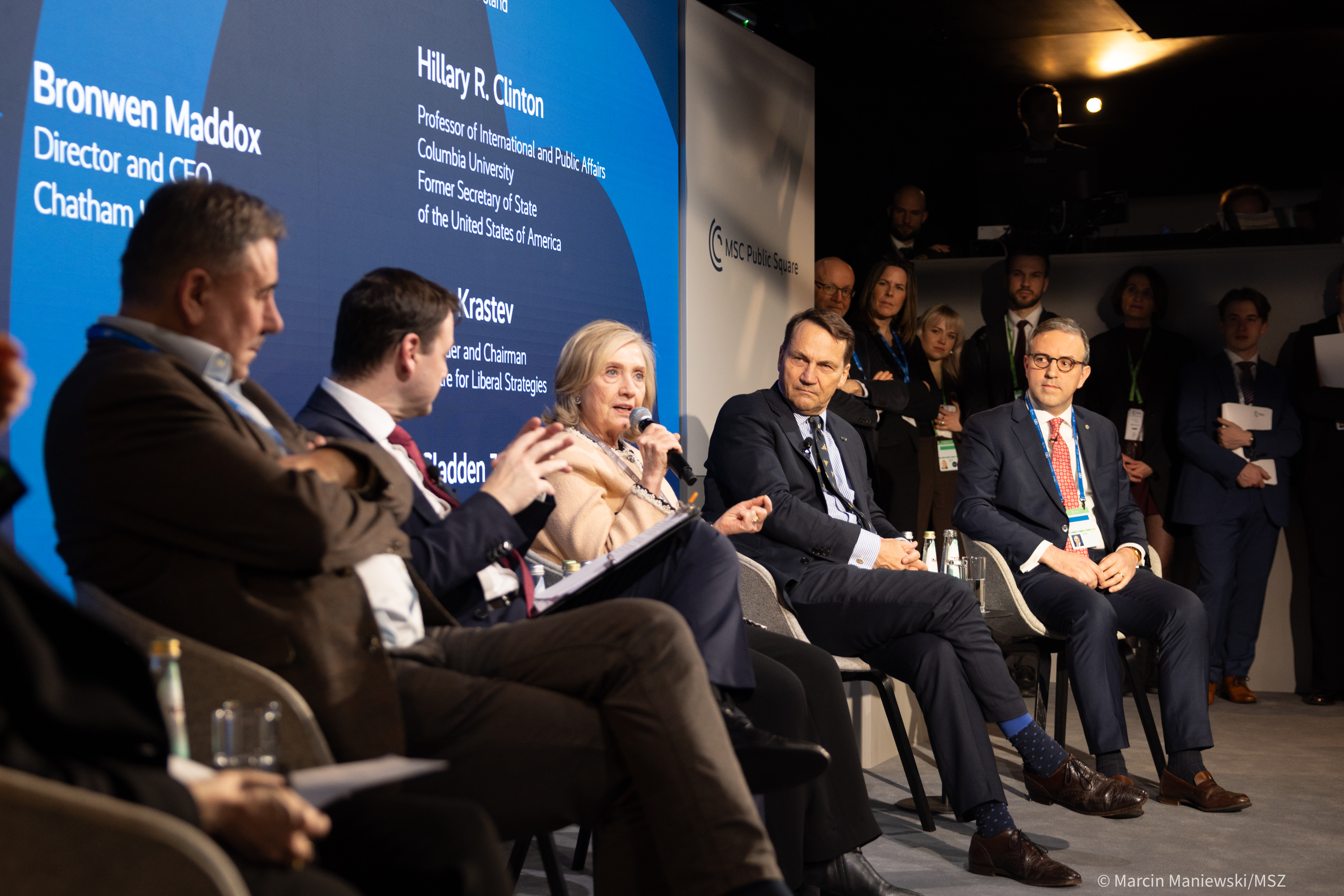
During the Munich Security Conference, Deputy Prime Minister Sikorski took part in four panels on topics including Ukraine's security, strengthening European defence, challenges for the West, and hybrid threats in the Baltic Sea region. Poland’s foreign minister highlighted our role in the efforts taken to achieve just peace for Ukraine. He noted that Europe should take part in the peace negotiations:
Europe is paying for this war. We are buying American weapons to be delivered to Ukraine. Additional US aid package expired last year. We are paying for our security, therefore we deserve the seat at the negotiation table.
- said Deputy Prime Minister Radosław Sikorski.
He also noted that:
We have started a mature transatlantic conversation about the future shape of NATO, about the future distribution of rights and responsibilities, about who should contribute what to this future NATO, in which Europe will take greater responsibility for its own territorial defence.
Deputy Prime Minister Sikorski pointed out that the EU's SAFE programme could play an important role:
Today, following the discussions in Munich, I can say with full responsibility that the European SAFE programme is exactly what the United States need from Europe— to restore its capabilities for producing arms and ammunition, and to replace some US capabilities.
The conference in Munich was also an opportunity to discuss security in the Baltic Sea region. During the Munich event, the Polish Presidency of the Council of the Baltic Sea States and the Polish Institute of International Affairs in cooperation with its Swedish counterpart organised two meetings on threats posed by Russia and the protection of critical infrastructure in the Baltic Sea.
***
The Munich Security Conference is a platform for exchanging views between global leaders and the representatives of science and business. The first Conference was held in 1963. This year's edition has seen a record number of 60 heads of state and government and around 100 foreign and defence ministers taking part.
Photo: Marcin Maniewski/MFA