Cohesion policy should be strong and accessible to all EU regions - summary of the Polish presidency of the EU Council
08.07.2025
A debate on the future of the cohesion policy and the cohesive development of EU regions, the adoption of General Affairs Council conclusions on cohesion and cohesion policy beyond 2027 and the so-called Warsaw Declaration, and the organisation of over a dozen events at various levels, including the High-Level Conference of EU Eastern Regions - are the most important achievements of the Polish Presidency from the perspective of the Ministry of Development Funds and Regional Policy.

The key priorities that we, as the Ministry of Development Funds and Regional Policy, set for ourselves during the Polish Presidency of the Council of the EU and which we have fully achieved include:
- a reflection on the role of cohesion policy in ensuring the cohesive development of EU regions in the face of increasingly rapidly changing EU and global socio-economic circumstances and development challenges;
- development of conclusions and recommendations that could be incorporated in the draft of the new regulations for the future cohesion policy;
- conclusion of the debate on "renewed" cohesion policy and the adoption of conclusions within the General Affairs Council.
Due to the efforts of the MDFRP, a strong voice was developed in the Council of the EU regarding future cohesion policy in the form of a Council conclusion, which indicated that cohesion policy should remain open to all EU regions, with particular support needed for those most affected by the war - bordering Ukraine and Belarus and Russia.
We also agreed on the Council's position on the mid-term review of the cohesion policy, which will allow reprogramming of priorities for, among others, defence funding already in the next financial perspective from 2028-2034.
Extensive calendar of meetings
From the beginning of January to the end of June this year, we organised 13 events ourselves, co-organised or - as a ministry - participated in further 14 meetings. A total of more than 200 ministry employees took part in the preparation and implementation of the ministry's presidency programme.
The first important event from the perspective of the MDFRP was the international conference entitled, “Development in European terms. A growth policy for a secure, resilient and globally competitive European Union”, held in Kraków on 30–31 January 2025. The two-day debate on the role of cohesion policy in strengthening of the security, resilience and global competitiveness of the European Union was one of seven flagship conferences of the Polish government during the Polish Presidency.
At the end of March 2025, the General Affairs Council in a cohesion format, at a meeting held in Brussels, adopted the conclusions on cohesion and the cohesion policy beyond 2027. The Minister of Development Funds and Regional Policy, Katarzyna Pełczyńska-Nałęcz who chaired the meeting, stressed that the EU had to tackle a number of challenges: the war in Ukraine, increasing the EU's competitiveness, resilience and defence capabilities. Europe must be stronger, more sovereign and more responsible.
On the other hand, in May, the informal meeting of ministers for cohesion policy, territorial cohesion and urban policy adopted a Joint Declaration - the so-called Warsaw Declaration. It highlights the importance of the territorial approach as a key element in understanding and shaping EU policies, including the cohesion policy beyond 2027.
As a ministry, we were also responsible for organising the work of two working groups of the Council of the European Union: the Group on Structural Measures and Outermost Regions (so-called Group B.5 - 12 meetings) and the Group on Support and Reconstruction of Ukraine (so-called Group C.41 - 14 meetings).
Debate on security of the eastern regions of the EU
The last, extremely significant event, marking the culmination of the Polish Presidency of the Council of the EU, was the two-day High Level Conference of Eastern EU Regions in Białowieża (25-26 June this year). The meeting was attended by representatives of the European Commission (as co-organiser), the European Committee of the Regions, Finland, Estonia, Lithuania, Latvia, Slovakia, Romania, Hungary, as well as the Podlasie, Pomorze, Warmia and Mazury, Podkarpacie and Lublin voivodeships. The discussions focused mainly on potential opportunities to support the EU eastern regions in the new financial perspective for 2028-2034. Their aim is to guarantee security and create prospects for socio-economic development in areas immediately adjacent to the eastern border of the European Union.
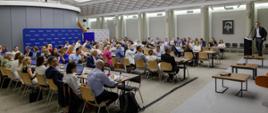
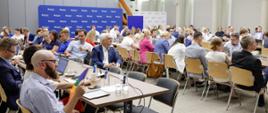
As part of the summary of the activities of the Ministry of Development Funds and Regional Policy, an expert meeting on the future of the cohesion policy and the EU Multiannual Financial Framework after 2027 was held on 3 July at the head office of the MDFRP. The meeting was opened by the Deputy Minister of Development Funds and Regional Policy, Jan Szyszko, and its participants included representatives of public administration, local government and civil society organisations. It also provided inspiration for Poland's preparations for the new challenges of negotiating and shaping the EU budget for 2028-2034.