Poland and Romania join forces in calling for a strong EU cohesion policy
08.04.2026
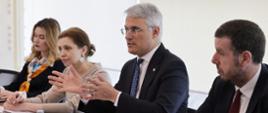
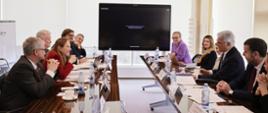
Poland and Romania are in favour of maintaining a strong cohesion policy in the European Union's future financial framework; it plays a key role in ensuring territorial cohesion and the sustainable development of the EU. Such a stance has been presented today in Bucharest by Minister Katarzyna Pełczyńska-Nałęcz and Romania's Minister for Investment and European Projects, Dragoș Pîslaru.

Poland and Romania are actively involved in the work of the informal group of the states - Friends of Cohesion, which brings together 17 EU Member States that are fighting for maintaining the strong position of the cohesion policy within the EU budget.
Poland and Romania are the two largest beneficiaries of the European Union’s cohesion policy. It is very important for our countries that the future financial policy of the EU includes a strong cohesion policy component, just as it has in previous decades
– said Katarzyna Pełczyńska-Nałęcz, the Minister of Development Funds and Regional Policy during a meeting in Bucharest with Dragoș Pîslaru, Romania’s Minister for Investment and European Projects. The Minister is responsible for coordinating the cohesion policy and the NRRP in the Romanian government.
The world is changing, and we are living in difficult times. But we still need European integration, we need cohesion policy, perhaps even more than in the past
- Minister Katarzyna Pełczyńska-Nałęcz emphasised.
The Minister addressed Communication of the European Commission on Eastern border regions adopted in February this year.
It is very important for Poland and Romania that the regions along the EU eastern border receive specific attention and support. Not just from our governments, but from the European Union as a whole
– the head of the MDFRP said.
Friends of Cohesion
Romania has become an active participant in the debate on the future of the cohesion policy and the future MFF. It is the driving force behind strengthening the cooperation within an informal group of countries known as Friends of Cohesion (a meeting of this group accompanied the General Affairs Council meeting in the cohesion policy format in Brussels in February this year), supporting maintaining of the important role of the cohesion policy in the future financial framework of the EU.
Cooperation in this format enables countries to closely coordinate their positions, develop joint solutions for shaping future regulations and gain greater negotiating leverage in the talks with the EU.
For this reason, Poland has invited the Member States to Warsaw to take part in the next meeting of the Friends of Cohesion, scheduled for 22 April this year. The aim is to exchange and coordinate positions so that we can speak with one voice as we enter the crucial stage of negotiations on the legislation concerning the National and Regional Partnership Plans.
Work on the Polish National and Regional Partnership Plan
Minister K. Pełczyńska-Nałęcz has announced that work is currently in progress on the Polish National and Regional Partnership Plan (PPKR), coordinated by the Ministry of Development Funds and Regional Policy. The competent ministries, regions and a wide range of social and economic partners are involved in its preparation.
The preparation of the PPKR is closely linked to the Development Strategy for Poland until 2035, which defines key objectives in the areas of demography, economy and security, supplemented by the strong territorial approach. The reforms and investments contained in the PPKR are expected to be based on the priorities of the SRP 2035.
According to the planned schedule, the PPKR assumptions shall be finalised by June this year. It is planned that the plan will be adopted by the Council of Ministers in mid-2027 and submitted to the European Commission to start the negotiations of the document.
Allocation of funds in the new EU budget
Poland will be the largest beneficiary of the EU budget for 2028-2034. Our country is expected to receive over EUR 123 billion, i.e. approximately half a trillion zlotys.
The new budget will not include separate funds, but it will consist of a single comprehensive pool of resources allocated as part of the investment and reform plan. The assumptions of the PPKR will also include priorities relating to the Common Agricultural Policy, the Common Fisheries Policy, and funds for security, border protection, migration and asylum.