Security, demographics, innovation, technology and the sustainable development of Poland - Poland's priorities in the new EU budget
26.03.2026
Security, demographics and economic development based on innovation, new technologies and sustainable growth of Poland are the development priorities on which Poland's budget is expected to be based in the EU financial framework for 2028-2034. Minister Katarzyna Pełczyńska-Nałęcz has outlined the objectives and challenges involved in planning the future EU budget for our country today in Głuchołazy. She reiterated her opposition to the centralisation of spending and confirmed that, in the next EU budget, 44 per cent of the funds for Poland will be managed at a level of marshal offices, with the involvement of local authorities at various levels.

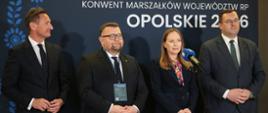
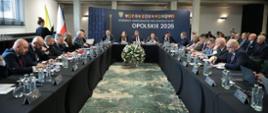
Katarzyna Pełczyńska-Nałęcz, the Minister of Development Funds and Regional Policy attended the first meeting of the Convention of Marshals of the Voivodeships of the Republic of Poland in the Opolskie Voivodeship which took place on 25–27 March this year in Głuchołazy. The meeting at the Convention is a follow-up of the dialogue on the regions’ involvement in the programming of the new financial framework for 2028–2034.
We are expecting a very important discussion on how we will invest huge funds to which we are entitled as a result of our membership of the European Union during the next financial framework for 2028–2034. They amount to approximately half a trillion zlotys. These must be investments targeted at development areas that will ensure Poland’s development and security
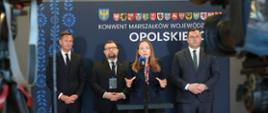
– said Katarzyna Pełczyńska-Nałęcz, the Minister of Development Funds and Regional Policy at a press conference during the Convention in Głuchołazy.
The Minister emphasised that discussions on the future budget would be based on the Development Strategy of Poland until 2035 to be soon adopted by the government. The document was developed by the Ministry of Development Funds and Regional Policy in collaboration with local authorities and ministries.
We put the Development Strategy of Poland until 2035 on the table in Brussels, stating that this time it is Poland that would determine which investment priorities are of key importance. This includes security, demographics, and economic development based on innovation, new technologies and the sustainable development of Poland. So that good jobs are not limited to Warsaw, Gdańsk or Wrocław, but are also available in smaller towns, and so that young people can choose where they want to live and can have decent, well-paid jobs all over Poland
– the minister said.
The head of the MDFRP emphasised that the new budget would not include separate funds, but rather a single, comprehensive pool of resources to be allocated under the National and Regional Partnership Plan (PPKR) for investment and reform. It will also include chapters on each of the 16 voivodeships. She assured that, in the future EU budget, just as in the current one, 44 per cent of cohesion funds would be managed at a level of marshal offices.
The role of local authorities in planning and investment is absolutely crucial. Poland fought against centralisation. There will be sixteen chapters, planned jointly but distinct, since each province has different investment needs within the same priorities
– Minister K. Pełczyńska-Nałęcz explained.
She emphasised that the Common Agricultural Policy (CAP) would also be included within the single funding envelope for Poland.
Rural areas must be linked to investment in towns and cities, so that people living in villages and rural areas have access to the best public services – services which are often provided in nearby towns and cities
– the Minister of Development Funds and Regional Policy said.
The Minister supported the demands of local authorities set out in the statement issued by the Convention of Marshals of the Voivodeships of the Republic of Poland on 3 March this year regarding the role of local authorities in the preparation, negotiation and implementation of the PPKR. The aim is to include 16 regional chapters in the plan, to decentralise 44 per cent of funding at the management level and to ensure that the authorities of voivodeships retain their administrative functions.
EUR 123 billion for Poland in the new EU budget
Under the next financial framework of the European Union, Member States will allocate funds through National and Regional Partnership Plans. According to the European Commission’s proposal, our country shall receive over EUR 123 billion.
The MDFRP is responsible for drafting the PPKR assumptions. Work on the plan has initially focused on identifying the most important objectives and priorities, within which a comprehensive, coherent package of investments and reforms will be developed.
These will include systemic, fundamental reforms that are closely linked to investment. They will be based on the Development Strategy of Poland until 2035 which is currently finalised by the government. They cover four cohesion priorities:
- Poland’s international competitiveness;
- the country’s internal cohesion;
- broadly understood resilience and security;
- development of democracy, protection of values and strengthening of the institutional efficiency of the state.
Work on the PPKR
The assumptions of the PPKR will also include priorities relating to the Common Agricultural Policy, the Common Fisheries Policy, and funds for security, border protection, migration and asylum.
The team supporting the preparation of the National and Regional Partnership Plan for Poland is involved in drawing up the assumptions and subsequently developing the plan. It was established in February this year by the Minister of Development Funds and Regional Policy and its task is to develop the recommendations for the preparation of the PPKR.
It comprises over 80 representatives from ministries, regions, Statistics Poland (GUS), the Joint Commission of the Government and Territorial Self-Government (KWRIST), social and economic partners, non-governmental organisations, as well as the scientific and academic community.
It is planned that the PPKR will be adopted by the Council of Ministers in mid-2027 and submitted to the European Commission to start its negotiations. Given this schedule, this would mean that the implementation of the PPKR would be launched in early 2028.