Breakthrough successes of the Polish presidency in the area of Home Affairs
30.06.2025
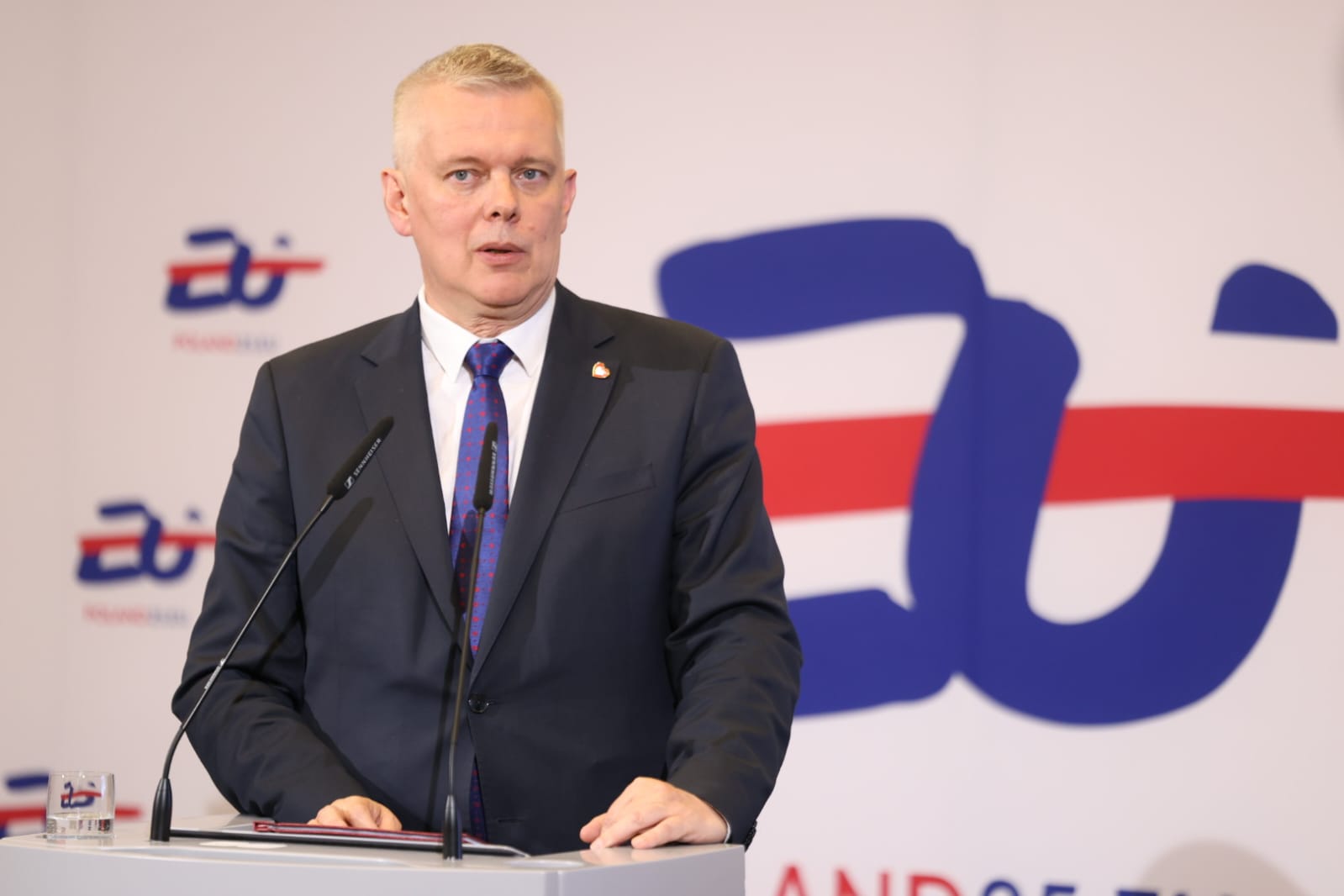
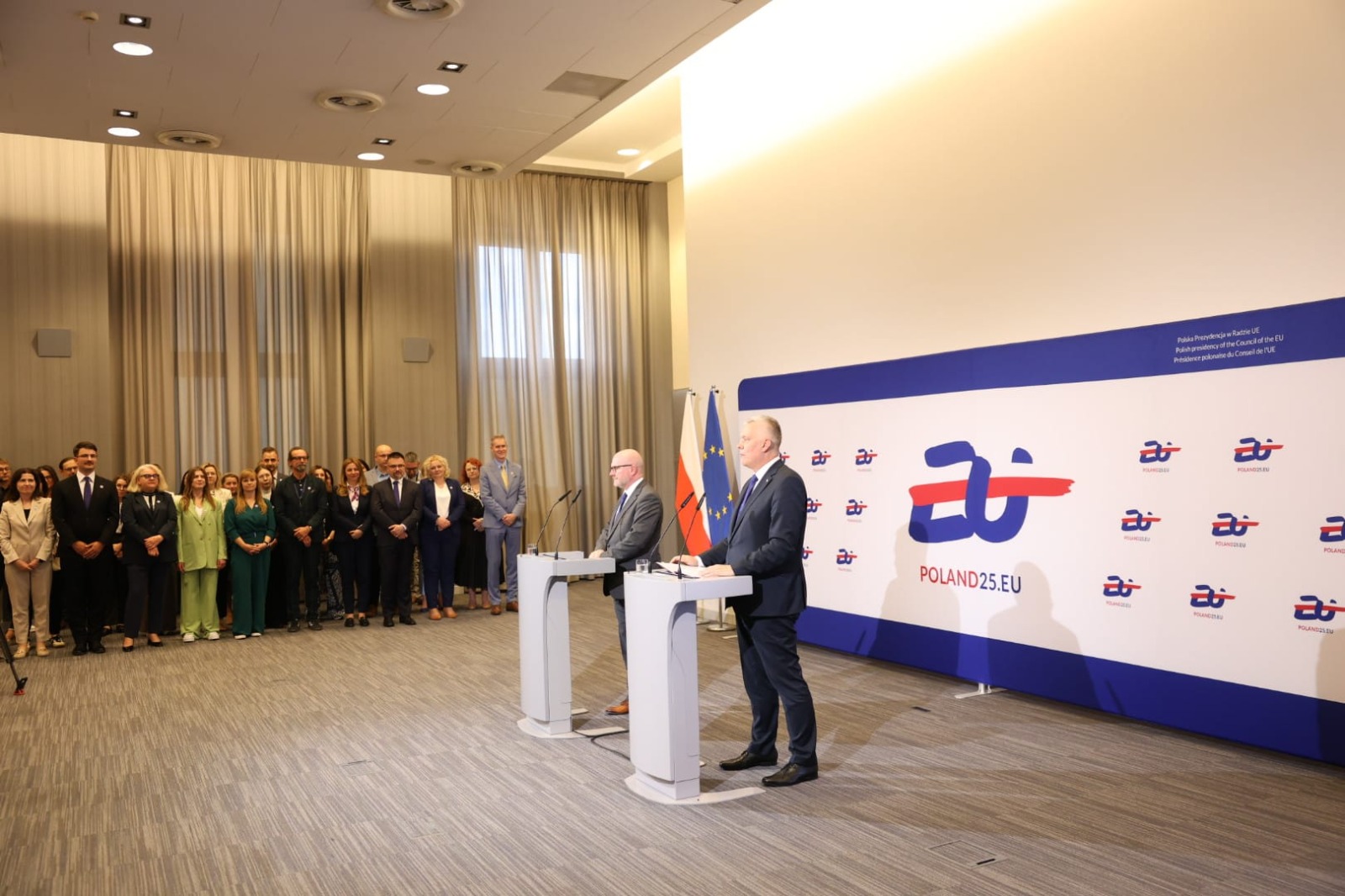
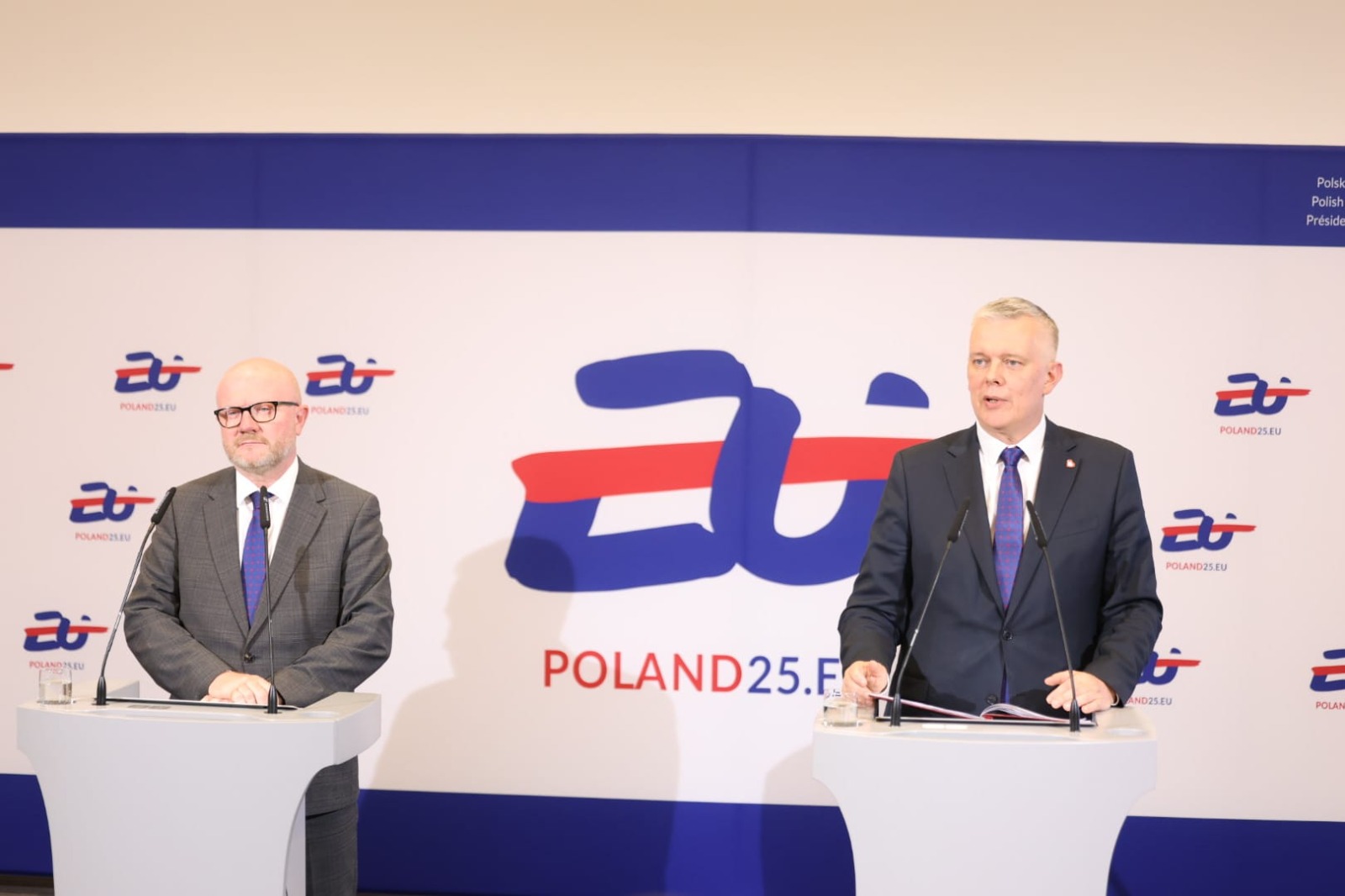
From January to June 2025, Poland held the presidency in the Council of the European Union. It was an opportunity to set the direction and develop the agenda of the European Community. During a press conference held at the Ministry of the Interior and Administration on Monday, 30 June, Minister Tomasz Siemoniak and Deputy Minister Maciej Duszczyk summarised the Ministry's achievements in the past six months. From migration to internal security, the fight against crime, and civil protection, progress has been made in each of the stated priorities. There can only be one conclusion - this has been a successful presidency!

Six months of the Polish presidency in the Ministry of Interior and Administration
The Ministry of the Interior and administration has identified three key pillars of action for the Polish presidency. Each of these areas saw significant progress, and some key assumptions are now included in the European Union workflows and processes. These include JHA Council talks, summits with non-European states, along with meetings with experts and senior officials.
Together, we took part in all the summits, councils, committees, and teams that worked hard throughout these six months. It was an enormous effort,
said Minister Tomasz Siemoniak.
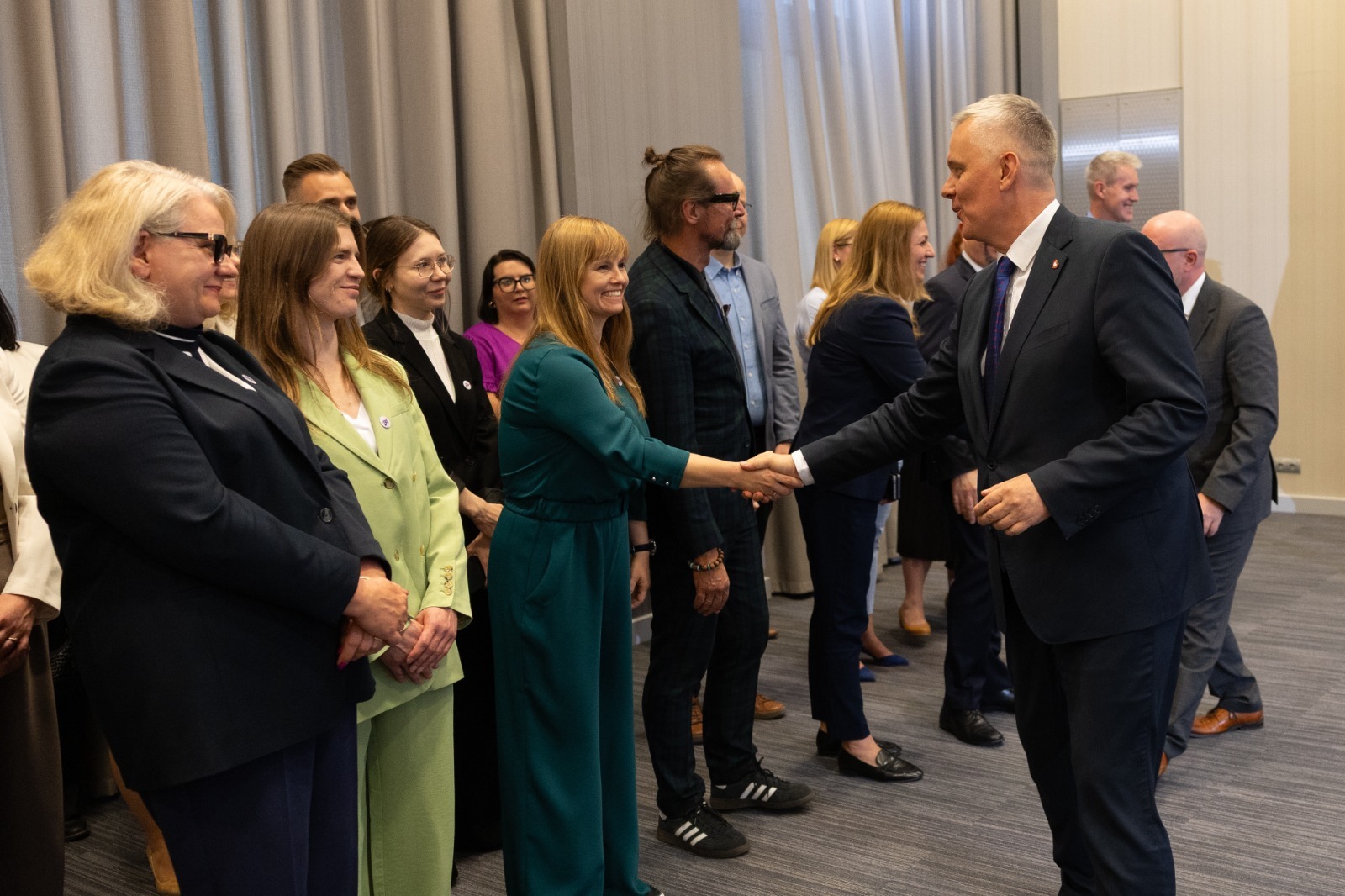
He also highlighted the contributions of the Ministry staff, who were involved in the presidency.
I would like to express my sincere gratitude to the entire team of the Ministry of the Interior and Administration, who were involved in the presidency work. We have been working hard over the past several months, carrying out plenty of projects during that time,
the Minister of the Interior and Administration pointed out.
The presidency saw more than 30 official and ministerial meetings concerning key issues and formats of cooperation in the area of home affairs.
Better migration management and the fight against human trafficking
Poland is proud of its presidency in the Council of the European Union over the past six months - we have set the pace and direction of work concerning European security. This bolsters our international standing and enables us to promote our perspective.
The fight against irregular migration within the European Union as a whole, remains one of the key topics, which is addressed by the governments of the Member States and the European Commission,
said Minister Tomasz Siemoniak.
We have changed the European Union's approach to migration management. We shifted the priorities and focused on protecting external borders, highlighting the need to implement an effective return policy based on deportations and voluntary returns.
Over the past six months, we have managed to get the European Commission to quickly develop a new approach to return policy. They recognised that Europe will never regain full control of the migration process if the return policy is as ineffective as it has been to date. We managed to do this in March,
Deputy Minister Maciej Duszczyk explained.
With a better return policy, people who do not have the right to legal residence in the European Union will be deported or asked to voluntarily return to their home countries. The Polish presidency also sparked a debate on the possibility of establishing return centres outside the European Union and on the development of the concept of a list of so-called safe third countries. It is also an opportunity for EU states to respond to the weaponisation of migration as a threat to internal security.
Today, the European Union speaks with one voice, saying that securing the external border is absolutely crucial in order to avoid all kinds of tensions within the European Union as a whole,
Deputy Minister Maciej Duszczyk pointed out.
International cooperation for internal security
Combating against international crime, with particular focus on trafficking people, arms and drugs, was another priority of the Polish presidency in the area of home affairs.
Many things have happened in this area, especially when it comes to police cooperation. We hosted a meeting in Brussels with the ministers of the interior of South and Central American states, where we discussed combating drug trafficking and drug cartels,
Minister Tomasz Siemoniak pointed out.
The meeting resulted in the adoption of a joint declaration of the EU and Latin American Ministers of the Interior and the Latin American Committee on Internal Security (CLASI) for 2025 and an action plan on operational cooperation priorities for 2025-2026.
As part of the efforts to bolster internal security, a brand-new European Internal Security Strategy was drafted during the Polish presidency.
Deputy Minister Maciej Duszczyk also highlighted the importance of the EU-US ministerial summit held by Poland in Warsaw.
The conclusions of this summit demonstrate the unity between the European Union and the United States in the fight against terrorism. The issues of combating illegal migration, data exchange, visa policy - the EU-US summit covered these areas as well,
Deputy Minister Maciej Duszczyk pointed out.
The Deputy Minister of the Interior and Administration pointed out that the EU-US summit in Warsaw was the first major summit attended by the new US administration.
We also managed to successfully convince our American partners to continue these talks to ensure better cooperation between the European Union and the United States,
Deputy Minister Maciej Duszczyk noted.
Civil protection and civil defence - a new item on the EU agenda
Civil protection and civil defence were among the key priorities of the Polish presidency. Poland has introduced the issue of civil protection and civil defence to the European Union's agenda in order to ensure better coordination of activities in this area, mainly in the context of hybrid threats from Russia. Minister Tomasz Siemoniak pointed out that this was a major Polish contribution, since these topics had not been addressed within the European Union to date. Thanks to Poland, the EU Civil Protection Strategy was adopted.
We have engaged all three Commissioners concerned with these issues, including the Security Commissioner, to ensure proper recognition of this matter at the EU level. This coincides with our government’s efforts aimed at transferring part of the European funds to the Security and Defence Fund,
Minister Tomasz Siemoniak stated.
This is already happening, the process is ongoing and proves that we do more than just talking - we are doing specific things with concrete funding,
he added.