Poland's borders under control - the Entry/Exit system is operational at all border crossings in Poland
10.04.2026
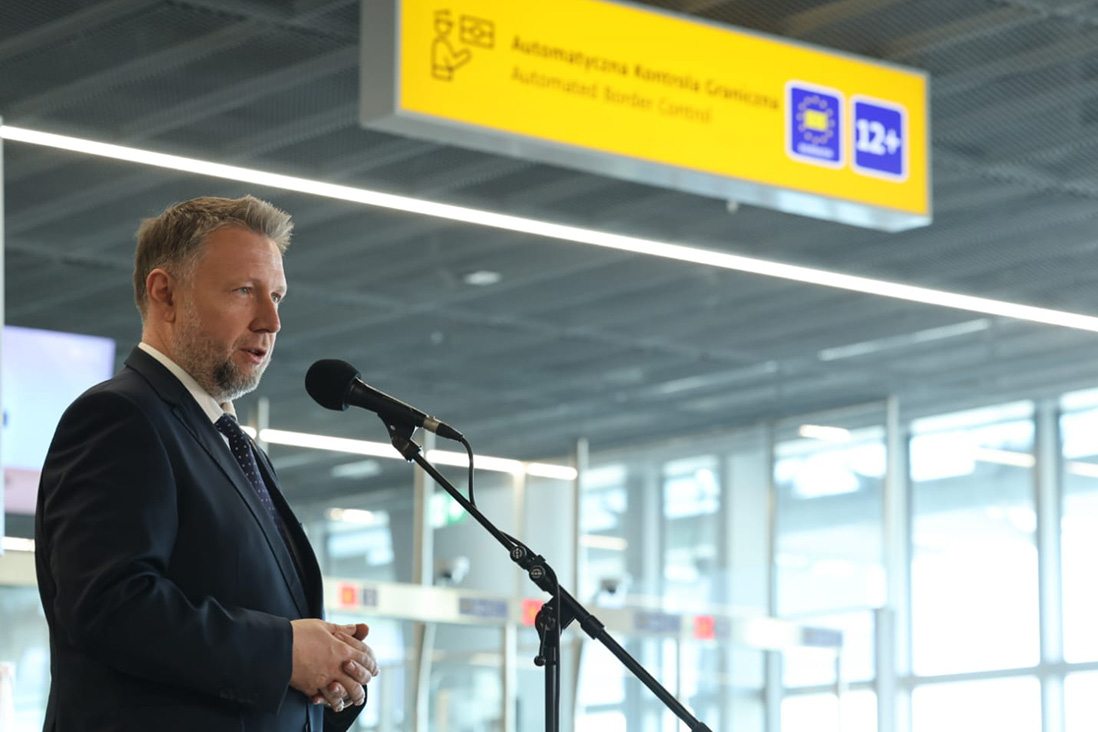
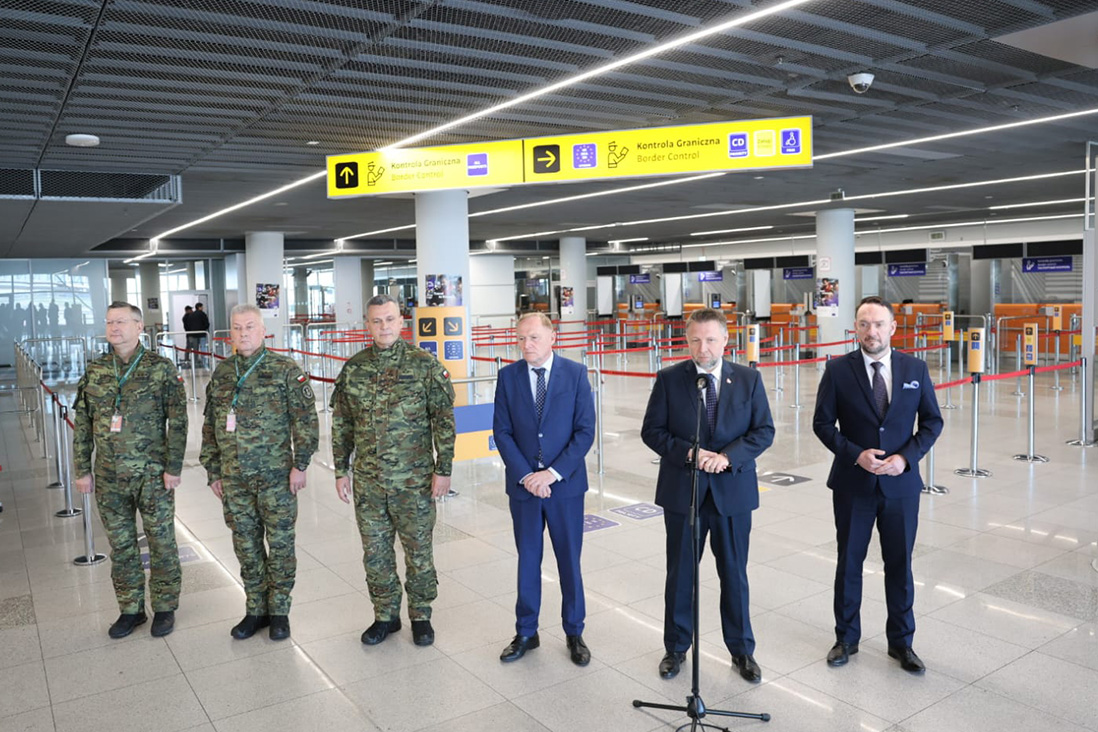
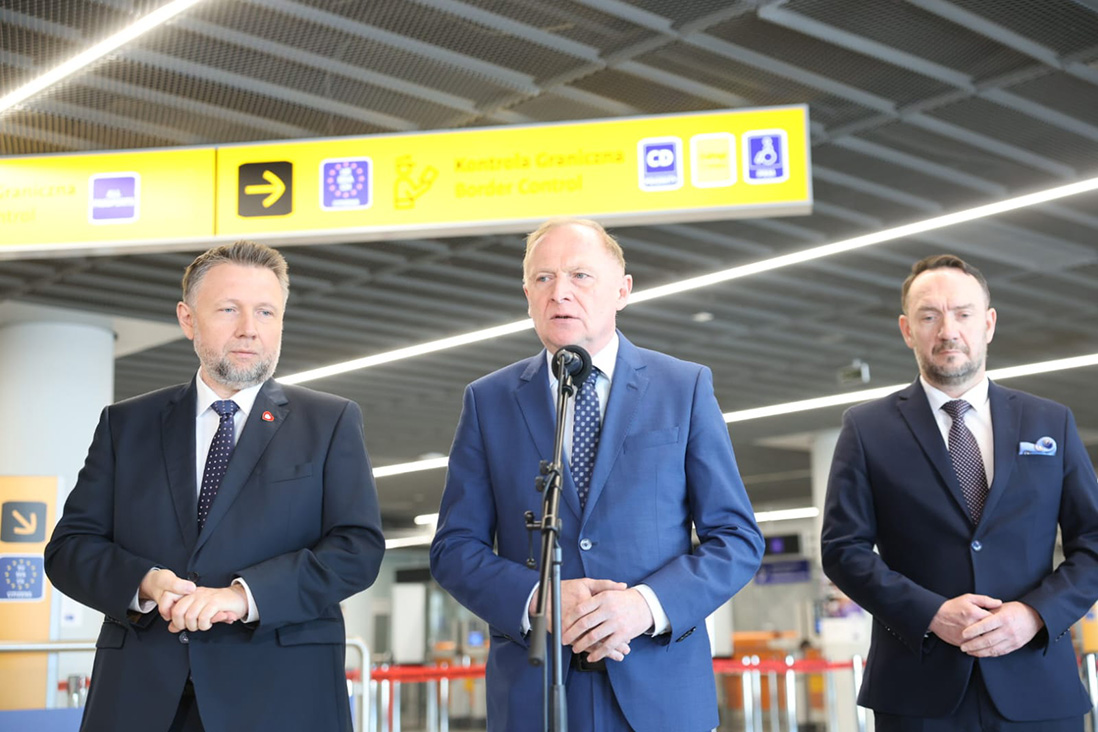
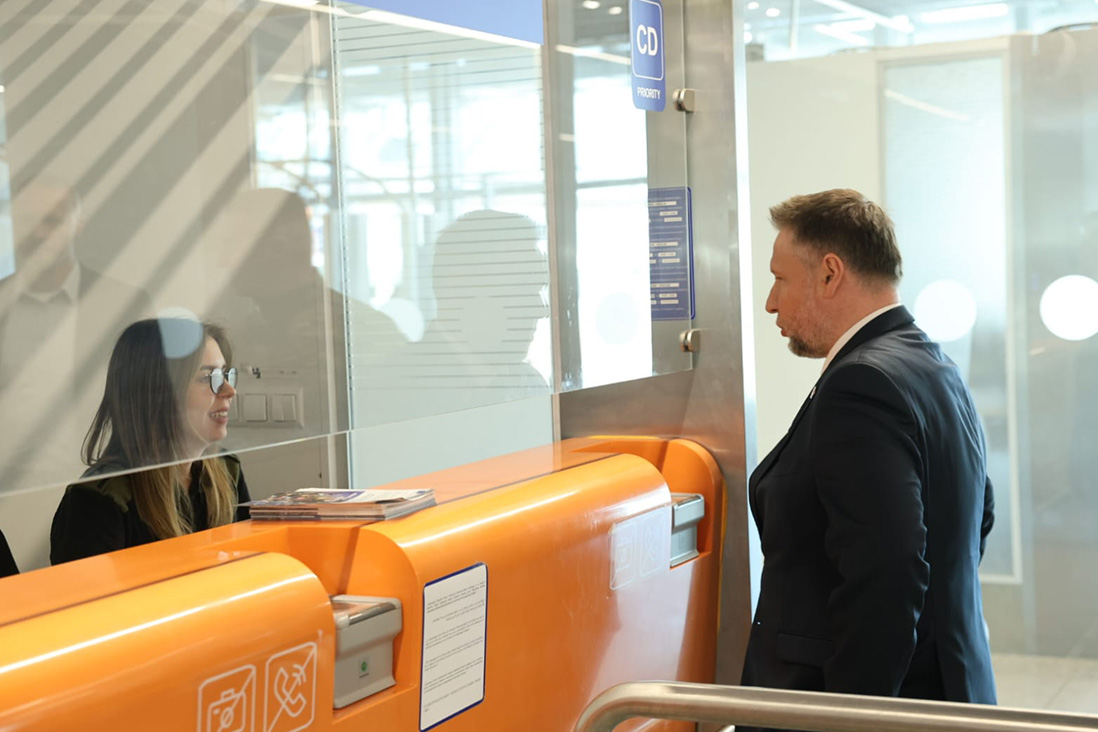
The Border Guard has prevented 6,500 non-EU nationals from entering Poland, thanks to the modern Entry/Exit System (EES). The system for digitally registering only third-country nationals travelling to the Schengen Area is now operational at all 71 road, rail, air and sea border crossings in Poland. Marcin Kierwiński, Minister of Interior and Administration, together with Deputy Ministers Czesław Mroczek and Tomasz Szymański, confirmed at the Warsaw Chopin Airport that the new type of security check is now fully operational. Since 12 October 2025, that is, since the EES was first launched, the Border Guard has created over 2 million biometric profiles of foreign nationals - including their fingerprints and facial images.

The most recent location where the entry and exit system was implemented was the Kraków-Balice Airport. This is a further step by the government towards tightening border controls and enhancing the safety of Polish citizens.
Securing the external borders is a priority for Prime Minister Donald Tusk’s government. We have expanded the infrastructure along the Polish-Belarusian border and commissioned state-of-the-art drone monitoring and detection systems. Today, thanks to the Entry/Exit system, we are creating tight and impenetrable borders for people who are not authorised to enter or who may pose a threat. This is a huge step towards securing our borders. This is a huge undertaking by the Border Guard and the Department of Information and Communication Technology at the Ministry of Interior and Administration,
- said Marcin Kierwiński, Head of the Ministry of Interior and Administration, during a press conference at the Warsaw Chopin Airport.
The system applies only to non-EU nationals. The EES identifies those who attempt to enter Poland in breach of the regulations, but also those who abuse the hospitality of Poland and other European Union countries. The system will send an alert regarding any person who exceeds the 90-day stay limit within the Community, as permitted by the regulations, during a total period of 180 days’ stay.
Modern technologies are the future of secure borders
Thanks to the EES system being in place, the Border Guard prevented 6,500 foreign nationals from entering Poland. Most of them had previously exceeded the 90-day limit for staying in the EU and were not permitted to re-enter the European Union; a significant proportion of the foreign nationals did not have documentation justifying the purpose and conditions of their stay, sufficient means of support, or a valid visa, residence permit or travel document. Among those refused entry were individuals who posed a threat to public order or internal security, who had previously been refused entry to the EU, or who were in possession of forged residence or travel documents.
Data from the period from October 2025 to April 2026 confirm the effectiveness of the solution that has been implemented. Since the system was first rolled out, 5.6 million entries and exits have already been recorded at Poland’s borders – an average of 31,000 operations a day.
The system, which covers all 71 border crossings, is now operational, and the Border Guard’s database has been expanded to include over 2 million biometric profiles. We have full control over who enters the European Union. This is a real struggle for security, in which Poland plays a key role. But we are taking it a step further. The next stage will be the roll-out of further systems that will enable real-time data checks across the entire Schengen area. We will know everything about people trying to enter Europe from outside. Modern technologies are the future of secure borders,
- said Deputy Minister Tomasz Szymański
At the Chopin Airport alone, 210,000 non-Schengen foreign nationals were registered and over 350 entry refusals were issued. Thanks to the system, a Georgian national wanted under a European Arrest Warrant, who had been using false details, was among those apprehended. Another example was the arrest of a Moldovan national who attempted to enter Poland under a false name in order to circumvent a ban on entry to the Schengen Area imposed by the Dutch authorities. Border Guard officers uncovered the deception using the Entry/Exit system.
No more stamps in passports – it’s time for biometrics
The introduction of the Entry/Exit system is a revolution in border control. The traditional, manual checking of stamps in passports is being replaced by an automatic stay counter and advanced biometric verification (fingerprints, facial image). The system detects, in real time, individuals who have exceeded the permitted length of stay (90 days) or who are attempting to enter the Schengen Area using a false identity.
The new Entry/Exit control system is a solution that significantly speeds up border checks and enhances our security. The European Commission has called on Member States to speed up their work, singling out Poland as a country that is efficiently fulfilling its obligations. Today, I am pleased to announce that Poland is among the countries that have fully implemented this system,
- said Deputy Minister Czesław Mroczek.
From years of delays to a leading position
As recently as three years ago, Poland was singled out as a country lagging significantly behind in the implementation of new border security and control systems, which threatened the implementation of the entire EU project. Brussels adopted an EU directive requiring the implementation of an entry and exit system in 2017.
We have made up for years of neglect and delays. Previously, Poland had been marked with a red symbol as a country posing a real threat to the project for the entire EU. We have carried out the most important work over the last two years. We have introduced legislation, implemented ICT solutions and trained officers. From a country that caused problems under previous governments, we have become a role model. We are leading this project; we were the first to introduce it at road and rail crossings,
- said Minister Marcin Kierwiński.
he Border Guard launched the Entry/Exit system on 12 October 2025 at the Medyka-Szeginie road border crossing and the Przemyśl-Mościska rail border crossing.