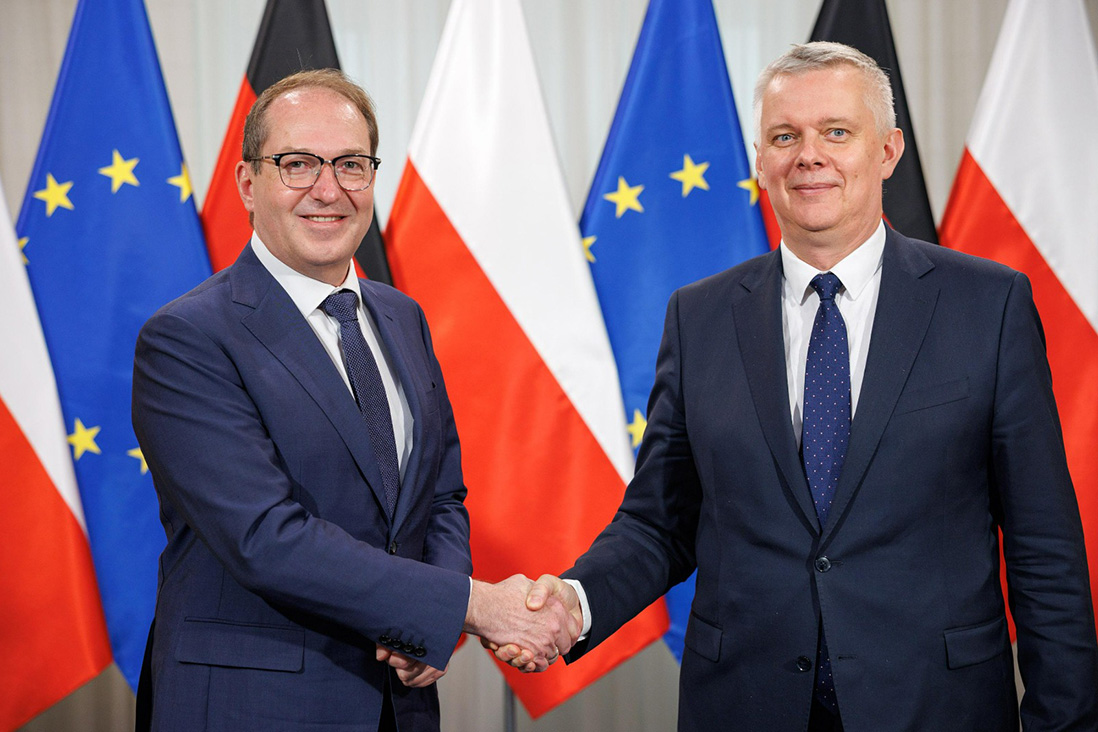
Statement after the meeting of Polish and German Interior Ministers: Tomasz Siemoniak and Alexander Dobrindt
09.06.2025

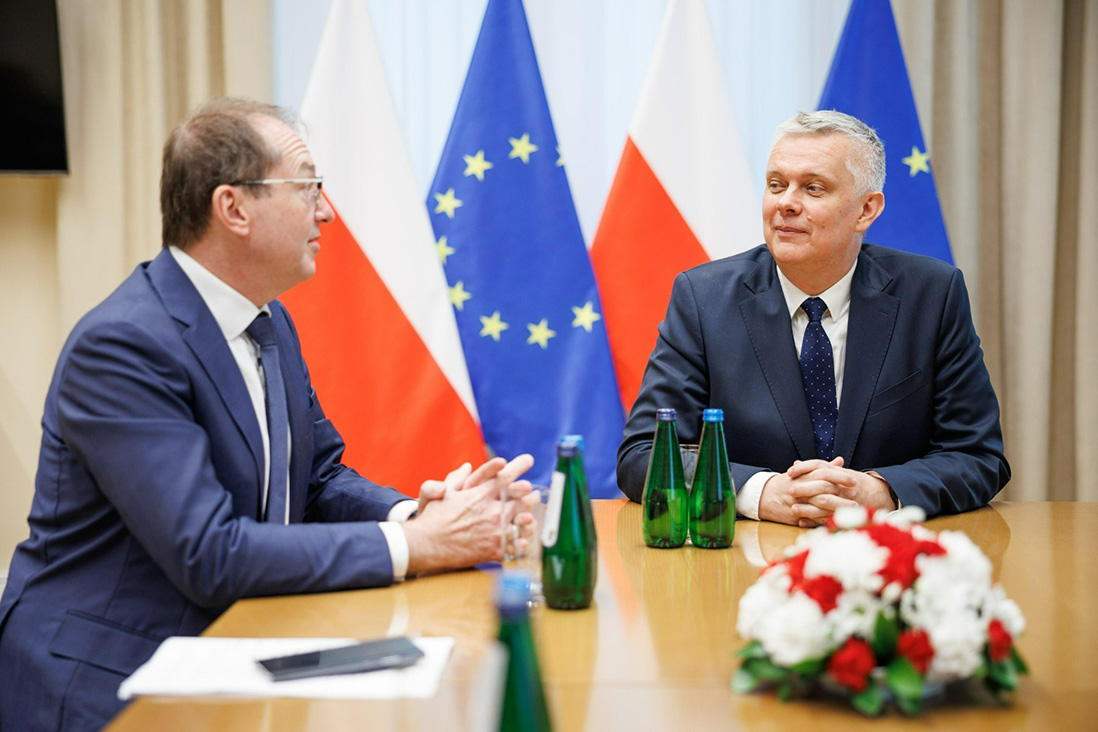
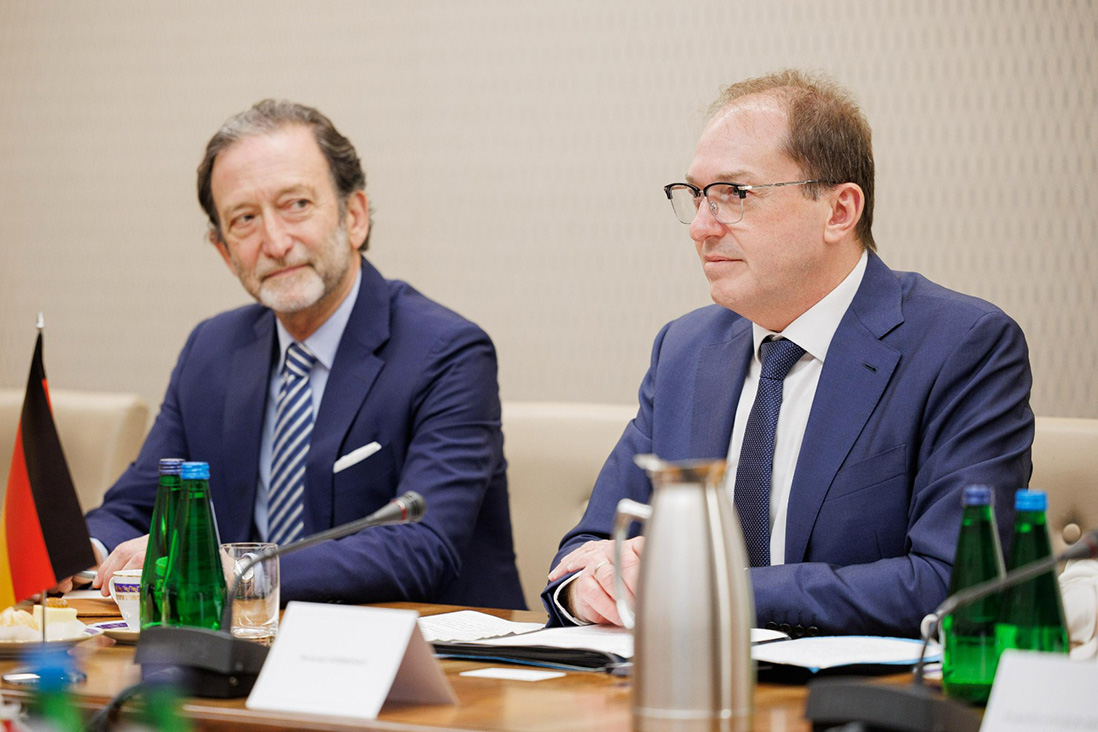
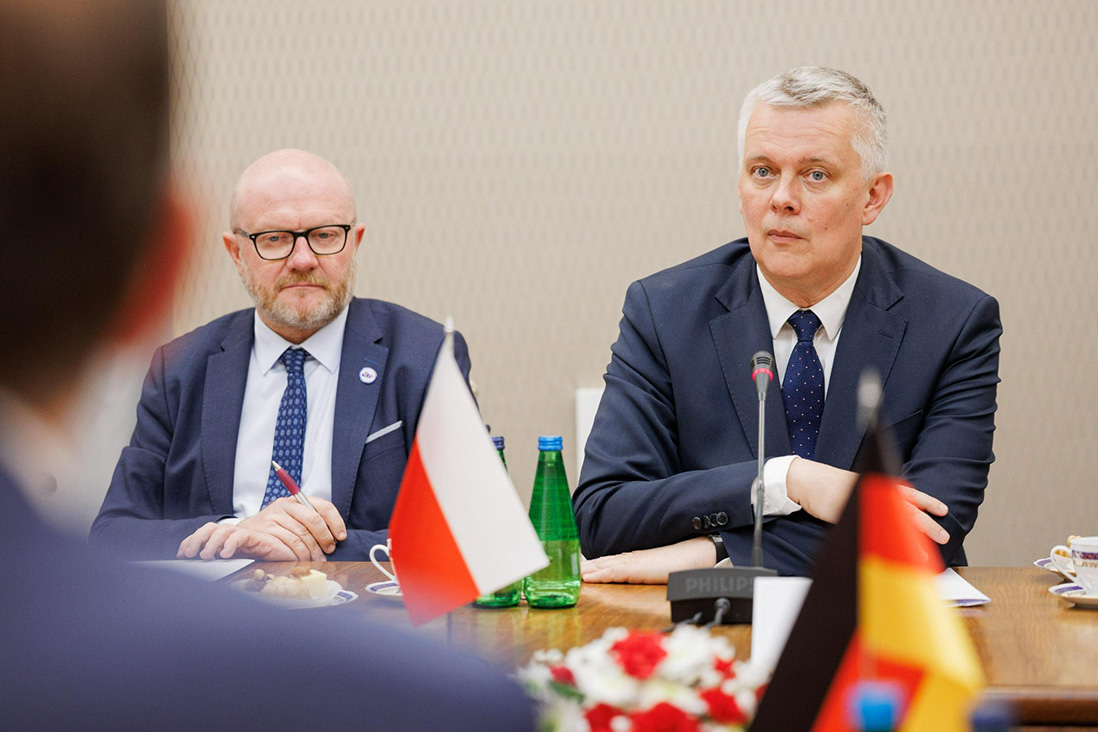
On 9 June, a meeting was held in Warsaw between the Minister of Interior and Administration Tomasz Siemoniak and the Minister of Interior of Germany Alexander Dobrindt. During the meeting, the results of cooperation so far were discussed in terms of preventing illegal migration, temporary protection for war refugees from Ukraine, preventing and combating crime and terrorist threats. The meeting was also an opportunity to discuss the issues that will be tackled during the upcoming EU Justice and Home Affairs Council. The principles of cooperation for the following months were also planned.
Minister of the Interior and Administration, coordinator of special services Tomasz Siemoniak:
Protecting the external borders of the European Union and countering illegal migration are common security priorities for Germany and Poland. We will decisively strengthen our actions to respond effectively to the threats of smuggling and human trafficking. Only together can we meet the challenges posed by the world today. We discussed how to lead to a situation in which traffic on our German-Polish border would once again flow freely.
Federal Minister of the Interior Alexander Dobrindt:
Germany and Poland have been working closely together on many levels for years, including in migration policy. Poland is doing an extraordinary amount at its external border in the fight against irregular migration and for the security of Europe. I am very grateful for this commitment. We agree that we need a resolute migration policy course in Europe. Only together can we continue to stem irregular migration to Europe.
Ministers stressed the need to step up efforts to protect the European Union's external borders and to counter illegal migration. They also agreed that migrants are currently being used in a hybrid war triggered by Russia and Belarus. It is therefore legitimate for countries exposed to migratory pressure to take extraordinary instruments to prevent the destabilisation of asylum and social systems.
Emphasising the value of the effective functioning of the Schengen Area, the Ministers pledged to cooperate on minimizing the impact of the temporary border controls between Germany and Poland, especially for local communities and the transportation of goods. They agreed that the ultimate goal is to restore a situation in which border traffic is completely free.
Ministers also discussed new and innovative solutions of migration policy implemented at EU level, which amend and complement the hitherto proposed principles of EU asylum and migration policy reform. In particular, a new approach to forced and voluntary returns to countries of origin of foreigners whose stay in the EU is illegal was discussed. The creation of so-called “return hubs”, which would be established outside the EU, and the concept of safe third countries were also addressed. One further instrument whose adoption and implementation will have a positive effect are sanctions on airlines involved in the transport of irregular migrants.
Regarding the situation of war refugees from Ukraine in Poland and Germany, Ministers expressed the expectation of more support from the EU budget than so far. Additional efforts are needed to make refugees independent of support from the social system. Poland and Germany are the countries hosting the largest number of war refugees, including those under temporary protection.
It was also agreed to deepen cooperation in the exchange of information aimed at identifying and preventing acts of sabotage targeting the critical infrastructure of both countries. Very often acts of sabotage have the hallmarks of terrorist activities and therefore require an appropriate response.
Ministers also stressed the importance of strengthening Europol in the context of combating organised crime related to human trafficking and migrant smuggling, pointing to the need to increase the resources and competences of this agency.