A healthy lifestyle in rural areas?
08.05.2025
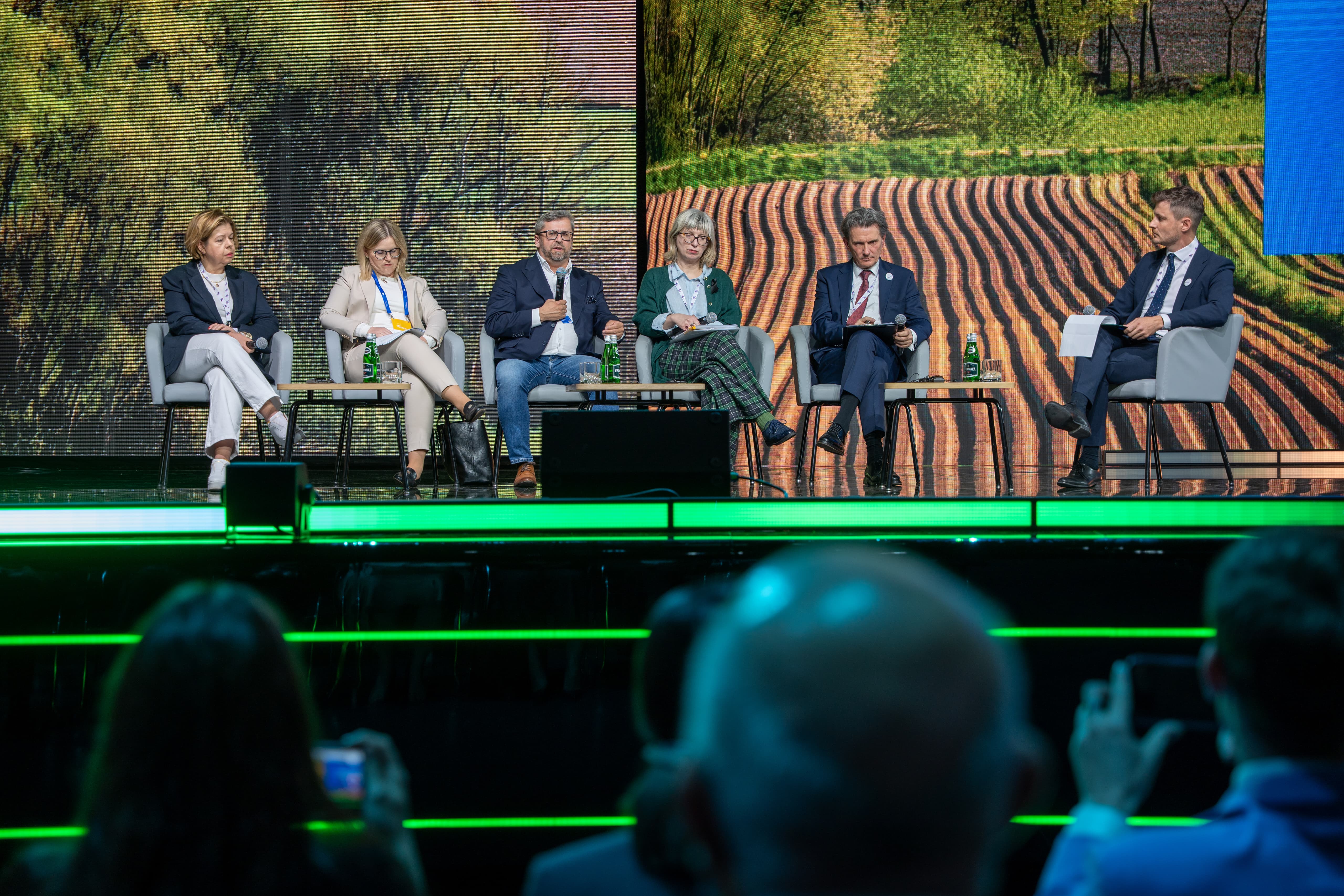
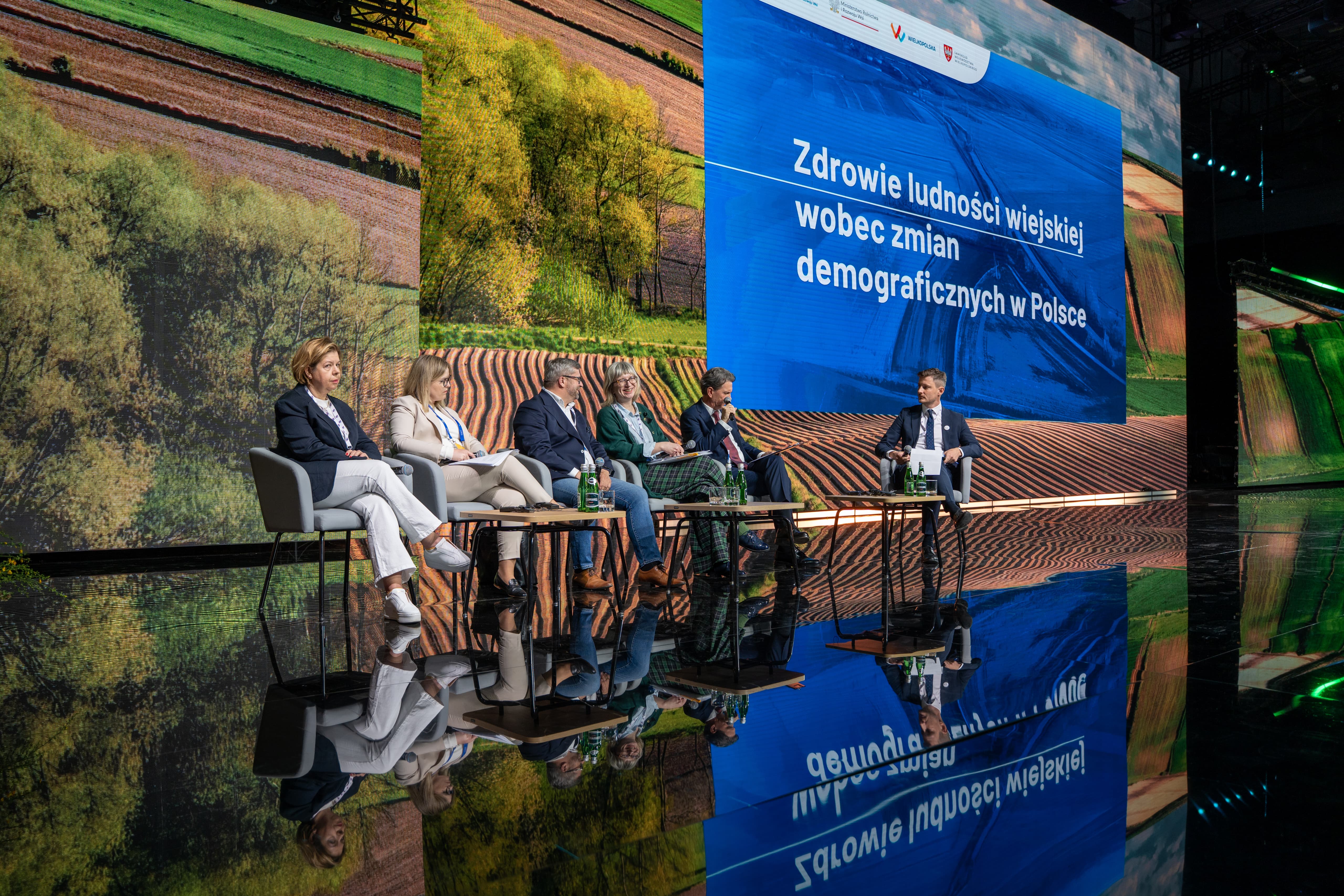
Access to specialists and diagnostic facilities in primary healthcare centres in rural areas, as well as demographic changes and cultural habits in the field of preventive healthcare among rural residents, were the topics of the panel discussion entitled "The health of the rural population in the face of demographic changes in Poland", led by Tomasz Pilawka, director of the office of the Management Board of the Farmers' Social Insurance Contribution Fund.

Poland is the fastest ageing country in the European Union. This worrying trend requires rapid changes to bring national health policy in line with demographic changes. In Poland, the birth rate has already fallen by 10 per cent. Moreover, both in Poland and in Europe, we are seeing ageing of rural population, as well as depopulation of rural areas.
As pointed out by the panel participants: dr hab. Sylwia Michalska, professor at the Institute of Rural Development and Agriculture of the Polish Academy of Sciences; dr hab. Wojciech Knieć, professor at the Nicolaus Copernicus University in Toruń, head of the Department of Social Ecology; Dariusz Rohde, president of the Agricultural Social Insurance Fund; Anna Majda, chairwoman of the Health and Public Safety Committee of the Wielkopolska Provincial Assembly; and prof. dr hab. Judyta Cielecka-Piontek, head of the Department of Pharmacology and Phytochemistry at the Institute of Natural Fibres and Medicinal Plants – National Research Institute – in the minds of city dwellers life in the countryside is still ‘attractive’, but verification of this trend in rural realities is increasingly discouraging to young people, who do not want to build their family and professional future in the countryside.
"Unfortunately, we do not have any studies that would show the current health situation of rural residents. A quarter of the village population is over 65, and almost half of those living in rural areas do not undergo preventive medical examinations. The challenge we face is to raise the awareness of preventive healthcare among the population of rural areas and villages. To this end, we are conducting numerous information campaigns, but this is an area that also requires more fundamental changes – primarily legislative changes."
Cultural baggage
Panel participants confirmed the strong reluctance of rural residents to make use of medical care and participate in preventive programmes, as well as the tendency to seek medical help only as a last resort. Such behaviour stems largely from inherited family and cultural patterns. For older generations living in rural areas, concern for physical and mental health is still a source of shame and a sign of weakness.
"Farmers are a professional group that makes the least use of specialist medical assistance and long-term care. Especially among the older generation of farmers working on the land, a healthy lifestyle and recreational sports activities are not values that are placed at the forefront. A farmer must be tough, it is still believed, and health problems are seen as an admission of weakness. This is the result of a certain rural culture shaped by many generations. It is a generational problem. Fortunately, we are seeing a generational shift in attitudes towards healthcare – young people living in rural areas are more aware of the importance of taking care of their health. We won't solve these problems overnight, but we can see the light at the end of the tunnel.
"Access to healthcare – both public and private – is more difficult for rural residents than for urban residents. Furthermore, the depopulation of rural areas leads to the decline of certain services. Clinics are disappearing, pharmacies are shutting down, and there are fewer and fewer healthcare workers willing to work in rural areas. The challenge in these areas is to modernise and introduce innovations into the healthcare system that take into account the difficult nature of rural areas and the characteristics of their inhabitants."
"I work in the countryside, I come from the countryside, I work in my home region. Patients from rural areas are unique. They expect immediate results from treatment as they are always busy with their work on the farm. At the same time, farmers do not seem to come to the doctor with trivial matters, but almost ‘on their last legs’. It is our duty as doctors to work on changing that attitude, primarily through education – preferably grassroots education, starting at an early age, if possible in direct contact with patients and through campaigns aimed directly at specific individuals, e.g. by sending text messages informing about preventive examinations."
Health from nature
The panel on health, organised as part of the European Congress on Renewal and Rural Development, could not fail to include topics related to the role of healthy food, the healing power of plants and herbs, and the effectiveness of natural medicine, which has been cultivated among rural residents for generations.
"Agricultural policy guidelines refer to the quality of food provided by farmers. Harnessing the potential of nature and high-quality food is our task for the future. Food and plants can be a solution to some health problems. And it is precisely the inhabitants of rural areas who are closest to nature. Such shift, however, requires knowledge and, consequently, education in this area. We have enormous resources at our disposal and we should learn how to use them."
Physical activity of rural residents
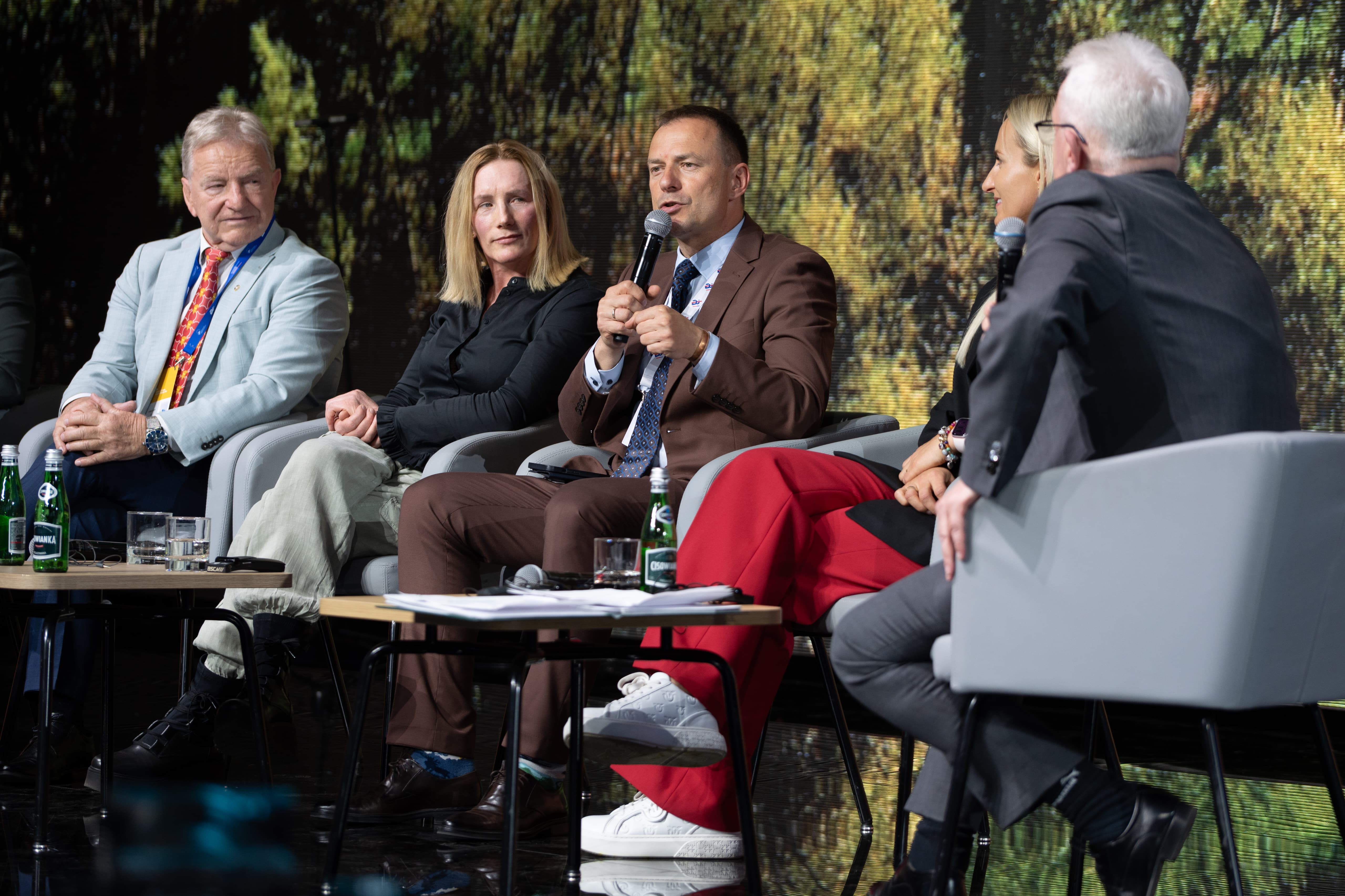
The health-related topics were complemented and the first day of the European Congress on Rural Renewal and Development was concluded with a panel discussion entitled ‘Physical activity, rural tourism, athletes – Presentations of Olympians’, attended by: Piotr Borys, Deputy Minister of Sport and Tourism; Andrzej Supron, Olympic silver medallist; Monika Michalik and Natalia Madej-Smolińska, Olympic rowing champions from Rio de Janeiro; Konrad Gwóźdź, Vice-President of the Provincial Association of LZS in Łódź, and Krzysztof Piasek, Vice-President of the National Association of Local Sports Teams.
The role of education and activation
Olympic champions Monika Michalik, Natalia Madej-Smolińska and Andrzej Supron emphasised the key role of education for children and young people in maintaining good health. Smart, conscious activation from an early age not only helps to consolidate healthy habits, but also allows new sporting talents to be identified. Teachers and coaches working in rural areas play an extremely important role in this process; their commitment and passion inspire young people, and access to sports activities organised in villages is often a strong motivator for young people's future interests.
"Physical activity is very important for improving both our physical and mental health. Recreational sports activities can be a matter of life and death in terms of life expectancy and quality of life. We must build this awareness among Poles from an early age. We are currently starting work on a new strategy for Polish sport. We are committed to this and are working to remodel the Polish sports system and improve its quality. Today, we are aiming high, and our goal is to host the Olympics in Warsaw in 2040."
"Sport is not just about results, it's primarily about people and exchanging experiences. Our task is to educate about sport. We want rural sports fields to be bustling with life. This is a challenge for the entire government, one that requires extensive action. A good example is the Active Village programme, which combines programmes aimed at mobilising rural residents."
Panel participants:
- dr hab. Sylwia Michalska, professor at the Institute of Rural Development and Agriculture of the Polish Academy of Sciences;
- dr hab. Wojciech Knieć, professor at the Nicolaus Copernicus University in Toruń, head of the Department of Social Ecology,
- president of the Agricultural Social Insurance Fund, Dariusz Rohde,
- Anna Majda, chairwoman of the Health and Public Safety Committee of the Wielkopolska Provincial Assembly, and
- prof. dr hab. Judyta Cielecka-Piontek, head of the Department of Pharmacology and Phytochemistry at the Institute of Natural Fibres and Medicinal Plants – National Research Institute.