Friends of Industry call for a stronger European economy to ensure Europe's security
27.10.2026
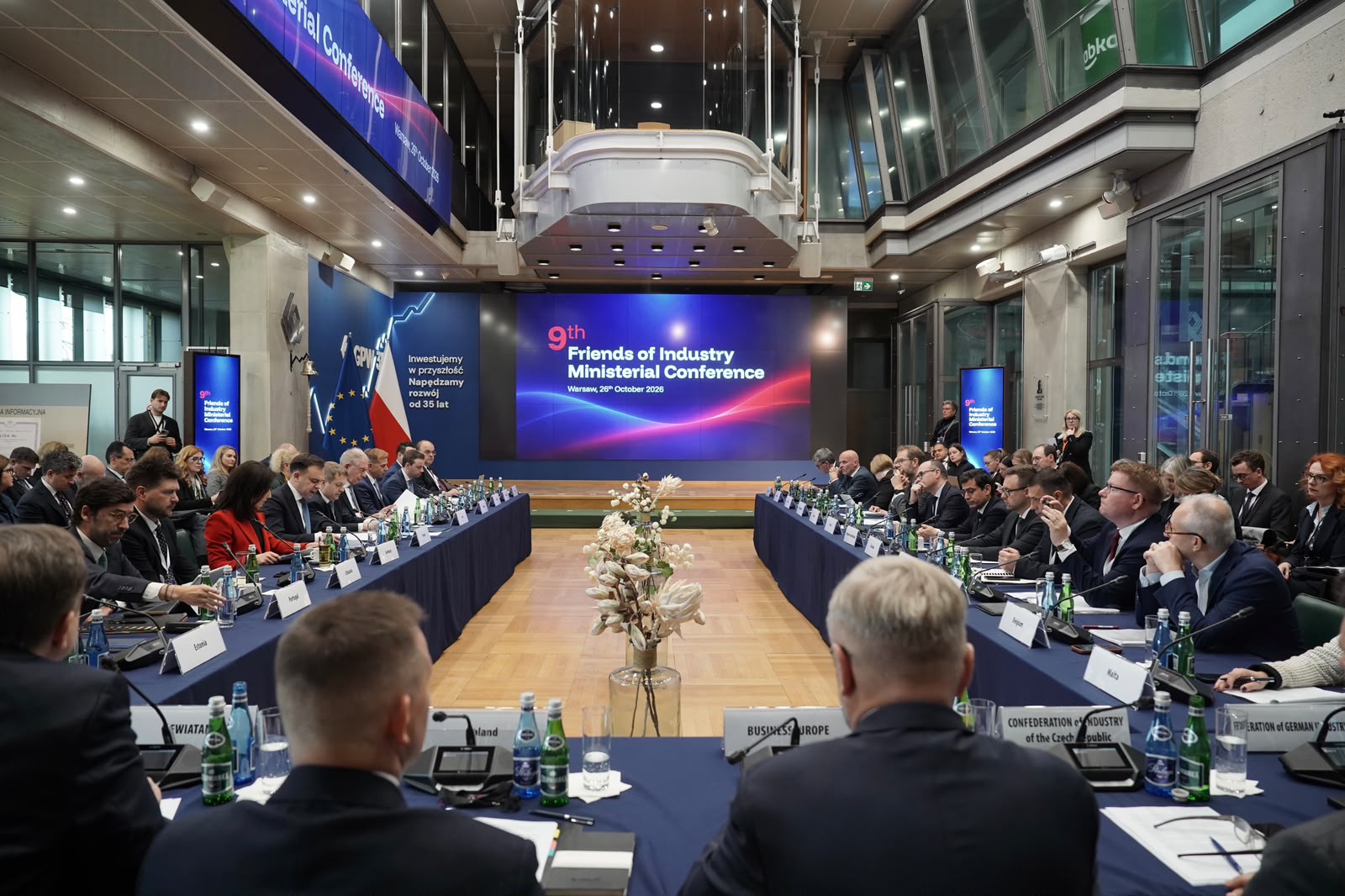
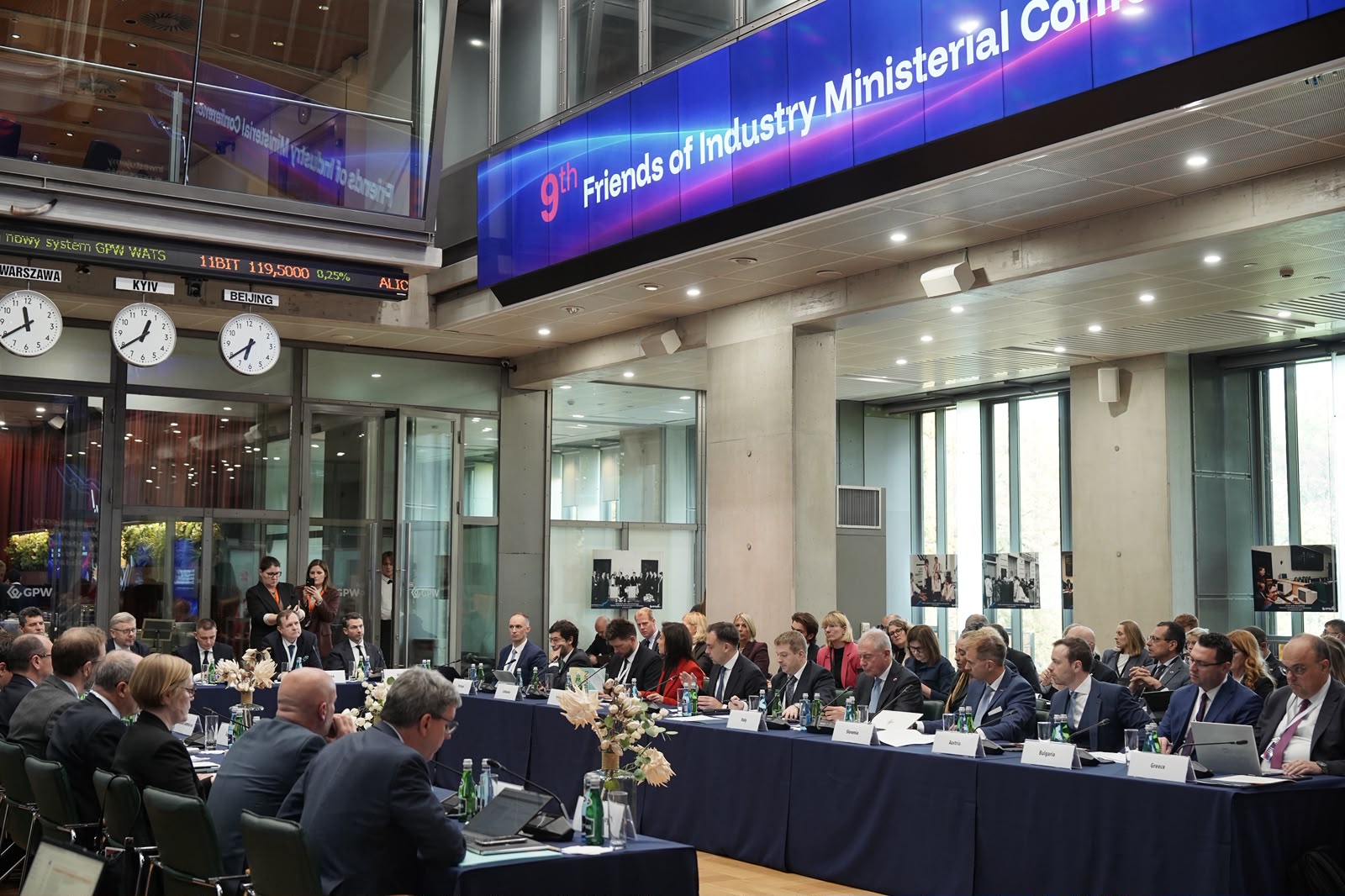
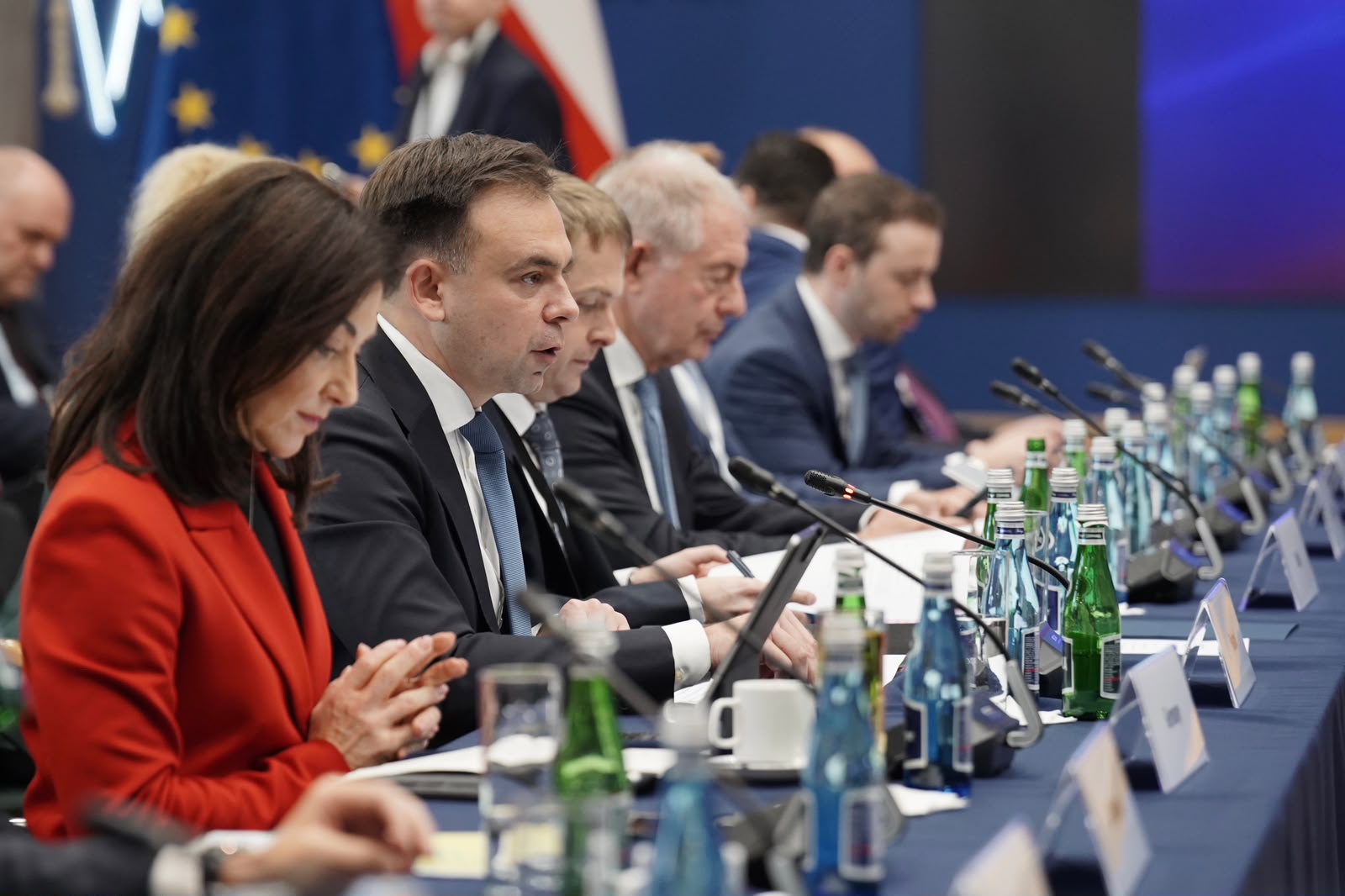
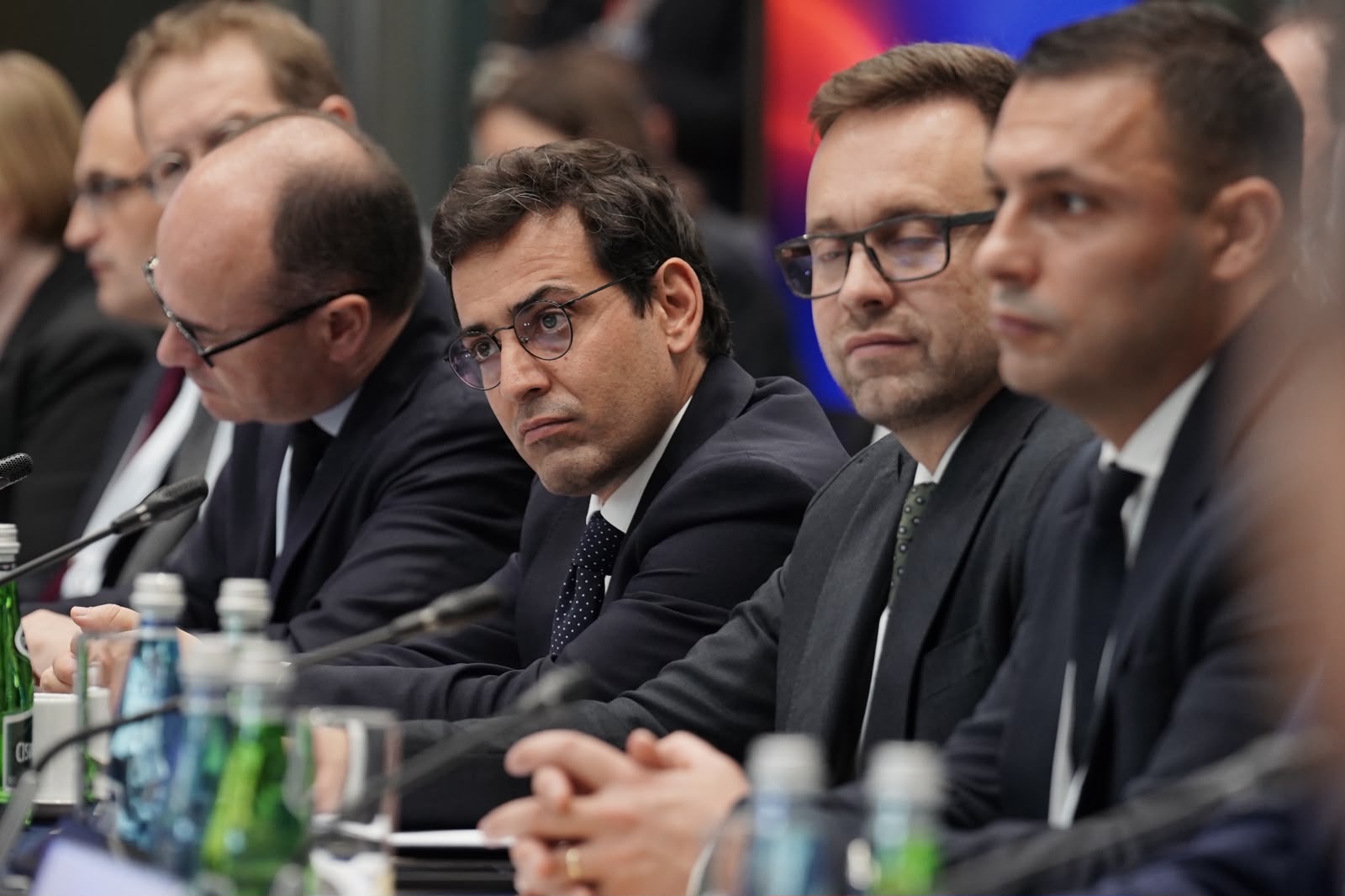
Yesterday Minister Andrzej Domański chaired the 9th Friends of Industry Ministerial Conference. Representatives of 21 EU Member States attended, alongside European Commission Vice-President Stéphane Séjourné. The discussions focused on safeguarding and strengthening the competitiveness of European industry and economic security in the face of geopolitical challenges.

The aim of the 9th Friends of Industry Ministerial Conference in Warsaw was to give fresh impetus to urgent EU action in response to mounting competitive and geopolitical pressures threatening European industry and Europe’s economic security.
The central theme of the discussions was the importance of a strong and competitive industrial sector as the foundation of Europe’s economic security.
Europe must put an end to economic naivety and firmly defend the interests of European industry. We must firmly say no when we see certain countries, for example, heavily subsidising their own exports
– said Andrzej Domański, Minister for Finance and Economy.
The conference opened with a session involving representatives of European business organisations. Industry made its voice heard loud and clear. The organisations stressed, among other things, the need for meaningful administrative simplification, lower energy costs and protection for European industry against unfair external competition.
EU industrial policy priorities
The discussions focused on the most pressing EU industrial policy priorities. Topics included improving the conditions for European industry to compete, providing more effective protection against unfair competition, including by modernising trade defence instruments, ensuring industrial competitiveness throughout decarbonisation and reducing regulatory burdens.
The conference thus addresses the key challenges facing European industry, also identified in the European Council conclusions of 15–16 October 2026.
Participants stressed the need to protect Europe’s existing industrial base while creating the conditions for investment, innovation and the development of new industrial capabilities.
The EU now needs a more coherent, pragmatic and proactive industrial policy, combining economic openness with resilience to global threats, decarbonisation with the preservation of Europe’s industrial base, and ambitious policy objectives with practical conditions that enable industrial development.
Industrial competitiveness has become a matter of economic security and of the sovereignty of Europe and its Member States. In this context, we have three main priorities. The first is to protect our industry and restore the competitiveness of European businesses. This means ensuring fairness in our trade relations. The second objective is to create new markets. Our industry must innovate and remain competitive. The third priority is regulatory simplification, to make our policies more coherent, simpler and easier to apply. Businesses need predictability, stability and conditions conducive to competitiveness
– said Stéphane Séjourné, the European Commission’s Executive Vice-President for Prosperity and Industrial Strategy.
The Warsaw Declaration as a contribution to the European Commission’s work
The Warsaw Declaration, prepared by Poland and supported by 15 Member States, provides a concrete contribution to the European Commission’s work on EU industrial policy. It sets out priorities and specific proposals for EU action to strengthen the competitiveness of European industry, preserve its production capacity and create the conditions for further development.
Europe must develop its own critical technologies, which means reducing dependence on external suppliers. It is vital that we consider our sovereignty in the context of technological change as well, because these changes will also determine the competitiveness of our economy
– emphasised Minister Domański.
The Warsaw Declaration sets out the main areas of action to strengthen the competitiveness of European industry.
Key proposals:
- Competitiveness as a cross-cutting principle of EU policies (competitiveness by design)
The competitiveness of European industry should become one of the fundamental principles of EU policymaking, embedded from the outset in policy design across all policy areas and in the work of all configurations of the Council of the EU.
- Unlocking the full potential of the single market
The single market is Europe’s greatest asset in global competition, yet its potential remains underused. The ten barriers identified as the most serious in the EU Single Market Strategy (the ‘Terrible Ten’) must be removed, and the imposition of additional national requirements (gold-plating) must be prevented.
- Competitive energy prices and security of raw material supply
Narrowing the structural gap in energy costs between Europe and its global competitors requires lower energy costs for industry and investment in generation, grids and storage, while maintaining technological neutrality. Europe should develop the extraction, processing and recycling of critical raw materials, diversify supplies and ensure that valuable secondary raw materials are available to European industry.
- Technological sovereignty and industrial artificial intelligence
Europe must develop its own critical technologies and reduce dependence on external suppliers. Industrial AI must become one of Europe’s key industrial capabilities. The development of European technologies should be open to businesses from all EU Member States, ensuring that they share in the benefits.
- Protecting European industry against unfair global competition
Global overcapacity and unfair trading practices are contributing to severe disruption in European industry. Trade defence instruments must be modernised to enable faster and more proactive action. This protection should address distortions affecting entire sectors and value chains, rather than individual products alone. The Industrial Accelerator Act (IAA) should strengthen European production, including through proportionate EU origin requirements, while preserving the integrity of the single market.
- Decarbonisation without compromising industrial competitiveness
Decarbonisation must go hand in hand with maintaining a strong and competitive industrial sector in Europe. The ETS and CBAM reviews should ensure predictable investment conditions and effective protection against carbon leakage, including the continued allocation of free allowances, with the effectiveness of CBAM taken into account when determining the pace of their phase-out. Decarbonisation instruments affecting access to the single market must ensure a level playing field while taking account of Member States’ different starting points in the energy transition. RFNBO requirements for industry must also be simplified, and greater flexibility is needed in implementing RED III, while maintaining the objectives of existing legislation.
- From regulation to tangible results
European industry can no longer wait for successive regulatory initiatives to deliver results – the EU must focus on effectively implementing the measures already adopted and achieving measurable outcomes. The priorities are to simplify legislation, shorten administrative procedures and make regulatory restraint a permanent principle of EU policy.
What is the Friends of Industry meeting?
Friends of Industry is an informal cooperation initiative among EU Member States aimed at coordinating positions on industrial policy, competitiveness and the conditions in which industry operates in the EU. The main forum for this cooperation is an annual informal conference of industry ministers, addressing a broad range of industrial policy issues and strategic challenges facing EU industry.
Materials
Warsaw_declaration_2026Warsaw_declaration_2026.pdf 0.22MB