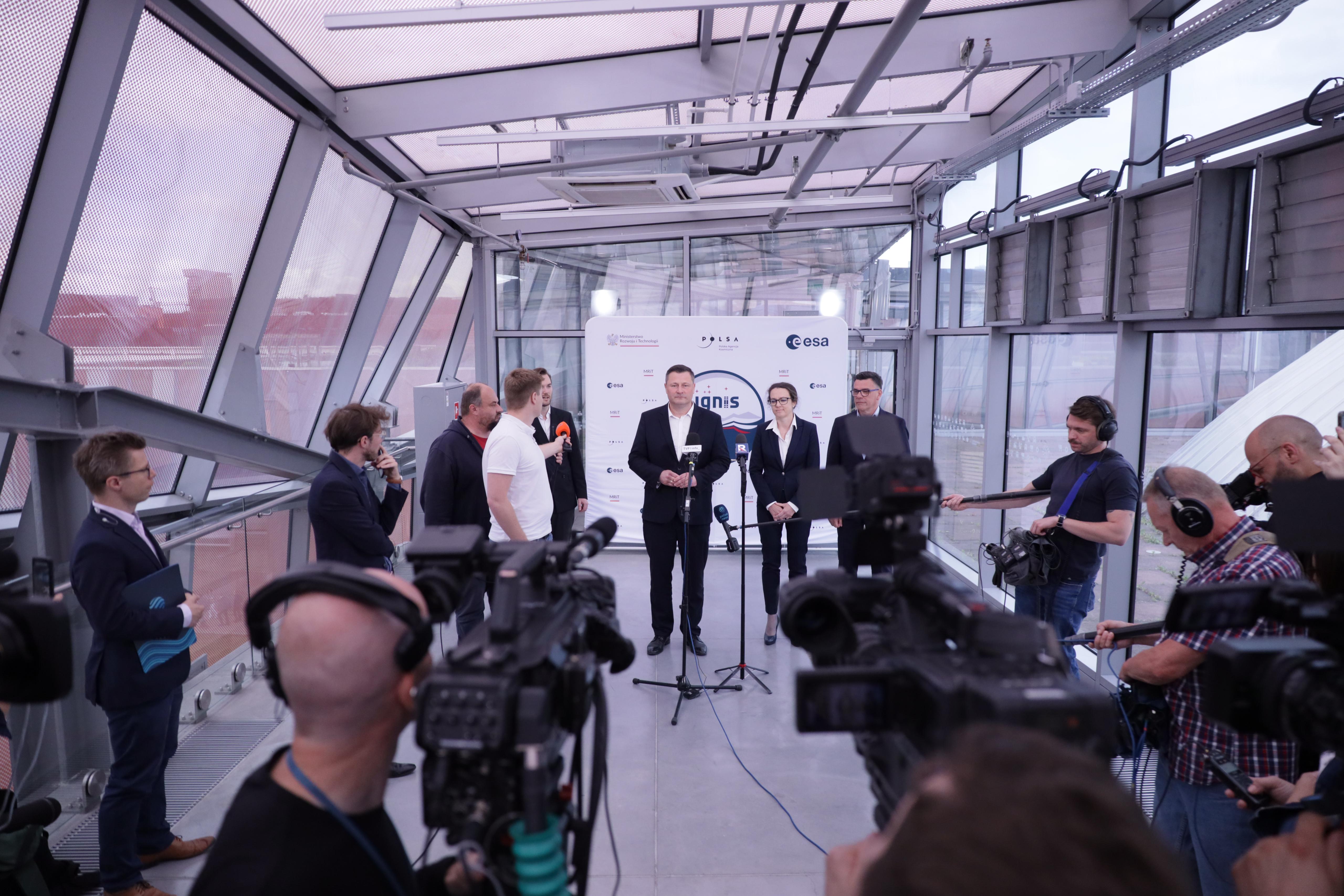
Poland in the orbit. IGNIS mission launched!
25.06.2025
Poland joins the space leaders. The IGNIS mission launched today from Cape Canaveral at 8:31 a.m. of the Polish time. This is the first technological and scientific mission carried out aboard the International Space Station (ISS) with participation of the Polish astronaut in the history of Poland. This is a historical moment for the Polish science, technology and entrepreneurship.

Almost two generations have awaited this moment – when Poland revives its participation in research and development of space technologies
– said Minister of Economic Development and Technology Krzysztof Paszyk as the mission launched.
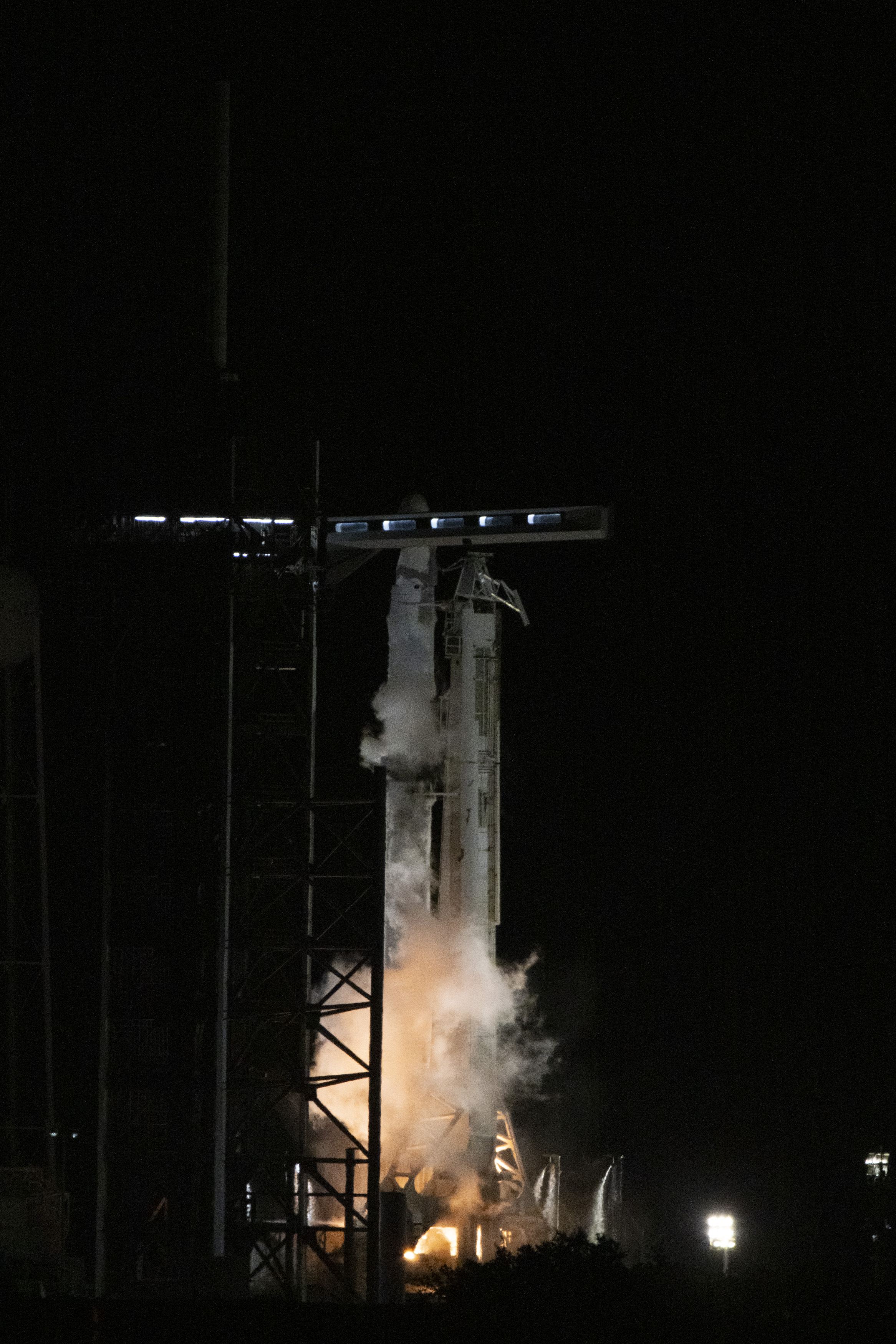
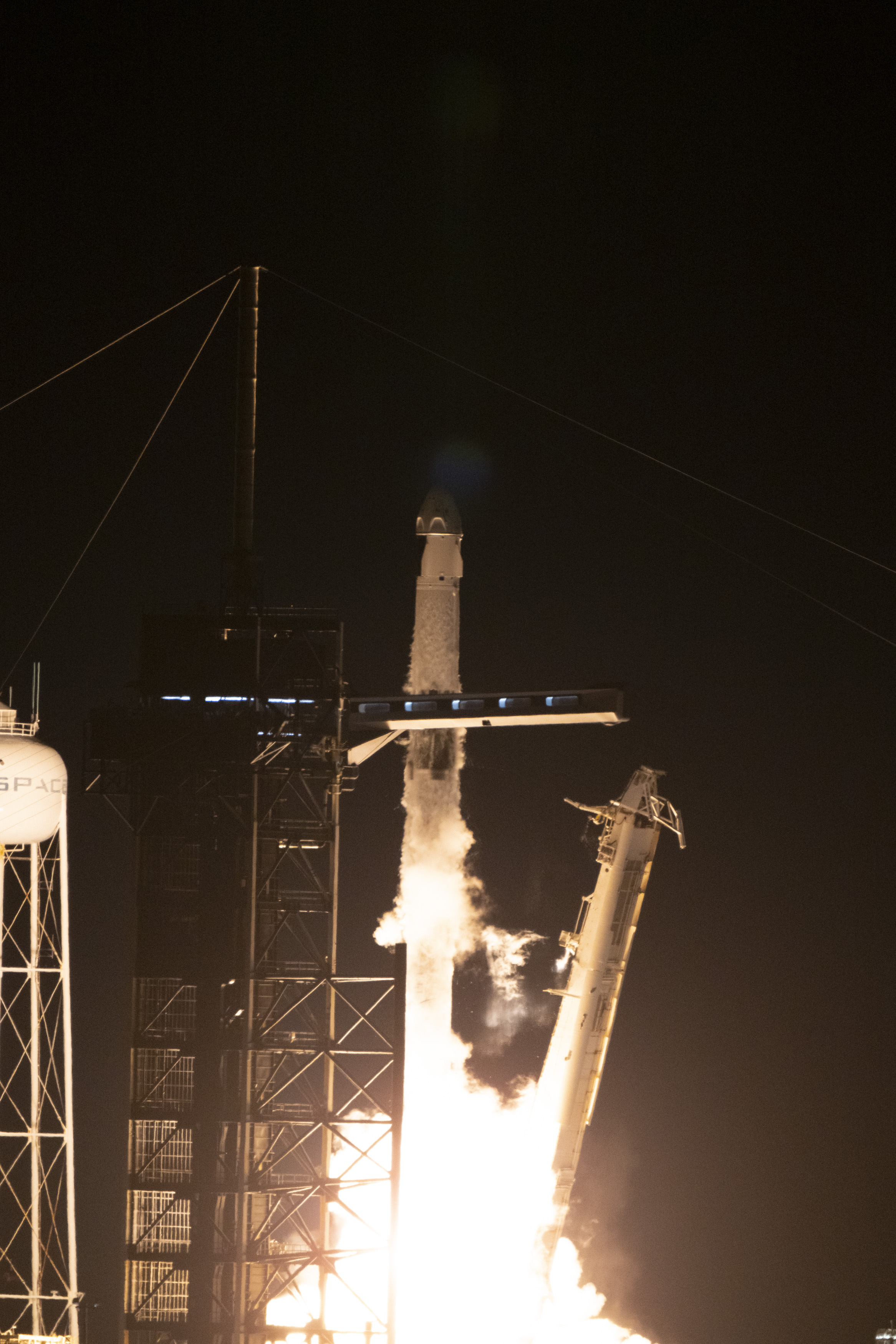
The IGNIS mission launched from the John F. Kennedy Space Center, Florida, on 25 June 2025 at 8:31 a.m. of the Polish time. The Polish mission specialist, Sławosz Uznański-Wiśniewski, was set off aboard the Crew Dragon capsule propelled by SpaceX Falcon 9 rocket. This is the second Pole in space and the first one to reach ISS in the history.
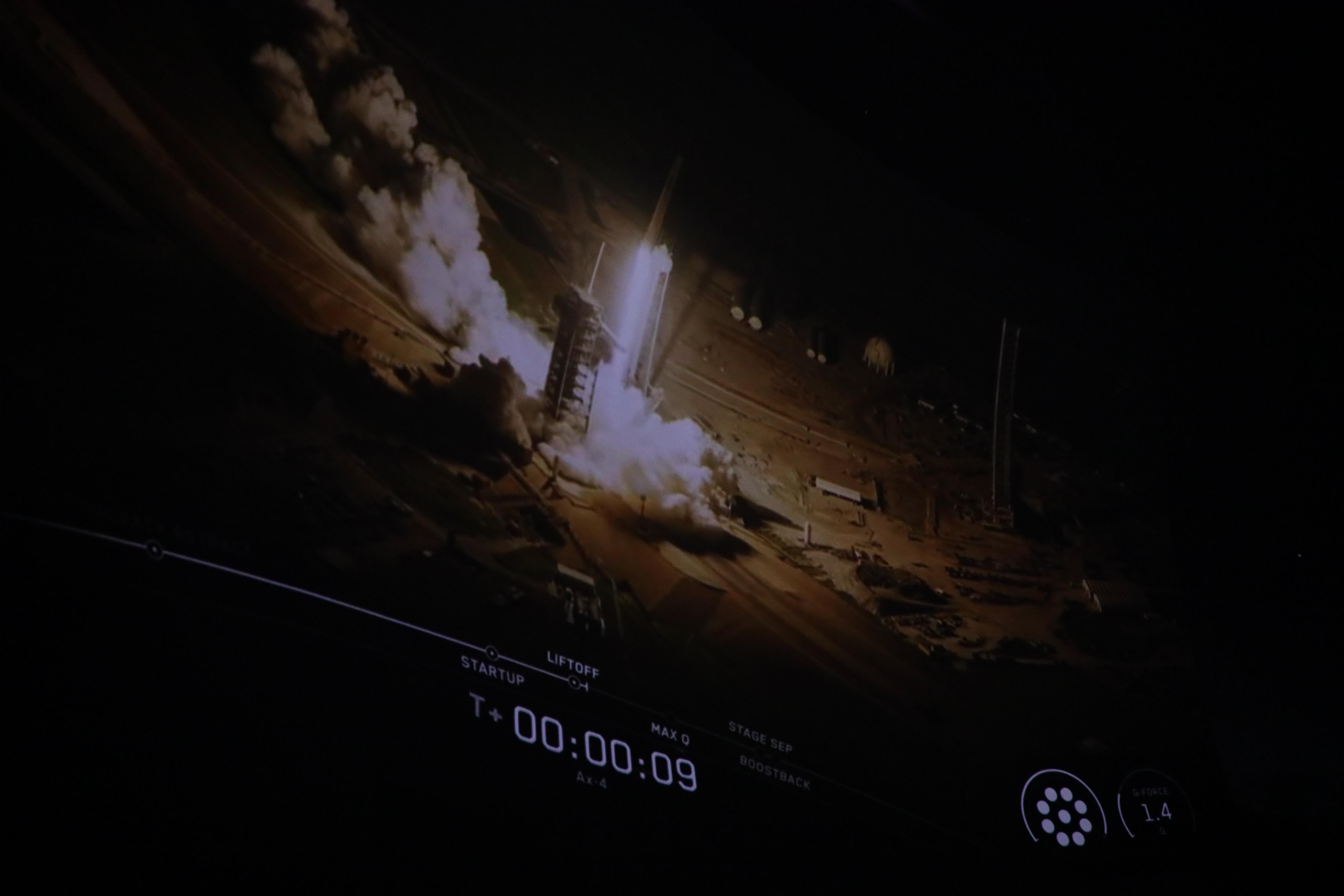
The mission launch was watched together with youth and children by Prime Minister Donald Tusk and Minister Krzysztof Paszyk in the Copernicus Science Centre.
Poland in space again
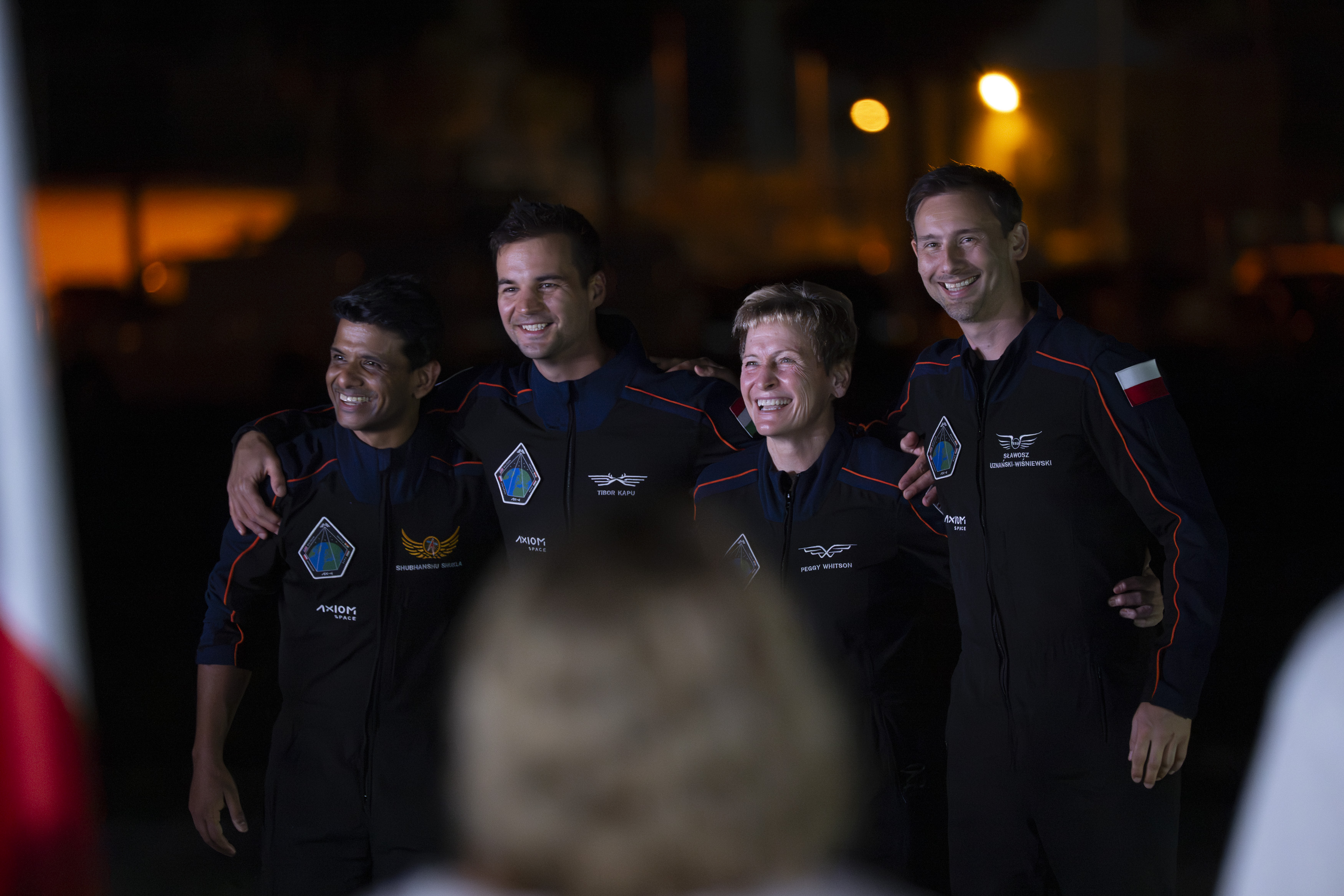
The IGNIS mission forms a part of the Ax-4 mission. The crew is composed of: Commander Peggy Whitson (USA), Pilot Shubhanshu Shukla (India), Mission Specialist Dr. Sławosz Uznański-Wiśniewski (Poland) and Mission Specialist Tibor Kapu (Hungary).
This is the first time in the history when the astronauts from Poland, Hungary and India set off together to the International Space Station under the governmental missions. Each of these three countries has resumed the space flights with participation of native astronauts after more than four decades.
Today we are ready. We have a great scientific and technical staff, a prominent astronaut and the entire technological background, which makes us able to really participate in the race for the future. Exploring space is not an abstract – it is a real impact on our lives here on Earth
- emphasized Minister Krzysztof Paszyk.
Accomplishment of the mission is a milestone for the Polish space, scientific and economic sectors. The mission is the outcome of the agreement between the Ministry of Economic Development and Technology and the European Space Agency. It was financed by the Ministry of Economic Development and Technology.
New perspectives for Polish science, education and economy
The IGNIS mission is an important step forward in development of the Polish space sector. It provides the Polish institutions with access to the International Space Station infrastructure, where the solutions that cannot be fully implemented on Earth are tested.
It also triggers the competence boost in the space industry, building social awareness of modern technologies and strengthening the position of Poland in the European and international scientific projects.
Space is not only science and dreams about a future. It is also economy, security and impact on everyday lives of the citizens. The technologies we use on a daily basis – in communication, navigations and medicine – have emerged in effect of research carried out in space. The space sector in Poland has been dynamically developing. The number of companies, which design state-of-the-art solutions and today – in effect of this mission – will be able to actually test them in space, is increasing. This is a response to long-term demands of this community and a proof that Poland is not only the participant of the global space missions, but also becomes their co-creator
- said Minister of Economic Development and Technology Krzysztof Paszyk.
The IGNIS mission confirms that Poland is not only the participant of the global space missions, but also their co-creator. A broad scientific and technological program i.e. 13 experiments to be carried out aboard the ISS, followed by an extensive educational program, demonstrate the scale of this initiative. The experiments results may be applied in the space sector and also contribute to development of other industrial sectors and successfully strengthen the state security. There is no coincidence in that the space sector and associated advanced technologies are considered strategic in well-developed countries. By the mission, Poland proves also that this is both important and prospective area for the country
- stresses President of the Polish Space Agency Dr. Marta Ewa Wachowicz.
Polish experiments in microgravity conditions
During the 14-day stay at ISS, Sławosz Uznański-Wiśniewski will carry out 13 experiments proposed and developed by the Polish companies, research institutes and universities in cooperation with ESA.
The experiments include among others:
- tests of the advanced artificial intelligence (AI) algorithms in microgravity conditions,
- research on non-muscular communication with the use of brain waves,
- analysing the impact of long-term stay in space on astronaut’s mental health,
- measurements of noise level at ISS and its impact on the crew,
- research on application of microalgae in future missions and space medicine.
The above not only provides the scientific contribution of Poland to space research – it creates also an opportunity for technology transfer to Earth, especially in such areas as medicine, neurotechnology, communication systems or biotechnology.
Complete project list: https://www.gov.pl/web/rozwoj-technologia/ignis--pierwsza-polska-misja-na-miedzynarodowa-stacje-kosmiczna
Space education – an investment in future
The IGNIS mission includes also an educational dimension. It aims at inspiring young people to engage in exact sciences, technology and space exploration. The schools and universities throughout Poland have been already joining the space research promoting activities, creating space for the future scientists, engineers and innovators.
This mission is unique. Nearly 20% of its duration was dedicated to educational activities. Several direct connections with the Polish astronaut addressed to youth and children will take place soon. The aim of these meetings is to bring space closer and primarily to inspire the new generations to discover science through passion
- emphasized Minister Krzysztof Paszyk.
The mission preparations involved a wide package of educational activities. It covers the activities of our astronaut before, during and upon accomplishment of the mission.
The mission agenda includes certain educational events, in the course of which the invited students will connect live with the Polish astronaut. He will answer the questions of the youngest and perform the student demonstrations of educational experiments. The participants of each event will take place in workshops and lectures as well as an educational picnic.
The end of the mission will start among others the “Become a space engineer” educational cycle in the form of engineering workshops for the youth, focusing on key areas for the Polish space sector.
The trainings for teachers will also take place. Based on educational activities carried out during the mission, the Polish Space Agency (POLSA) will prepare 60 thematic educational materials, including the scenarios, movie content and experiment proposals for schools, educators and any and all concerned. The materials prepared under the “Classes from the orbit” cycle will be distributed to the Polish schools.
More on space education: https://plinspace.pl/edukacja/program-edukacyjny-ignis