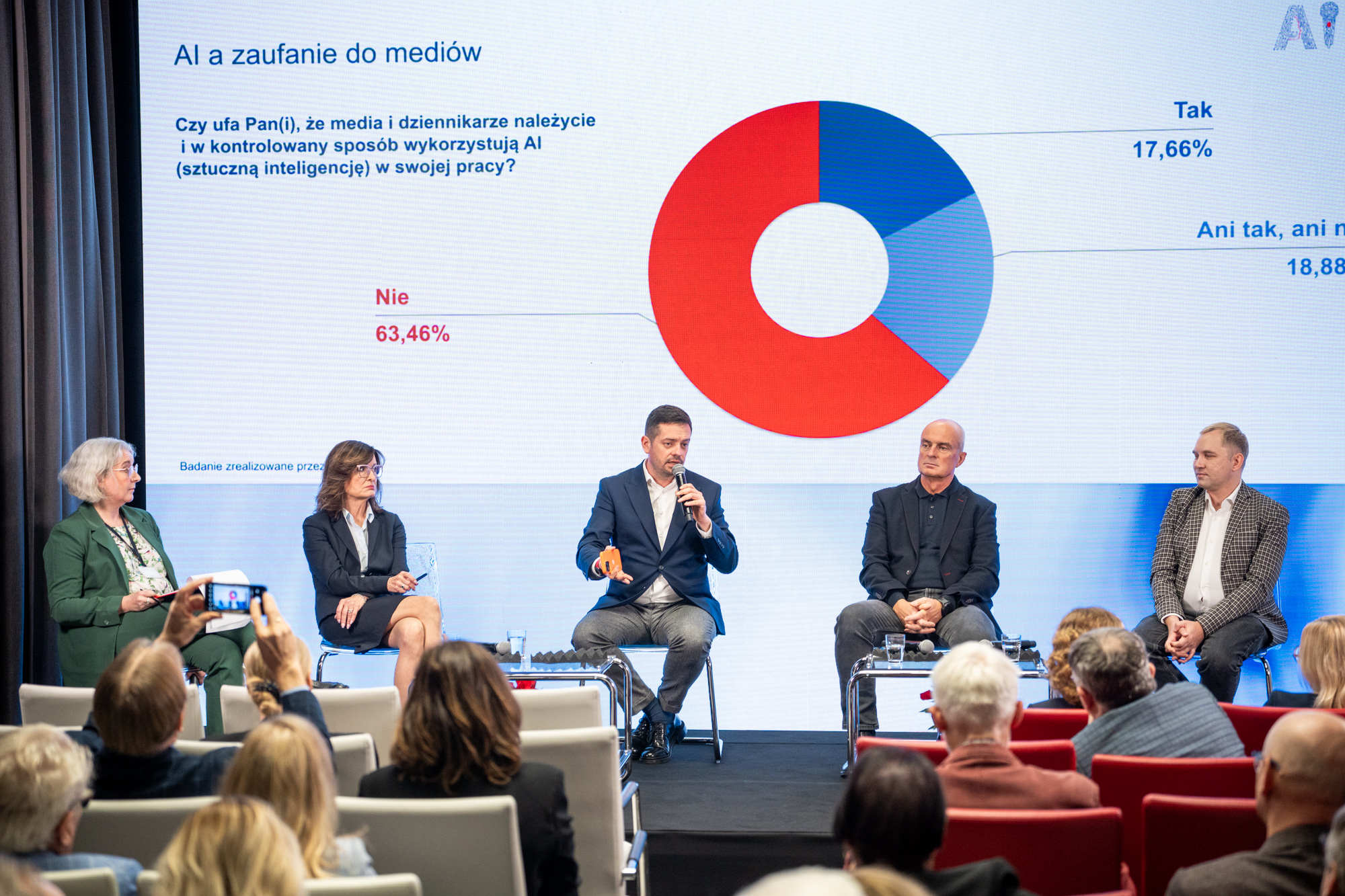
'AI - Media in the Age of Algorithms' - KRRiT Conference
11.12.2025
Only journalistic integrity and responsibility can effectively protect against the threats posed by artificial intelligence. This was one of the conclusions of the National Broadcasting Council (KRRiT) conference entitled, 'AI - Media in the Age of Algorithms'. During the event, Dr Agnieszka Glapiak, Chairwoman of the National Broadcasting Council, presented the results of the study 'Artificial Intelligence in the Media', which formed the basis for discussions on responsibility, ethics, and the automation of media communication.

‘Is artificial intelligence a tool for power or the destruction of journalism’? That was the question we asked. ‘We wanted to compare the results of the study Artificial intelligence in the media with the views of those shaping the message in the age of algorithms on AI in the media, at a time when the line between modern technologies and human decisions is becoming increasingly blurred’, said Dr Agnieszka Glapiak, Chairwoman of the National Broadcasting Council, opening the conference.
AI and trust in the media
When presenting the results of the study, Dr Glapiak drew attention to one of the most important elements of journalistic work: trust.
'63% of respondents do not trust the media and journalists to use artificial intelligence (AI) in their work appropriately and under control. However, nearly 17% of respondents do trust the media in this regard’, she noted.
Artificial intelligence, which is increasingly present in the media, evokes strong, often extreme, emotions among audiences. As many as 60% of respondents expressed uncertainty about content generated entirely by AI, including television and radio programmes, articles, and social media posts. Respondents emphasise that they prefer content created by humans as they trust such messages more.
Moreover, the Chairwoman of the National Broadcasting Council emphasised that the use of images of deceased persons raises even greater concerns. While the majority of survey participants declared their general opposition to such practices, the detailed results reveal the extent of this opposition.
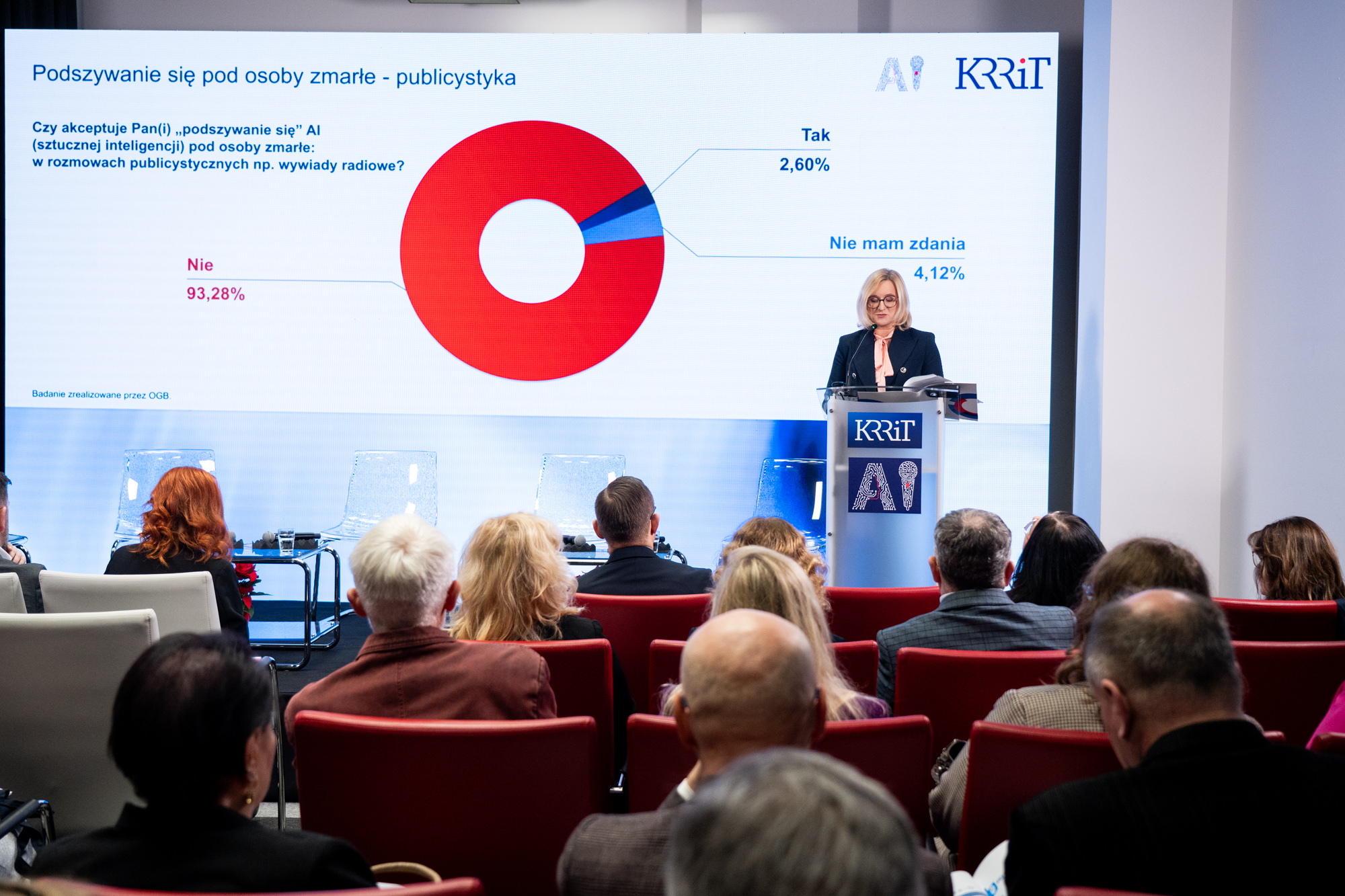
‘Over 93% of respondents rejected the use of images of deceased people in current affairs programmes; only 2.6% expressed acceptance; and 4% had no opinion. Partial acceptance was noted only in the case of educational (35%) and artistic (25%) content. This confirms that audiences only accept such solutions in a strictly defined and justified context’, said Dr Agnieszka Glapiak.
AI in the newsroom: pros and cons
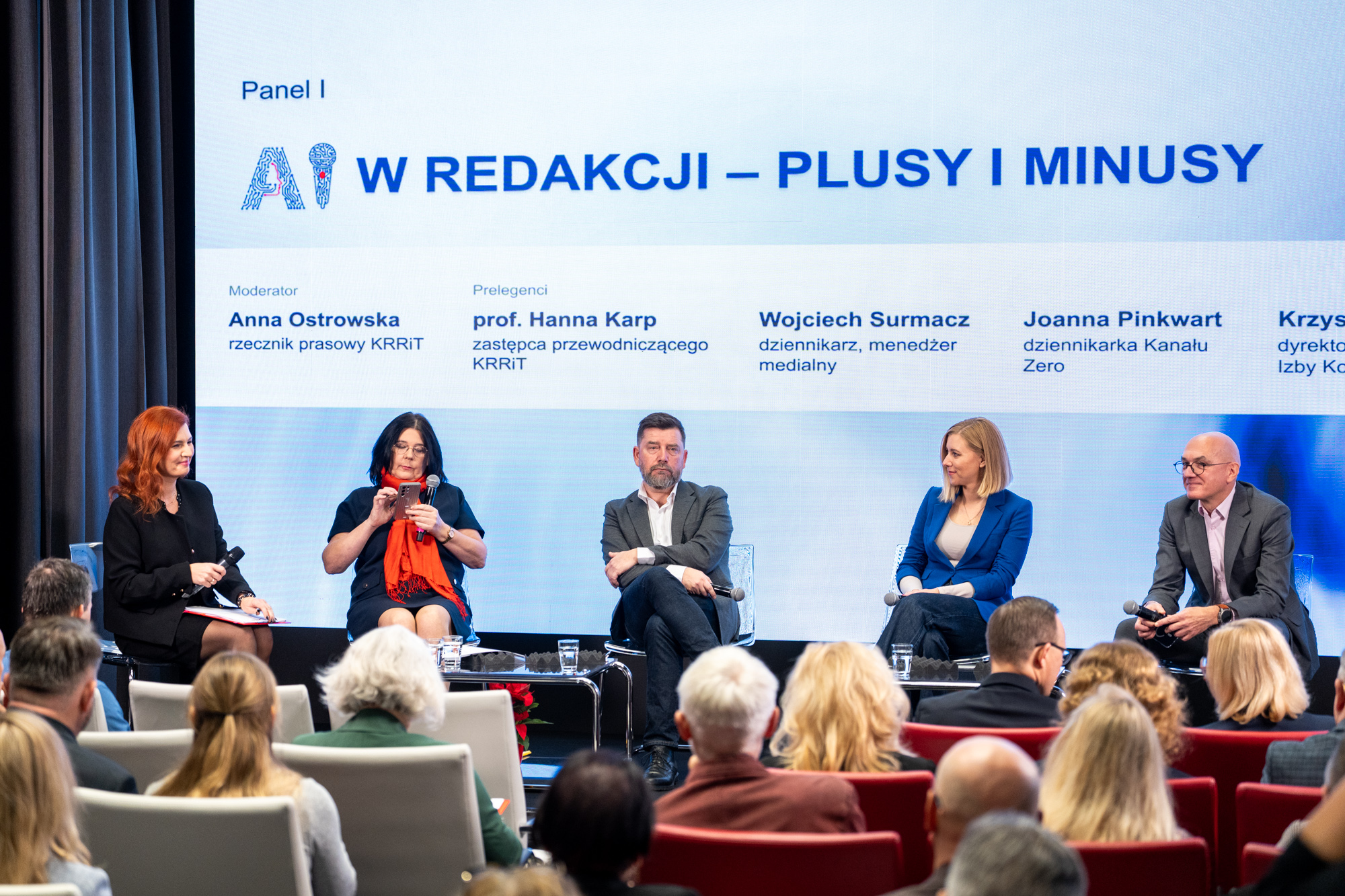
The benefits and risks of using artificial intelligence in the newsroom were discussed
during the first panel, ‘AI: pros and cons’, moderated by Anna Ostrowska (spokeswoman for the National Broadcasting Council).
‘We are seeing an increasing presence of AI in the work of journalists. Artificial intelligence is not capable of nuancing the message. However, it should be emphasised that it is becoming more and more sophisticated. This means that the world of media and the internet as we know it is coming to an end’, said Prof. Hanna Karp, deputy chair of the National Broadcasting Council.
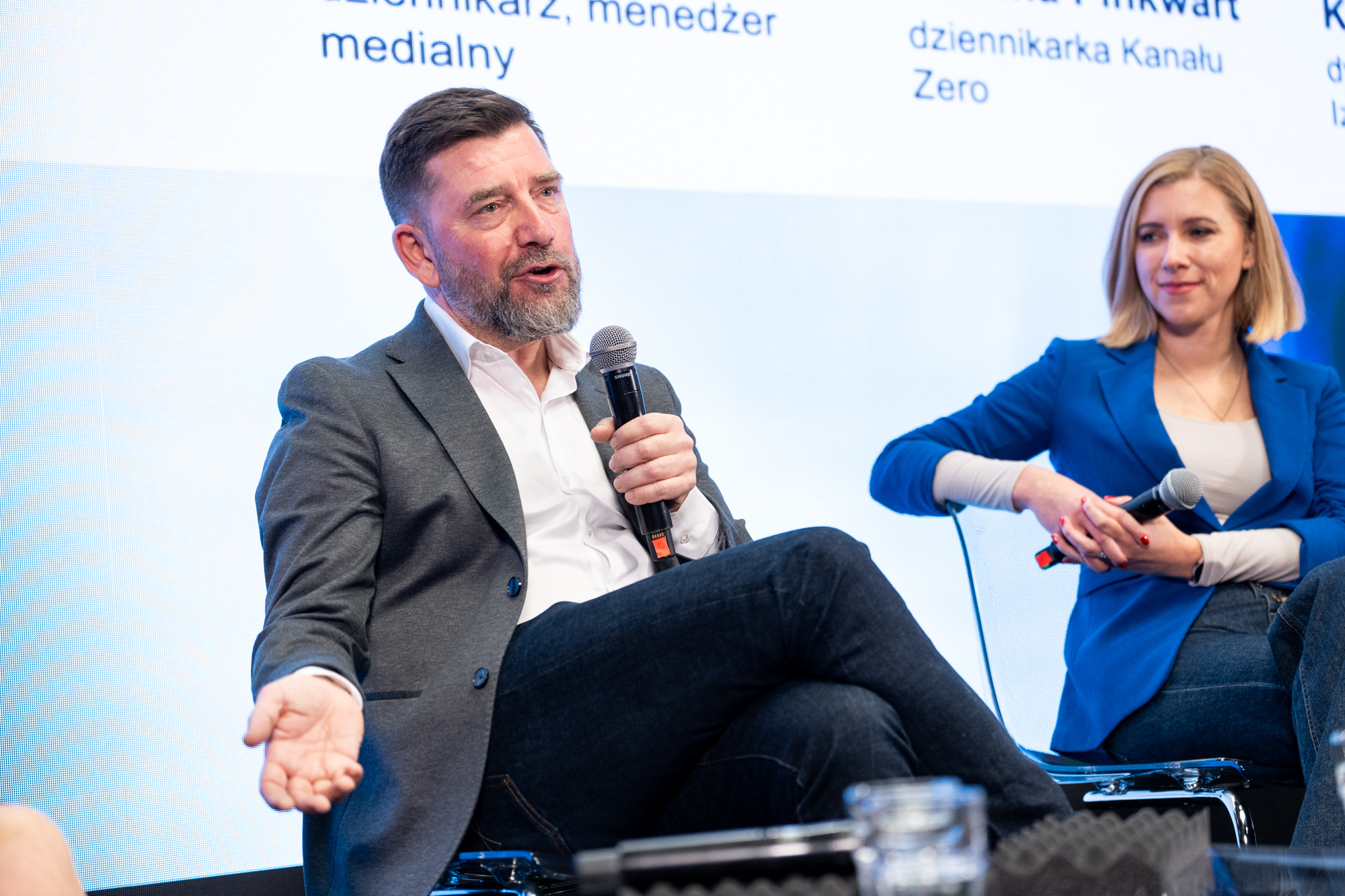
Wojciech Surmacz, a journalist and media manager, drew attention to the importance of message quality. He emphasised that this will always be the most important issue, regardless of whether the content is created by an algorithm or a human being. ‘We should not be afraid of artificial intelligence. However, it is important to note that AI loves quality journalism’, he stressed.
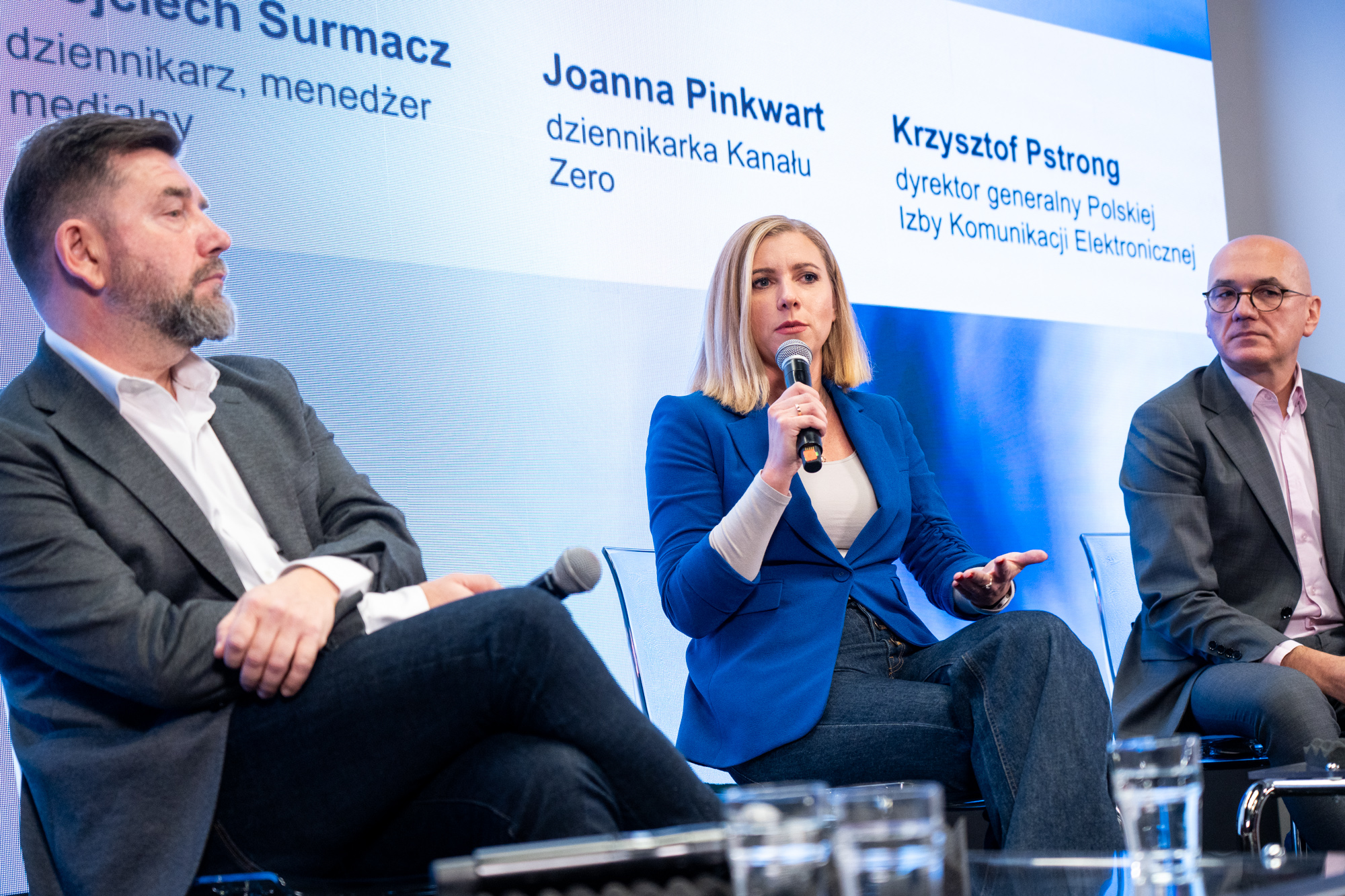
Joanna Pinkwart, a journalist at Kanał Zero, reminded listeners of the fundamental principle of journalism: verifying information using at least two sources. ‘But these cannot be other AI tools, such as ChatGP’.
Krzysztof Pstrong, CEO of the Polish Chamber of Electronic Communication, discussed editorial processes involving artificial intelligence, using local media as an example. ‘Regardless of the size of the media outlet, there must always be a human being at the end of the editorial process, and the most important things will always be craftsmanship, ethics and empathy’, he noted.
AI in the newsroom – sharing responsibility
The second panel, moderated by Anna Kuźma, Deputy Director of the Monitoring Department at the National Broadcasting Council (KRRiT), focused on issues of responsibility, journalistic skills, and information verification in the context of AI in the editorial office.
Marzena Paczuska, a National Broadcasting Council member, emphasised that the editor-in-chief is responsible for the content published in the media and its accuracy, regardless of whether the creator is an algorithm or a human being.
Using his radio station as an example, Leszek Kozioł, founder and owner of Radio Wielkopolska, pointed out that journalists working for regional media can have more time to create quality content thanks to the use of AI tools.
Dr Maciej Chudkiewicz, a journalist and lecturer at UKSW, noted that the media market is constantly changing and that young journalists have a different approach to verifying sources of information than their older colleagues.
In turn, Patryk Pallus, editor-in-chief of Wirtualnemedia.pl, emphasised that fierce competition is forcing processes to be accelerated, resulting in the need for publications to be created based on algorithms. ‘Translations, research, article summaries and reviews are common applications of AI. However, editorial offices do not want to talk about it openly’, he added.
The discussion also touched on the topic of threats. The possibility of manipulation and influencing democratic processes, for example through targeted election advertisements, was mentioned. ‘Strictly defined algorithm systems are more dangerous than texts created by PR agencies. Unfortunately, the law is not keeping up. There are no penalties for a lack of reliability’, noted Marzena Paczuska.
Artificial intelligence and human beings
In her summary of the conference, Dr Agnieszka Glapiak emphasised that ‘viewers, listeners and readers prefer content created by humans. They have no objection to the use of AI potential in the media. Paradoxically, this gives journalists a special opportunity, because, for example, texts marked as ‘created by human beings’ can become an asset for good editorial offices. It can be a sign of quality, credibility, professionalism and trust’, noted the head of the National Broadcasting Council.
A recording of the conference is available here: