Protecting minors is a priority for the National Broadcasting Council. The Chair's address to the Sejm Committee
15.04.2026
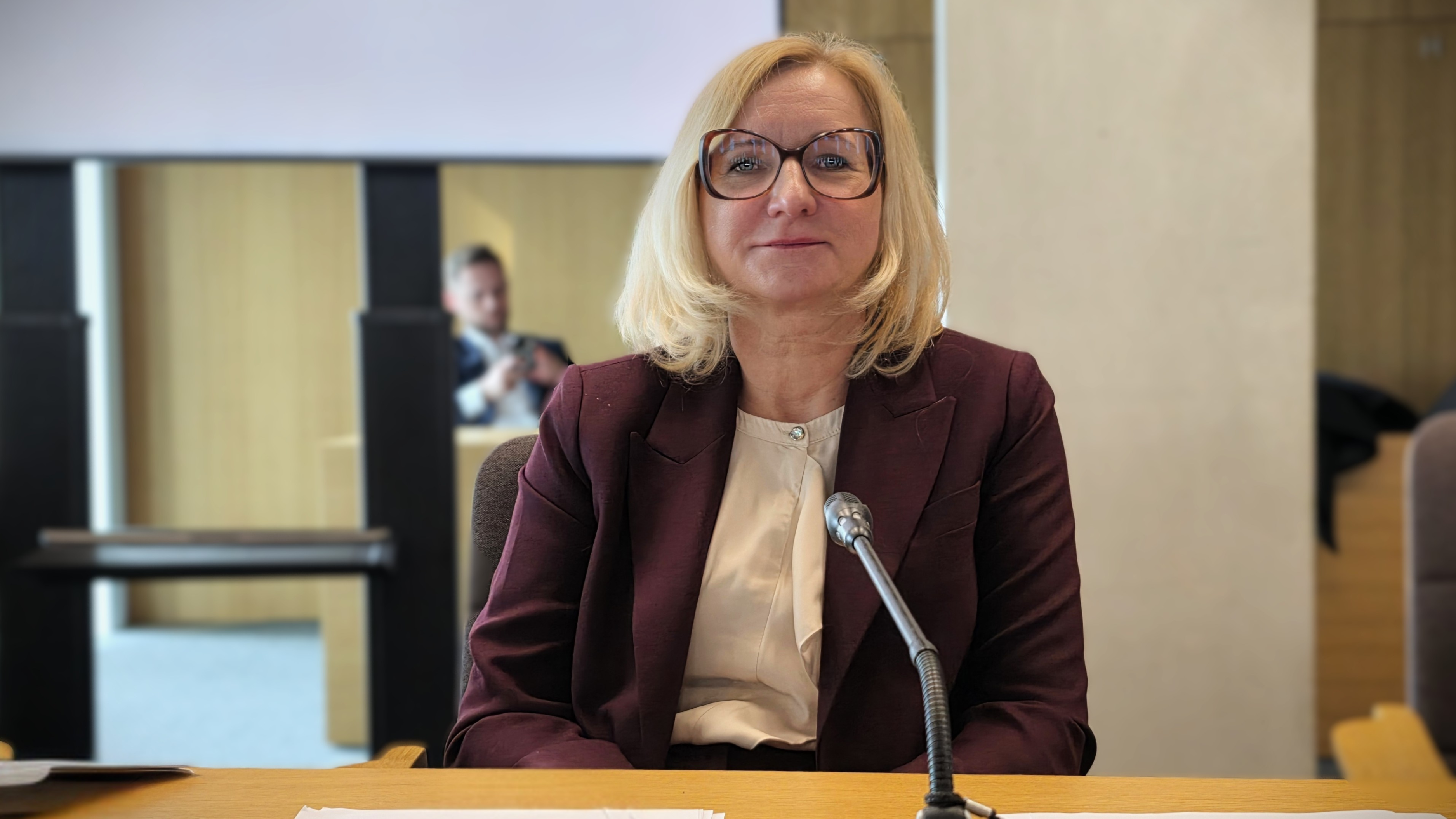
The protection of minors in the media and online is one of the National Broadcasting Council's key areas of activity. The Council continuously monitors television programmes and on-demand audiovisual services, imposes financial penalties for infringements, and initiates educational projects. During a meeting of the Sejm Committee on Culture, National Heritage and the Media, the Chair, Dr Agnieszka Glapiak, spoke about the KRRiT's effective interventions and ongoing activities in this area.

‘The National Broadcasting Council regulates the Polish media market and looks after the interests of viewers, listeners, and users of on-demand audiovisual media services. Ensuring the safety of children and young people and protecting them from content that could negatively impact their development is a particular focus of our work’, emphasised the Chair of the National Broadcasting Council.
Protecting minors is an ever-present priority for the KRRiT
Ensuring the effective protection of minors in the media is one of the National Broadcasting Council’s core priorities. During the meeting of the Culture Committee, the Chair of the KRRiT emphasised that the Council responds to every complaint received but does not limit itself solely to interventionist measures; it also conducts ongoing monitoring of the media market.
In practice, this involves the continuous analysis of television programmes and on-demand audiovisual media services, including broadcasts and commercial communications, to ensure compliance with the provisions of the Broadcasting Act.
This monitoring covers the correct age classification of programs, appropriate content labeling, and the broadcast of material that excessively depicts violence or pornography. It also covers the broadcasting of beer adverts during protected hours and monitors the promotion of alcohol and psychoactive substances.
As the Chair pointed out, the current legal provisions focus mainly on age ratings and programme labeling. However, the dynamic development of the media market means that new challenges in the protection of minors constantly emerge, requiring adjustments to legal regulations. The National Broadcasting Council (KRRiT) is calling for urgent action to strengthen the legal protection of minors. Both the government and parliament have initiatives in this regard.
Taking decisive action against harmful content
In recent years, the National Broadcasting Council (KRRiT) has consistently implemented measures to protect minors and responded to violations as they have arisen.
Between 2019 and 2023, the Chair of the KRRiT reported that this averaged over a dozen decisions per year. Between 2023 and 2025, 40 decisions were issued solely in the area of protecting minors.
‘Twelve of these were related to incorrect age ratings or the absence of required warnings, while 28 were related to the broadcasting of beer adverts during protected hours, the promotion of alcohol and psychotropic substances, and hidden commercial messages for alcohol consumption. Four decisions were related to VOD services’, reported the Chair of the KRRiT.
KRRiT’s responses to infringements on television and the internet
During the Commission’s meeting, the Chair, Dr Agnieszka Glapiak, cited specific decisions taken by the KRRiT in the context of protecting minors against both television broadcasters and entities operating over the internet.
Since late July 2025, the National Broadcasting Council (KRRiT) has imposed fines in cases involving breaches related to the protection of minors. These include a fine of 20,000 PLN on Red Carpet TV for broadcasting the film ‘Solo, or 120 Days of Sodom’ which contains pornographic and violent content; a fine of 30,000 PLN on Telewizja Puls for broadcasting the film ‘Furioza’ with a 16+ age rating; and a fine of 20,000 PLN for broadcasting ‘John Wick 4’ with an incorrect age rating. Additionally, Telewizja Polska S.A. in liquidation was fined PLN 20,000 for broadcasting the series ‘Furioza’ during protected viewing hours, and TVN was fined PLN 20,000 for broadcasting the film ‘John Wick’ at 8 pm, which carries a 16+ rating.
The National Broadcasting Council (KRRiT) recently imposed two fines totaling 300,000 PLN on FAME MMA for making content featuring profanity, threats, and aggressive behaviour publicly available on YouTube and Twitch.tv – without appropriate age restrictions. Meanwhile, PRIME MMA was fined 150,000 PLN for publishing material on YouTube containing numerous instances of verbal and physical aggression, which was accessible to minors without adequate safeguards. Further proceedings have also been initiated against this company.
The National Broadcasting Council employs more than just financial penalties. Preventive measures are also taken, including warnings and orders issued to broadcasters to cease broadcasting inappropriate content or dangerous behavioural patterns, as well as other rule breaches that affect the protection of minors.
Responsibility on the internet
The protection of minors now applies equally to traditional television programmes and content published on the internet.
‘The National Broadcasting Council (KRRiT) systematically supervises on-demand audiovisual media services operating on video-sharing platforms. There are currently 15 ongoing investigations concerning such services. At the same time, the KRRiT is monitoring 40 providers’, the Chair of the KRRiT noted.
Systemic and educational measures
Protecting minors in the media requires more than just reacting to infringements; it also requires ongoing development of responsibility standards among broadcasters and online content creators. The National Broadcasting Council (KRRiT) is taking steps to regulate the market and clarify the rules for protecting children. These measures include an agreement among television broadcasters on advertising food to children, a Code of Good Practice for protecting minors on video-on-demand (VOD) services, and a Charter for the Protection of Children in Advertising.
In February 2026, the KRRiT headquarters hosted a conference entitled ‘Influencers 2026: Responsibility in the Spotlight of Reach’, focusing on the responsibility of online content creators for the material they publish. The Council also published a guide for digital content creators containing guidelines on proper labeling and drawing attention to sharenting, as well as the need for particular care when using children's images on social media.
Successful intervention regarding the programme ‘The Voice Kids’
The National Broadcasting Council recently intervened successfully in the promotion of minors’ activity on social media in the programme ‘The Voice Kids’ broadcast by Telewizja Polska S.A. in liquidation. Following the KRRiT's intervention, the broadcaster announced that it would no longer address the topic of social media in relation to the programme’s child participants.
This followed a complaint submitted to the KRRiT by Norbert Kaczmarczyk, a Member of the Sejm, regarding episodes broadcast on 7 March 2026. During the programme, a thirteen-year-old contestant mentioned having a social media account and discussed the number of views her posts had received. In another episode, an 11-year-old contestant also mentioned his social media presence. Jacek Prusinowski, an editor at Zero.pl, had previously reported the matter.
As the head of the National Broadcasting Council said, many children use social media.
‘For 7–12-year-olds, TikTok has the highest level of engagement at up to 47 hours a month. It is followed by YouTube at about 32 hours per month and Instagram at around 12 hours per month. Considering how much time children spend on social media, it is neither fair nor appropriate to promote this kind of content in the media,’ said
Dr Agnieszka Glapiak.
The Chair added that the public broadcaster has a particular responsibility in this regard and, in carrying out its mission, should promote responsible attitudes and take into account the well-being of its young audience.