1.6 billion packaging items collected after just six months of the deposit-refund system being in operation
25.06.2026
In just half a year, the nationwide deposit-refund system has already collected 1.6 billion packaging items, demonstrating that it is effectively tidying up public spaces and strengthening environmental protection. There are now 62,000 return points operating across the country, and the network continues to grow. The system is now preparing for the summer peak by expanding its infrastructure in tourist regions and developing digital deposit refunds to make using the system even easier.

Highlights
- Since the system's launch, 1.6 billion deposit-bearing bottles and cans have been returned (figures as at the end of May 2026).
- The system’s stable operation and the steady increase in the number of returns confirm that this solution effectively supports separate collection and helps keep public spaces clean.
- There are 62,000 return points across Poland, including 13,000 points with refund machines.
- 32,000 collection points are located in small shops, with an area of less than 200 square metres.
- Giving value to empty packaging reduces the problem of it being discarded in the countryside, as confirmed by the negligible numbers of deposit bottles found during clean-up operations.
- Additional deposit-refund machines in holiday resorts, convenient digital returns and enhanced logistics will ensure the efficient handling of packaging returns during the upcoming peak summer season.
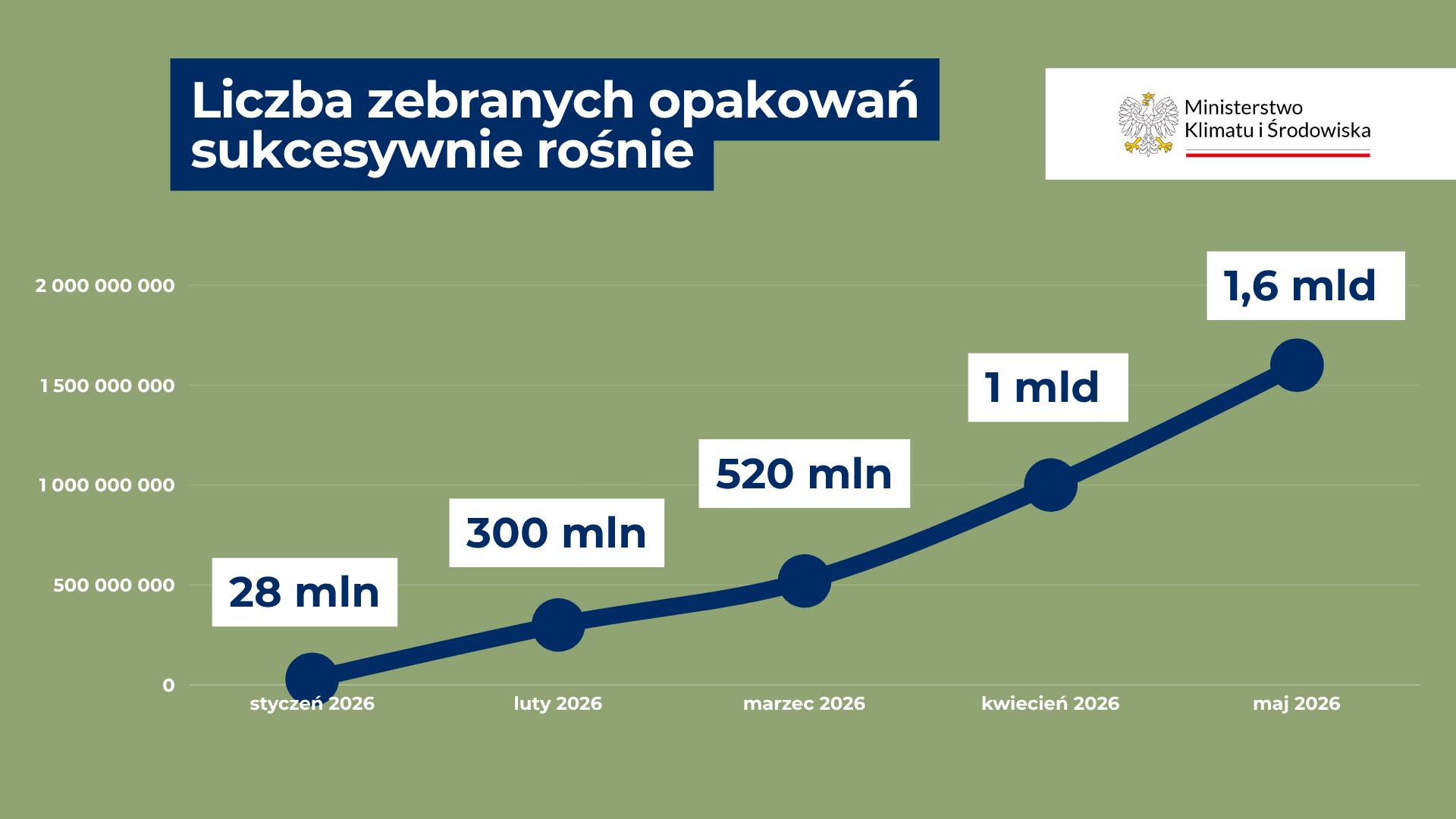
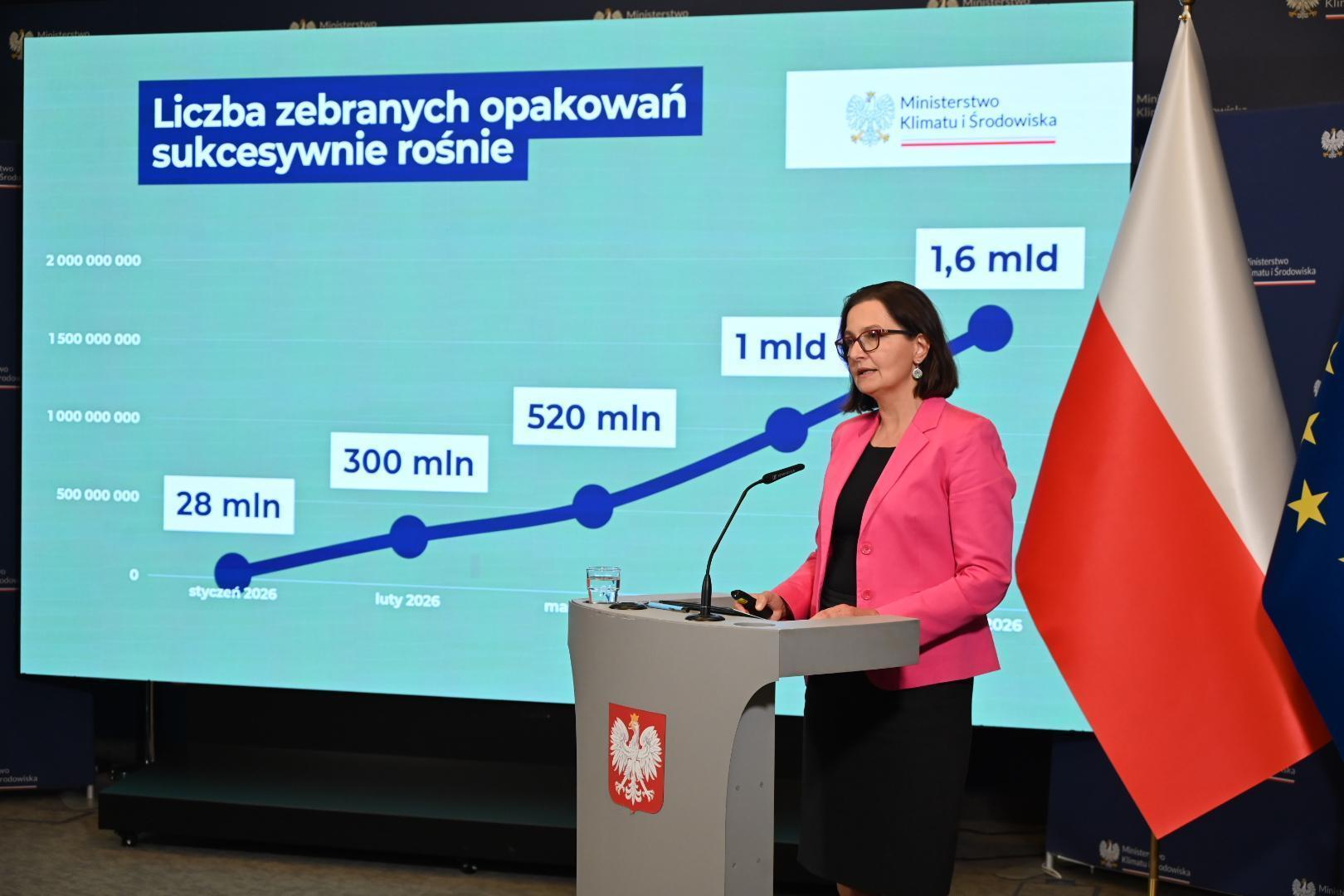
After the first six months of the deposit-refund system's operation, we can say that it has become an integral part of our daily routines. The system has become a natural part of purchasing and returning packaging, whilst also serving as a practical tool for keeping public spaces and the environment clean. We are seeing very strong growth in packaging collection: from 28 million at the end of January, through 300 million in February, 520 million in March, up to 1 billion in April, and already 1.6 billion bottles and cans collected by the end of May. This shows how quickly and effectively the system is developing and how well it has been adopted by the public. It is also worth emphasising that there are now 62,000 collection points operating across the country, over half of which are small and medium-sized shops, which demonstrates the enormous commitment of business owners
– said Anita Sowińska, Deputy Minister of Climate and the Environment, during a press conference.
The deposit-refund system is becoming an integral part of our daily routines, bringing tangible benefits to the environment. The number of returns is growing at an impressive rate, which demonstrates just how efficiently the new recycling mechanism is working.
In January 2026, 28 million items of packaging were collected, 300 million in February, 520 million in March and 1 billion in April. In May, another record was set, with the tally of returned packaging reaching 1.6 billion units. This confirms that the system is not only working but is becoming an increasingly important part of our daily lives with each passing day.
There are currently 62,000 collection points operating across Poland. Although the statutory obligation to collect packaging rests with large shops having a floor area of over 200 square metres, 32,000 smaller outlets already decided to join the system voluntarily. This accounts for as much as 52% of all return points.
Most packaging was returned via reverse vending machines, with as many as 85% of returns made using these machines. They are available at 13,000 locations.
Public opinion surveys show that nearly 100% of respondents know what the deposit-refund system is, and 81% say they are already using it or plan to do so in the nearest future. This shows that the new rules have been well understood and accepted, and that the system has become part of the everyday habits of Polish men and women. At the same time, 72% of those surveyed rate their knowledge of the system as good, which confirms the effectiveness of the information and education campaigns
- added Deputy Minister Anita Sowińska.
Returnable packaging – too valuable to throw away
The introduction of a deposit-refund system makes a real contribution to keeping public spaces clean, as assigning value to empty packaging means it is less likely to be discarded in forests, parks, on beaches or in rivers, which directly improves the appearance of our surroundings.
Concrete evidence of this effectiveness can be seen, for example, in the results of campaigns by the Waste Free Oceans (WFO) Foundation. In April this year, during a clean-up of the Międzyodrze area, 240 kg of glass and 77 kg of plastic were collected, amongst other items. However, only two bottles covered by the deposit-refund system were found amongst this waste. Similar conclusions can be drawn from a campaign organised on 15 May 2026 along the River Vistula by the same foundation: out of 98 kg of glass bottles collected (mostly small ‘monkey’ bottles) and 2 kg of PET bottles, only 18 items of deposit-refund packaging were identified.
The effectiveness of the deposit-refund system is also confirmed by the results of the ‘Clean Oder 2026’ campaign, during which over 400 clean-up operations took place across the entire river basin and a total of 228 tonnes of waste was collected. During each of these operations, no more than 10 items of deposit-refund packaging were found. These figures confirm that the deposit-refund system eliminates the problem of empty packaging being discarded in the countryside, whilst glass bottles remain the main environmental challenge.
The deposit-refund system isn’t taking a break
The deposit-refund system is gearing up intensively for the summer peak, when Poles’ increased mobility and more frequent consumption of drinks mean significantly higher footfall at collection points. That is why more and more infrastructure is being set up outside traditional shops – in the places where life really happens in the summer: at holiday resorts and outdoor events.
The operator PolKa (Polska Kaucja) is focusing on solutions that are ‘close to people’. It is installing machines right next to beaches, including in Mielno, Gąski and Sarbinowo, and
is rolling out digital deposit refunds via payment cards or RFID wristbands at water parks. This means people no longer must queue for paper vouchers.
Kaucja.pl, meanwhile, is improving the availability of collection points by cooperating with the largest retail chains. In holiday resorts, it uses enhanced monitoring and special logistics windows, which allow waste to be collected quickly even where access is restricted. Along the coast, it is also launching mobile counting centres, which significantly speed up service in the busiest locations. The system is complemented by drive thru points and vending machines in entertainment areas and public facilities.