BioDezinfoLAB: the first cross-sectoral Laboratory for Counteracting Disinformation about Biodiversity
04.12.2025
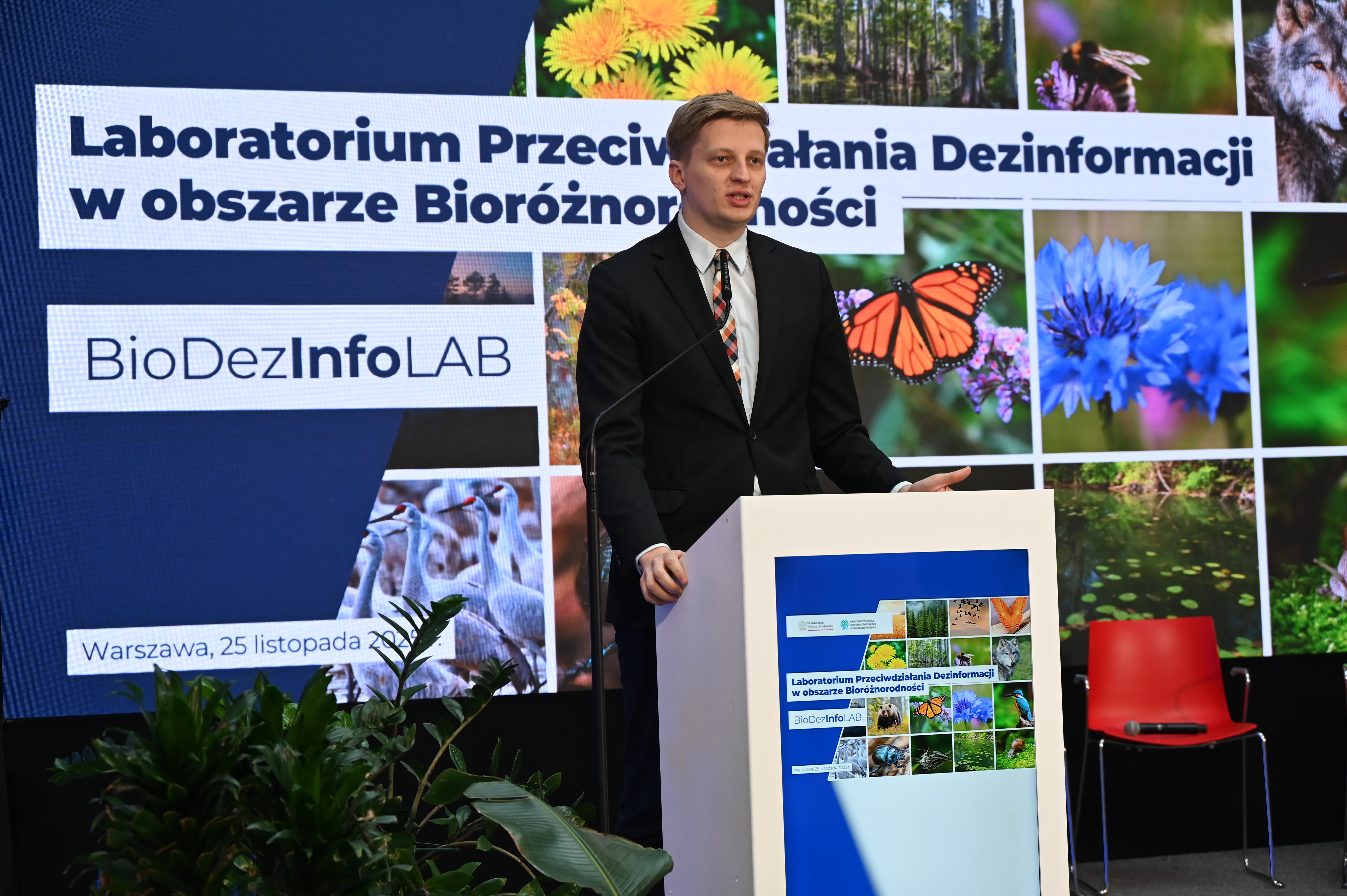
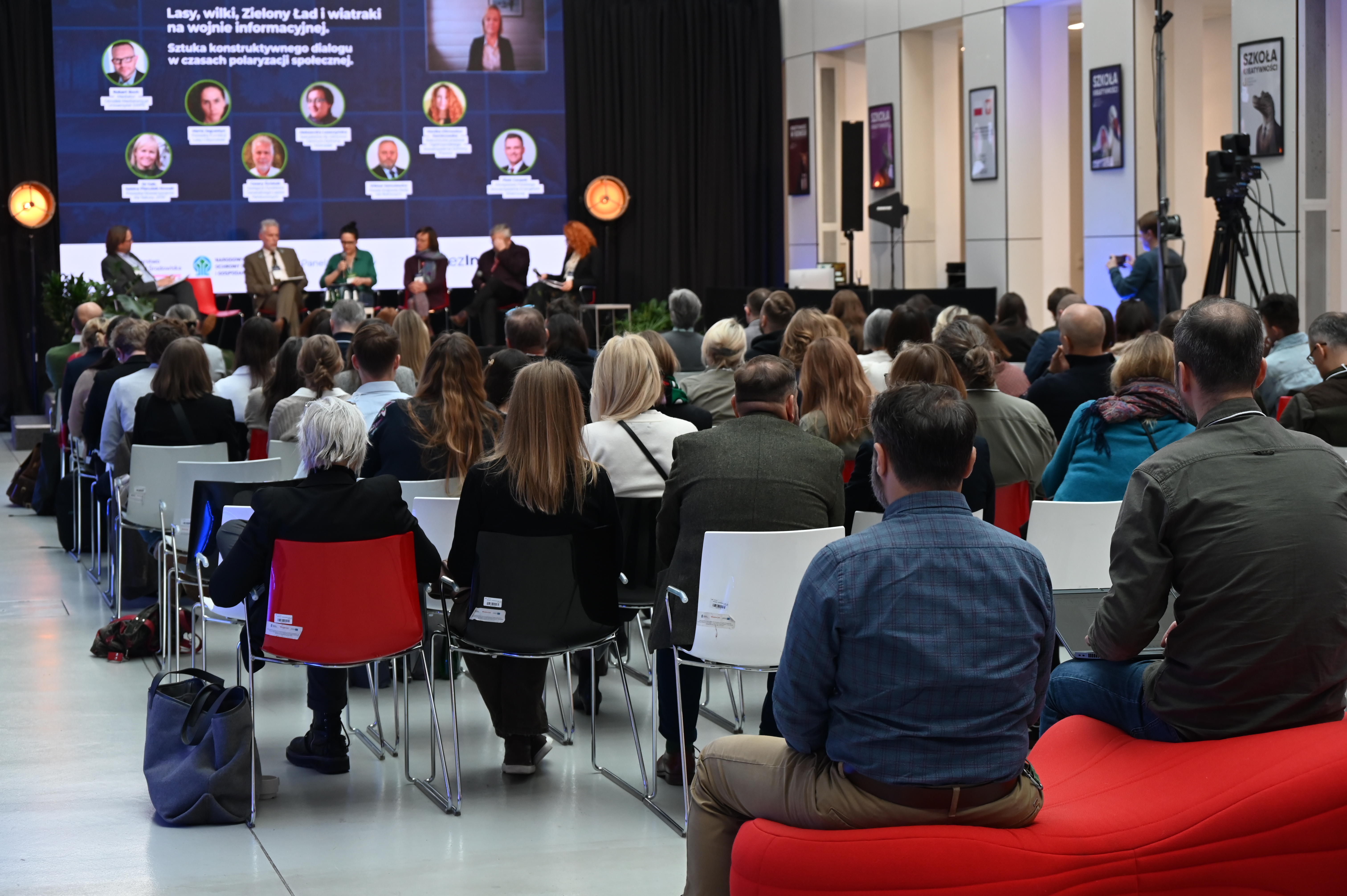
On 25 November, Warsaw hosted the first edition of BioDezinfoLAB, an initiative of the Ministry of Climate and Environment, which brought together over 100 representatives of public administration, nature conservation institutions, State Forests, the National Fund for Environmental Protection and Water Management, non-governmental organisations, academic communities and the media. The meeting was dedicated to strengthening competences and cooperation in counteracting disinformation in the field of biodiversity, and its main goal was to exchange experiences, network and improve the skills of recognising and neutralising false narratives in professional practice.

Highlights:
- DezinfoLAB is a new format of cooperation between the Ministry of Climate and Environment and other institutions, aimed at counteracting climate and environmental disinformation.
- The first edition, called BioDezinfoLAB, was dedicated to biodiversity – an area particularly vulnerable to information manipulation.
- It was attended by representatives of the Regional Directorates for Environmental Protection, State Forests, the National Fund for Environmental Protection and Water Management, NGOs, scientific communities and students.
- In the plenary session, experts presented mechanisms of disinformation on biodiversity, as well as the most common myths and techniques used in false narratives.
- In the workshop part, participants developed practical skills in fact-checking, message analysis and greenwashing identification.
- The event enabled networking and laid the foundations for future depolarisation platforms.
The significance of misinformation in exacerbating biodiversity and public trust crises
Misinformation in the area of biodiversity is often not as spectacular as that concerning climate or energy. However, it is equally dangerous – it undermines the foundations of our existence on Earth and serves to deepen social divisions
– said Hubert Różyk, Director of the Department of Education and Communication at the Ministry of Climate and Environment, emphasising the importance of reliable information for effective environmental protection, social security and counteracting polarisation.
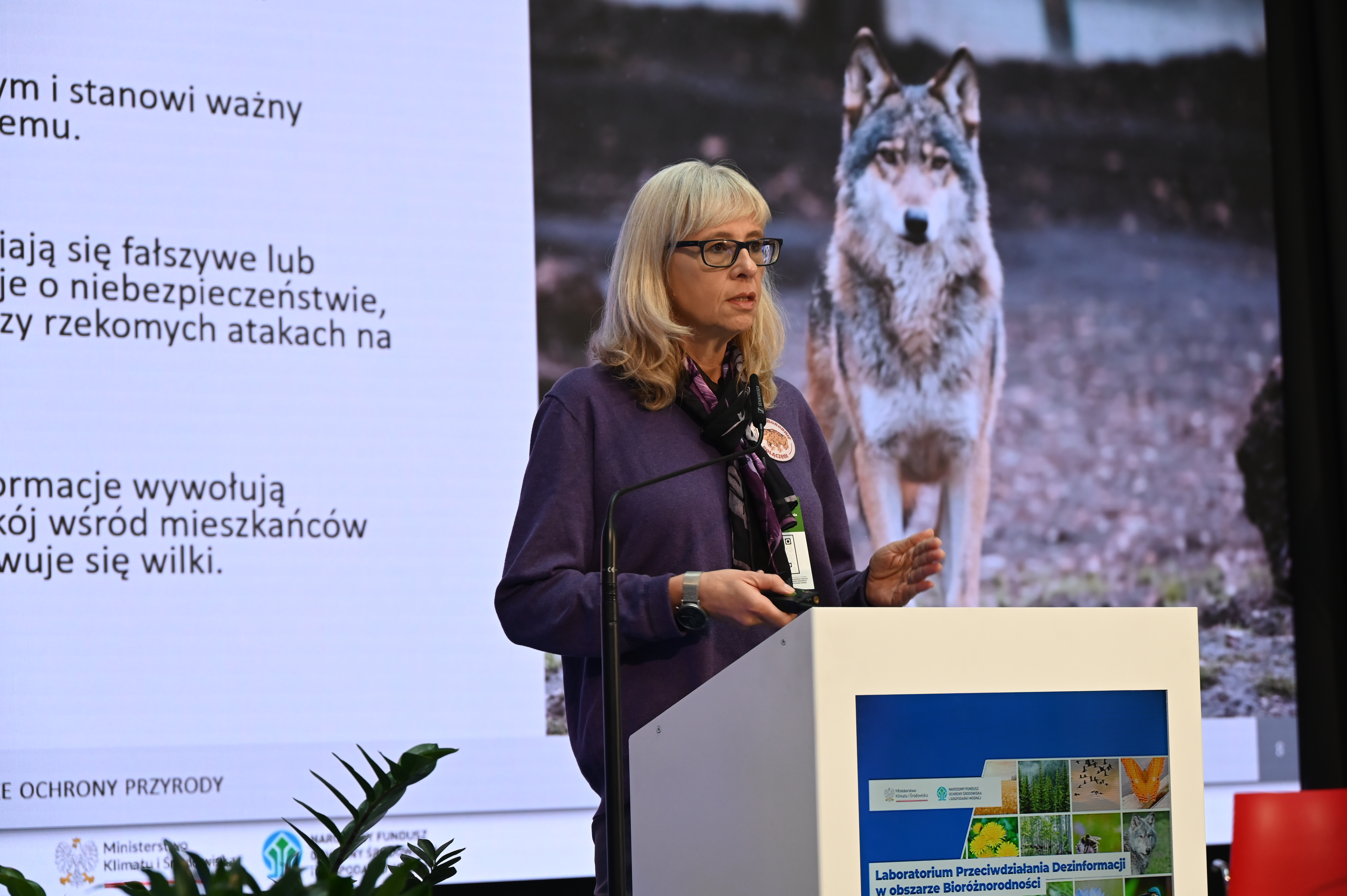
As an introduction to the issue, Anna Ronikier-Dolańska, Deputy Director General for Environmental Protection, discussed the scale of false information about nature, including protected and invasive species. She pointed to the phenomenon of deliberately distorting true content by presenting it in a false context, often used by unreliable media to undermine trust in science and public institutions.
The topic was continued by Zuzanna Buck, Head of the Department of Nature Conservation and Natura 2000 Protected Sites at the Regional Directorate for Environmental Protection in Katowice, who presented a ‘Case study: misinformation surrounding the elimination of the nutria (Myocastor coypus)’. Ms. Buck described an example of the escalation of social conflict following the decision to eliminate an invasive species, detailing how a lack of reliable information and legal context, combined with emotional media coverage, can lead to a spiral of hate and the spread of false narratives.
Paulina Sobiesiak-Penszko, PhD, President of the 'Grunt' Food Strategy Institute in her speech entitled: ‘When nature becomes a tool for disinformation. On disinformation surrounding biodiversity,’ discussed the mechanisms of exploiting nature in disinformation narratives in a broader social and economic context. She pointed to the shift from scientific to political discourse, manipulation techniques (e.g., downplaying biodiversity loss, denying research) and examples of false narratives present in public debate.
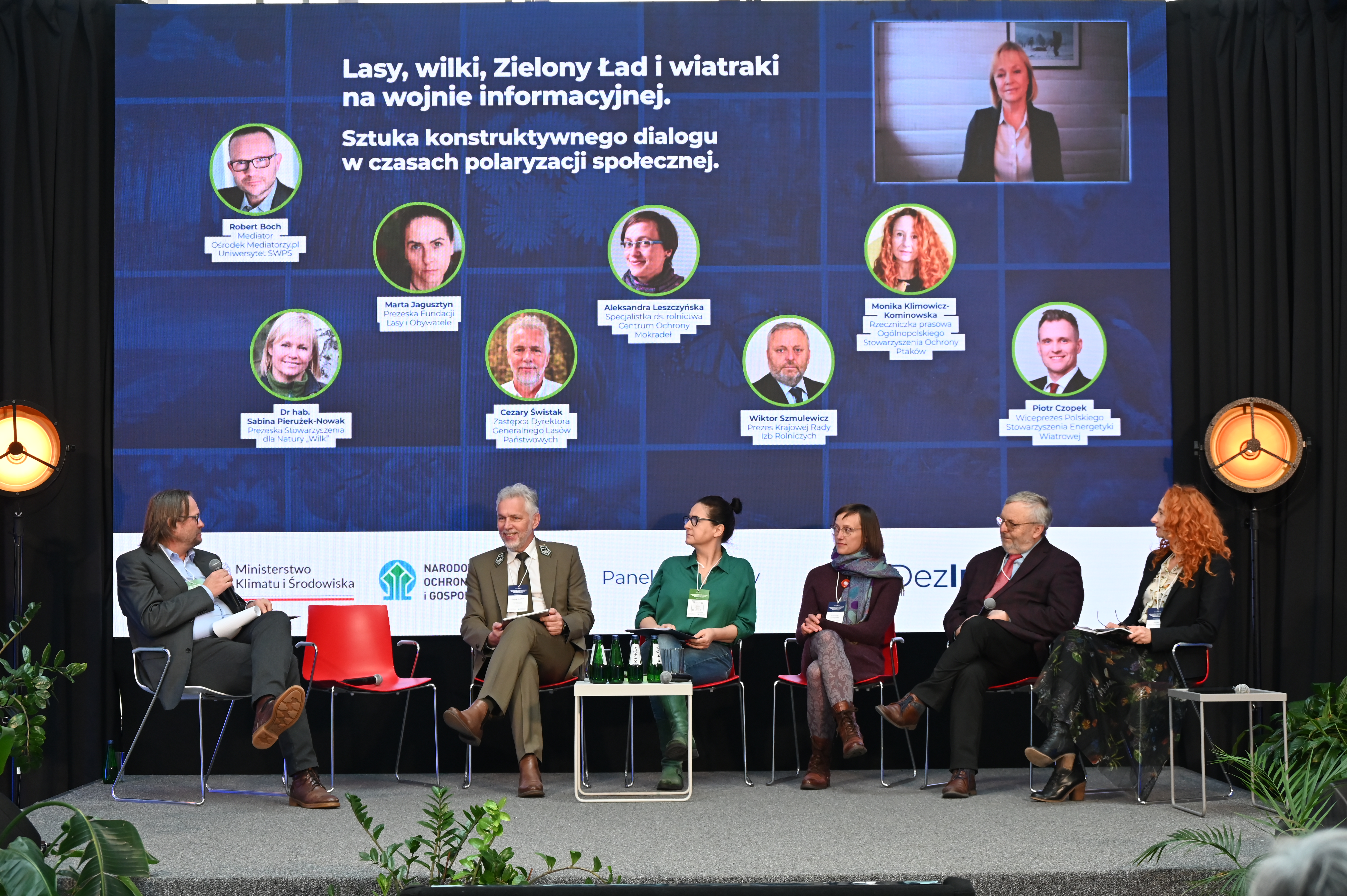
Another important item on the agenda of the plenary session was the panel discussion entitled ‘Forests, wolves, the Green Deal and wind turbines on the information war. The art of constructive dialogue in times of social polarisation’, with the participation of representatives from the scientific community, administration, the agricultural sector and social organisations:
- Sabina Pierużek-Nowak, PhD – Professor at the University of Warsaw, Association for Nature ‘Wilk’ (Wolf),
- Marta Jagusztyn – President of the Forests and Citizens Foundation,
- Cezary Świstak – Deputy Director General of the State Forests,
- Wiktor Szmulewicz – President of the National Council of Agricultural Chambers,
- Monika Klimowicz-Kominowska – spokesperson for the Polish Society for the Protection of Birds,
- Aleksandra Leszczyńska – agriculture specialist at the Wetlands Conservation Centre.
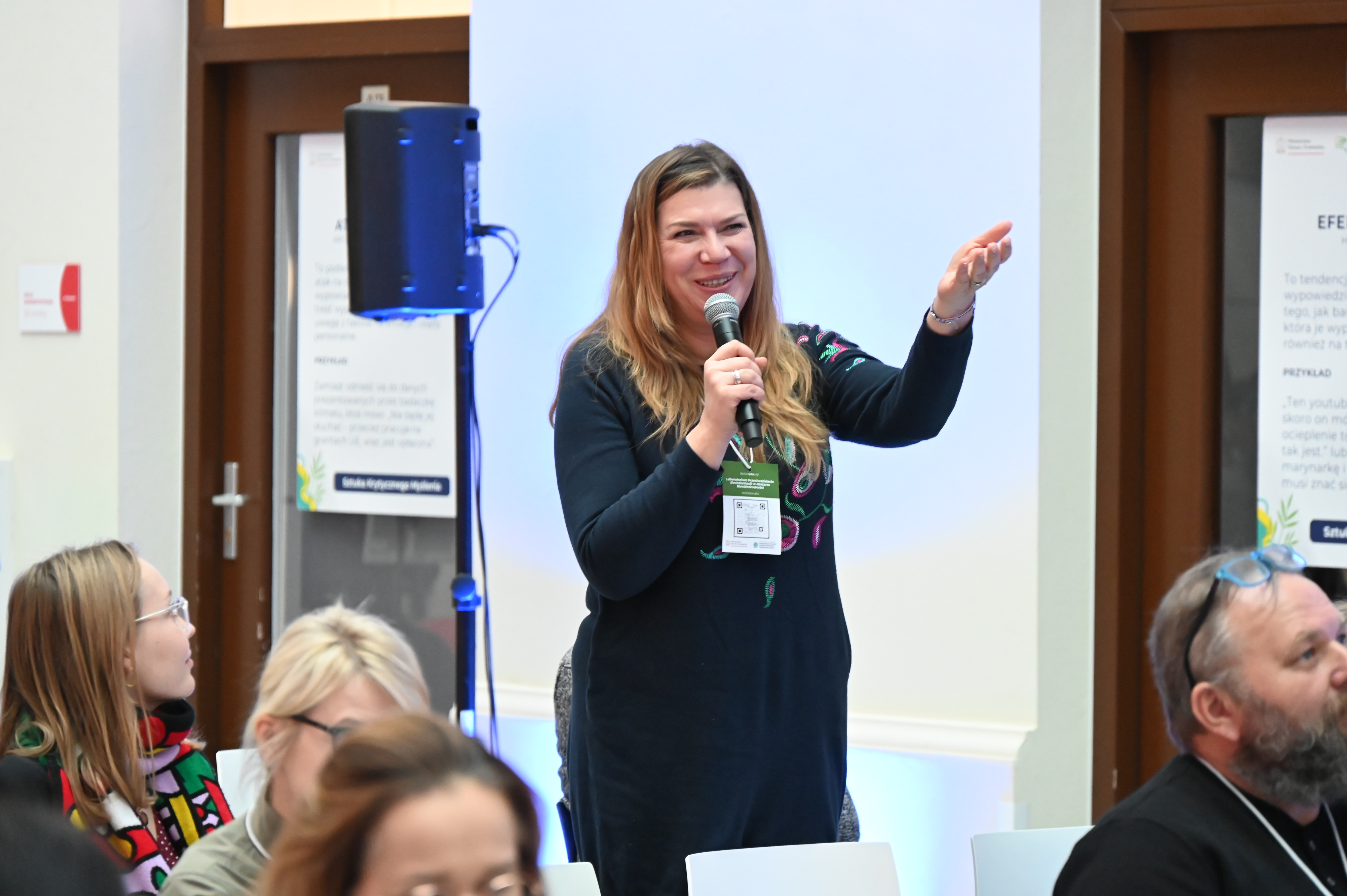
The discussion focused on the challenges of conducting dialogue on the environment in conditions of growing polarisation. The importance of reliable communication, public consultation and building trust between different stakeholder groups was emphasised. The expert presentations and panel discussion were followed by a question and answer session with the audience.
In the plenary session, Katarzyna Popiołek, Head of the Educational Projects Division in the Department of Education and Communication at the Ministry of Climate and Environment, also presented the ‘Bioróżnorodnie połączeni’ (Biodiversity Connected) campaign, created with the participation of children and addressed to children. This campaign is an example of how a message tailored to different age groups can help overcome the lack of contact with nature and the abstract nature of the concept of biodiversity.
Workshop part
The second part of the Laboratory was practical and interactive. Its aim was to support the participants of the event, mainly representatives of the administration, State Forests, RDEP, non-governmental organisations and students, in developing the skills needed to identify and neutralise misinformation they encounter in their daily activities. The participants worked in two thematic blocks:
- Block A: Primer on recognising and counteracting disinformation
The workshops were conducted by experts in fact-checking and narrative analysis, namely Aleksy Szymkiewicz from the Demagog Association, Kamila Drzewicka from the ClientEarth Foundation, and Anna Siewiorek from the Climate & Strategy Foundation. They included:
- identifying false content, algorithmic manipulation, and deepfakes,
- recognising greenwashing and assessing the credibility of environmental messages,
- creating rules for information prevention in institutions and organisations.
The exercises were based on real examples of narratives appearing in traditional and social media, which allowed participants to translate theory into practice applied in government offices and NGOs.
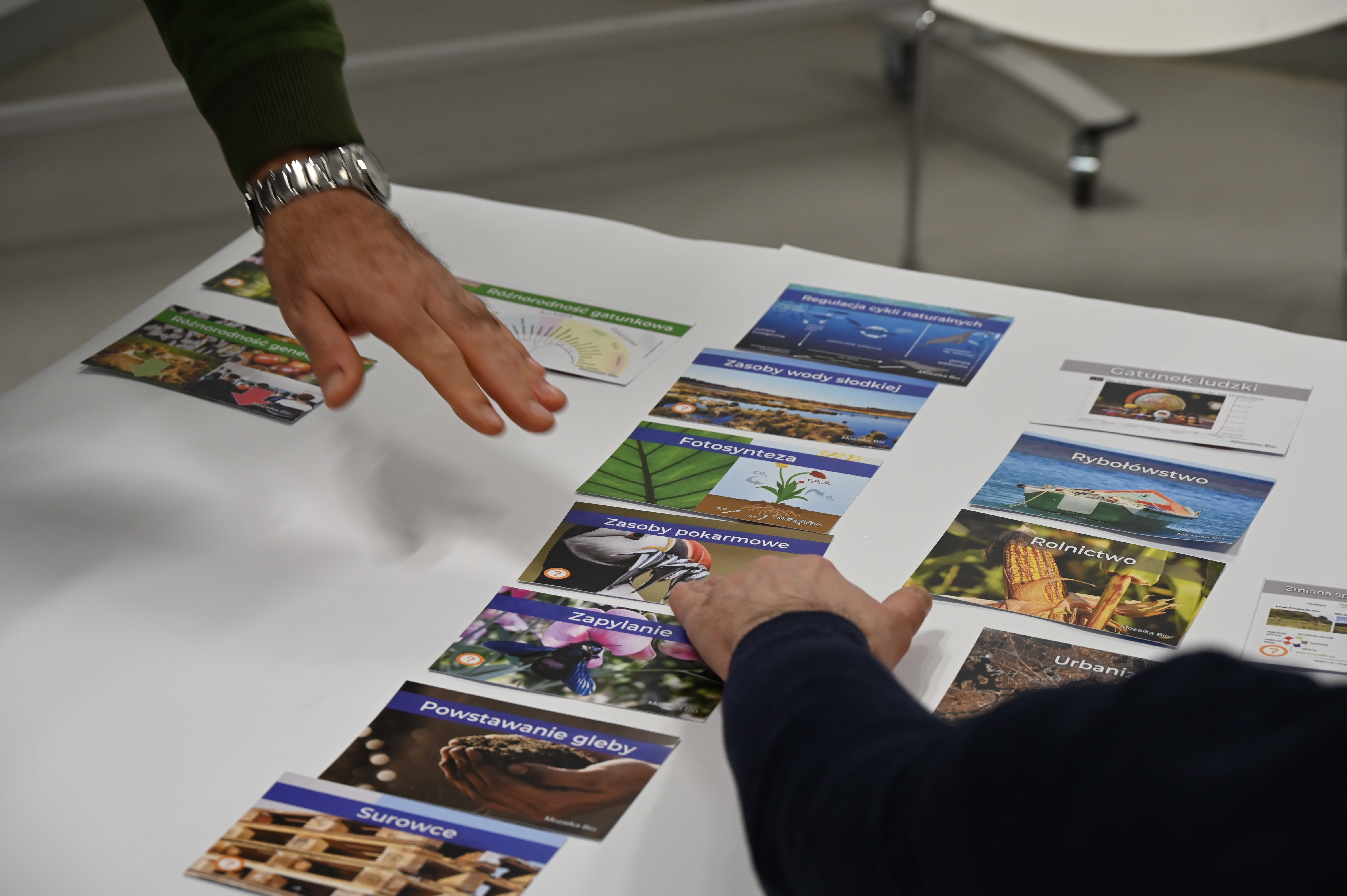
- Block B: Biodiversity Mosaic
This educational and informational workshop, based on the latest reports from the Intergovernmental Science-Policy Platform on Biodiversity and Ecosystem Services (IPBES), was conducted by certified facilitators:
- Katarzyna Udrycka – Climate Mosaic Association, Nature Explained initiative,
- Monika Sadowska – Regional Directorate for Environmental Protection in Kraków, Parents for Climate Foundation,
- Katarzyna Banul-Wójcikowska – ‘Grunt’ Food Strategy Institute,
- Michał Pilch – beekeeper and educator.
The classes provided synthetic knowledge about ecological processes and threats to biodiversity. Participants analysed the most common myths about nature, shared practical examples and identified areas particularly vulnerable to misinformation. Working in groups facilitated the exchange of experiences and strengthened cross-sectoral cooperation.
Outcomes of the event
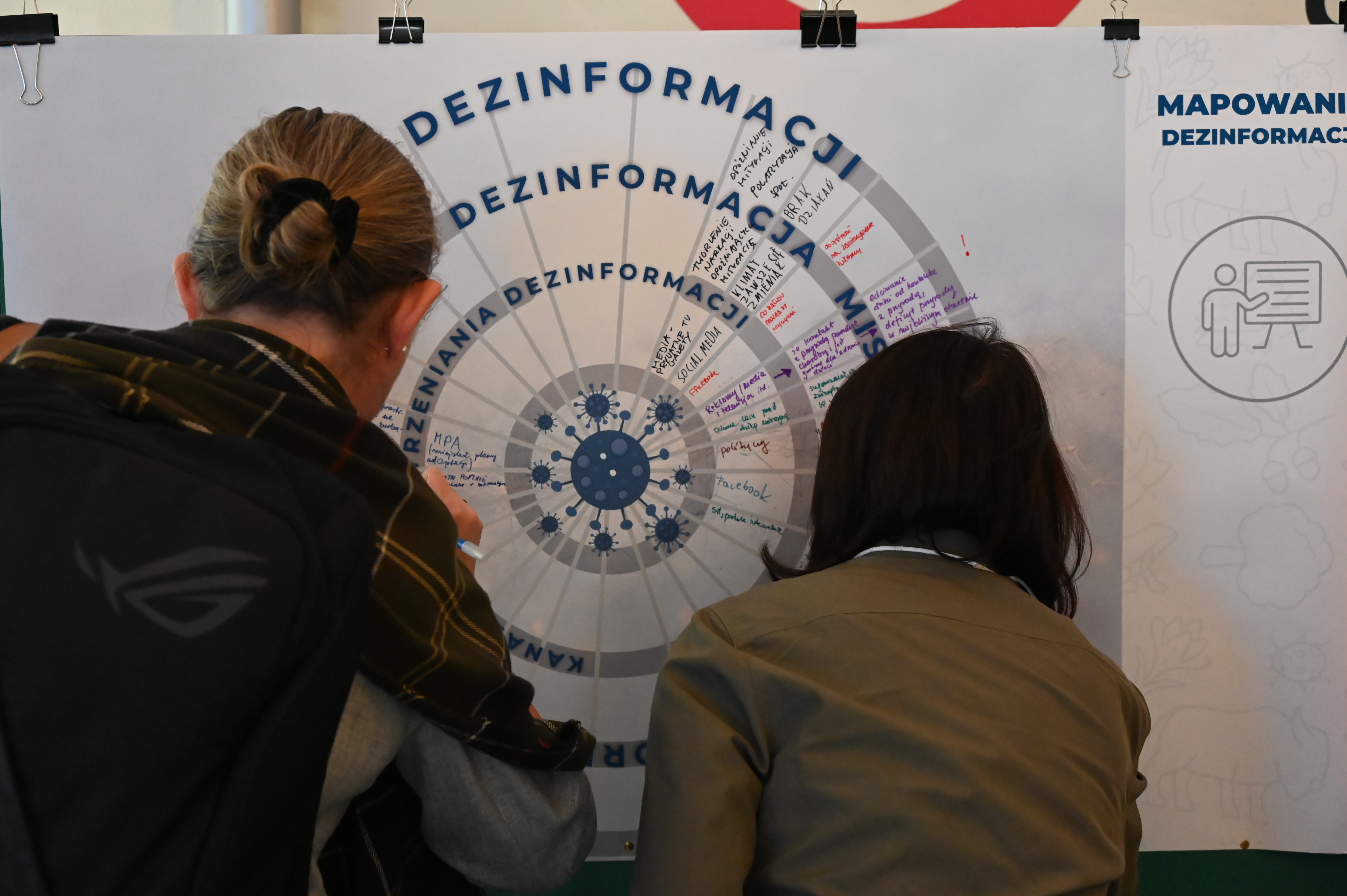
During the meeting, work began on creating a Map of Disinformation in the Area of Biodiversity, covering the most commonly repeated myths, their sources, as well as their potential social and environmental consequences. The event also enabled the initiation of work on solutions to support the depolarisation of the debate on the environment and the development of a network of cooperation between institutions that struggle with false narratives on a daily basis. The conclusions and recommendations from the first edition of BioDezinfoLAB will be developed in further educational and communication activities, which will continue in 2026.
More information:
Photo gallery: https://flic.kr/s/aHBqjCC7JC
A detailed summary of the event will soon be available at: https://www.gov.pl/web/klimat/dezinfo
Broadcast of the first part of the event: https: https://www.youtube.com/watch?v=LcaEpQb9vIQ