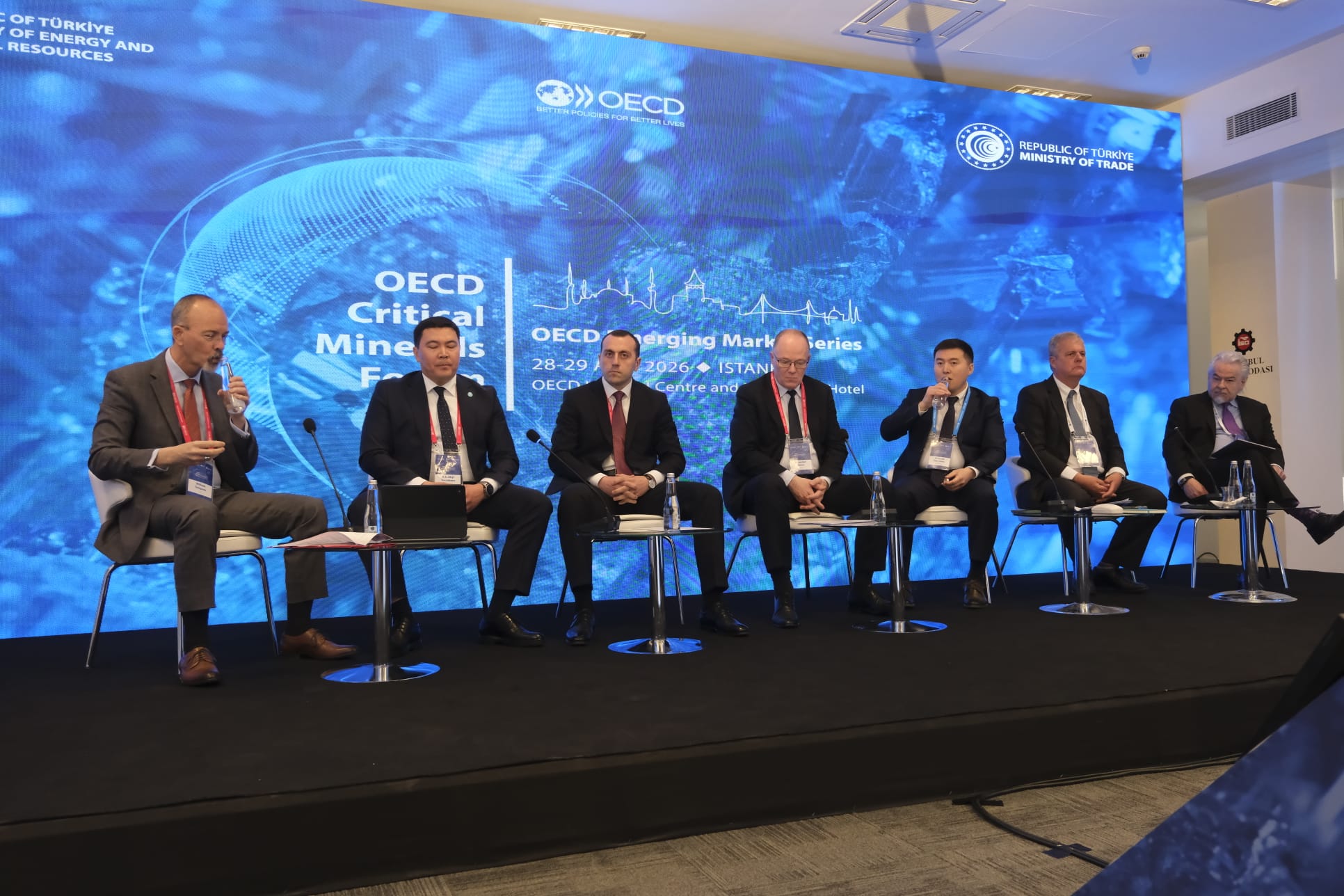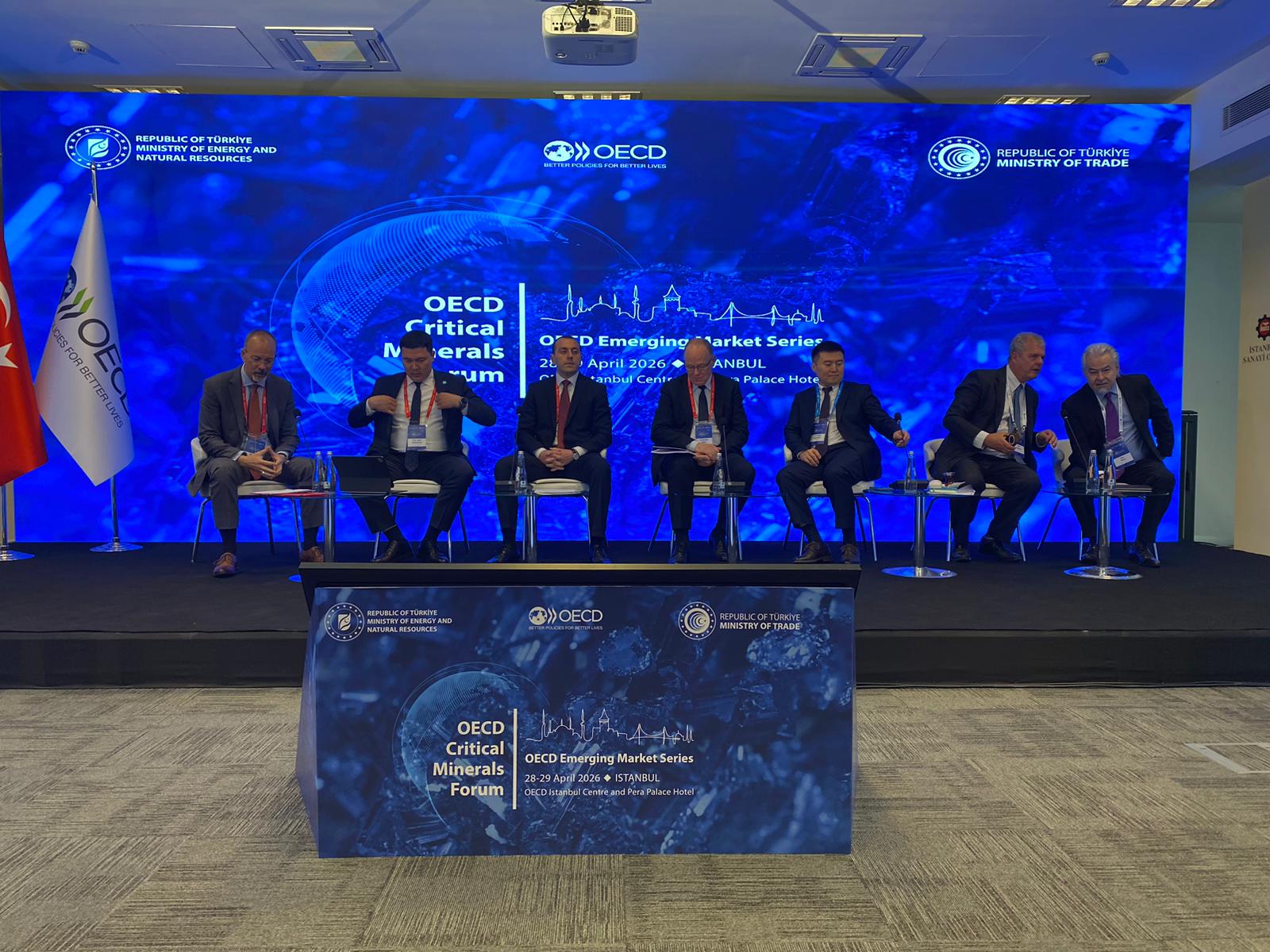
Deputy Minister Krzysztof Galos at the OECD Critical Minerals Forum
28.04.2026
The European Union has made a commitment to develop and implement national programmes for the exploration of critical raw materials, to monitor the supply chain, and to build up strategic stocks of raw materials. The changes in this area expected by 2030 were discussed at the OECD Critical Minerals Forum in Istanbul, which took place on 28 April 2026. The Deputy Minister of Climate and Environment and Chief Geologist of Poland, Krzysztof Galos, took part in the session: Central Asia - mobilising investment whilst managing risks in the supply chains of critical raw materials: an ambitious action plan.

Highlights
- The EU Critical Raw Materials Act stipulates that by 2030, 10% of critical raw materials will come from mining, 40% from processing, 25% from recycling, and the remainder from imports from countries with which the EU has strategic raw materials partnerships.
- Furthermore, no more than 65% of supplies to EU countries may come from a single non-EU country. This will prevent the EU economy from becoming dependent on supplies from a single source.
- The CRMA Regulation also obliges Member States to develop and implement national programmes for the exploration of critical raw materials, establishes mechanisms for monitoring risks in the critical raw materials supply chain (including early warning systems) and for building up strategic stocks of these raw materials.
The Critical Minerals Forum, organised by the OECD (Organisation for Economic Co-operation and Development), brought together representatives of OECD member governments, international institutions and the private sector. Its aim was to discuss the key challenges associated with the development of global supply chains for critical raw materials.
As part of the event, Deputy Minister Krzysztof Galos took part in a session entitled ‘Unlocking investment in critical raw materials supply chains’, during which investment barriers and instruments supporting the sector’s development were discussed. The importance of a stable and predictable regulatory framework, international cooperation and the mobilisation of private capital was emphasised.
The Forum’s programme also included a ministerial round table, which served as a platform for exchanging experiences and best practices regarding raw materials policies and security of supply.
The panel discussions during the round table focused on Southeast Asia, Central Asia, Africa, Latin America and the Caribbean. Deputy Minister Krzysztof Galos took part in the debate ‘Central Asia – mobilising investment whilst managing risks in the supply chains of critical raw materials: an ambitious action plan’.
Open, digitised, standardised and easily accessible geological data are key elements in laying the foundations for an effective policy to attract investors in the critical raw materials sector
– noted Deputy Minister Krzysztof Galos.
Poland has a fairly well-developed system for accessing geological data and is currently in the final phase of the first stage of its digital transformation
– added the Chief Geologist of Poland.
During the debate, attention was drawn to the need to balance efforts to attract investment with effective management of environmental, social and geopolitical risks.
The Minister’s participation in the Forum was a key element in strengthening international cooperation and promoting Poland’s approach to the sustainable development of the critical raw materials sector.