Deputy Minister Krzysztof Galos attended the World Mining Congress
26.06.2026
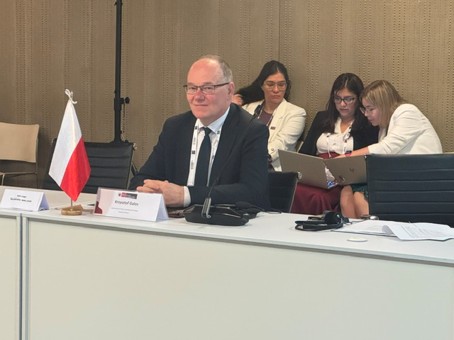
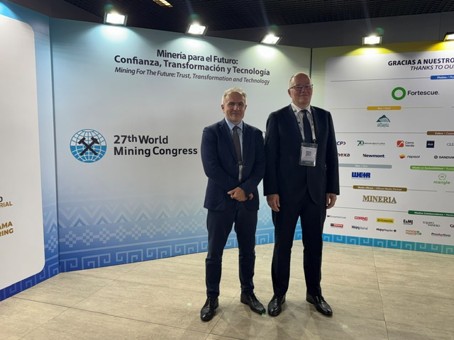
Strengthening resilience and maintaining value chains based on global cooperation was the main theme of the 27th World Mining Congress in Lima (Peru). The event, held from 24 to 26 June 2026, was attended by the Chief National Geologist, Krzysztof Galos, and the Director of the Department of Geology, Maciej Młynarczyk.

The Minister took part in the High-Level Round Table entitled ‘Towards the Future of Mining: Resilient, Sustainable and Competitive Critical Minerals Value Chains’. The meeting, chaired by Waldir Ayasta, Minister of Energy and Mining of the Republic of Peru, was attended by ministers or ambassadors from 10 countries: Peru, the USA, Guatemala, China, India, Malaysia, Brazil, the United Kingdom, Poland and the Netherlands.
The discussion focused on various aspects and conditions related to the development of mining as a primary source of critical raw materials, including, amongst other things, trends in critical raw materials markets, the development of raw materials value chains, the regulatory framework for geological and mining activities, competitive and sustainable geological exploration, the technological transformation of mining operations, and the challenges and opportunities for the development of sustainable mining.
The future of the mining sector depends on our ability to strengthen resilience and maintain value chains based on raw materials, with the necessary international cooperation in this area. The sustainable development of the mining sector is of vital importance for the progress of modern economic sectors. Within the European Union, this issue is treated as a strategic priority, as reflected in the Critical Raw Materials Act introduced two years ago. In this Act, the European Union has set out several targets to be achieved in relation to critical raw materials, including meeting at least 10% of the EU’s demand for these materials from its own mining sector. Given our resource base, Poland’s efforts in this respect are focused on several raw materials, in particular copper and coking coal, as well as helium. We have significant potential in undeveloped deposits of, amongst others, nickel, molybdenum, tungsten, titanium and vanadium ores, although, given our resource base, the greatest opportunity is likely to remain the development of copper mining, with the by-product extraction of silver, gold, platinum group metals and other metals. Companies from Canada, the US and Australia are showing an interest in investing in our country in this respect. On the other hand, according to the CRMA, we are launching the National Programme for the Exploration of Critical Raw Materials, focusing primarily on potential new sources of, amongst others, copper, platinum group metals, graphite, helium, tungsten, titanium and vanadium. This stage of exploration falls within the remit of the state and is conducted by the national geological survey. However, we encourage private entities to undertake more detailed exploration work, which over the last dozen or so years has resulted in a significant increase in documented copper and silver ore deposits
– said Krzysztof Galos, Deputy Minister of Climate and Environment and Chief National Geologist.
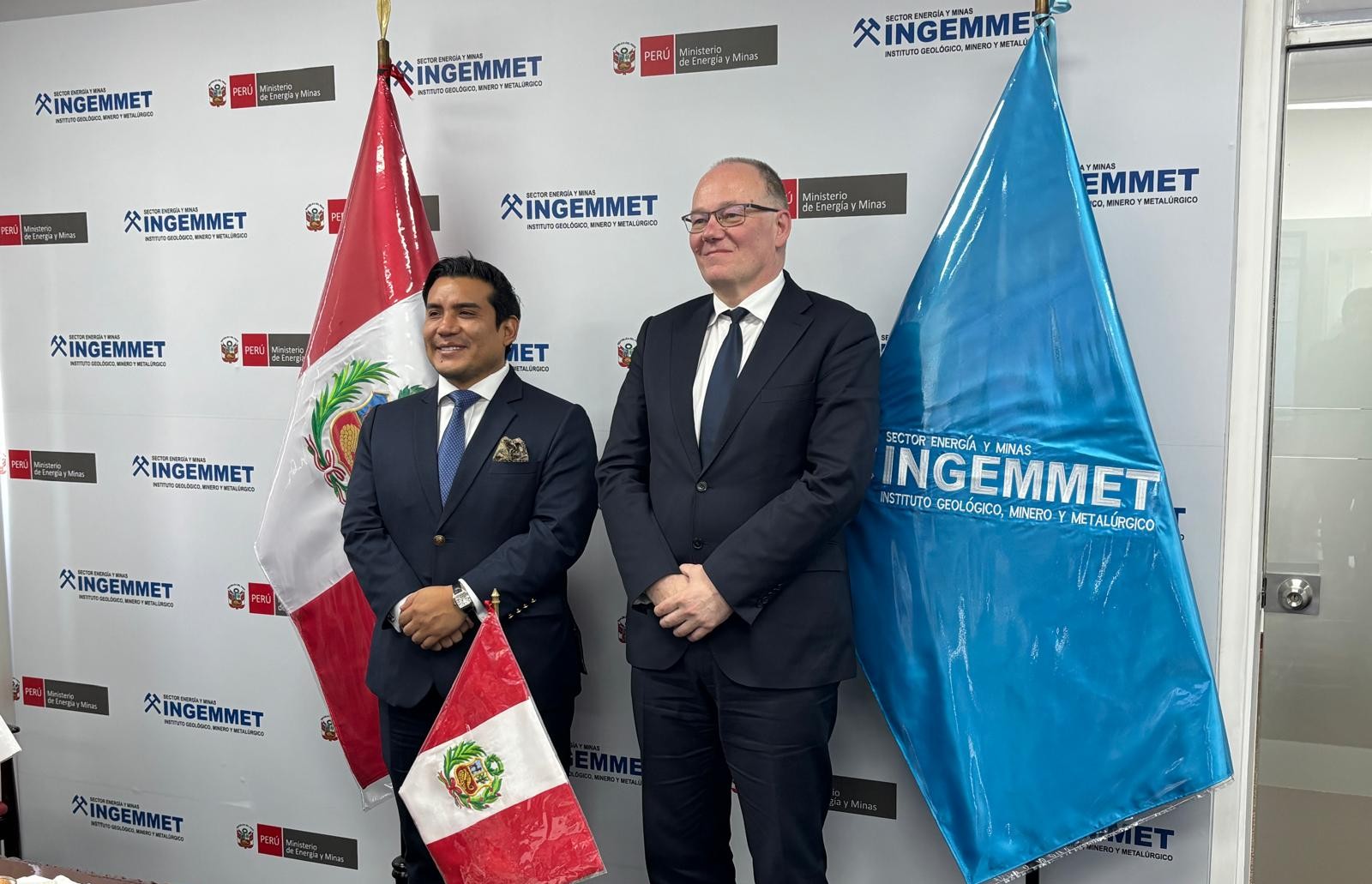
Minister Krzysztof Galos’s visit to Peru also provided an opportunity to meet with officials from the Instituto Geológico, Minero y Metalúrgico (INGEMMET), which acts as Peru’s geological survey and as the licensing authority for geology and mining. Discussions with INGEMMET’s Director-General, Paolo Alzamora, and his colleagues covered, amongst other things, the operating conditions and scope of the Polish and Peruvian geological surveys (including, for example, geological mapping, mineral deposit geology, geological hazards and geoparks) as well as the Polish and Peruvian licensing authorities for geological and mining activities (the rules for granting licences, associated fees and databases). During the discussion, the scope of possible future cooperation between the Polish and Peruvian geological services was also outlined with a view to concluding an appropriate cooperation agreement in the future.