Improving the operations of Inspectorate of Environmental Protection
20.02.2026
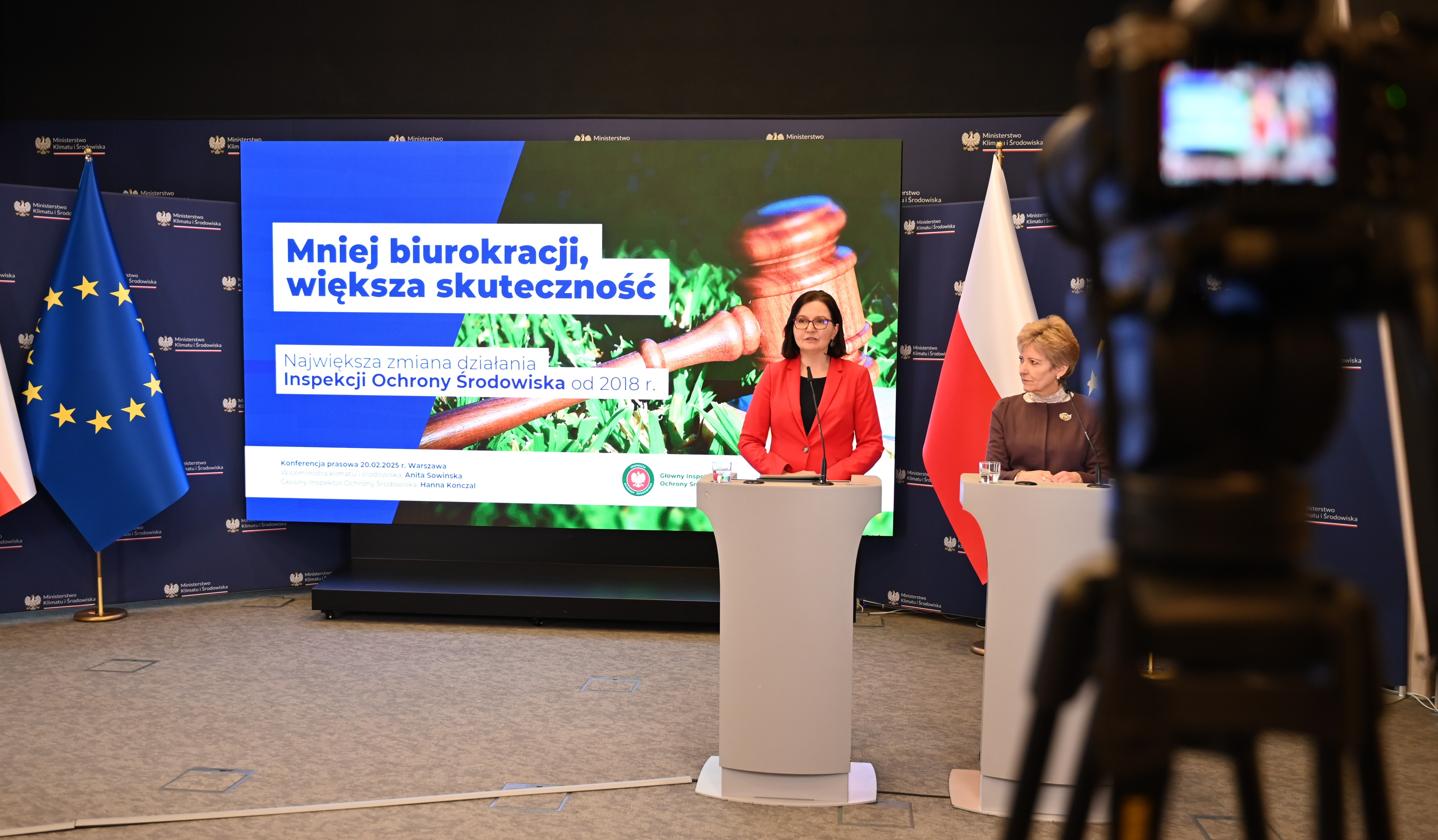
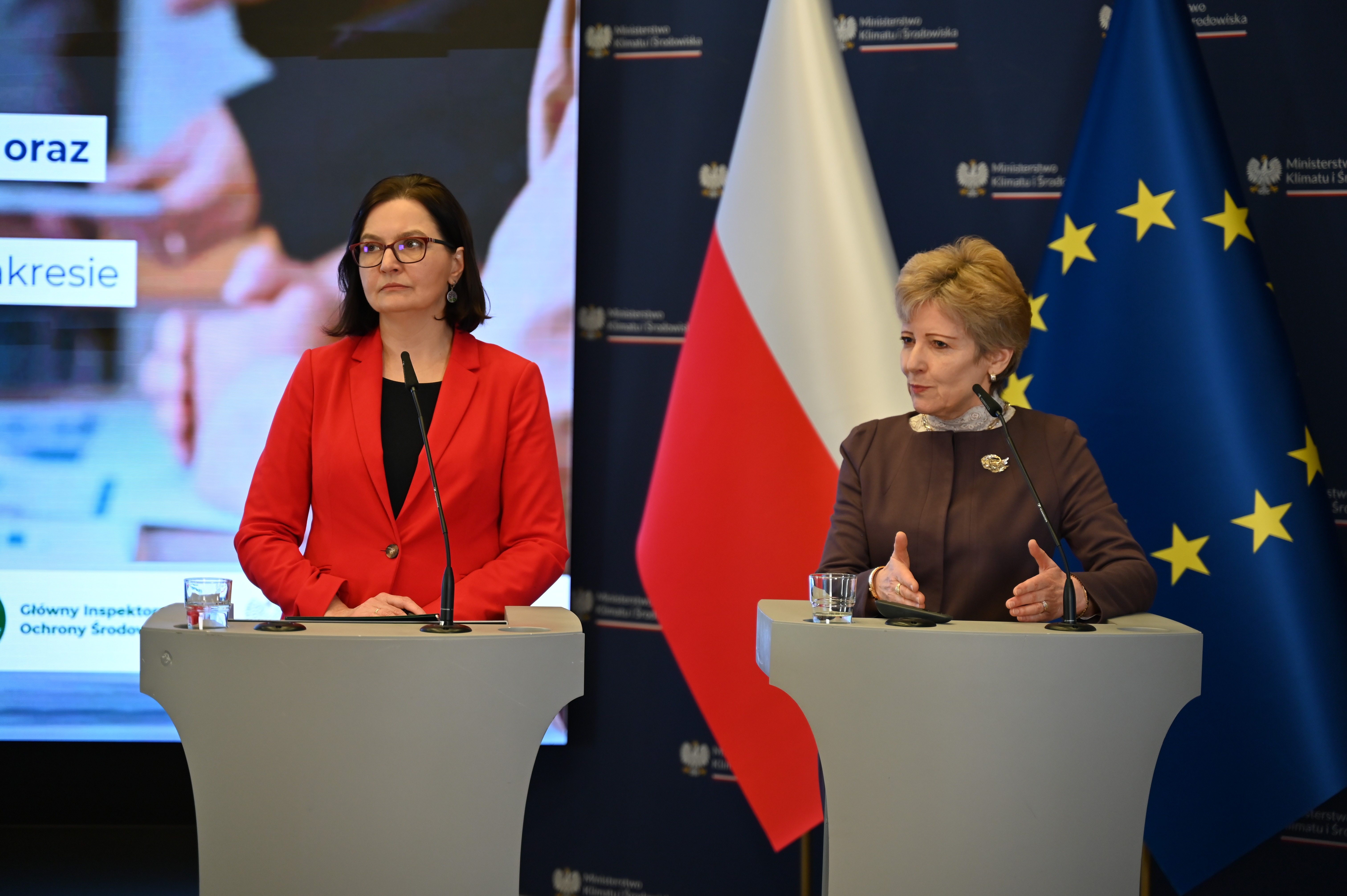
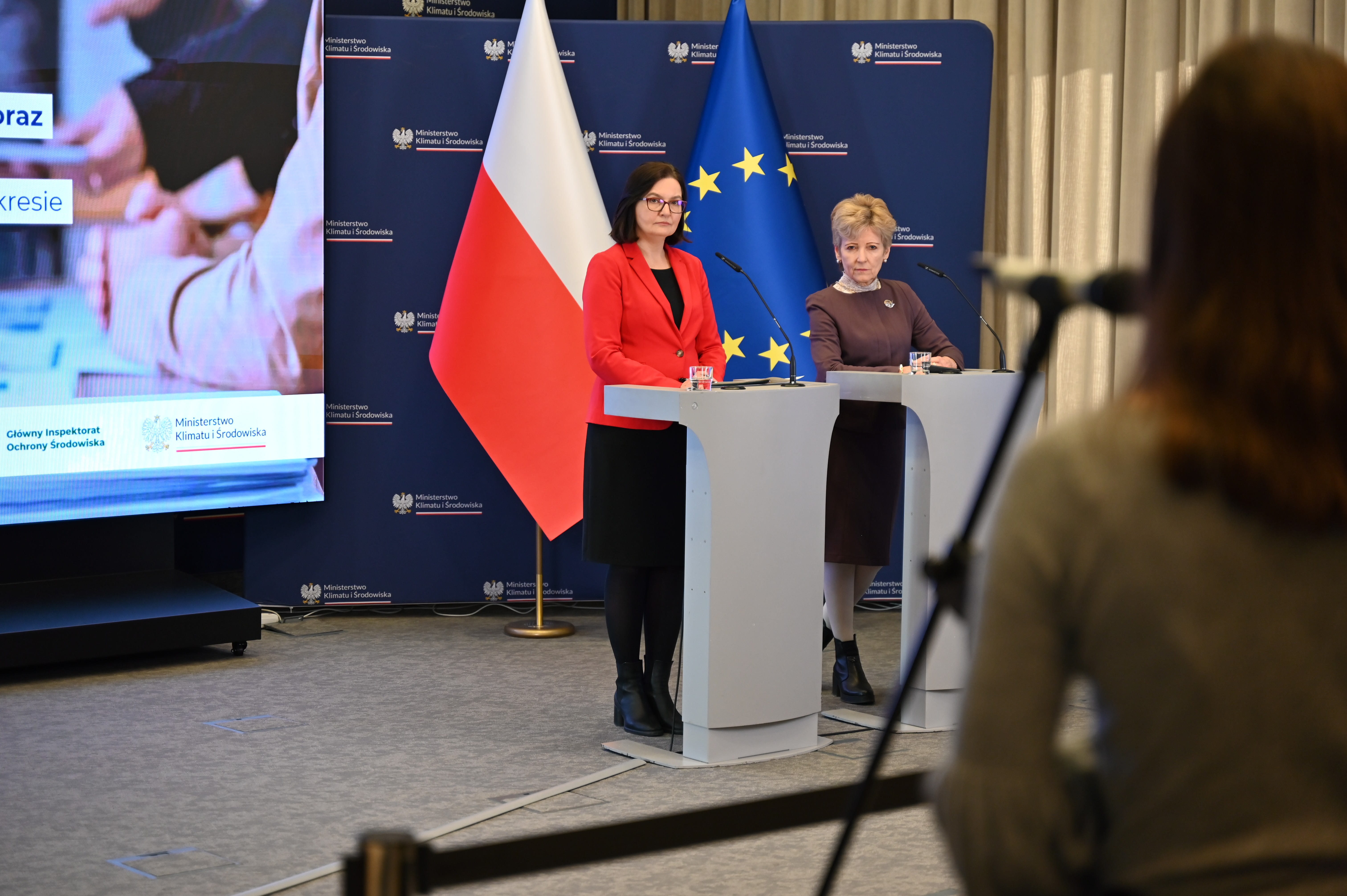
The Ministry of Climate and Environment has prepared a draft law that will increase the effectiveness of the Inspectorate of Environmental Protection and speed up proceedings after violations of the law have been identified. The planned changes will simplify procedures, shorten the time needed to issue decisions and strengthen the protection of human health and the environment, while reducing the administrative burden on businesses and authorities. Detailed information on the draft bill were presented by Deputy Minister of Climate and Environment Anita Sowińska and Hanna Kończal, Chief Inspector of Environmental Protection, during a press conference on 20 February 2026 in Warsaw.

Highlights
- The Ministry of Climate and Environment has prepared a draft bill amending certain acts in order to improve the operations of the Inspectorate of Environmental Protection (UDER 81).
- The draft aims to streamline inspections and actions taken by the Inspectorate of Environmental Protection after violations of the law have been identified.
- The next stage of work on the draft will be agreements and public consultations.
The draft bill aims to simplify procedures, shorten proceedings and make better use of available data, while strengthening the protection of human health and the environment. All proposed changes will increase the effectiveness of inspections, shorten proceedings and improve enforcement in cases of environmental law violations.
The draft bill streamlining the activities of the Inspectorate of Environmental Protection is a deregulatory project and the biggest change in the Inspectorate's operations since 2018. We are speeding up its operations, but maintaining the highest quality of control activities, while reducing administrative burdens in terms of penalties
– said Deputy Minister of Climate and Environment Anita Sowińska.
The draft is a response to the conclusions of an analysis on the current functioning of the Inspectorate of Environmental Protection, which pointed to the need to simplify procedures and make better use of available data. The new solutions are also intended to reduce the administrative burden on businesses and public administration bodies.
Hanna Kończal, Chief Inspector of Environmental Protection, spoke at a press conference about how the proposed changes could affect the functioning of businesses.
We are planning to simplify the procedure, i.e. we are allowing optional rather than mandatory participation of representatives of the authorities issuing permits in joint inspections prior to the issuance of a permit. This will be a simplification that will shorten the waiting time for obtaining a permit. Procedures should therefore be simpler and faster
– emphasised Hanna Kończal, Chief Inspector of Environmental Protection.
Simplification of procedures and faster proceedings
Key areas of change:
- Regulation of the procedures followed by environmental protection inspection authorities in cases where a plant has remedied the irregularities that led to the previous suspension (by a decision issued pursuant to Article 12(4) of the Act on the Inspectorate of Environmental Protection) of the plant's operations due to a threat to human health or life or to the environment, or the suspension of the commissioning of a facility or installation that does not meet environmental protection requirements.
- Unification of the concept of ‘accredited laboratory’ in the Acts on Water Law and Environmental Protection. In both Acts, it will be understood in the same way, i.e. as a laboratory accredited within the meaning of the Act on Conformity Assessment and Market Surveillance Systems.
- Introduction of a new threshold for the total amount of penalties specified in Articles 42, 46 and 194 of the Act on Waste.
- Replacement of selected fees with criminal sanctions by amending the Act on Water Law and adding two new offences relating to fertiliser management.
- Enabling the Inspectorate of Environmental Protection to plan and carry out inspections based on data available to the Agency for Restructuring and Modernisation of Agriculture (ARMA) by amending:
- the Act on Inspection of Environmental Protection,
- the Act on Water Law,
- the Act of 4 November 2022 on the animal identification and registration system.
Reducing the burden on the Inspectorate and voivodship marshals by:
a) changing the mandatory participation of a representative of the issuing authority in the inspection (Article 41a(1) of the Act on Waste) to optional participation – only when the authority deems it appropriate,
b) specifying in Article 41a(3) the deadline for issuing a decision (14 days from the end of the inspection), indicating that the inspection should be carried out within 50 days of receipt of the application, introducing the possibility of tacit conclusion of the proceedings and establishing that, in the event of notification of the impossibility of carrying out the inspection, the authority shall refuse to issue a permit,
c) introducing the obligation for the competent authority to provide verified and complete documentation necessary to conduct the inspection,
d) adding the obligation to include in the permit information about a negative opinion of the Voivodship Inspectorate of Environmental Protection (VIEP) together with the reasons for not taking it into account,
e) introducing in Article 3 of the Act on Waste a definition of ‘significant change to a permit’ (concerning permits for collection, processing and waste generation permits covering collection or processing).
Changes important for entrepreneurs
Thanks to the new regulations, entrepreneurs will gain the following benefits:
- the possibility to apply for the resumption of previously suspended activities,
- simpler and faster procedures for obtaining and changing waste permits,
- shorter waiting time for decisions on waste management,
- a lower risk of losing the right to conduct business,
- a reduction in the financial burden associated with penalty fees.
Less burden on public administration
The draft will also bring measurable benefits for the administration and courts, including:
- reducing the burden on licensing authorities,
- streamlining the control and decision-making process in the field of waste management,
- reducing the number of cases brought before administrative courts.
Next stages of work on the draft bill
The next stage of work on the bill involves consultations with members of the Council of Ministers, the Head of the Chancellery of the Prime Minister, the Government Legislation Centre, as well as public consultations and opinions.