No longer waste, but valuable raw materials. 1 billion empty containers have been collected under the Deposit Return Scheme
08.05.2026
1 billion containers have already been collected at 57,000 return points and will be put back into circulation. This brings real benefits: less raw material consumption, more effective recycling, cleaner towns and forests, and lower cleaning costs. Every bottle and can returned strengthens the system, which fosters a responsible economy and good everyday habits.

Highlights
- The Deposit Return Scheme (DRS) reduces littering of public spaces.
- Packaging collected under this scheme is less contaminated, making it easier to recycle.
- Since the launch of the scheme, 1 billion deposit-bearing bottles and cans have been returned.
- There are 57,000 return points across Poland, including 12,500 with reverse vending machines.
- The deposit follows the packaging, and the flow of funds is monitored by operators who keep detailed records.
- Unclaimed deposits may only be used to fund the operation of the system.
- System operators act on a non-profit basis; they do not work for profit.
In the economy, closing the loop on raw materials is crucial. Materials collected through the Deposit Return Scheme are exceptionally clean, meaning they can be reused to produce new packaging, including food-contact packaging
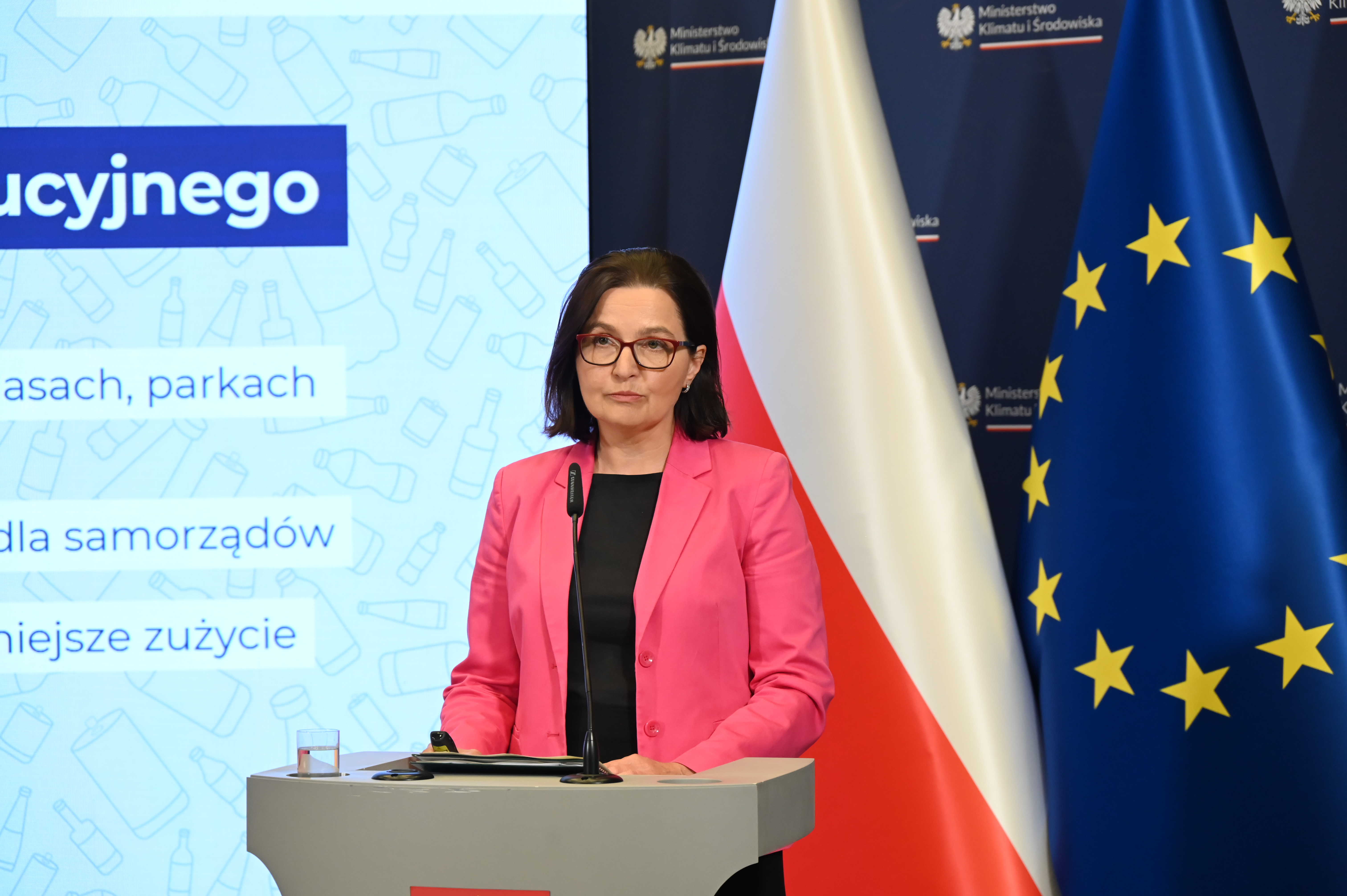
– said Anita Sowińska during a press conference on the DRS.
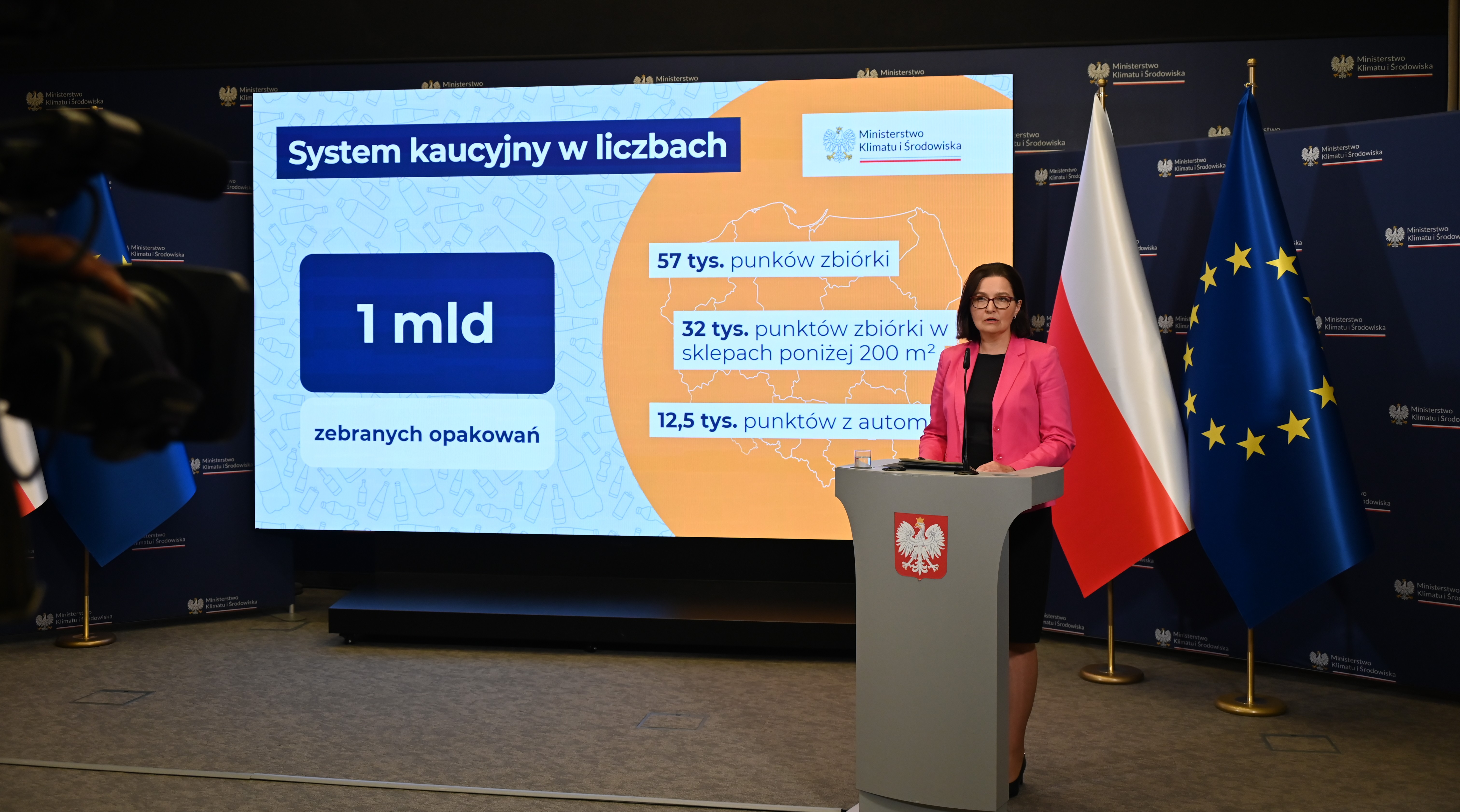
The Deposit Return Scheme became a natural part of everyday shopping. Empty bottles and cans are increasingly finding their way back to where they belong – for recycling. The latest figures show that a total of 1 billion items of packaging have already been collected at 57,000 collection points. The majority of these, 81%, were returned via reverse vending machines, available at 12,500 locations.
Although the statutory obligation to collect packaging rests with large shops having a floor area of over 200 square metres, 32,000 smaller outlets already decided to join the scheme voluntarily. This accounts for as much as 56% of all return points.
A system packed with benefits
The DRS strengthens recycling where it matters most – at the collection stage. Plastic and metal were already being recovered, but thanks to the DRS, it is easier to collect them in large quantities and of a better quality.
Returned packaging is cleaner than that thrown into ordinary bins, which eases its processing and reuse, for example in the production of new bottles and cans. In practice, this means less raw material waste, more recycled content in packaging – meaning more recycled bottles – and lower consumption of new resources.
Organised collection also reduces the number of discarded bottles and cans in public spaces – resulting in cleaner streets, parks and forests, and a reduced burden on local authorities.
The whole model drives the development of green jobs – from sorting, through logistics, to the processing of raw materials – creating a modern, increasingly specialised sector of the circular economy. It also reinforces eco-friendly habits, which over time become a natural part of our daily lives.
Simple rules for the deposit circulation
The Deposit Return Scheme is a simple mechanism in which money circulates alongside packaging. When a consumer buys a drink and pays a deposit, the shop does not make a profit on it – it merely recovers the amount it had previously paid when purchasing the goods. All transactions are supervised by the operator, who keeps a precise record of funds within the system.
The system is designed in such a way that it is the individual market participants who ensure the accuracy of settlements. Starting with the customer, who expects to recover the deposit when returning the packaging, through shops, wholesalers and distributors, right up to the operators. There is no mechanism for the retroactive refund of deposits between individual entities in the supply chain.
If a consumer does not return the packaging, a so-called unclaimed deposit arises. These are funds allocated to packaging that has not been returned to collection points. At the end of the calendar year, the operator allocates them exclusively to cover the costs of operating the system e.g., transport, administration and the so-called handling fee, that is, remuneration for shops for processing returns.
The system is not designed to generate profit from deposits. Any financial surplus supports its operation and development.
System operators – role and operating principles
Deposit scheme operators coordinate the circulation of packaging on behalf of producers – from collection and transport to record-keeping, accounting and reporting. They operate under the extended producer responsibility scheme, which means that companies placing drinks on the market fund the system.
The operator’s revenue comes primarily from contributions by producers and importers, as well as from the sale of collected raw materials. Under the Act, unclaimed deposits may only be added to the operator’s budget after the end of the financial year, and these funds may be used solely for the maintenance, development and stability of the system, not for generating profit.
The operator’s responsibilities include organising collection, collecting and transporting packaging, maintaining records and settling deposits, and paying retailers for handling returns. The operator also bears administrative and reporting costs, as well as other expenses necessary for the proper functioning of the scheme.
Operators act as non-profit entities. Any surplus is reinvested to ensure the efficiency of collection, financial transparency and the achievement of environmental objectives.