Poland is accelerating its green transition - agreement on new climate and energy programme has been signed
22.04.2026
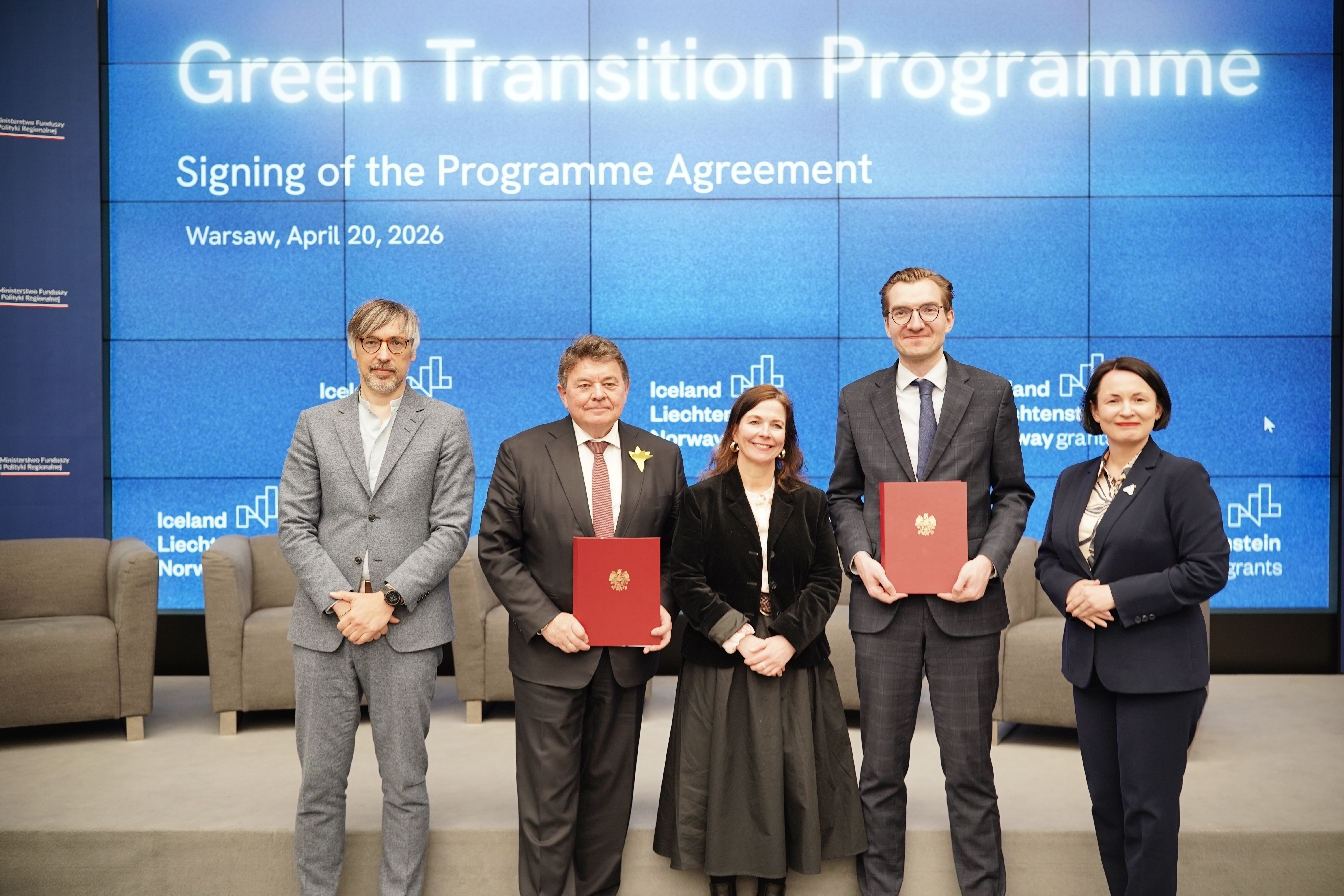
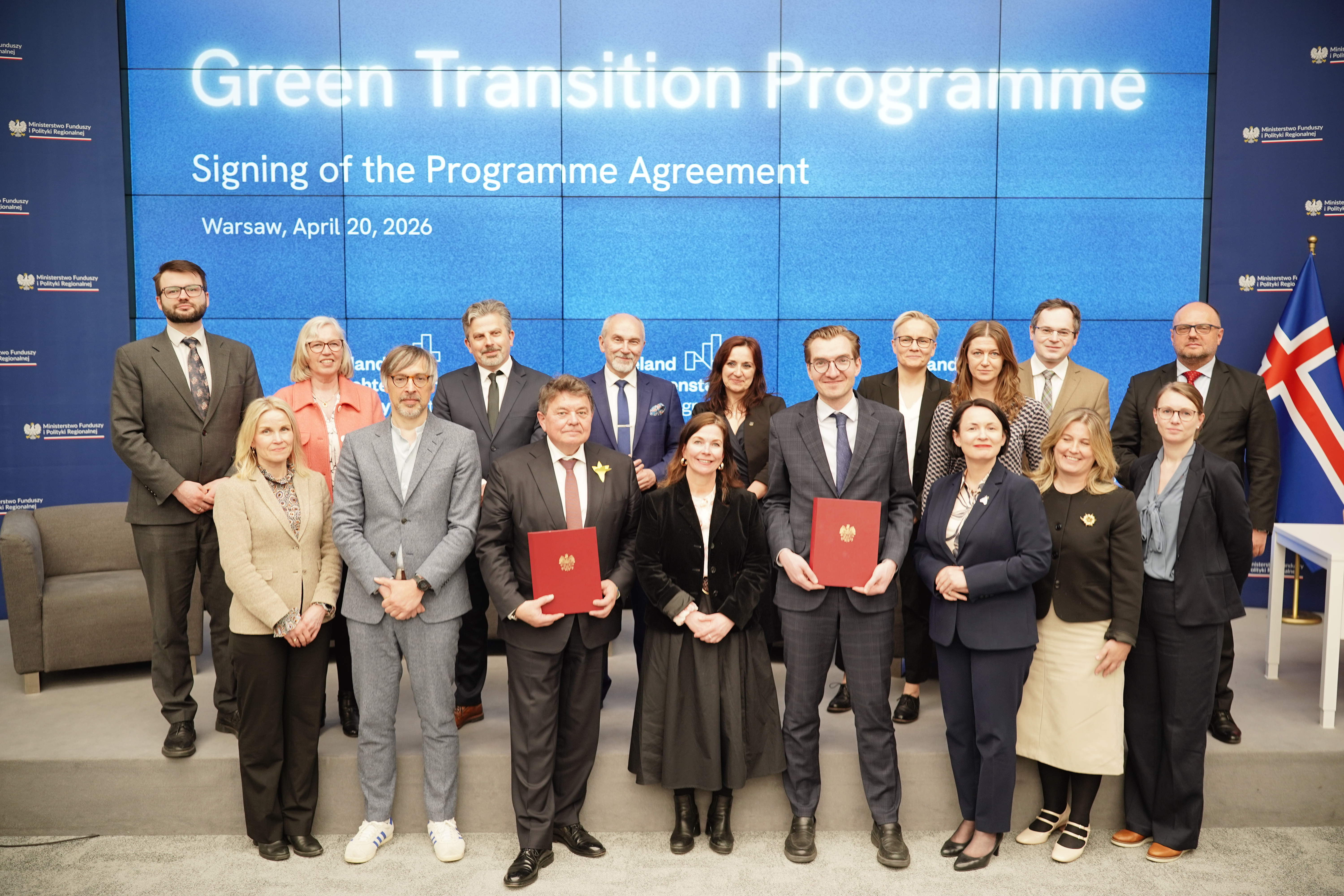
The new programme, financed by the Norwegian and EEA Grants, will provide Poland with EUR 160 million for measures to accelerate the climate and energy transition. The funds will be allocated to projects related to climate, energy, nature conservation and the circular economy. The programme will be operated by the Ministry of Climate and Environment, with the support of the National Fund for Environmental Protection and Water Management. On 20 April 2026, in the presence of Krzysztof Bolesta, Deputy Minister of Climate and Environment, signed an agreement for the implementation of the programme.

Highlights
- The total budget for the ‘Green Transition’ Programme amounts to EUR 160 million from the EEA Financial Mechanism, plus over EUR 28 million in national funding.
- The Programme is the result of Poland’s long-standing cooperation with Iceland, Liechtenstein and Norway, and is being implemented in partnership with institutions from those countries.
- The Programme will cover four areas: climate, energy, nature conservation and the circular economy.
- It includes 9 open calls for proposals and 11 pre-defined projects, with project implementation running until the end of April 2031.
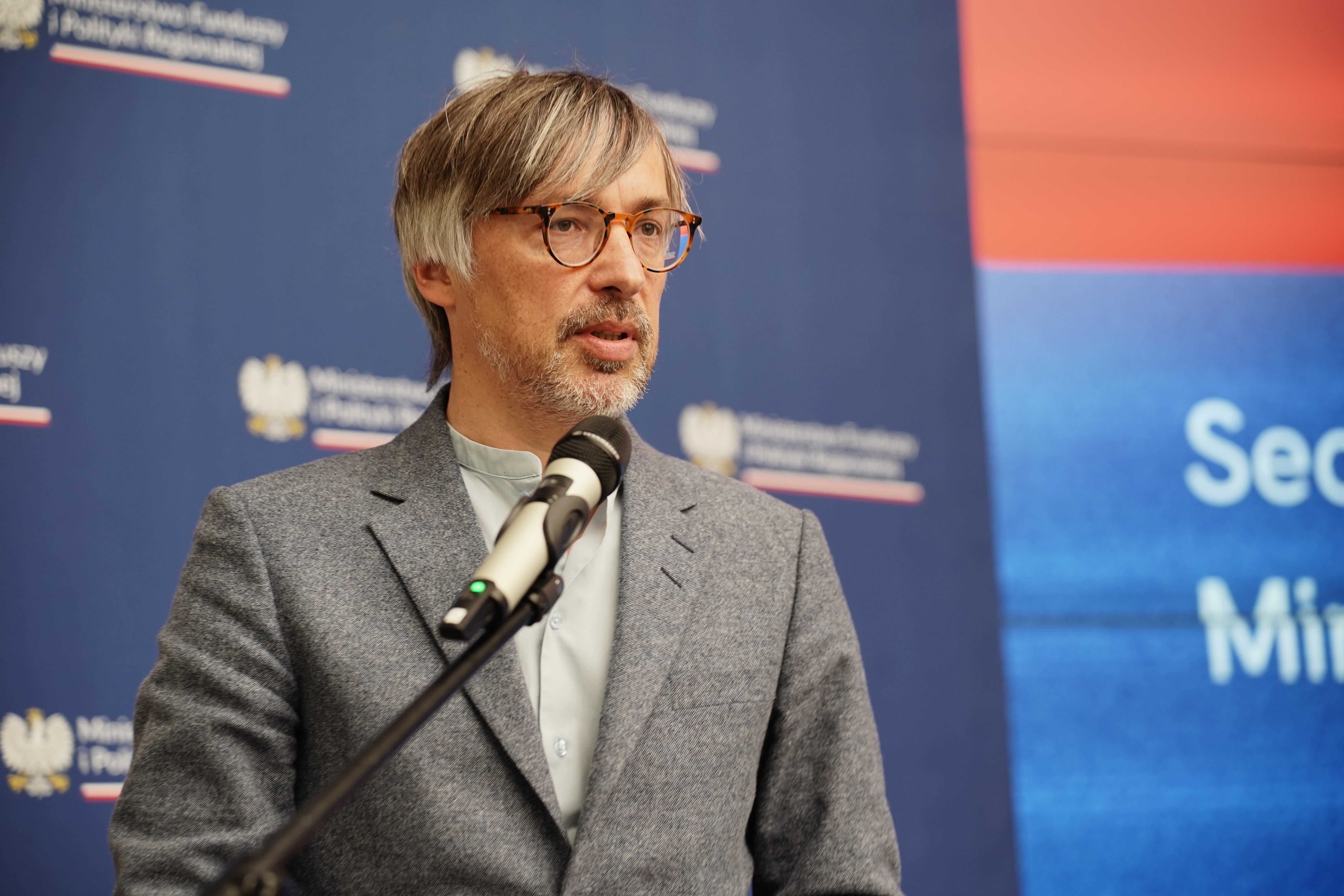
The projects we will carry out thanks to funding from the Norwegian and EEA Grants will focus on areas that are crucial to our future: climate, energy, geothermal energy and the circular economy. Technologies such as CCUS can genuinely strengthen the competitiveness of Polish industry in the context of climate policy, whilst the development of geothermal energy will help increase our energy independence, which is so vital in the face of global tensions. Equally important are measures concerning nature conservation and water management, especially as Poland is among the countries most vulnerable to water shortages. All these projects form a solid foundation for further development and for strengthening our resilience in key sectors
– said Krzysztof Bolesta, Deputy Minister of Climate and Environment.
The agreement, signed on 20 April 2026, is the result of many years of cooperation between Poland and Iceland, Liechtenstein and Norway.
It is a partnership programme and is agreed and implemented in cooperation with institutions from the donor countries, in particular the Norwegian Environment Agency (NEA), the Norwegian Water Resources and Energy Directorate (Norges vassdrags- og energidirektorat, NVE) and the Icelandic Research Centre (Rannsóknamiðstöð Íslands, RANNIS). This cooperation combines financial support with the transfer of knowledge, experience and best practices.
EUR 160 million for the green transition
The total budget for the ‘Green Transition’ programme amounts to EUR 160 million from the European Economic Area Financial Mechanism (EEA FM), supplemented by a national contribution of over EUR 28 million.
The ‘Green Transition’ programme is one of eight programmes being implemented under this round of the Norwegian and EEA Grants in Poland, and is also one of the largest among them. The total amount of funding allocated to Poland is PLN 4 billion, or nearly EUR 925 million.
The programme’s four areas of support
The aim of the Programme is to accelerate the green transition. The activities will be carried out in four main areas:
- Climate – adaptation to and mitigation of the effects of climate change, educational initiatives, improving air quality.
- Energy – support for energy communities, the development of CCUS technology, energy storage and geothermal energy.
- Nature – protection of ecosystems and biodiversity, development of a database for environmental impact assessments, support for the creation of new nature reserves, monitoring of large predators.
- Circular economy – circular water management, circularity in construction and green public procurement.
Calls for proposals and predefined projects
Under the Programme, there are plans to launch 9 open calls for proposals and to implement 11 pre-defined projects, including projects related to:
- development of geothermal energy,
- green public procurement,
- climate education,
- systemic solutions in the field of CCUS,
- nature conservation and the creation of new nature reserves.
In addition, initiatives will be implemented under the Bilateral Cooperation Fund, including those addressing climate disinformation.
The first calls for proposals are scheduled for the 3rd and 4th quarters of 2026. Projects may be implemented until the end of April 2031.
________________________________________
The European Economic Area (EEA) Financial Mechanism is a non-repayable form of financial support granted to certain European countries, including Poland, to reduce economic and social disparities within the EEA and to strengthen bilateral relations between the Donor and Beneficiary States. It also enables Donor States to have free access to and cooperate with the European Union market.
The Programme Operator, i.e. the entity responsible for the preparation and implementation of the programme, will be the Ministry of Climate and Environment, with the support of the National Fund for Environmental Protection and Water Management.