Polish and Icelandic Geologists Develop a System to Support Geothermal Resource Monitoring
24.02.2025
Geothermal system operators in Poland will soon have access to a set of free computational tools that will enable them to better manage their geothermal resources. This initiative is the result of collaboration between scientists from the Polish Academy of Sciences and the Icelandic Geological Survey within a project funded by the EEA and Norway Grants.

Currently, up to ten geothermal heating plants are operating or awaiting launch in Poland. However, considering municipal investment plans, this number is expected to grow steadily. In this context, the issue of proper geothermal water reservoir management is becoming increasingly important, as these resources, like other water supplies, can be depleted if overused or mismanaged.
Geothermal Sources 2.0
To address this challenge, a set of computer tools has been developed as part of a joint research project called GeoModel (full title: ”Optimal Management of Low-Temperature Geothermal Reservoirs – Polish-Icelandic Cooperation in Reservoir Modeling”), carried out by the Mineral and Energy Economy Research Institute of the Polish Academy of Sciences in partnership with Iceland GeoSurvey.
The geologists used the Python programming language and existing software as a foundation to develop several tools, enabling, among other functions, the prediction of water table levels in wells during operation, better interpretation of reservoir tests and numerical model calibration, and an algorithm for identifying optimal locations for new drilling.
The tools' effectiveness was verified through tests using real data collected from geothermal well monitoring in three locations in Iceland (Botn, Sydra Laugaland, Hjalteyri) and two in Poland (Pyrzyce, Stargard).
Continuous Monitoring
The research focused on low-temperature reservoirs, where water temperatures range from approximately 40°C to 90°C. The study demonstrated that proper modelling allows for simulations of various future exploitation scenarios, including predicting potential risks such as excessive water withdrawal, pressure drops, or temperature declines in the reservoir.
With regular resource monitoring and the support of these newly developed computational tools, necessary preventive measures can now be taken much earlier.
Notably, these tools enable calculations and simulations for highly mineralized waters, which are common in Poland. This feature represents a significant innovation compared to existing market software.
Free Tools for Polish Local Governments
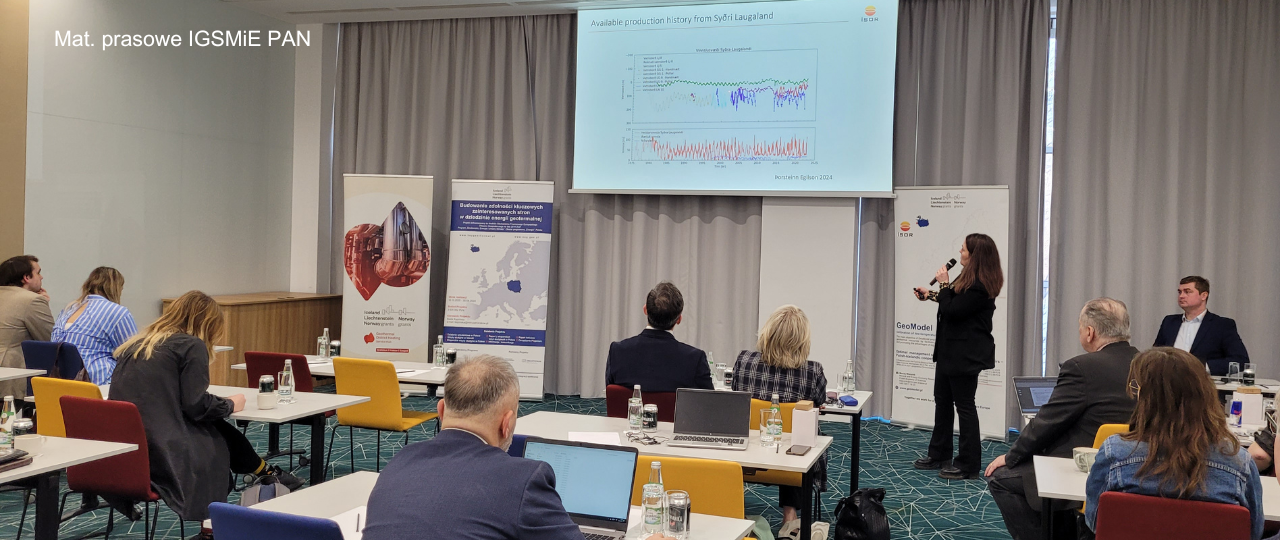
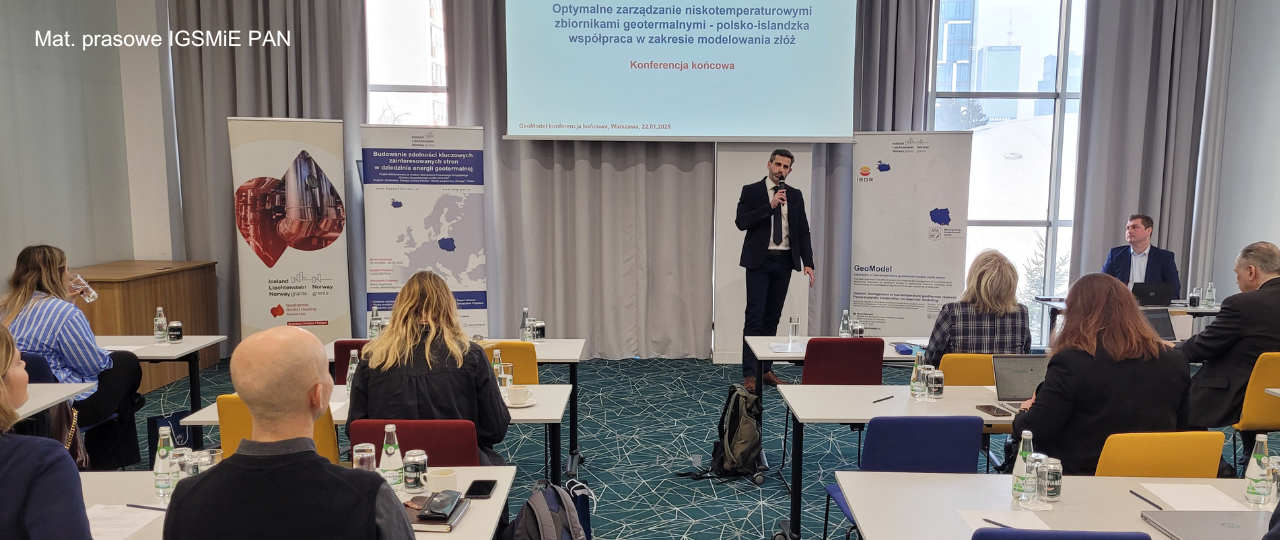
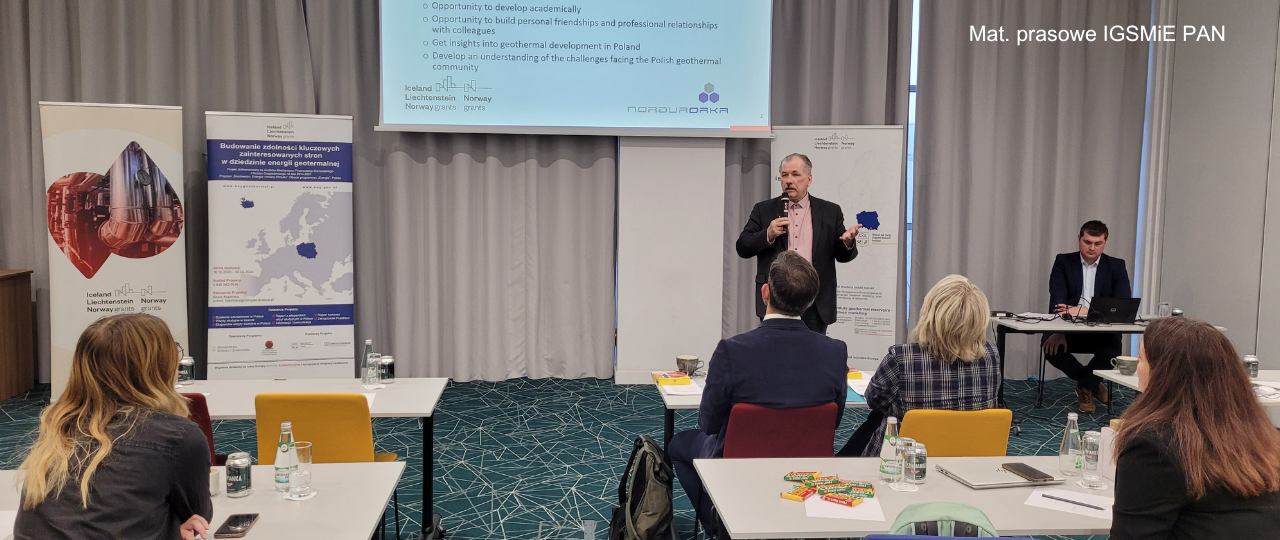
The official presentation of the tools took place at a conference held in Warsaw at the end of January 2025. The event provided an opportunity to summarize the project's results and facilitate the exchange of experiences among participants and potential users, including geothermal water operators in Poland, who will be able to access these solutions completely free of charge.
The system was developed within a project supported from the EEA and Norway Grants, with financial contribution amounting to 1.6 million PLN.