Protecting the brown bear and improving the safety of the inhabitants of Podkarpacie and Małopolska
18.03.2026
The Ministry of Climate and Environment, in collaboration with the National Fund for Environmental Protection and Water Management and the Regional Directorate for Environmental Protection in Rzeszów, is launching a comprehensive programme designed to improve the safety of residents in the Podkarpacie and Małopolska regions and to strengthen the protection of the brown bear. Thanks to a comprehensive range of measures, the risk of human contact with large predators will be minimised.

Highlights
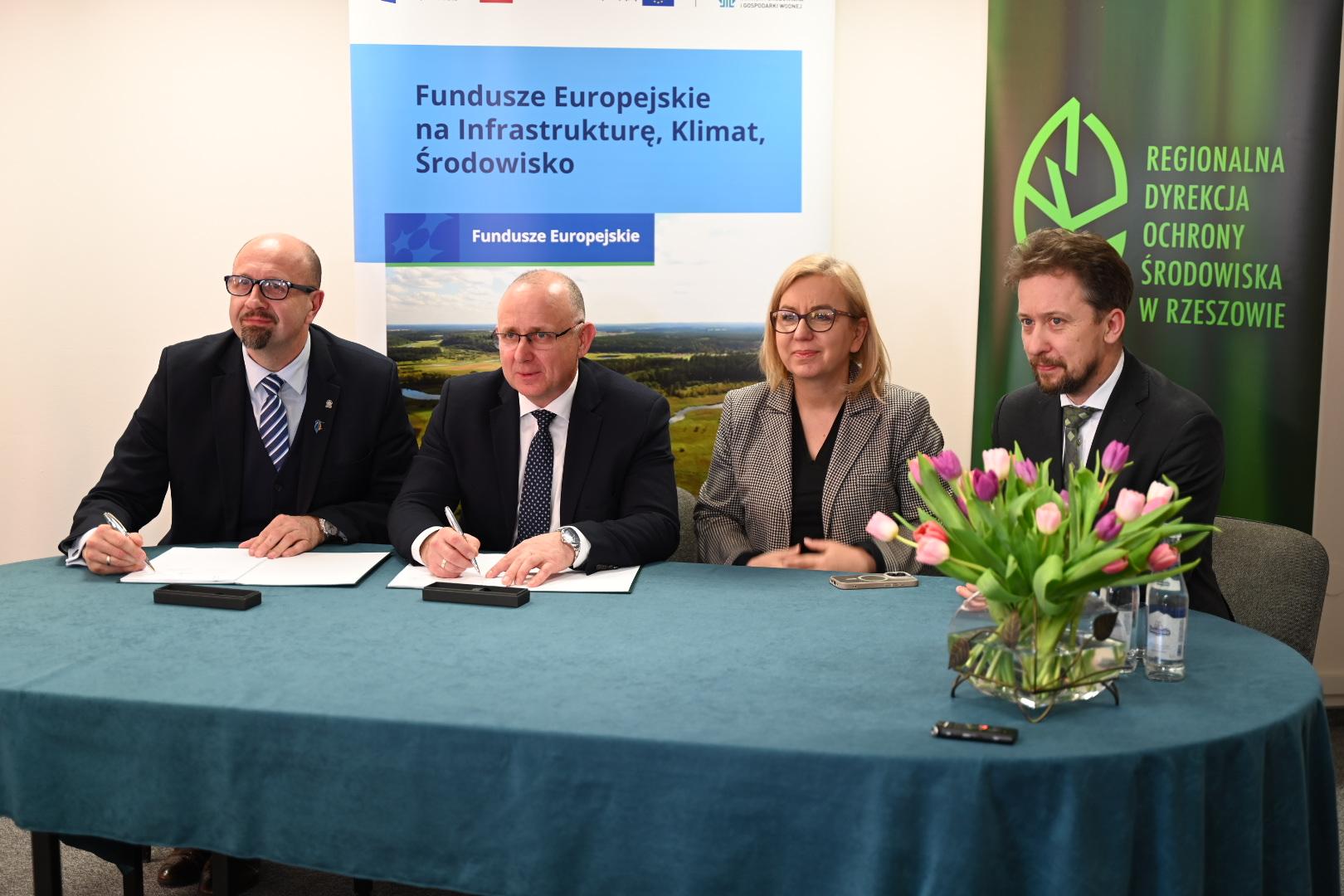
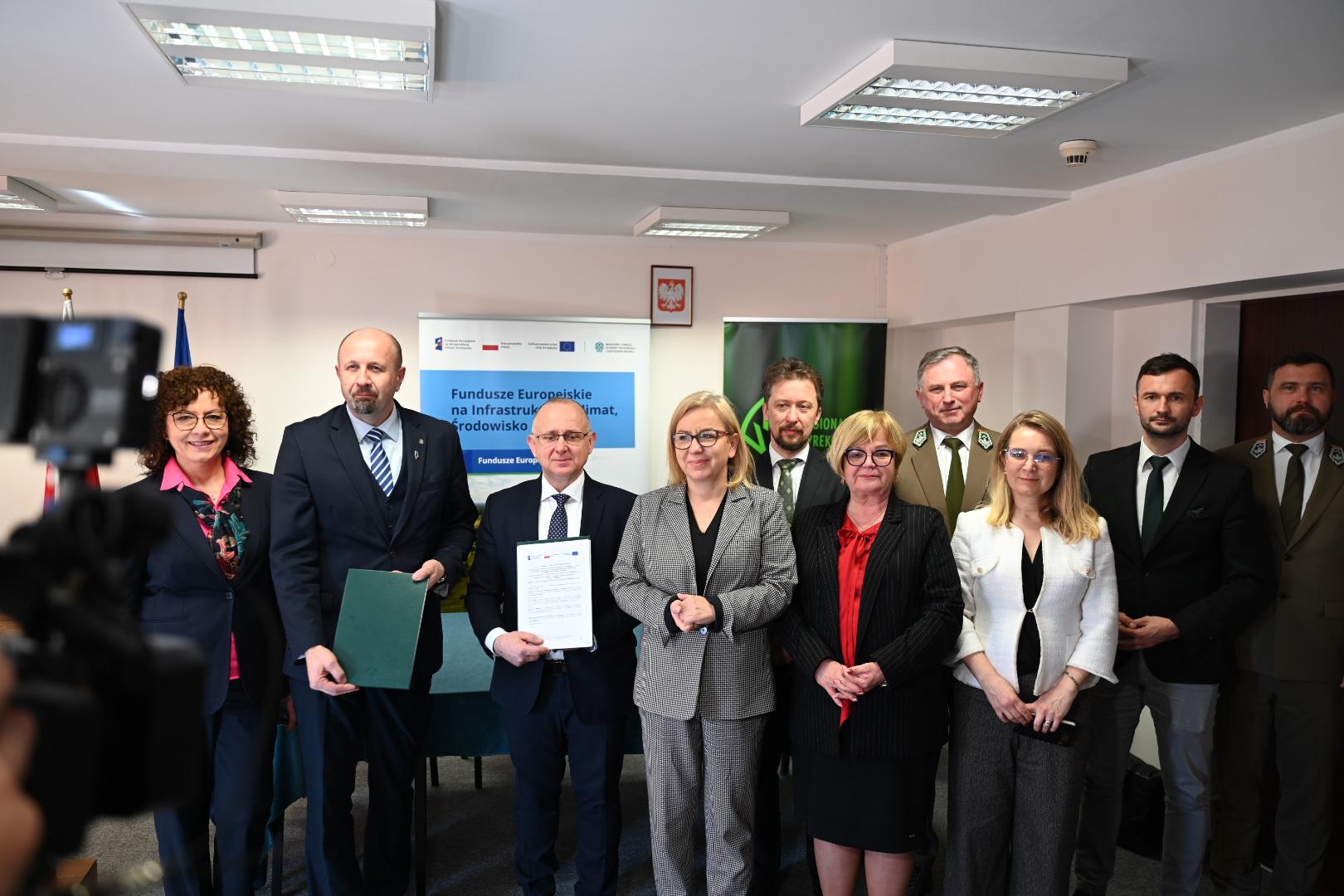
- On March 18, 2026, the National Fund for Environmental Protection and Water Management (NFOŚiGW) signed an agreement with the Regional Directorate for Environmental Protection in Rzeszów to improve the protection of brown bears and enhance public safety.
- The project will be implemented in the Podkarpackie Province (Lesko, Bieszczady and Sanok districts) and the Małopolskie Province (Nowy Sącz, Nowy Targ, Tatra and Gorlice districts).
- It covers the areas most at risk of conflict with brown bears.
- The total cost of the project is PLN 16,050,000, of which PLN 13,642,500 is funded by the European Union.
- Thanks to these funds, the number of conflict situations will be reduced, a specialized intervention group will be operational and a modern system for monitoring bear behavior will be implemented.
- EU funds will also be used to finance the implementation of an IT system for monitoring and managing conflicts.
Today we are finalizing the signing of an agreement for systemic solutions that will increase the safety of people and animals in two provinces – Podkarpackie and Małopolskie. Mainly in the Bieszczady National Park and the Tatra National Park
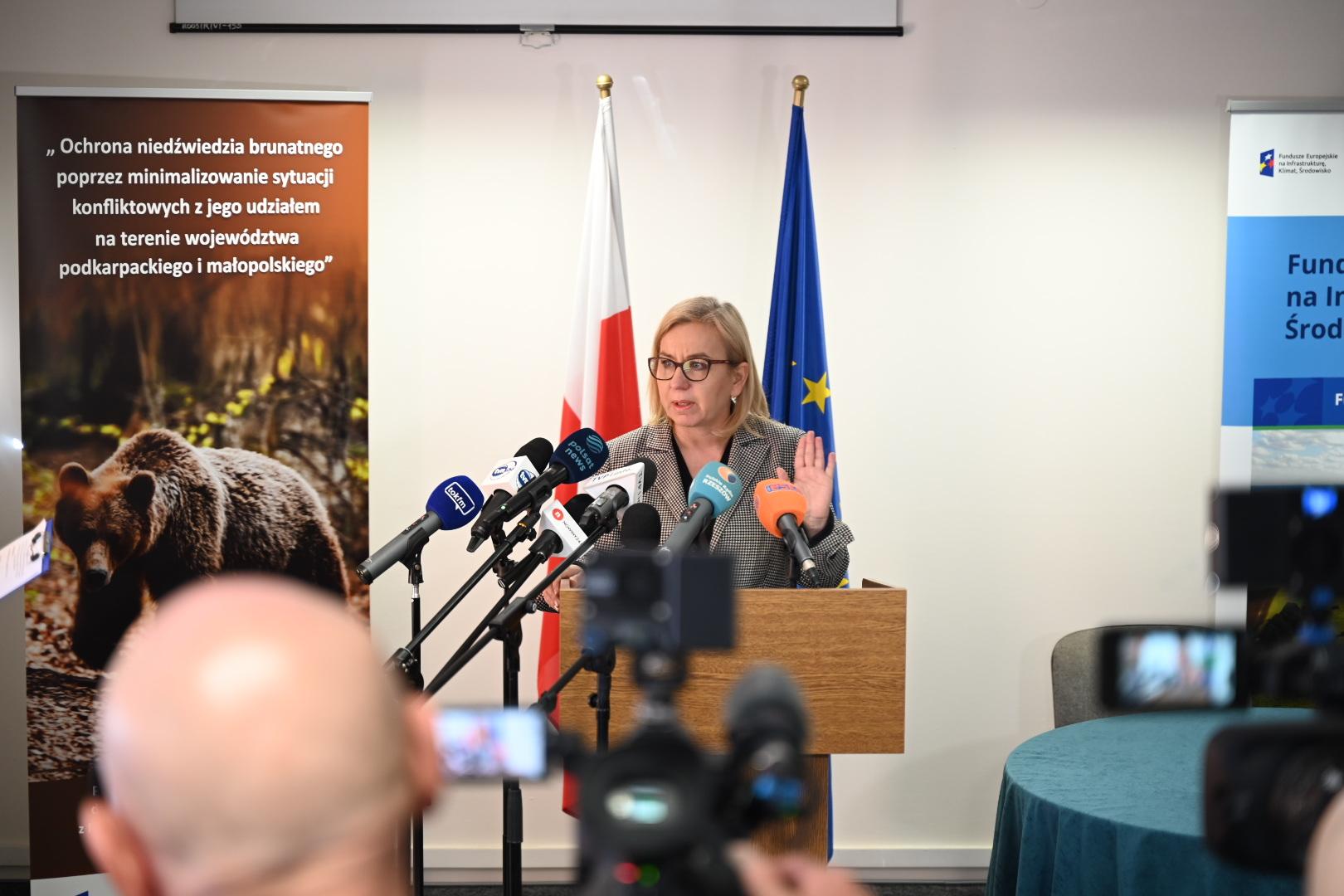
– said Paulina Hennig-Kloska, Minister for Climate and the Environment, at a press conference in Rzeszów during the signing of agreements between the National Fund for Environmental Protection and Water Management (NFOŚiGW) and the Regional Directorate for Environmental Protection in Rzeszów.
The brown bear is one of the largest and most challenging species of wild animals found in southern Poland. Currently, its permanent habitats cover five key regions: The Żywiec Beskids, the Tatra Mountains, the Sądeckie Beskids, the Low Beskids and the Bieszczady Mountains.
Estimates suggest that by far the largest proportion of the bear population inhabits the Podkarpacie region, and this population is growing steadily year on year.
The growing bear population, their mobility, and people’s careless behaviour make it essential to establish a system that allows humans and large predators to coexist effectively and safely.
We are launching a programme to improve the safety of people and animals. We are allocating over PLN 16 million for this purpose, which will secure the budget for four years. These include preventive measures, the establishment of a rapid response team, and educational initiatives, aimed primarily at local residents. We also aim to restore the food supply for bears in their natural habitat by planting native species of fruit trees and shrubs, and by restricting access to waste near human settlements through the introduction of special bins
– the Minister of Climate and Environment pointed out.
Prevention as the cornerstone of reducing human–bear conflicts
The aim of preventive measures is to reduce the number of instances in which bears forage for food near people. The RDOŚ project in Rzeszów involves, amongst other things, creating a food source for bears by planting native species of fruit trees and shrubs in their natural habitat, with the aim of reducing their foraging in areas near buildings.
At the same time, measures will be implemented to restrict animals’ access to waste, which is one of the main causes of conflict. In areas with the highest number of reports, special bear-proof bins will be installed, along with measures to improve local waste management. All of this will mean that animals will not seek food near human settlements, which will significantly reduce the number of potentially dangerous situations.
A professional rapid response system for conflict situations
We are setting up a professional response team, which will eventually consist of around 20 people. Its role will be to fit specific individuals with tracking collars so that we can monitor their movements. This will enable us to scare them away in good time, so that they do not stray onto busy roads and built-up areas. In this way, we are able to improve people’s safety and avoid unnecessary risks. Not by killing bears, but by scaring them away
– the Minister of Climate and Environment pointed out.
The second pillar of the programme involves the creation of a comprehensive and fully professional response system for situations requiring immediate action.
At its core will be a specialist Intervention Unit, staffed by suitably trained personnel and equipped with state-of-the-art equipment, enabling rapid, effective and safe interventions. The equipment includes, amongst other things, off-road vehicles, drones, thermal imaging and night-vision equipment, camera traps with encrypted data transmission, animal capture equipment and telemetry collars.
The group will work in close cooperation with the police, the fire service, the State Forests, local authorities and emergency services. Its work will be supported by two operational centres in Cisna and Polańczyk, which will significantly reduce response times and improve the effectiveness of operations across the entire Bieszczady region.
Every procedure will be carried out in the presence of a vet, thereby ensuring the safety of both people and animals. The introduction of this pillar will raise protection standards and ensure a response that is appropriate to rapidly changing situations on the ground.
Education and raising public awareness
The third pillar of the programme is a wide-ranging education initiative aimed at raising public awareness and increasing acceptance of coexistence with large predators. The activities will be aimed at both residents and tourists.
These will include installing information boards, organising meetings with local residents, and producing educational videos explaining how to stay safe in areas where bears may be present.
The aim of this part of the programme is to instil good habits and foster an understanding that appropriate behaviour and proper waste management are crucial for human safety and animal welfare. This is important because the knowledge of local residents and tourists plays a key role in reducing the likelihood of conflicts.
A modern conflict management platform
The project also involves the creation of an advanced IT platform that will bring together data from camera traps, telemetry collars and emergency reports into a single system. This will enable faster risk assessment and better coordination of the activities of all services.
The project will be implemented by the Regional Directorate for Environmental Protection in Rzeszów as part of programme FENX.01.05-IW.01-0038/25 and will run until December 31, 2029.