Reliable knowledge, trust and security.
13.10.2026
Disinformation Counteraction Laboratory on renewable energy sources and the circular economy held in Warsaw, alongside the launch of Polish-Norwegian cooperation under CIIIP.

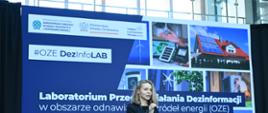
Warsaw hosted two days of workshops and academic seminars focusing on strengthening societal resilience to disinformation concerning renewable energy sources (RES) and the circular economy (CE). The “DezInfoLAB” event was combined with the official launch of the Polish–Norwegian Climate Information & Identity Integrity Programme (CIIIP). The DezInfoLAB initiative is co-financed by the National Fund for Environmental Protection and Water Management and the Fund for Bilateral Relations under the EEA Grants, as part of the pre-defined project implemented by the Institute of Environmental Protection – National Research Institute (IOŚ-PIB), entitled “Climate Information & Identity Integrity Programme: Polish–Norwegian Partnership for Civic Resilience”.
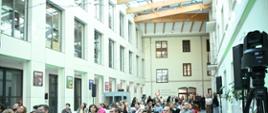
The event, held on 7–8 October 2026, brought together representatives of public administration, the Royal Norwegian Embassy, research institutes (including the Center for International Climate Research in Oslo (CICERO) and Poland’s Institute of Environmental Protection – National Research Institute (IOŚ-PIB)), the EEA and Norway Grants representatives, as well as experts, researchers, journalists, representatives of non-governmental organisations and businesses. It combined seminars and lectures with intensive practical workshops.
How can disinformation narratives concerning the energy transition, the development of renewable energy, the deposit-refund system or recycling be identified and addressed? How can societal resilience be built and the objectives of the green transition communicated effectively? Participants in the two-day “DezInfoLAB” meeting answered these and other questions.
Climate and environmental disinformation is not merely a dispute over isolated facts. It undermines trust in science and institutions, deepens polarisation, delays investments and may weaken both energy and societal security.
Today, this partnership is more important than ever. We live in a time when democratic societies face increasingly complex pressures. Foreign influence operations, disinformation and attempts to deepen social divisions are challenging public trust and collective decision-making across Europe.
These challenges affect many policy areas, including climate and energy, which are central to our future prosperity, security and competitiveness. No country can address these issues alone. They require cooperation between partners, between institutions, and across sectors. They also require us to better understand how people receive information, whom they trust, and how public policies can be communicated in ways that resonate with citizens' everyday realities.
This is precisely why I am pleased that Polish and Norwegian institutions have come together to develop the Climate Information & Identity Integrity Programme. What makes this initiative particularly valuable is the combination of research, practical experience and international cooperation. It brings together expertise from Norway and Poland while recognising that effective solutions must always be grounded in local realities.
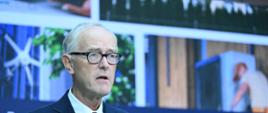
— said H.E. Bjørn Erik Brustad, Deputy Head of Mission at the Royal Norwegian Embassy in Poland, during his speach.
About the project
The CIIIP (Climate Information & Identity Integrity Programme) project is establishing a long-term, inter-ministerial and cross-sectoral cooperation platform as a joint response to information threats. It combines a proven Norwegian methodology for values-based climate communication, developed by CICERO, with the institutional, scientific and sociological expertise provided by IOŚ-PIB. The Ministry of Climate and Environment Republic of Poland is the project’s strategic partner. The initiative is financed through the Fund for Bilateral Relations under the “Green Transition” Programme of the EEA Grants for 2021–2028. DezInfoLAB’s are the first of the project’s two key components. The second will be a Climate Communication Course combining research, joint methodology development and pilot implementation involving people responsible for communication at local and institutional level.
These activities will support the development of communication strategies that take account of the social context, focus on the audience and demonstrate resilience against disinformation appealing to identity-related issues.
Facts in the context of everyday values
Countering climate and environmental disinformation requires more than simply correcting false informations. While necessary, such corrections are insufficient. Manipulation and false narratives are rarely concerned solely with individual facts - they seek to exploit emotions, undermine trust, create economic uncertainty and stir fears about local security and community identity.
Lasting societal resilience emerges when reliable knowledge and proven science are connected with people’s everyday experience, values, sense of agency and security. We need to communicate using the language of daily life: local development, energy costs, health, family security, a friendly environment and new jobs. The initiative is not intended to settle the debate through administrative means or replace the free media, but rather to improve the quality of discussion, strengthen audiences’ capabilities, and build societal and local-government resilience against the misinformation (fake news) and myths surrounding climate and energy policies in Poland. The “DezInfoLAB” project is intended to strengthen skills, information quality, independent journalism and society’s ability to recognise manipulation over the long term.
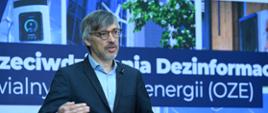
I hope that, after today’s lab, we will at least have some elements of a diagnosis of what needs to be done, as well as some practical solutions. And, of course, we will create—or begin to create—the human network that will tackle this problem. In my view, the most important element of this project is to build a network of people who can work together, who bring knowledge to the project and who will help us address this problem.
— said the Secretary of State in the Ministry of Climate and Environment Republic of Poland - Krzysztof Bolesta in his opening speech.
Key conclusions from the RES DezInfoLAB seminar sesion and threat assessment
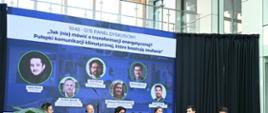
The first day of the laboratory opened with a seminar during which speakers analysed, step by step, the architecture of contemporary disinformation campaigns. The discussion focused on identifying the principal myths that have grown up around the energy transition.
Experts emphasised that climate and energy disinformation is rarely accidental. Most often, it is deliberately designed to slow modernisation processes and provoke public anxiety.
Attention was drawn to the following factors:
- Security and the transition: Disinformation targeting renewable energy sources—including wind turbines, solar photovoltaics and heat pumps—and circular-economy mechanisms, such as the deposit-return system and recycling, artificially escalates local conflicts, delays key investments and may consequently weaken the country’s energy security.
- Sources of manipulation: Foreign disinformation campaigns—part of hybrid warfare, aimed at maintaining the economy’s dependence on fossil fuels, impede the energy transition, fuel public anxiety and undermine trust in public institutions and science.
- The advantage of prebunking: Charts alone and traditional fact-checking often reach fewer people than the myth itself, leaving them to mitigate harm after the event. Prebunking—proactive education and the provision of transparent information before a wave of manipulation emerges—is considerably more effective.
- The local dimension of the transition and the role of local authorities: Disinformation often targets specific local investments, such as wind farms or materials-recovery facilities, exploiting knowledge gaps and the concerns of local communities. Open dialogue with residents and local authorities at an early stage of an investment, together with the involvement of trusted local figures and elected leaders, is key to overcoming public fears.
Three functions of DezInfoLABs
The two-day event combined lectures and workshops. The DezInfoLAB’s served three core functions:
- Developing practical capabilities in early warning and crisis response.
- Mapping the disinformation ecosystem surrounding renewable energy and the circular economy.
- Strategic networking between sectors that seldom work together in their day-to-day activities.
Workshops and group work: from theory to practice
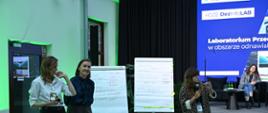
Working in teams, participants addressed real-life case studies involving crisis situations surrounding renewable-energy and circular-economy projects.
The workshop sessions proceeded in three successive stages: diagnosis (analysis of key narratives), intervention (practicing responses), and narrative rebuilding (designing climate communication that is resilient to manipulation and grounded in facts, values, traditions, and the audience's own experiences).
The outcome of the two-day laboratory sessions was the development of concrete recommendations, best practices, and response matrices for addressing misleading messages, tailored for local government units and public institutions.
Watch the event recording
Recordings of the seminar sessions for RES DezInfoLAB and CE DezInfoLAB, along with a detailed record of the discussions, are available on the Ministry of Climate and Environment’s official YouTube channel:
Laboratory for Countering Disinformation on the RES - in Polish
Laboratory for Countering Disinformation hindering the Development of the CE - in Polish