Schools in Greater Poland are undergoing extensive thermal modernisation
10.08.2026
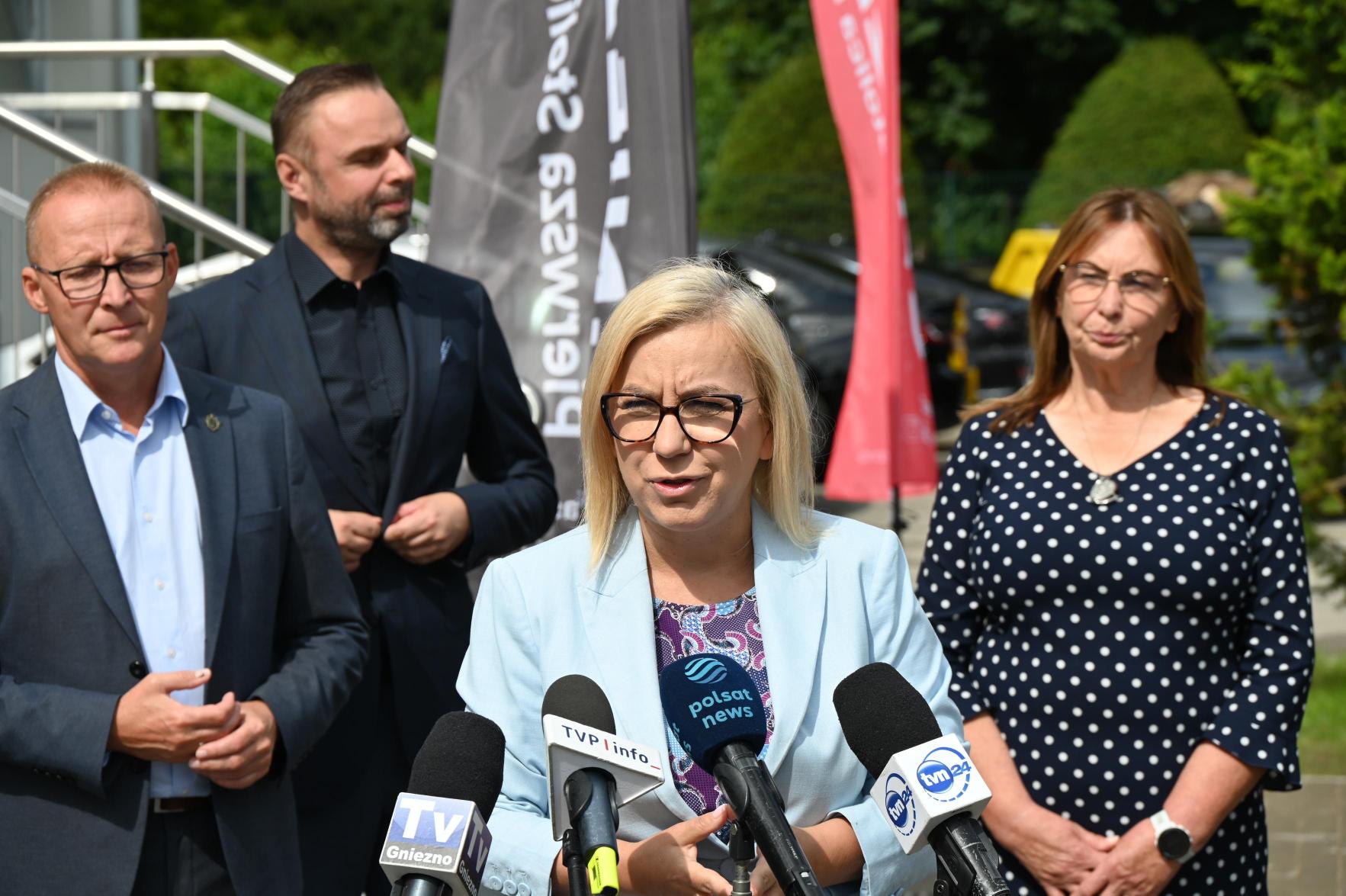
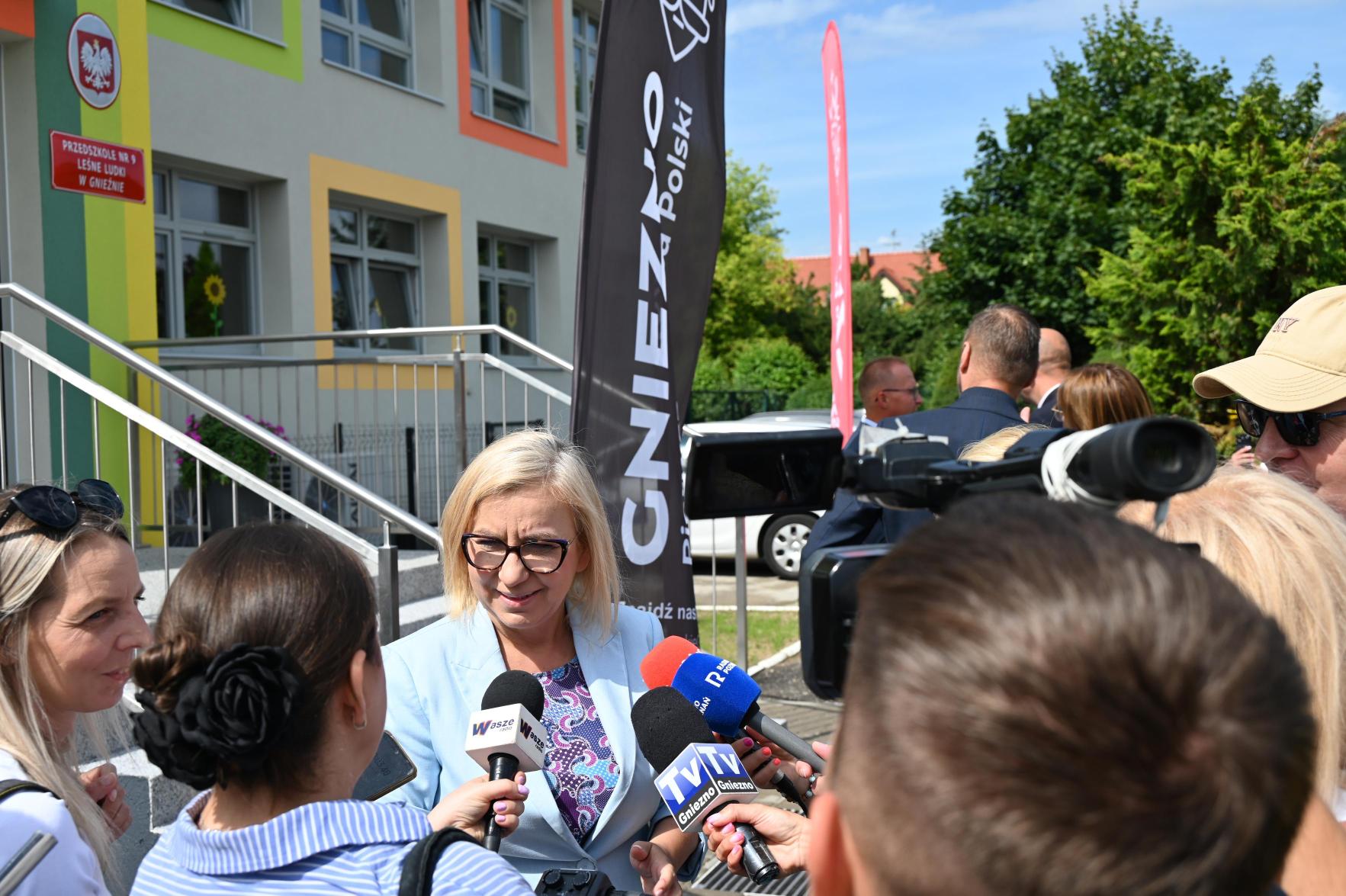
42 educational establishments in Greater Poland are undergoing thermal modernisation thanks to funding from the National Recovery Plan. In Gniezno, work has just been completed on the building housing Kindergarten No. 9, 'Leśne Ludki'. The project was supported by a grant of over PLN 1.4 million from the National Recovery Plan, provided by the National Fund for Environmental Protection and Water Management. The roof and walls were insulated, the windows and doors were replaced, the heating and hot-water systems were modernised, and a heat pump and a photovoltaic system were installed. The Minister of Climate and Environment, Paulina Hennig-Kloska, attended the official completion ceremony in Gniezno.

Highlights
- 500 educational establishments across Poland are already undergoing thermal modernisation. The projects are co-financed with nearly PLN 1.8 billion from the National Recovery Plan.
- A further 500 will be able to undergo thermal modernisation thanks to PLN 2 billion from the Modernisation Fund.
- In total, around 1,000 schools, kindergartens and other educational establishments will be modernised thanks to European funds.
- Renovations and modernisation work in schools are focused on improving the energy efficiency of buildings and replacing heating systems with modern and environmentally friendly solutions.
A good example from Gniezno: modernity and sustainability at ‘Leśne Ludki’
A comprehensive thermal modernisation of Kindergarten No. 9 ‘Leśne Ludki’ at 4 Radosna Street in Gniezno is nearing completion. The total cost of the project amounted to over PLN 3.8 million, of which as much as PLN 1.4 million came from the National Recovery Plan.
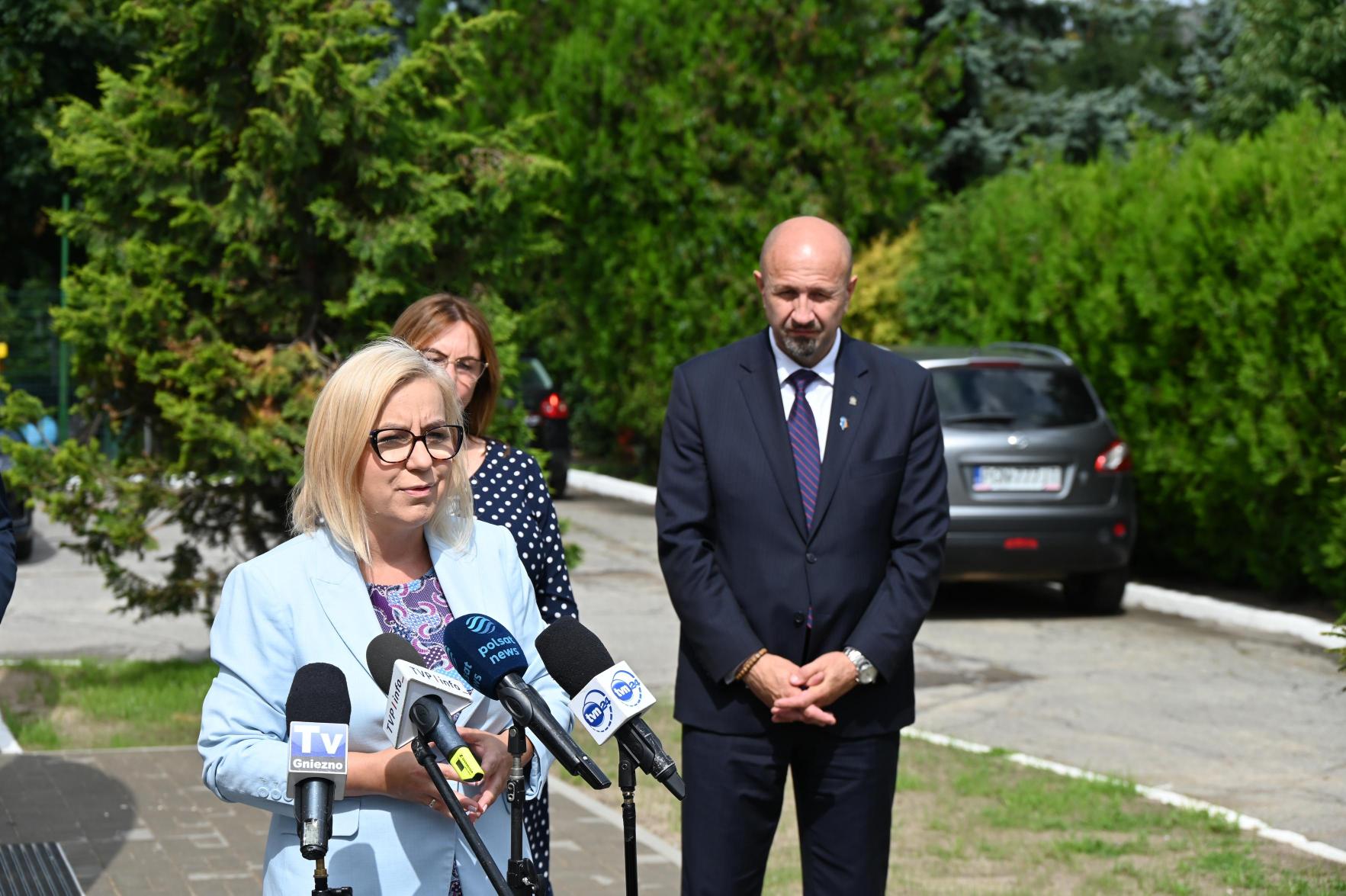
Across Poland, we have already modernised 500 educational establishments at a cost of nearly PLN 1.8 billion. We have decided to continue this programme and have allocated a further PLN 2 billion raised from European funds. We aim to renovate a total of 1,000 schools and kindergartens during this term of office. Thermal modernisation is of huge importance, especially given the prolonged heatwaves we are experiencing. A well-modernised building simply does not heat up as quickly, ensuring children’s comfort thanks to proper insulation and sunshades. These investments would not have been possible without the tremendous commitment of local authorities, which applied for these funds and efficiently implemented these projects
– said Minister Paulina Hennig-Kloska during a meeting summarising the investment in Kindergarten No. 9 in Gniezno.
The scope of the work performed included a comprehensive thermal modernisation of the building: the external walls, plinth walls, walls in contact with the ground and the flat roof were insulated. New windows and external doors (both solid and glazed) were fitted. The heating system was modernised – a modern heat pump was added to the existing gas boiler, and the entire central heating system – including pipework and radiators – was replaced. Photovoltaic panels were installed on the roof, and the traditional interior lighting was replaced with LED fittings. A new access ramp, adapted to the needs of people with disabilities, was constructed next to the building; the City of Gniezno secured funding for this from the State Fund for the Rehabilitation of the Disabled (PFRON).
As part of the project, comprehensive documentation and the necessary energy audits were also carried out. The investor’s supervision ensured that all stages proceeded correctly. The aim of the project was to increase the installed capacity from renewable energy sources, reduce annual primary energy consumption, lower final energy consumption and cut greenhouse gas emissions.
Energy efficiency in schools in Greater Poland and across Poland
Schools and kindergartens in Greater Poland are set to enter a new era of comfort and efficiency thanks to thermal modernisation. 42 educational establishments in the region will receive funding of over PLN 113 million from the National Recovery and Resilience Plan. Nationwide, 500 educational establishments have already benefited from such funding, with the total value of the projects amounting to nearly PLN 1.8 billion.
Ultimately, following an increase in the programme’s budget through funding from the Modernisation Fund, 1,000 schools and kindergartens will be renovated. The scope of work will include a wide range of modernisation measures designed to comprehensively improve the energy efficiency of the buildings. The programme shows that investments in modern technologies, including renewable energy sources, simply pay off because they deliver tangible results.
See how schools in your area are changing
Energy-efficiency upgrades help to reduce energy consumption and improve comfort within buildings. Insulating buildings, replacing windows, modernising heating systems and switching to renewable energy sources mean that classrooms have the appropriate temperature in both winter and summer, whilst air quality improves significantly. As a result, pupils learn in better conditions, whilst local authorities incur lower running costs.
Thermal modernisation is one of the most effective measures for helping to reduce emissions and improve air quality. Thanks to such investments, schools and kindergartens are becoming more comfortable and healthier environments for children. That is why we support local authorities in implementing changes that bring about real improvements to day-to-day conditions in these establishments.
On the Ministry of Climate and Environment’s information and education website concerning the thermal modernisation programme for educational establishments in Poland, you can check which schools are currently undergoing thermal modernisation and find out more about how the programme works.