We are investing in clean energy on the railways - over PLN 36 million for a new generation of Polish hydrogen trains
13.02.2026
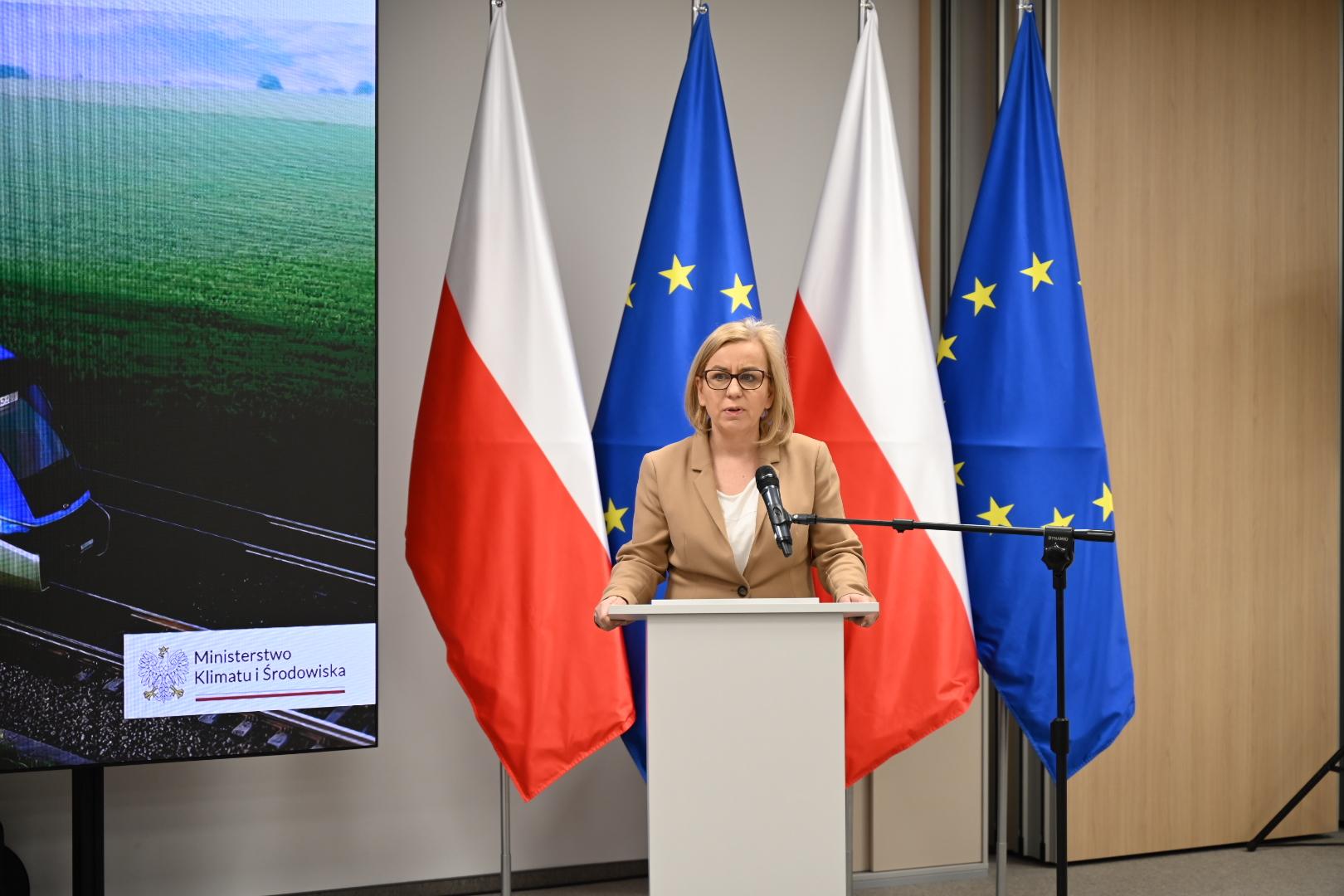
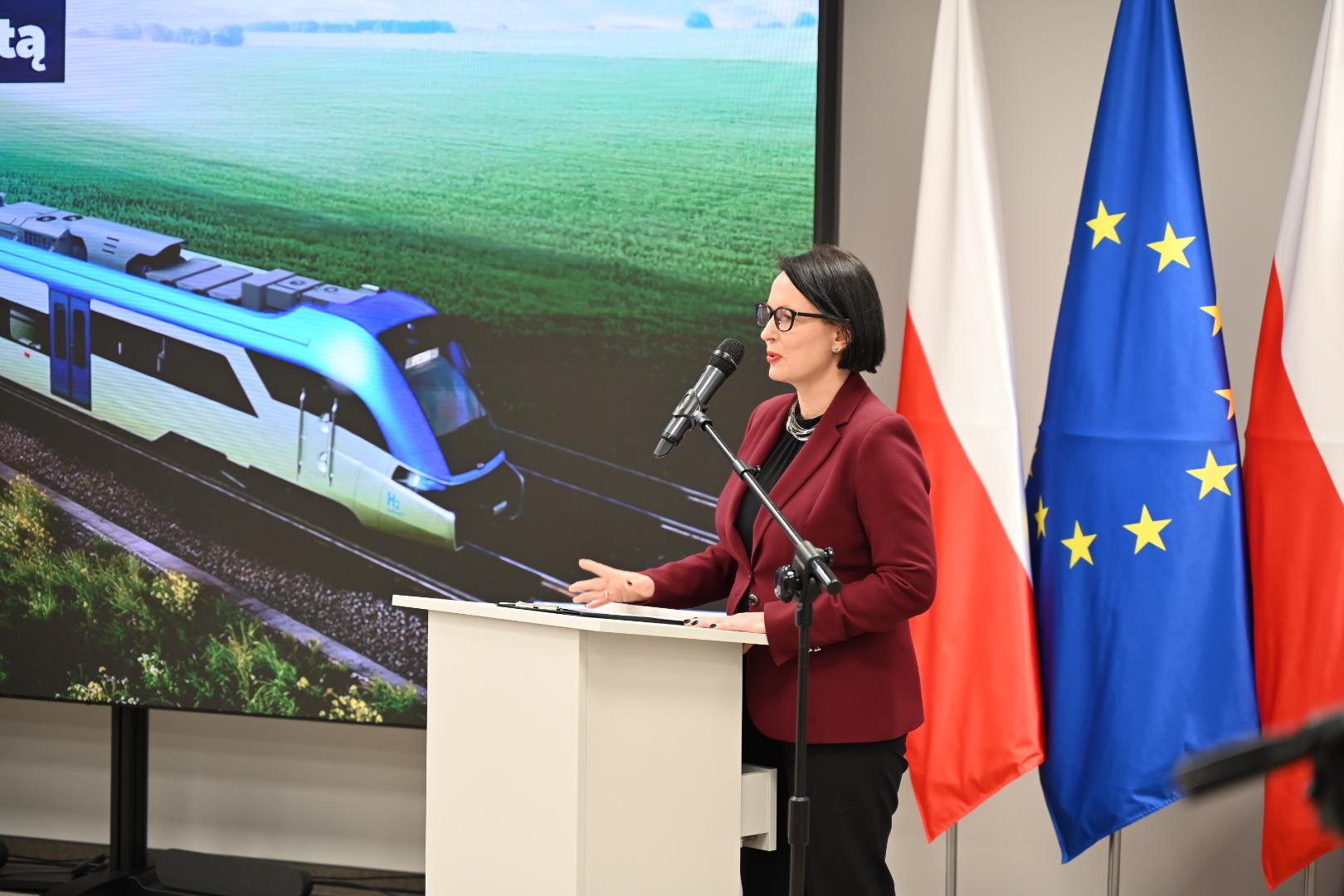
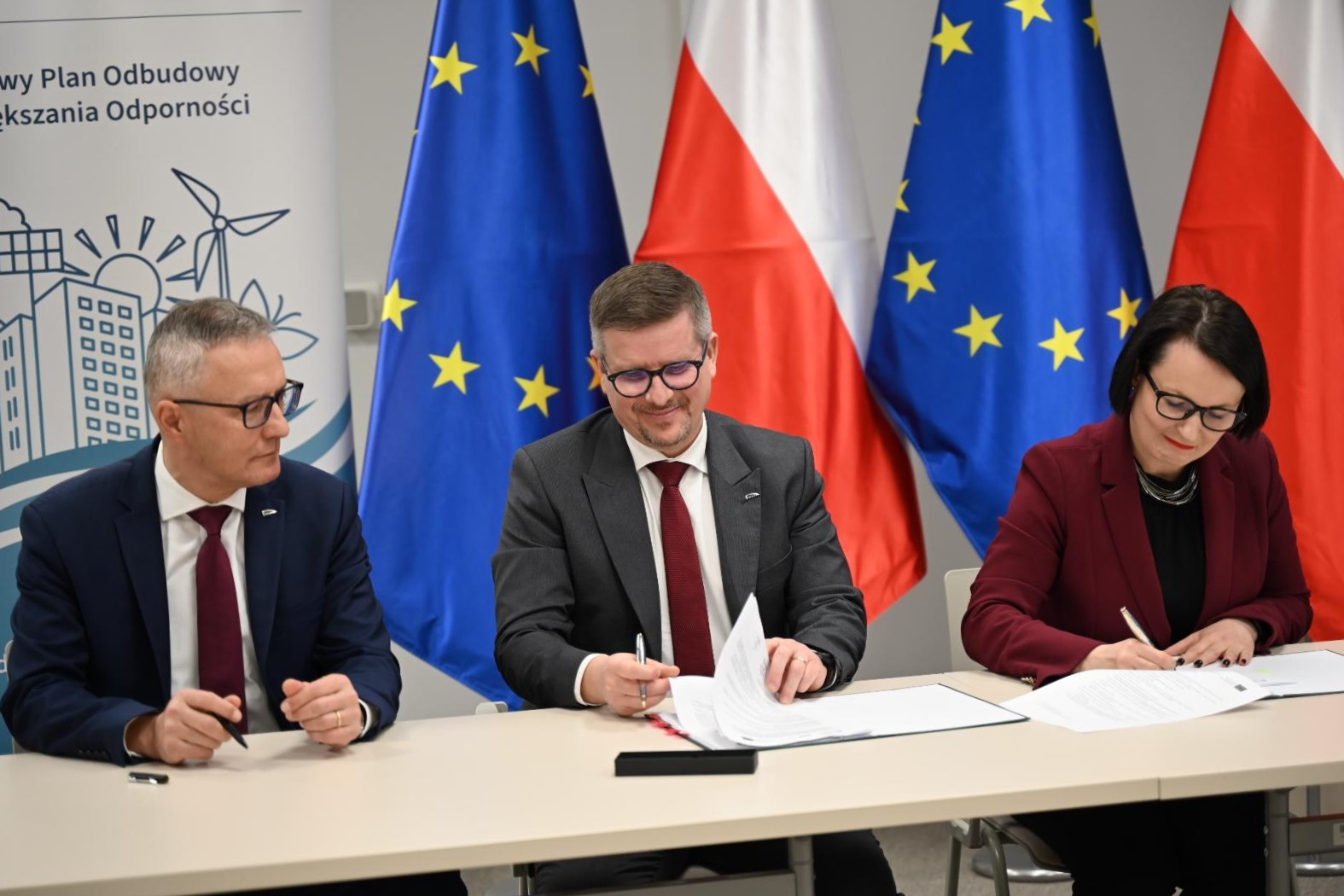
Over PLN 36 million from the National Recovery and Resilience Plan will go towards a project that could change the way people travel in Poland. Thanks to the construction of the first Polish hydrogen train, passengers will enjoy quieter, cleaner and more comfortable connections, especially in areas where there is currently no electrification. This investment will significantly improve the quality of life and allow for the development of railways in smaller towns without burdening the environment. The subsidy for the development of the country's first passenger hydrogen vehicle with additional power from the traction network will be awarded to the company Pojazdy Szynowe PESA Bydgoszcz S.A. The agreement with the National Fund for Environmental Protection and Water Management (NFEP&WM) was signed on 13 February 2026. The event was attended by the Minister of Climate and Environment, Paulina Hennig-Kloska.

Highlights
- Pojazdy Szynowe PESA Bydgoszcz S.A. will receive over PLN 36 million to develop the first Polish new-generation hydrogen train.
- The project involves the construction of a prototype hydrogen passenger vehicle with additional power supply from the traction network.
- The project will result in the development of rail vehicle construction technology that will completely eliminate CO2 emissions on non-electrified tracks.
Today, we are taking another step forward in the development of hydrogen-powered rail transport in Poland. We are allocating over PLN 36 million to the construction of a prototype of the first Polish hydrogen-powered passenger vehicle – an impressive project with global potential. Poland must use the latest clean technologies in the field of renewable energy and transport development to create its advantages in the energy and climate transition process. The participation of domestic companies allows us to build our own supply chains and become independent of import markets. We are creating space for our scientists, engineers and employees of our companies to develop solutions here that we will proudly present in Europe and around the world
– said Minister Paulina Hennig-Kloska.
The project entitled ‘Implementation of a research and development venture concerning the design and construction of a prototype hydrogen-powered passenger vehicle with additional power supply from the traction network’ is financed from the National Recovery and Resilience Plan (NRRP) as part of the ‘Hydrogenisation of the Economy’ programme.
Representatives of PESA, the Ministry of Climate and Environment, and the National Fund for Environmental Protection and Water Management took part in the signing of the agreement for co-financing this innovative, environmentally friendly research and development project.
Groundbreaking HEMU technology: Hydrogen and electric traction
The aim of the project is to build a HEMU (Hydrogen Electric Multiple Unit) vehicle. This is a nationwide innovation – the train will have a triple power source consisting of:
- electric traction (pantograph),
- hydrogen fuel cells,
- batteries.
This configuration will allow for:
- unlimited flexibility: the train will be able to operate on mixed routes (electrified and non-electrified) without the need for transfers,
- cost optimisation: thanks to a control system developed by PESA, the vehicle will select the most efficient energy source, reducing hydrogen consumption on sections with traction,
- combating transport exclusion: this is an ideal solution for 40% of railway lines in Poland that are not electrified, including tourist regions such as Karpacz and the Hel Peninsula.
We are supporting a project that is truly pushing the technological boundaries of Polish railways. It is the first solution in the country to combine hydrogen propulsion with the possibility of power supply from the traction network, making it flexible and ready for implementation in various infrastructure conditions. We are investing not only in the vehicle, but also in the expertise and technologies that could become Poland's speciality in the field of zero-emission transport
– emphasised Dorota Zawadzka-Stępniak, President of the Management Board of the NFEP&WM.
Since 2019, we have been consistently building a hydrogen ecosystem. Our shunting locomotive has already undergone testing and certification, attracting interest not only in Sweden, but also from the KGHM Group and Orlen. Now we are taking the next step – the HEMU passenger vehicle. Thanks to funding from NFEP&WM, we will create a technology that completely eliminates CO2 emissions on local routes, offering passengers silence and comfort, and carriers efficiency that batteries alone cannot provide
– said Robert Tafiłowski, Vice-President of the Management Board of PESA Bydgoszcz S.A.