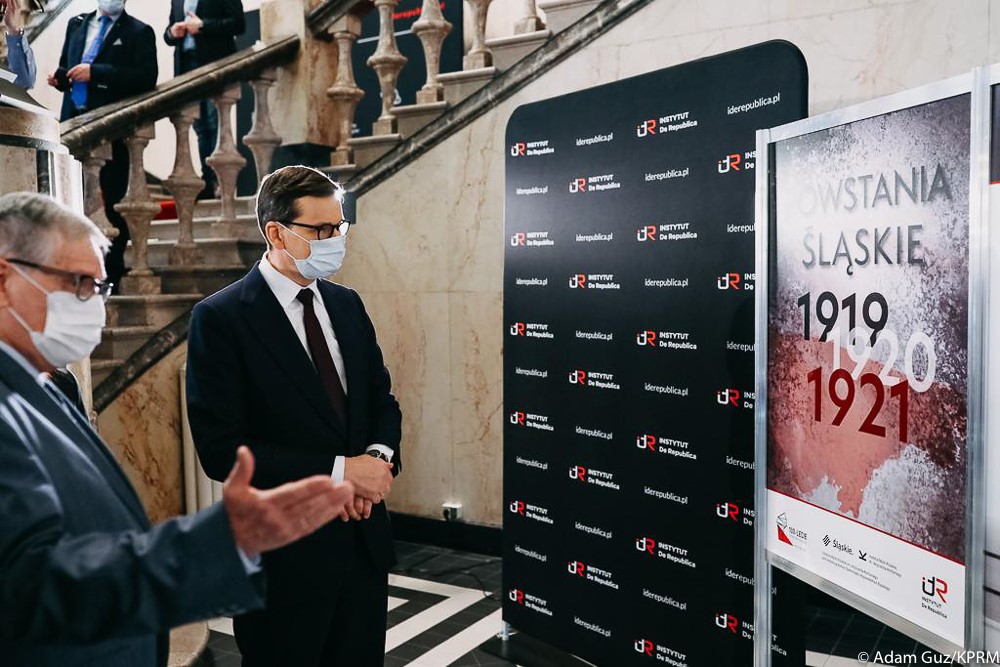
Prime Minister attends the opening of the “Silesian Uprisings” exhibition
27.10.2021
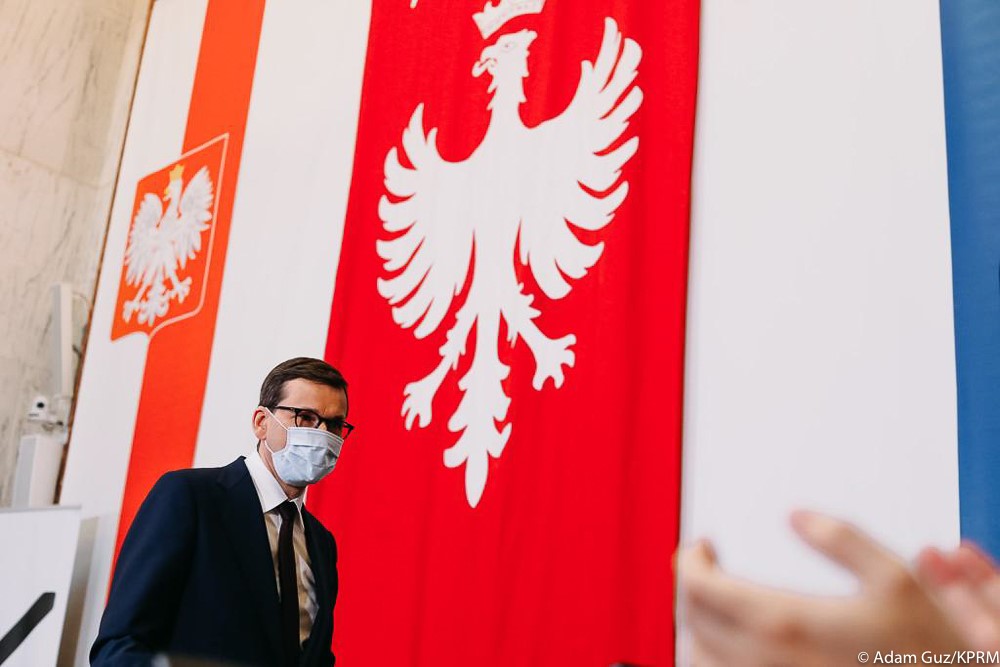
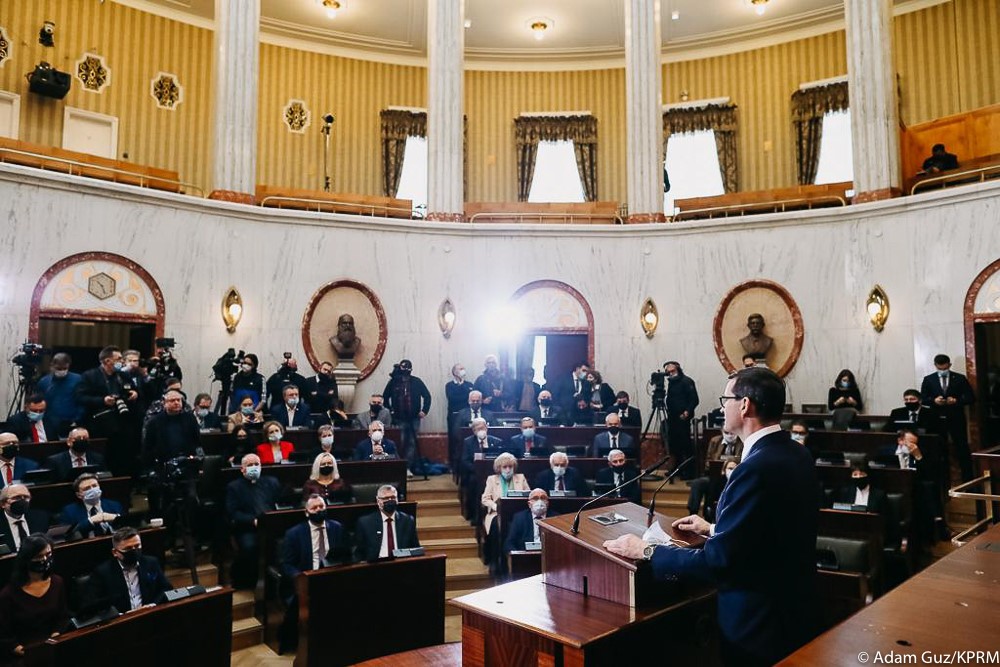
The Second Polish Republic owed its survival in no small part to the Silesian insurgents and their 1919-1921 uprisings. To commemorate their deeds, the Wojciech Korfanty Institute of Polish Thought and Institute de Republica prepared a special exhibition. The exhibition’s opening ceremony, which took place in Katowice, was also attended by Prime Minister Mateusz Morawiecki. Mr Morawiecki emphasized that Silesian insurgents put their bets on Poland and these events should be remembered as victorious Polish uprisings.

The Prime Minister also remarked that when the Silesian Uprisings of 1919-1921 were taking place, no one could predict how long Poland would survive after regaining independence. “By that point, our country had only recently reappeared on the world’s map, and it is very easy to love a homeland that is strong and secure. It is much more difficult to love a homeland that is under siege”, said PM Morawiecki at the Silesian Voivodeship Office. “The Silesian insurgents put their bets on Poland no matter what”, he added.
Prime Minister Morawiecki also emphasized the role of the uprisings’ leader Wojciech Korfanty and stated that the Second Polish Republic could never have existed the way it had without having control over Silesia. Mr Morawiecki also thanked everyone involved in keeping alive the memory of these events from over 100 years ago.
“1919-1920-1921 Silesian Uprisings” exhibition
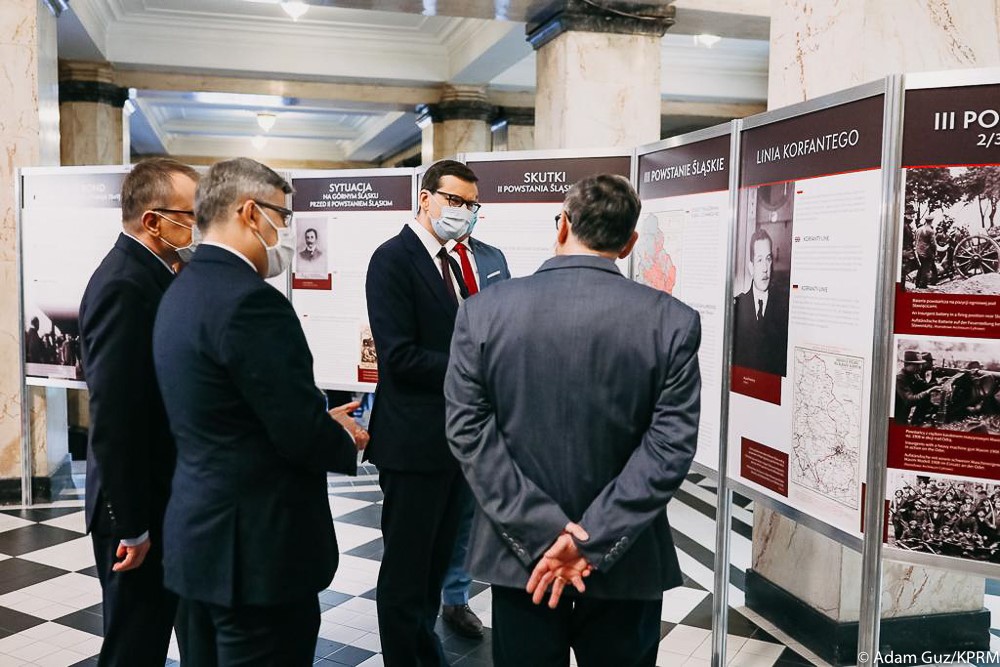
The exhibition has been prepared by the Wojciech Korfanty Institute of Polish Thought and Institute de Republica. It comprises 24 boards devoted to the history of the Silesian Uprisings. Arranged in chronological order, the boards contain information ranging from the reasons behind the Uprisings’ outbreak to a summary of Polish independence efforts in the Upper Silesia region.
The exhibition is cross-sectional and presents the most critical events, places and people that had a direct impact on the course of the Uprisings. Since the boards’ content is available in Polish, English and German, the exhibition can also fulfil its informative and educational function for international visitors.
Silesian Uprisings
The Silesian Uprisings was a series of three armed conflicts fought in Upper Silesia in the 1919-1921 period, with Poles and Germans as the belligerents. The clashes took place during the formation of the Polish State following the end of World War I.
- 1st Silesian Uprising – from 16 August to 24 August 1919.
- 2nd Silesian Uprising – from 19/20 August to 25 August 1920.
- 3rd Silesian Uprising – from 2/3 May to 5 July 1921.
In 1922, a Polish-German convention on Silesia was signed in Geneva, which increased the territory of Upper Silesia allocated to Poland to about 1/3 of Upper Silesia’s total area. The convention was also beneficial to our country due to the industrial facilities it gained in the process, with Poland taking over 50% of the region’s metallurgy and 76% of its coal mines.