Prime Minister: Europe needs strong economies that do not depend on energy from Russia
03.03.2022
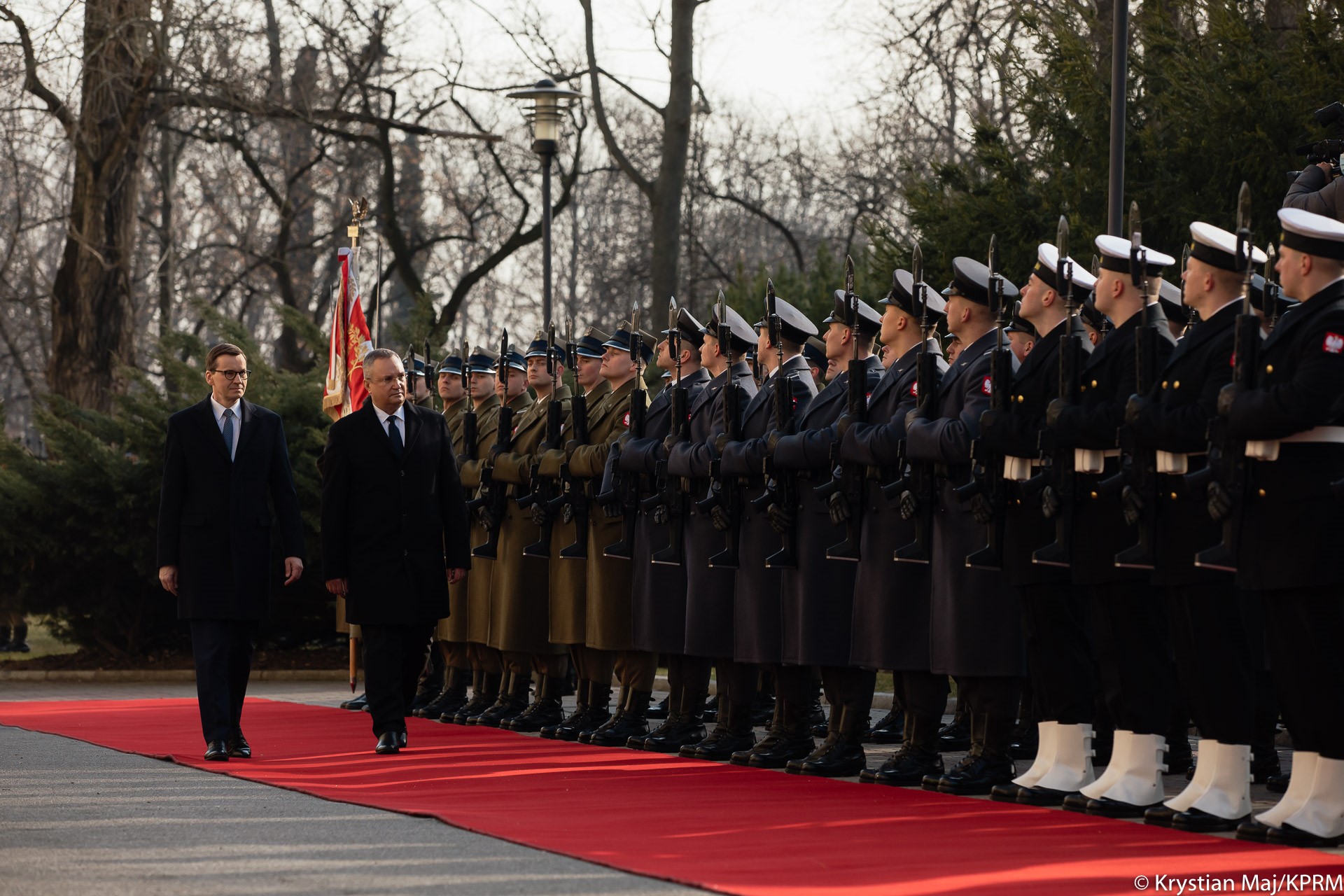
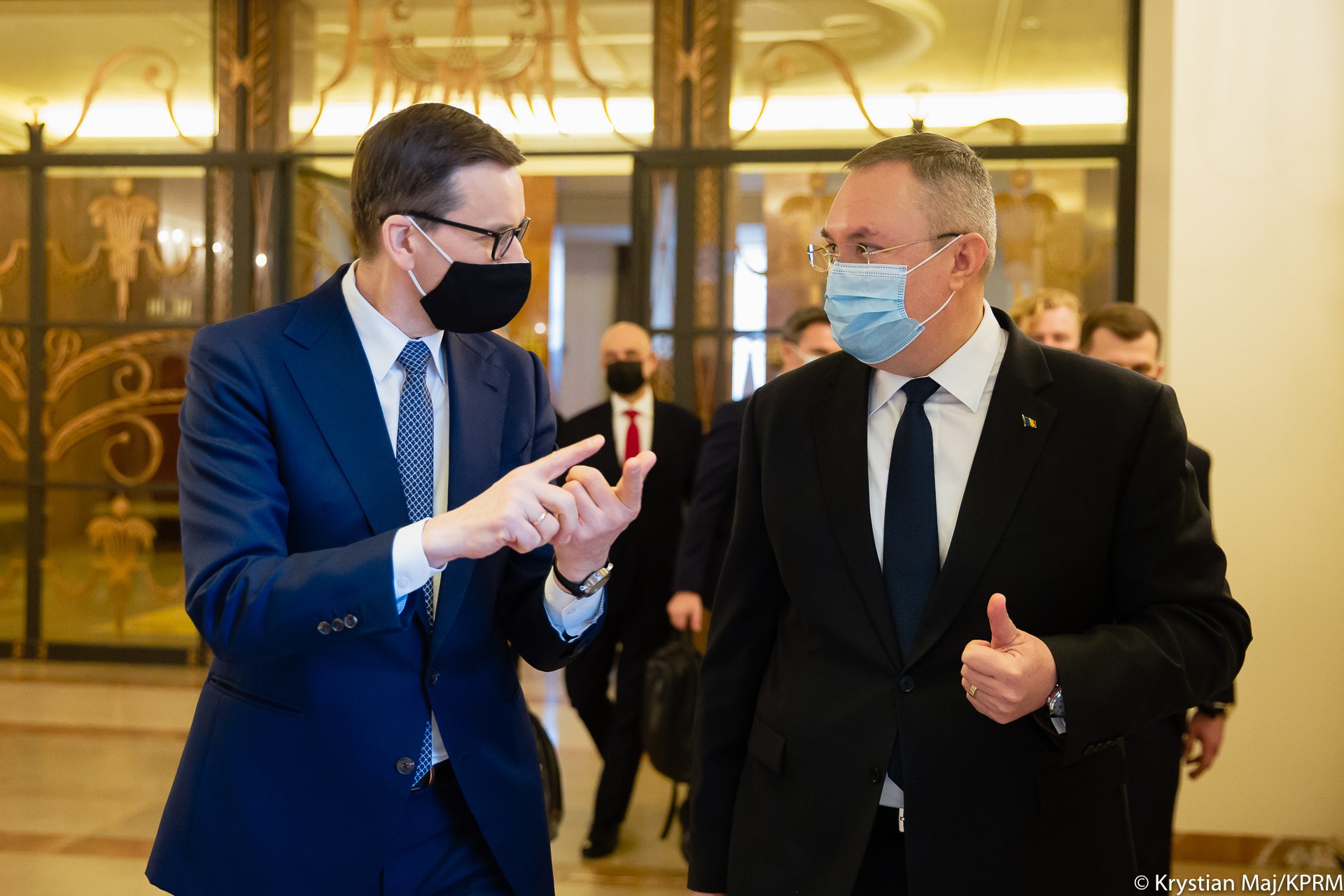
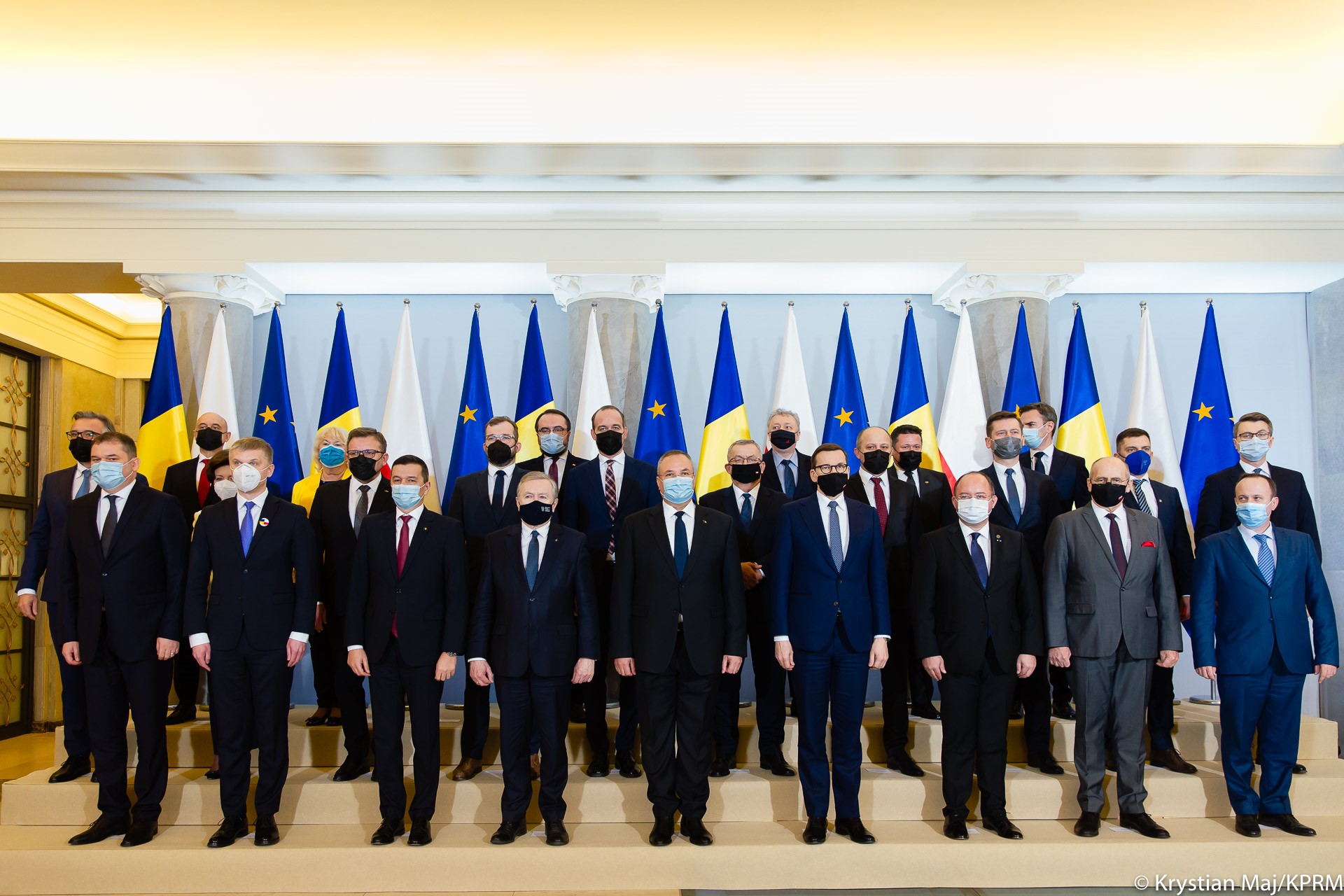
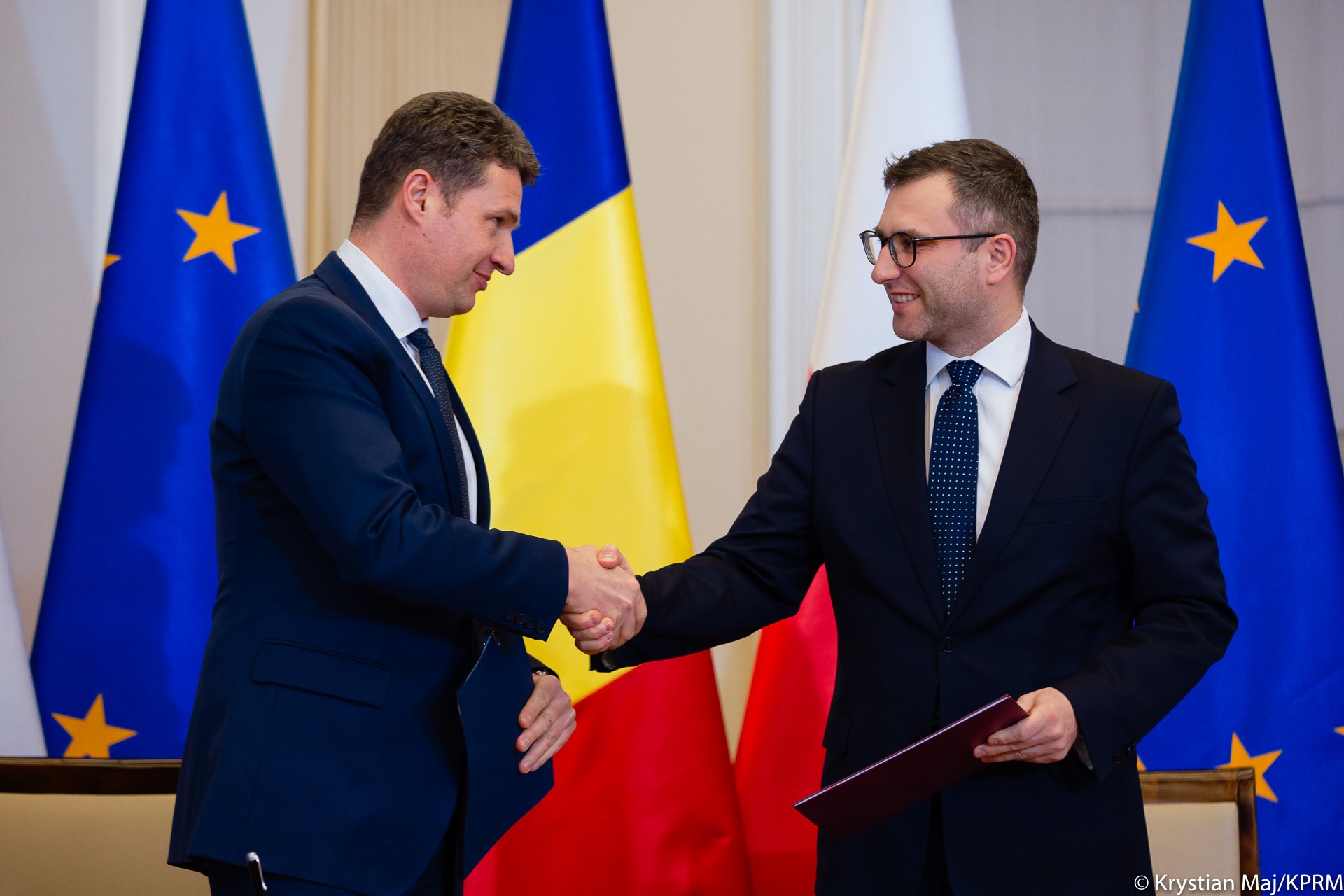
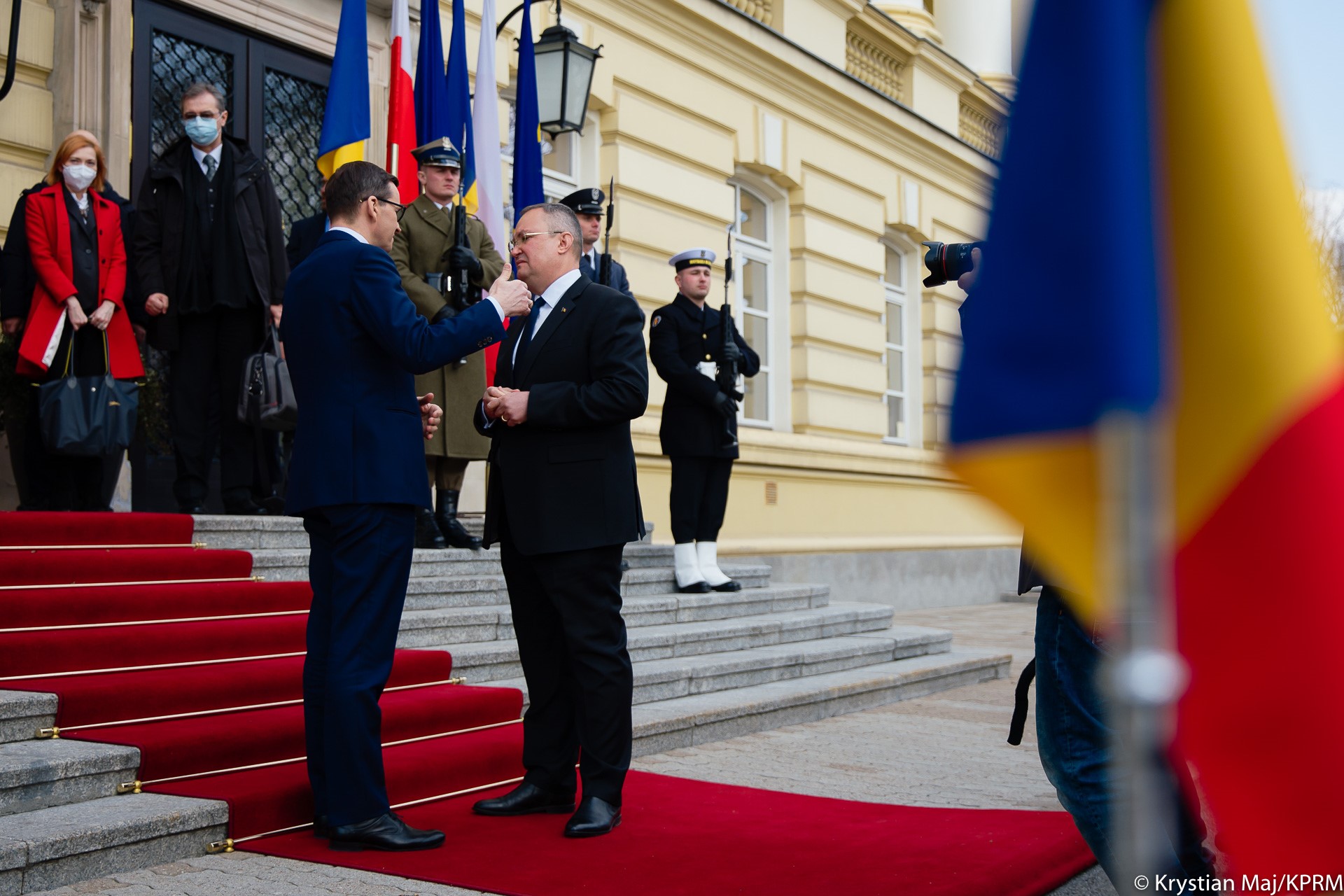
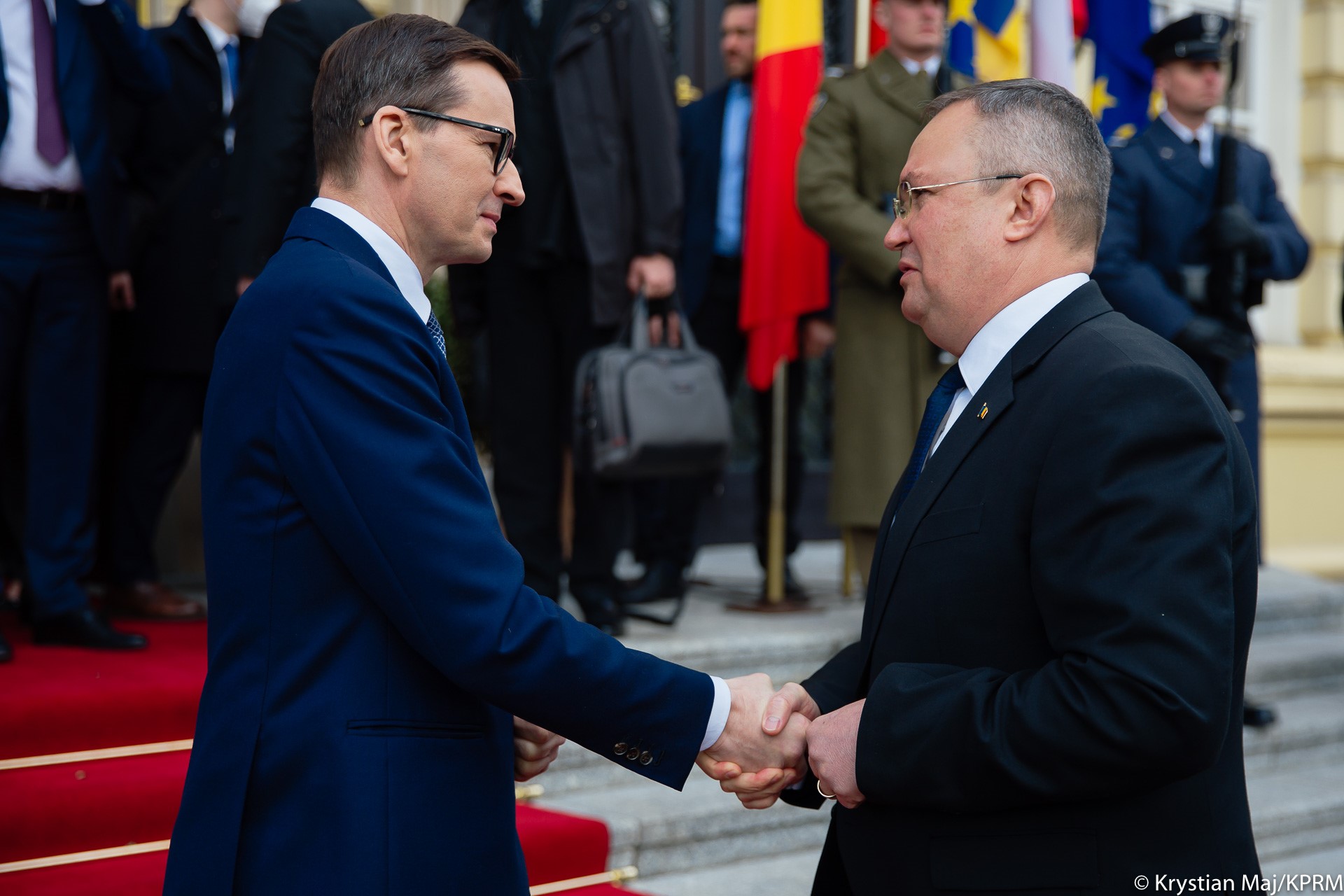
On the 101st anniversary of signing of the “Convention on Defensive Alliance between the Republic of Poland and the Kingdom of Romania”, the Prime Ministers of Poland and Romania held intergovernmental consultations. Topics discussed during the meeting between the leaders of the largest countries of the eastern flank of NATO included bilateral relations between the two countries, concerns related to security and defence, matters from the agenda of the EU and issues related to regional policy. The Governments of Poland and Romania have concluded an agreement on cooperation between their defence industries, as well as agreements on closer cooperation in the field of strategic reserves and on diplomatic and academic cooperation. Previous consultations were held in Warsaw (2018) and in Bucharest (2019).

The intergovernmental consultations between Poland and Romania constitute an element of extensive cooperation between the two largest countries of the eastern flank of NATO. Over the last several years, the two countries have committed significant resources to joint operations, including through the presence of a Romanian battalion group in Poland and a contingent of Polish soldiers in a Multinational Battalion Battle Group.
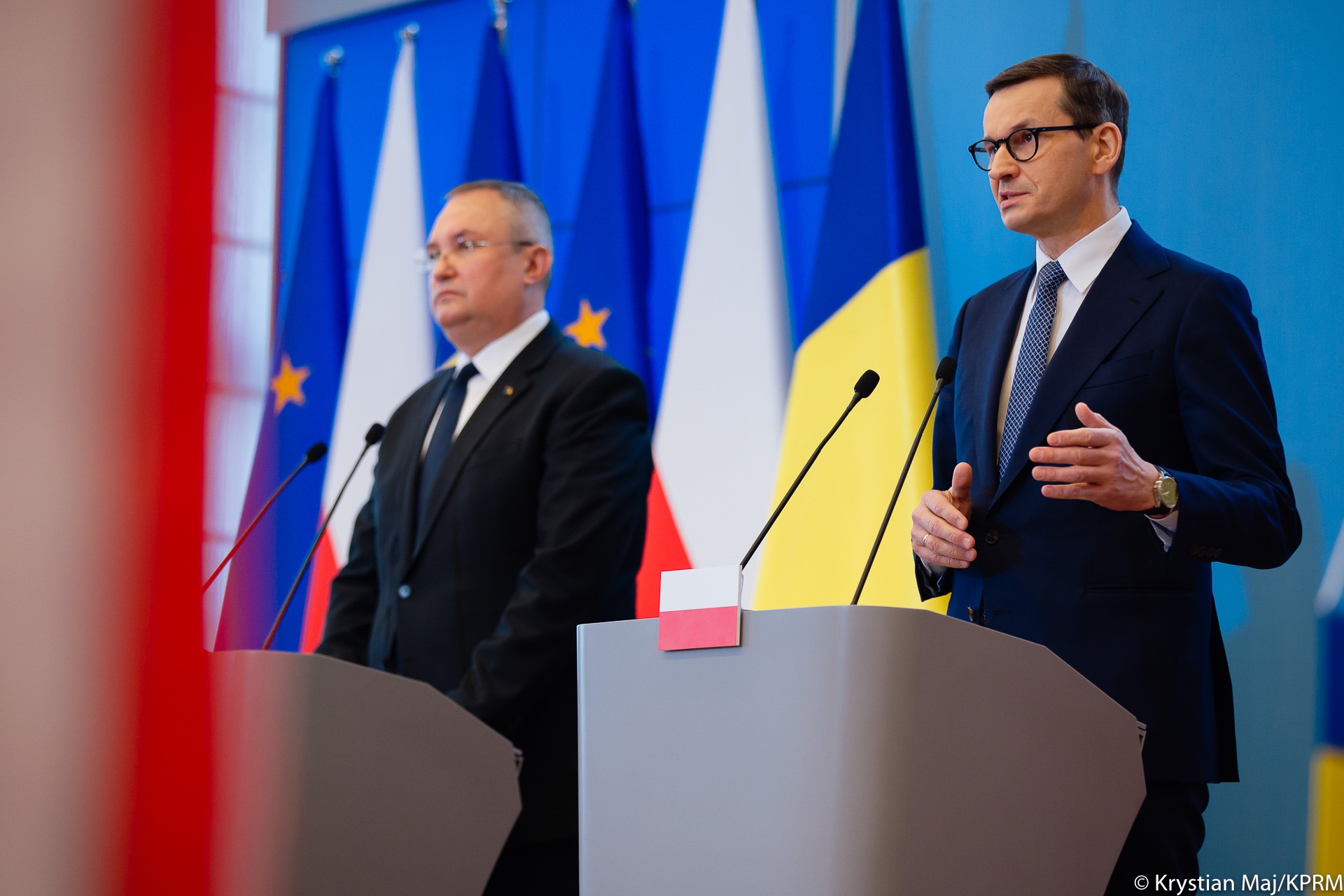
“Our countries have changed significantly over the last 20-30 years after regaining freedom, but one thing has not changed: the conditions of our security, which are directly dependent on the attitude of Russia, on whether it is an aggressive country, like today, or a country with which we can coexist peacefully,” noted Prime Minister Mateusz Morawiecki.
Awakening the conscience of the West
The issue of war in Ukraine was one of the main topics discussed during the meeting between the Heads of Governments. The Prime Ministers of Poland and Romania condemned the illegal aggression of the Russian Armed Forces against Ukraine. The Heads of both Governments expressed their complete and unwavering support for independence, sovereignty and territorial integrity of Ukraine within its borders recognised by the international community.
The consultations included a discussion concerning the options for preventing further escalation of the conflict. Prime Minister Mateusz Morawiecki emphasised the need to stop behind-the-scenes calculations in favour of joint actions which will be felt by the entire economic, banking and energy system in Russia.
“This is exactly what I said in Berlin: it will not just be gas flowing through Nord Stream 2 if it is completed, much like it is not just gas flowing through Nord Stream 1. These pipes, these pipelines also carry the blood of innocent people. Our Western partners need to realise this and stop financing the Russian war machine,” stressed the Prime Minister, and added that “Romania is one of Poland’s chief partners in awakening the conscience of the West. Awakening the conscience of the West is exactly what Poland is trying to do by calling for the most severe sanctions possible.”
A similar assessment of the threat on the part of Russia and awareness of the importance of transatlantic cooperation are the foundation for joint actions aimed at reinforcing European security. Both countries currently lead the cooperation within the so-called Bucharest Nine, or B9, which consists of 9 countries from the eastern flank of NATO. Romania also actively participates in meetings organised by the Visegrád Group.
Energy security in Europe
The Russian invasion of Ukraine has undermined not only the international order, but also the current energy policy for the entire region. Prime Ministers Mateusz Morawiecki and Nicolae Ciucă discussed the possibilities for resolution of the current situation and scenarios for supporting Ukraine and the Republic of Moldavia, which are threatened by an energy and gas crisis.
“Together with Romania, we are building a strategy for the upcoming years, and even for the upcoming months, by talking about interconnectors and potential supply sources,” stated the Prime Minister of Poland.
Topics discussed during the meeting also included the Baltic Pipe project, which is scheduled for completion by the end of this year. In the view of the Head of the Polish Government, only the end of dependence on Russian energy can lead to a significant change in Russia’s aggressive policy.
“This means finally becoming independent from Russia, which takes dollars from Western Europe and, unfortunately, converts them into a war machine. This is something that we need to counteract,” summed up the Head of the Government and called on the European Commission to quickly approve an embargo on Russian coal.
Humanitarian crisis in Ukraine and actions of the Polish Government
Poland has been providing Ukraine with humanitarian aid since the beginning of the crisis. Economic pressure, further sanctions and organisation of multifaceted assistance for Ukraine are the essential actions undertaken by Polish authorities with the aim of ending the conflict. Significant resources to help the refugees are also being committed by the Government of Romania. The Russian aggression was unequivocally condemned by key individuals from Romania’s political scene.
In cooperation with Ukrainian institutions, Poland is also offering assistance to, among others, persons waiting to cross the Polish–Ukrainian border. The European Commission’s Emergency Response Coordination Centre (ERCC) is creating a logistical hub in Poland for aid arriving from all Member States.
“Yesterday, I talked about this with Charles Michel, and the day before that – with Ursula von der Leyen, as it is very important for our partners from Western Europe to recognise and appreciate our considerable efforts,” stressed the Head of the Government, and added that “Today, here, we are also defending Europe. Today, through our humanitarian actions, through having already received over half a million war refugees from Ukraine, we are trying to ensure security, but also to respond to the challenges related to wartime, that is, to a humanitarian catastrophe, which is currently ongoing in Ukraine.”
New prospects for cooperation
For years, Poland and Romania have been cooperating ever more closely. Through agreements concluded during the consultations, further actions of both Governments will enable joint development of:
• close cooperation in the field of security and defence, whether bilateral, regional, as part of NATO, as part of the EU or through support for NATO–EU cooperation in the context of the new situation in terms of security in Europe;
• coordination with respect to the spheres of freedom, security and justice, especially in the scope of aid provided to Ukrainian refugees, border issues, fighting organised crime, terrorism and other serious offences, managing extraordinary situations, protecting the population and law enforcement;
• cooperation with respect to strategic state reserves and ensuring resources and means for crisis situations;
• cooperation in the field of energy and sustainable development, with a particular emphasis on the European dimension thereof and on ensuring energy security;
• coordination with respect to fulfilment of the goals of the Eastern Partnership after 2020, agreed upon during the summit of the Eastern Partnership on 15 December 2021, including in the scope of deepening sectoral cooperation between the partners and the EU and strengthening the security aspect of the Eastern Partnership.
Over the last few weeks, the Polish Government has been actively working to reinforce the eastern flank of NATO and of the European Union. Within the EU, Poland and Romania support the enlargement policy of the European Union. The Prime Ministers of both countries expressed their full support for the efforts of Ukraine, Moldavia and Georgia to join the EU.
During the meeting, the representatives of the Governments of Poland and Romania also discussed regional cooperation. One of its key elements is the construction of the Via Carpatia road, which stretches from Lithuania to Romania, Bulgaria and Greece. Its branches will also connect other countries, including Ukraine.