Prime Minister: our government will make every effort to address farmers' concerns
10.02.2022
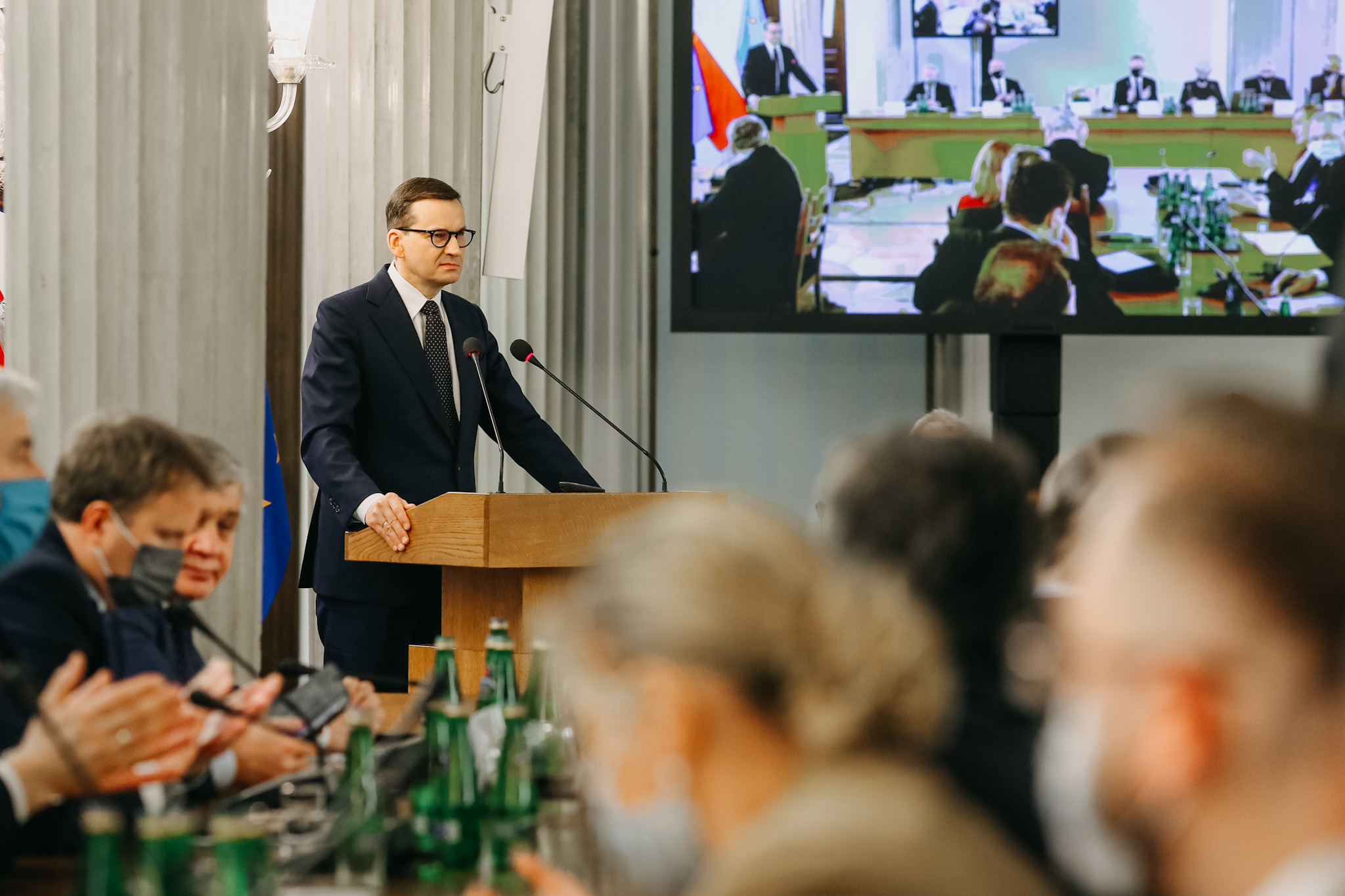
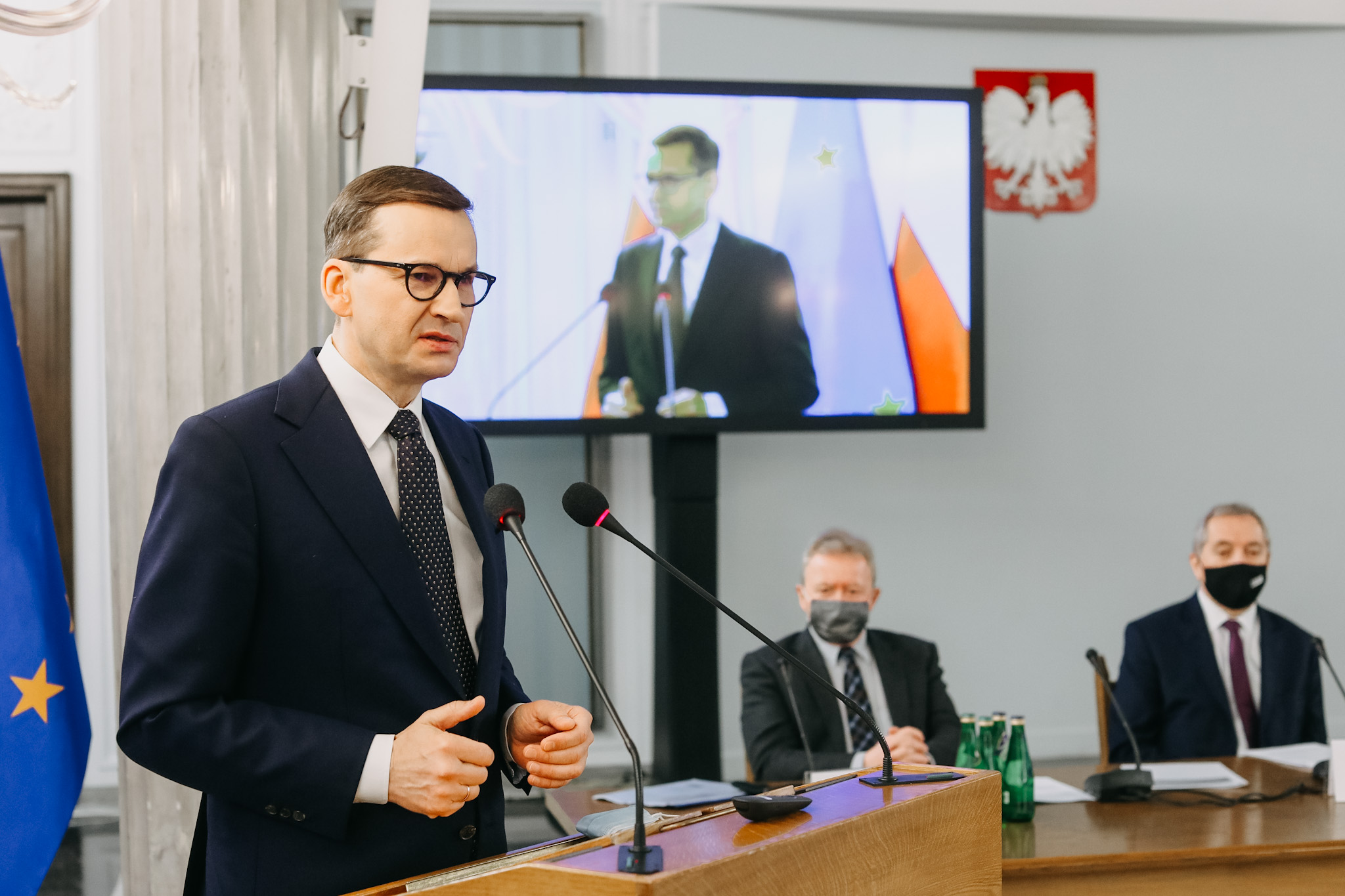
Prime Minister Mateusz Morawiecki took part in the Sejm Committee on Agriculture and Rural Development. In the presence of parliament members and representatives of the farming community, he spoke about the opportunities and challenges faced by the rural areas in Poland. The topics discussed included fertiliser subsidies, the fight against the ASF virus and agricultural processing. Moreover, the Prime Minister pledged support to farmers. He also pointed out that the government addresses the current problems faced by the rural areas in Poland.

Request for the approval of fertiliser subsidies filed to the European Commission
Europe, including Poland, struggles with inflation and price swings. Prime Minister Mateusz Morawiecki emphasized that the current situation is caused by factors coming from both Eastern and Western Europe. Moscow's policy on gas prices affects the entire European Union. To a large extent, energy prices are caused by the very high price of CO2 emission allowances imposed by the EU.
The head of the government indicated that more than a month ago, he filed a request to the European Commission for the approval of fertiliser subsidies to farmers. So far, the government has introduced a zero VAT rate on fertilisers. ‘It is beneficial for farmers who do not receive VAT refunds, but those who receive VAT refunds won’t derive any benefits. We are aware of it,’ said the Prime Minister. The head of the Polish government called on the European Commission to give Poland the green light to grant fertiliser subsidies as soon as possible.
Fight against the ASF virus and natural disasters
One of the problems faced by the rural areas in Poland is the ASF (African Swine Fever) virus. The Prime Minister called on all parliamentary groups to support the act allowing the shooting of wild boars, which are carriers of the ASF virus. It is crucial to ensure the biosafety of farms, which reduces the risk of spreading the disease to the herd.
Natural disasters and violent weather events are factors that significantly hamper work in rural areas and frequently make it impossible to plan investments. ‘Natural disasters are a more complex problem. As a result of droughts that occurred in 2018 and 2019, we paid out from PLN 2 to 2.5 billion to farmers in each year, i.e. almost PLN 5 billion,’ concluded the Prime Minister.
The head of the government emphasized that a new insurance system would be implemented. ‘We took over the Mutual Insurance Company and based on this system, we want to offer insurance for farmers as widely as possible, with considerable support provided by the State Treasury,’ informed the Prime Minister.
Agricultural processing
‘Another big problem faced by the rural areas lies in the last 30 years. During that time, various governments have sold off processing assets. As a result, these assets are now mostly controlled by foreign capital,’ pointed out the Prime Minister. He also added that the government considers agricultural production to be one of the key elements ensuring Poland’s security. ‘We are well aware of the dark clouds gathering over Poland, Europe and, in particular, over our eastern neighbours. To prevent such a situation, we secure various elements of security architecture in different parts of our country. One of these elements is food security, which can be ensured by Polish farmers,’ emphasized the Prime Minister.
EU funds for Polish farmers
‘We will increase subsidies, and even exceed the EU average, for 95-97% of farmers. This is something they have been waiting for, for a very long time. Something that will level the playing field with respect to German, French, Austrian or other farmers. We will continue developing the programme of higher subsidies,’ emphasized Prime Minister Mateusz Morawiecki.
He also added that due to the fact that the National Recovery and Resilience Plan (NRRP) has not yet been approved, the government will not be waiting for the final approval. The Plan comprises key programmes, such as the water retention programme, support for the processing industry, and energy for the Polish rural areas. ‘I want to guarantee and declare for the first time that we will implement these programmes regardless of whether the NRRP will be approved in a month, in a year or in two years. We will eventually get the money but we are starting to implement the programmes today,’ emphasized the head of the government. The Prime Minister also added that he had already instructed the Ministry of Finance to secure national funds for tender procedures, payments and the implementation of the first major changes in this area.