A historic step towards protecting the Białowieża Forest. The Minister of Climate has signed the Management Plan approved by UNESCO
19.06.2026
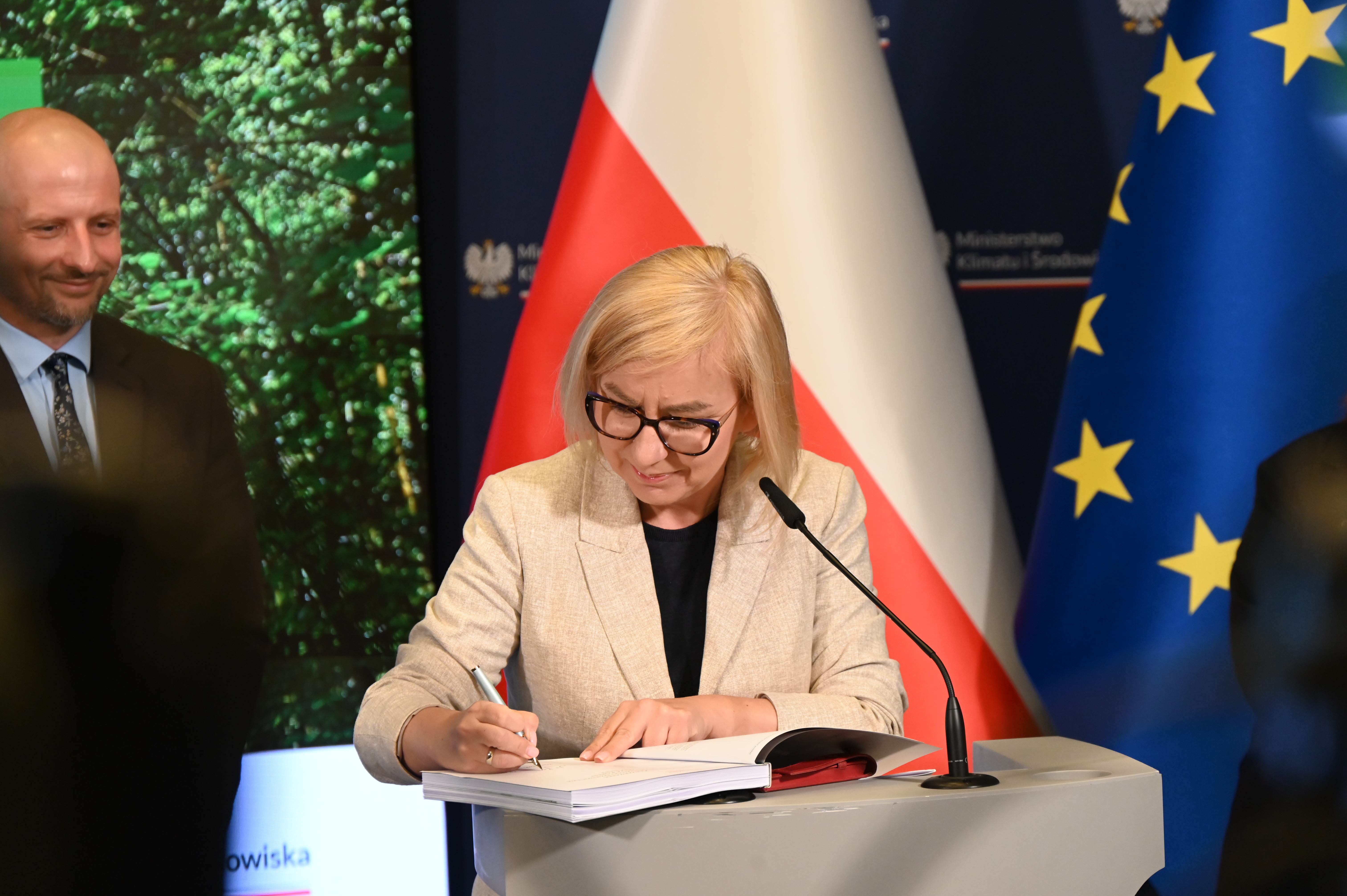
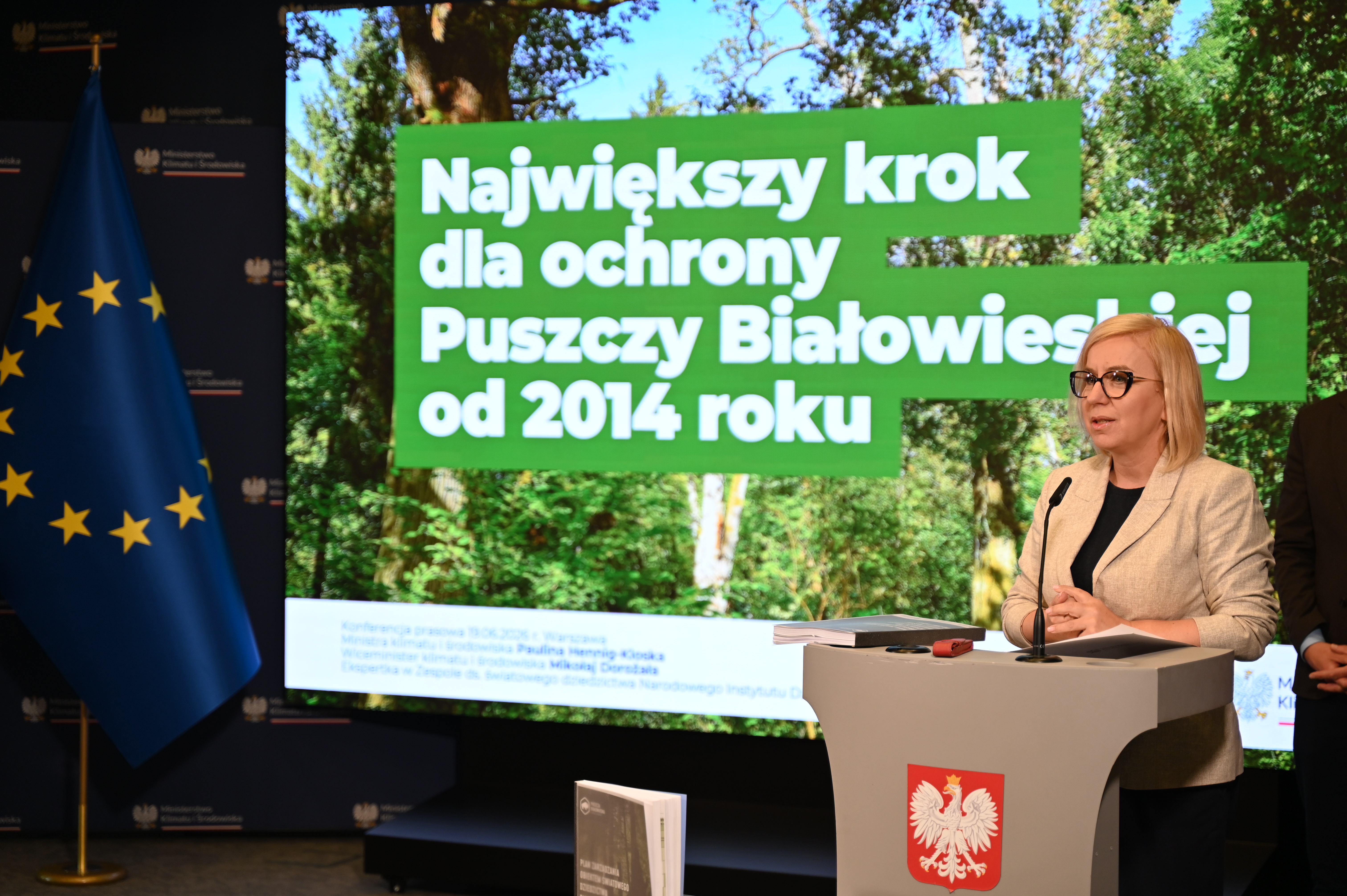
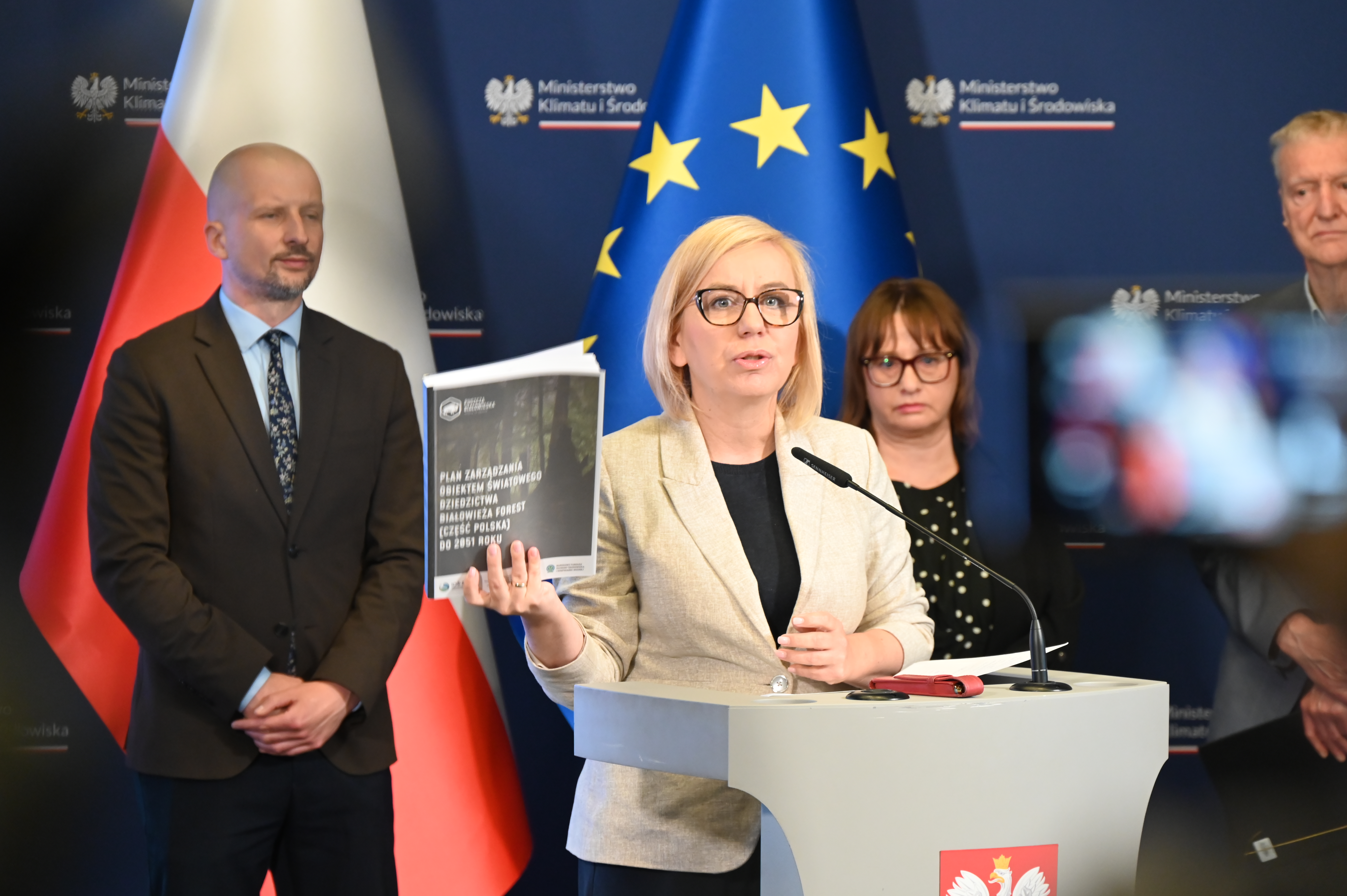
After years of preparation, Poland has fulfilled its commitment to UNESCO, and the protection of the Białowieża Forest has been placed on a new, sustainable footing. On 19 June, the Minister of Climate and Environment, Paulina Hennig-Kloska, signed the Management Plan for the Białowieża Forest World Heritage Site, which had previously been approved by the World Heritage Centre of the United Nations Educational, Scientific and Cultural Organisation (UNESCO). This document sets out the guidelines for the conservation of this unique area for the next 25 years.

Key assumptions of the Management Plan:
- The Management Plan for the Białowieża Forest World Heritage Site covers the Polish part of the transboundary Białowieża Forest site and sets out the principles for its conservation until 2051.
- The Plan is a comprehensive document consisting of 184 pages and 11 annexes, drawn up based on extensive analyses and public consultations.
- The adoption of this document marks the fulfilment of Poland’s long-standing commitment arising from the inscription of the entire Białowieża Forest on the UNESCO World Heritage List in 2014.
- In terms of nature conservation in the Białowieża Forest, the Management Plan is consistent with the Conservation Plan drawn up for the Natura 2000 site.
- Under the Plan, 96% of the Polish part of the Białowieża Forest will be left to natural processes. Until now, this figure stood at just 37%.
- Within the protected area, traditional forestry practices and hunting will be prohibited.
- The document identifies threats to the Białowieża Forest ecosystem and proposes measures to preserve its unique biodiversity – the Białowieża Forest is a habitat for thousands of species, including over 12,000 invertebrates, 250 bird species and 59 mammal species.
- The plan takes into account the recommendations from UNESCO and the International Union for Conservation of Nature (IUCN).
- The existing rules governing access to the Forest will remain in place, whilst the development needs of local communities and the region will be taken into account.
- A UNESCO mission to the Białowieża Forest is planned for 2027 to assess progress in implementing the Plan.
After 12 years of work, we’ve done it! We have signed the Management Plan for the Białowieża Forest UNESCO World Heritage Site. This is a historic document drawn up in consultation with academics, local authorities, the local community and UNESCO experts. Together, we have agreed on the future of one of Europe’s most valuable natural sites. This proves that nature conservation can be based on knowledge, dialogue and understanding
– said Minister Paulina Hennig-Kloska.
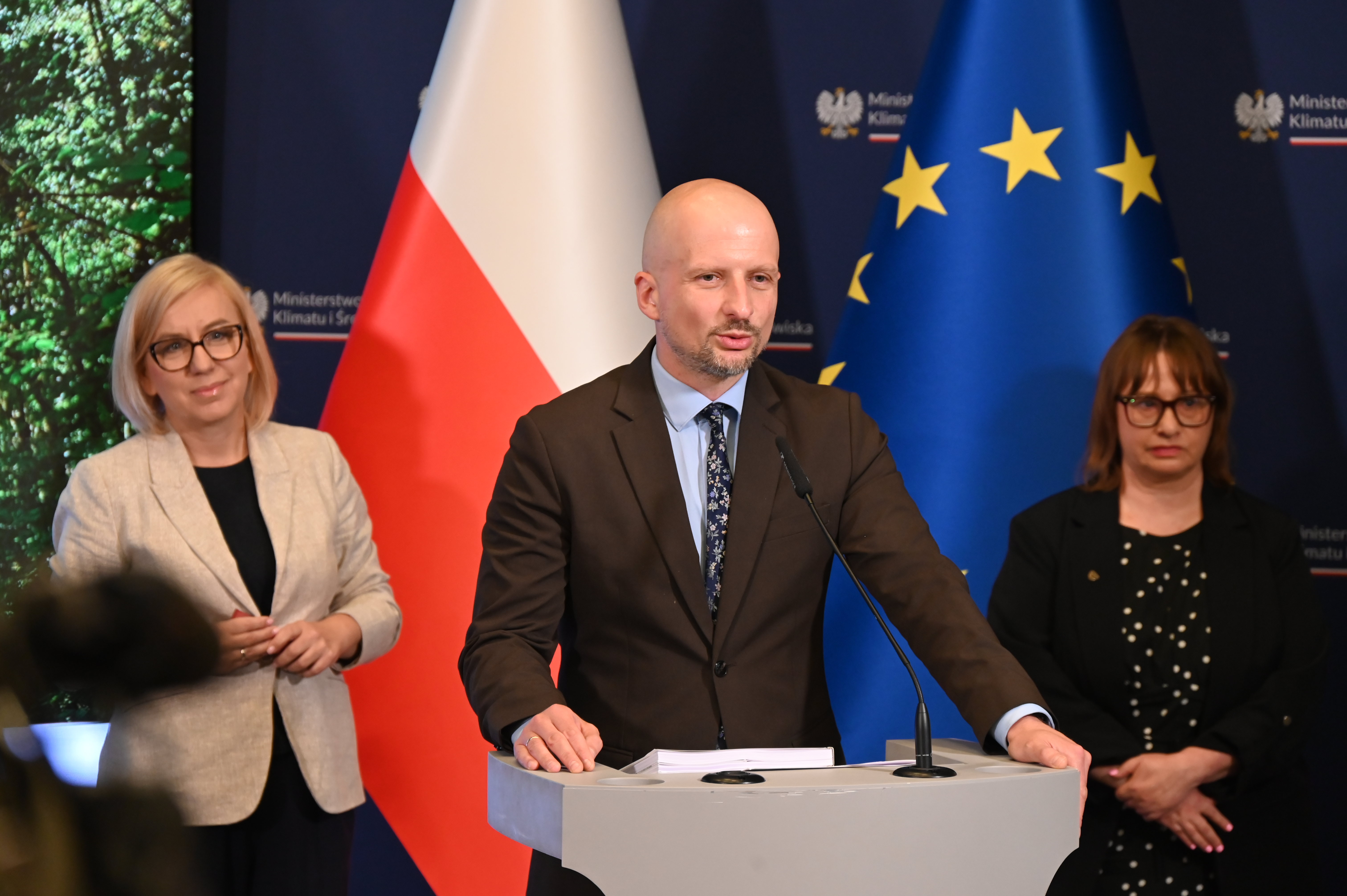
The Management Plan for the Białowieża Forest is not just about protecting this valuable natural heritage. It also involves concrete measures to increase water retention, restore natural processes and reduce human pressure on the most valuable areas. We will gradually remove disused roads, develop water retention projects and implement solutions that will help to better protect this unique forest in the face of the climate crisis. The primeval forest is alive, changing and regaining its natural dynamism – our task is not to interfere with this process
– emphasised Deputy Minister Mikołaj Dorożała.
Białowieża Forest – a unique World Heritage Site
Białowieża Forest is one of 1,248 sites included in the prestigious UNESCO World Heritage List. Only 235 of them are natural sites.
The Forest provides protection for a diverse and rich natural environment, comprising over 3,500 species of fungi, over 12,000 species of invertebrates, over 250 species of birds, 59 species of mammals, 13 species of amphibians and 7 species of reptiles. The symbol of the site is the European bison, which found its refuge in the Białowieża Forest and was saved from extinction here.
In 2014, the UNESCO World Heritage Committee accepted the proposal to inscribe the entire Białowieża Forest on the World Heritage List. It did not raise any objections from the international community. Since then, Poland has been obliged to prepare a Management Plan for the Site.
96% of the area left to natural processes
The document was drawn up following an extensive consultation process – comprising 17 analyses and over 45 meetings involving local authorities, scientists, civil society organisations and residents of the region. It takes into account both the recommendations of the UNESCO World Heritage Committee and the needs of local communities, as well as considerations related to national security.
Under the Plan, 96% of the Polish part of the Białowieża Forest will be left to natural processes. Previously, it was only 37%. As a result, traditional forestry and hunting will be excluded from the area.
The measures included in the Plan are primarily aimed at preserving the ecosystems of the Białowieża Forest for future generations, so that they will be able to see it in its unaltered and natural form. In the face of accelerating climate change, which is detrimental to nature, and the resulting direct threats to local ecosystems, the protection of natural processes and unique biodiversity is of particular importance.
The Management Plan identifies existing and potential risks and barriers to the management of the Białowieża Forest and proposes a number of remedial measures. The priority is to protect the various groups of organisms that shape the natural processes and biodiversity of the Forest.
UNESCO’s positive assessment and support for the region
The plan was well received by experts from UNESCO and the IUCN, who gave a positive assessment of the proposed measures, which were drawn up following extensive consultations with local authorities, experts and residents of the region. This document is the first comprehensive management plan for the Białowieża Forest since the entire site was inscribed on the World Heritage List in 2014.
Support for local authorities is also a key element of the measures accompanying the implementation of the Plan – in 2025, the municipalities of the Białowieża Forest and Hajnówka County received a total of approximately PLN 12.5 million in so-called ‘environmental grants’, to compensate for the restrictions resulting from nature conservation. In 2026, the environmental needs of the municipalities of the Białowieża Forest and Hajnówka County, taken into account in the general grant, amount to PLN 21.6 million.
Enormous support for the protection of the Forest
Public opinion polls confirm strong public support for the adopted guidelines – over 90% of respondents, including local residents, are accepting the protection of the Primeval Forest with minimal human interference.
The signing of the Management Plan is not merely the formal conclusion of a long-standing process, but above all an expression of Poland’s commitment to preserving one of the world’s most important natural heritage sites. The document sets a new standard for the management of protected areas – combining nature conservation, public dialogue and international cooperation.
What happens next with the plan?
The signed Management Plan for the UNESCO World Heritage Site ‘Białowieża Forest’ will be handed over to the site’s managing bodies, namely Białowieża National Park, the Białowieża Forest District, the Browsk Forest District and the Hajnówka Forest District. The Management Plan will also be forwarded to the local authorities in the Białowieża Forest region, which are responsible for the site’s buffer zone. A mission by representatives of UNESCO and the IUCN to the Białowieża Forest is planned for 2027.
Where to find the Management Plan?
The Białowieża Forest Management Plan is available on the Ministry of Climate and Environment's subpage dedicated to the forest: link