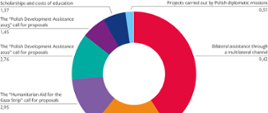
Bilateral development aid - 2024
In 2024, 6 development projects and 2 humanitarian projects were implemented in Palestine by Polish non-governmental organisations and funded by Polish Aid. Additionally, 5 initiatives were carried out by the Representative Office of the Republic of Poland in Ramallah.
Supporting health care and social integration in the West Bank
Development projects implemented in the West Bank by NGOs focused on improving the quality and accessibility of health care for the most vulnerable social groups and on improving the living conditions of people with disabilities. The activities included medical consultations delivered by mobile teams, preventive health screenings, psychosocial support, and the purchase of medicines and medical equipment.
Cooperation with the Palestinian Ministry of Health enabled the modernisation of health centres and the retrofitting of the Palestinian Medical Association’s mobile clinics, which improved the quality of services offered. This allowed almost 10,500 medical consultations to be provided in the Hebron and Jenin districts.
In conditions of limited access to traditional facilities, the projects also contributed to the development of a telemedicine system, which becomes another tool for providing medical care to the inhabitants of Palestine in situations of security threats. Community‑based rehabilitation centres were also modernised, particularly those located in areas distant from major urban centres, and were equipped with specialist therapeutic devices.
Poland’s assistance further supported initiatives promoting entrepreneurship and professional activation among persons with disabilities and their families, as well as among women and young people. In total, 40 beneficiaries received training in establishing and managing their own businesses and were provided with financial support to launch them.
Humanitarian aid in the Gaza Strip
In response to the humanitarian crisis in the Gaza Strip, numerous health and food security initiatives were undertaken. Palestinian families received 3,340 food parcels containing supplies tailored to the cultural preferences and needs of the region’s residents. In total, more than 17,000 Palestinians benefited from food assistance.
Under another project, 1,000 families received cash assistance (multipurpose cash grant), which enabled them to meet their most urgent needs, including food. In addition, 2,800 patients were provided with at least one medical consultation, while 2,300 received essential medicines.