National Reading 2025 in South Africa - Jan Kochanowski's poetry - his songs, epigrams, and laments
07.12.2025
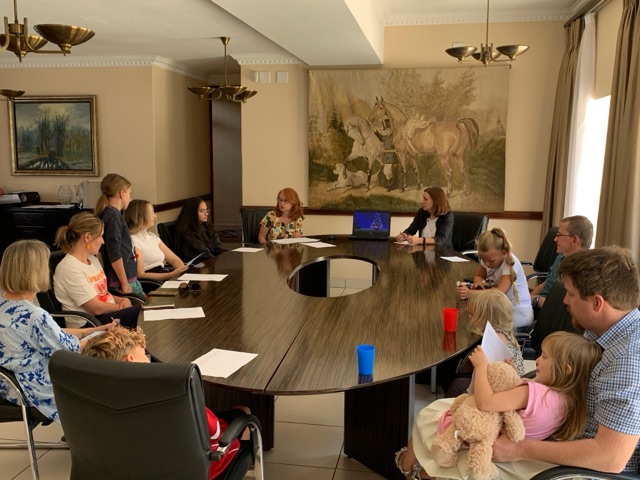
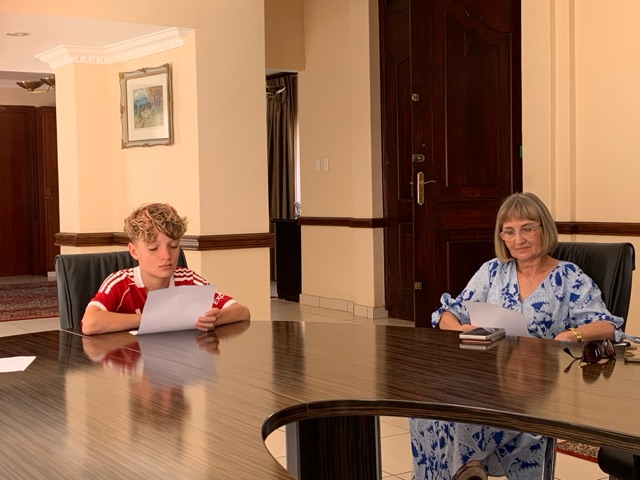
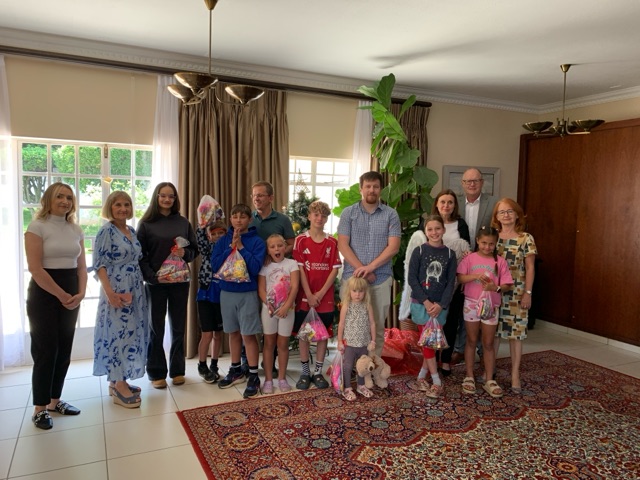
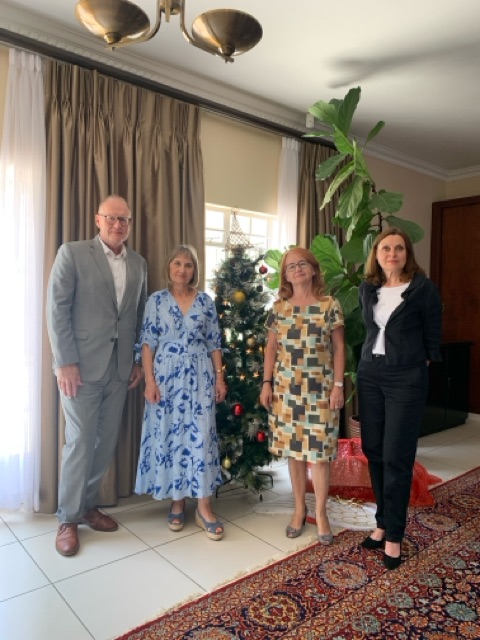
The Embassy of the Republic of Poland in Pretoria participated on 6 December 2025 in this prestigious event for the ninth time.

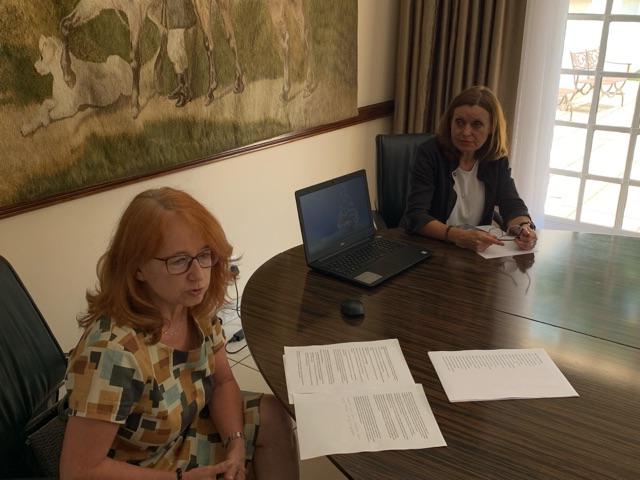
Lidia Moń, principal of the Polish School in Pretoria, welcomed the event’s participants and delivered a short speech. Consul Robert Rusiecki delivered an introductory remarks. Magda Górna, a Polish language teacher at the School, delivered a lecture on Polish literature and the work of Jan Kochanowski. She also explained the origins of the National Reading to the gathered participants.
The 14th edition of the National Reading took place this year at the initiative of the President of the Republic of Poland, Karol Nawrocki and under the honorary patronage of the Presidential Couple. Jan Kochanowski's poetry – his songs, epigrams, and laments – was selected as the reading for the National Reading.
Jan Kochanowski is considered one of the most outstanding Polish poets and the greatest European creators of the Renaissance. He was born in 1530 in Sycyna near Zwoleń. He studied at the Kraków Academy and the University of Padua, and traveled throughout Europe in his youth. In 1559, he returned to Poland and accepted a position as a courtier at the courts of magnates and the royal court. A dozen or so years later, he settled permanently on his hereditary estate in Czarnolas, devoting himself to writing. During this period, he continued writing songs and epigrams. After the death of his beloved daughter, Urszula, he published the cycle of Laments – a masterpiece of Old Polish literature. Kochanowski died suddenly in 1584 during a session of the Sejm in Lublin and was buried in the crypt of the Zwoleń church. Jan Kochanowski's poetry explores a variety of themes – from the serious and momentous to the lighter and humorous. He describes life at court and in the land, and incorporates patriotic themes, moral reflections, and ancient and biblical allusions. His poems embody a humanistic religiosity, a delight in life, but also a profound reflection on transience and human fate. The artist contributed to the development of the Polish literary language, and his unparalleled works remain vibrant and inspiring to this day.
In previous years, the following works have been read: "Pan Tadeusz" by Adam Mickiewicz, works by Aleksander Fredro, "The Trilogy" by Henryk Sienkiewicz, "The Doll" by Bolesław Prus, "Quo Vadis" by Henryk Sienkiewicz, "The Wedding" by Stanisław Wyspiański, "The Coming Spring" by Stefan Żeromski, Polish short stories, "Balladyna" by Juliusz Słowacki, "The Morality of Mrs. Dulska" by Gabriela Zapolska, "Ballads and Romances" by Adam Mickiewicz, "On the Niemen" by Eliza Orzeszkowa, and "Kordian" by Juliusz Słowacki.
The National Reading for next year's 15th edition will be the drama "Forefathers' Eve" by Adam Mickiewicz, as announced by the President during the inauguration of the 14th edition in 2025.
Photos: Polish School in Pretoria