The 77th anniversary of the outbreak of the Warsaw Ghetto Uprising. Press release
19.04.2020
19 April 2020 marks the 77th anniversary of the outbreak of the Warsaw Ghetto Uprising – the biggest Jewish military revolt during WW2, and the first urban insurgency in occupied Europe. POLIN Museum of the History of Polish Jews organizes a social-education campaign to commemorate the Warsaw Ghetto Uprising. This year, due to the pandemic, POLIN Museum is running the campaign on the Internet and invites everyone to join in the commemoration.

In the summer of 1942, the Germans began the so-called Great Deportation Aktion of the Ghetto, established in 1940. Nearly 300,000 Jews were deported to the extermination camp in Treblinka. On 19 April 1943, two thousand Germans entered the Ghetto in order to carry out its final liquidation. They were met with the resistance of several hundred poorly armed insurgents who, in the course of a month that followed, engaged in combat amongst the rubble of the systematically destroyed Ghetto. As residents of Warsaw, we should keep the memory of their bravery alive.
Warsaw Ghetto Uprising social-educational campaign
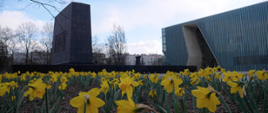
This year POLIN Museum launches the 8th edition of the Warsaw Ghetto Uprising social-educational campaign. On the initiative of POLIN Museum, this educational and commemorative event takes place every year on April 19, namely the anniversary of the outbreak of the Warsaw Ghetto Uprising. For almost a decade, hundreds of volunteers in Warsaw and other cities have been handing out yellow paper daffodils to raise awareness of the Uprising and its significance.
Daffodils are the symbol of remembrance of the Uprising. Why? They are connected to the figure of Marek Edelman, the last commander of the Jewish Combat Organization which staged the Uprising together with the Jewish Military Union. Edelman was one of the few survivors. After the war had ended, each year on the anniversary of the Uprising, he used to lay a bouquet of yellow flowers at the Monument to the Ghetto Heroes. The paper daffodils, which people wear on 19 April, are inspired by this custom. Edelman, who had stayed in Poland after the war, passed away in 2009. Today, by wearing a daffodil badge we demonstrate that we are all united in the memory of those who perished in a fight for dignity.
In 2019, POLIN Museum took the campaign to New York, New Jersey and the European Parliament in Strasbourg; in 2020, it is extending its range to Los Angeles and Israel. This year, however, due to the global pandemic, the campaign goes online. We invite everyone to join in the commemoration of the Warsaw Ghetto Uprising. To get involved, you can make your own daffodil using only paper, glue and scissors. Here you will find a daffodil template as well as text and video instructions on how to make one:
Download daffodil instructions >>
Video how to put your daffodil together >>
Once your paper daffodil is ready, POLIN Museum encourages you to post a photo wearing the flower on social media, and—using hashtags #WarsawGhettoUprising and #POLINMuseum—say why this anniversary is important to you. Follow Friends of POLIN, the Museum’s English-language fan page on FB, to see how we are remembering the Warsaw Ghetto Uprising together.
For the anniversary, POLIN Museum also suggests:
-watching a film about the Warsaw Ghetto Uprising titled There Was No Hope, produced by POLIN Museum,
- reading a short graphic novel about Marek Edelman,
- taking an online tour of the Warsaw Ghetto gallery at POLIN Museum core exhibition.
The Warsaw Ghetto Uprising campaign is educational and engaging, and could easily be included in an online curriculum. We encourage schools all across the globe to commemorate the Warsaw Ghetto Uprising with us. Educational materials are available in the Educational Resources tab.
Do join the Warsaw Ghetto Uprising campaign by posting a selfie with the paper daffodil on social media on 19 April. Help us commemorate the Uprising, and keep the memory of its heroes alive.
The press material and photos are available at https://www.polin.pl/en/media
Press Office POLIN Museum Żaneta Czyżniewska