Treasures of Africa in the heart of Poland
21.03.2021
The fascinating collection of ancient Nubian art from Faras, discovered and saved by Poles in present-day Sudan, is celebrating its 60th anniversary this year. On the occasion of the anniversary, the National Museum in Warsaw, which houses part of the collection from this place, has prepared a series of scientific and educational events that bring closer their history and achievements of Polish archaeologists.

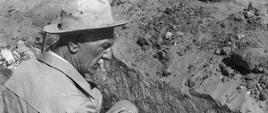
A Polish archaeological mission came to Africa during the construction of the Aswan High Dam, a powerful dam on the Nile near the city of Aswan. It was headed by prof. Kazimierz Michałowski, a legend of Polish archeology, then head of the Polish Centre of Mediterranean Archeology at the University of Warsaw in Cairo and deputy director of the National Museum in Warsaw.
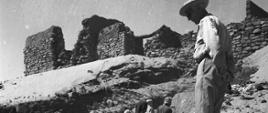
Under the auspices of UNESCO, in the years 1961-1964, Poles conducted excavations aimed at saving priceless ancient works from flooding associated with the construction of the dam. The governments of Sudan, Egypt and the international community were very keen on the rescue operations. Organizing the mission and carrying out the excavations in great haste was a great challenge, in return for their participation, the governments of both countries offered to the countries that offered to conduct excavations half of the future finds. The selection of the excavation site was decided by prof. Michałowski.
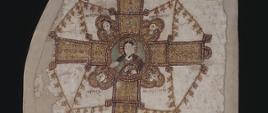
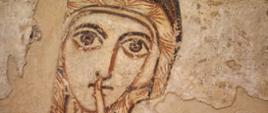
The most important discovery of Poles in Sudan was the discovery of the remains of the Faras Cathedral, which served the faithful from the 8th to the 14th centuries, and a set of over 150 paintings there. To this day, it is considered one of the leading achievements of Polish science, conservation and museology, which turned out to be groundbreaking in research on ancient and medieval Nubia. The presence of Polish archaeologists in Sudan began with him.
As part of the jubilee celebrated in 2021, which was symbolically inaugurated on February 2nd, when Poles came to Sudan, the National Museum in Warsaw will organize many scientific and educational events, as well as conduct online activities, including a popularization campaign in social media, which will present the history of the cathedral's discovery in a manner accessible to the general public.
At the end of 2021, a publication in Polish and English will also be published, containing previously unpublished archival materials from Faras.
These activities herald the fiftieth anniversary of the opening of the first Faras Gallery at the National Museum in Warsaw in 2022. It presents, among others elements of the collection, which was delivered to Poland under an agreement between Poland and Sudan. It began with the discoveries of the team of prof. Michałowski, including 67 paintings, some stone elements of the architectural decoration of the cathedral and other churches and buildings in Faras, epitaphs of local bishops and priests, products of Nubian craftsmen, including a large group of painted ceramic vessels produced in local workshops. The rest of the discoveries went to the Sudanese National Museum in Khartoum.
The Nubian collection in Warsaw, which has been presented in a completely new version since 2014, remains unique in the world to this day, as well as the largest and richest collection of medieval Nubian monuments in Europe.
During the jubilee events, three institutions cooperate with each other: the National Museum in Warsaw, the Centre of Mediterranean Archeology of the University of Warsaw and the Institute of Mediterranean and Oriental Cultures of the Polish Academy of Sciences. The event was held under the patronage of the Ministry of Foreign Affairs and UNESCO.
You can also learn more about the discoveries from Faras by visiting the exhibition at the Google Culture Institute: https://artsandculture.google.com/exhibit/galeria-faras-skarby-zatopionej-pustyni/zAKSFOp2_BDeIg?hl=en
More about Faras Gallery also on: https://www.mnw.art.pl/en/collections/permanent-galleries/faras-gallery/