Biogas and biomethane - pillars of cooperation between ORLEN and KOWR
12.02.2026
The ORLEN Group and the National Support Centre for Agriculture (KOWR) have entered into cooperation on the construction, operation, and development of biogas and biomethane facilities in Poland. This includes the exchange of knowhow and experience, joint investment projects, and the use of the Agricultural Property Stock of the State Treasure with the participation of state-owned agricultural companies supervised by KOWR. This is yet another example of the implementation of the strategy of the Ministry of Agriculture and Rural Development.

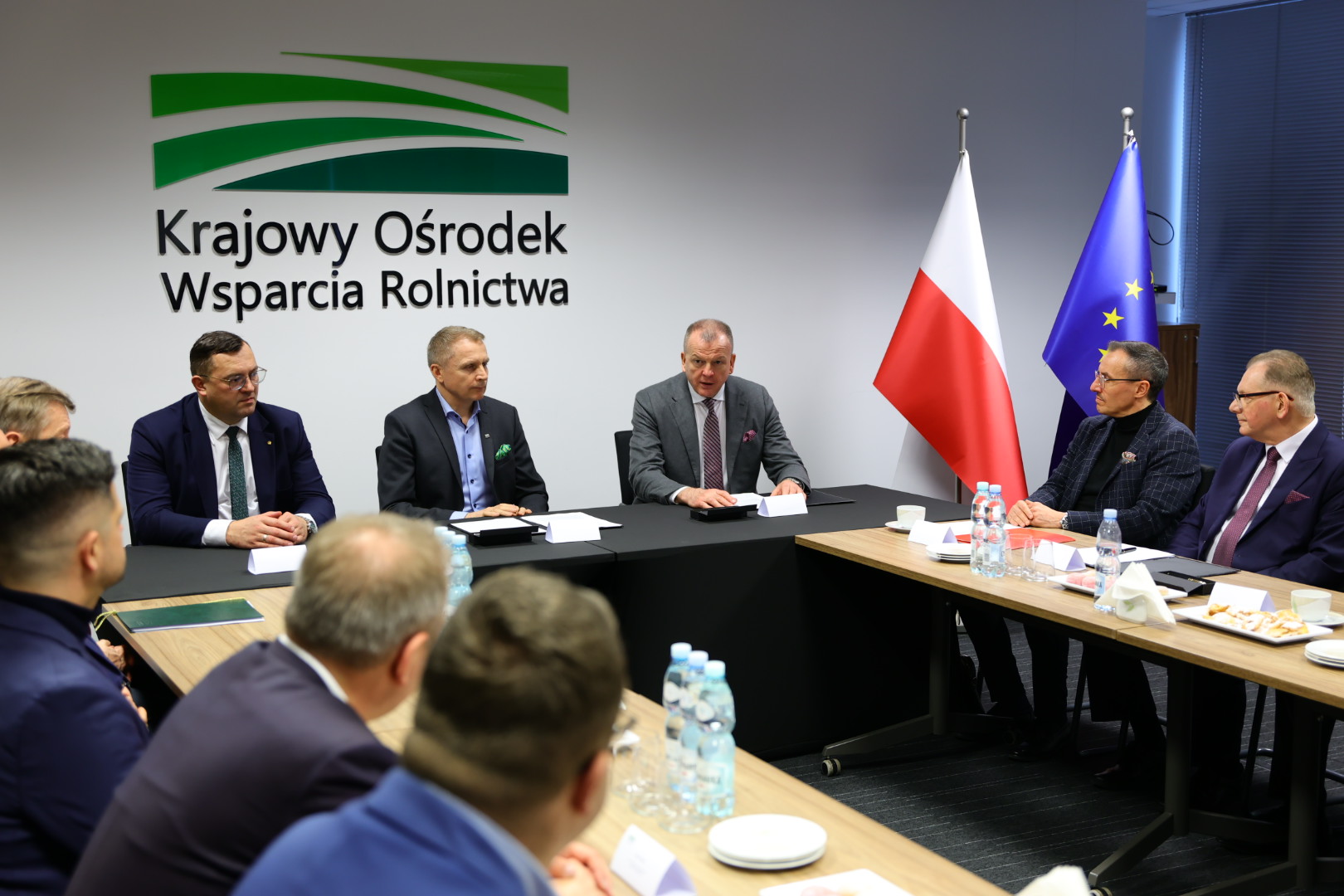
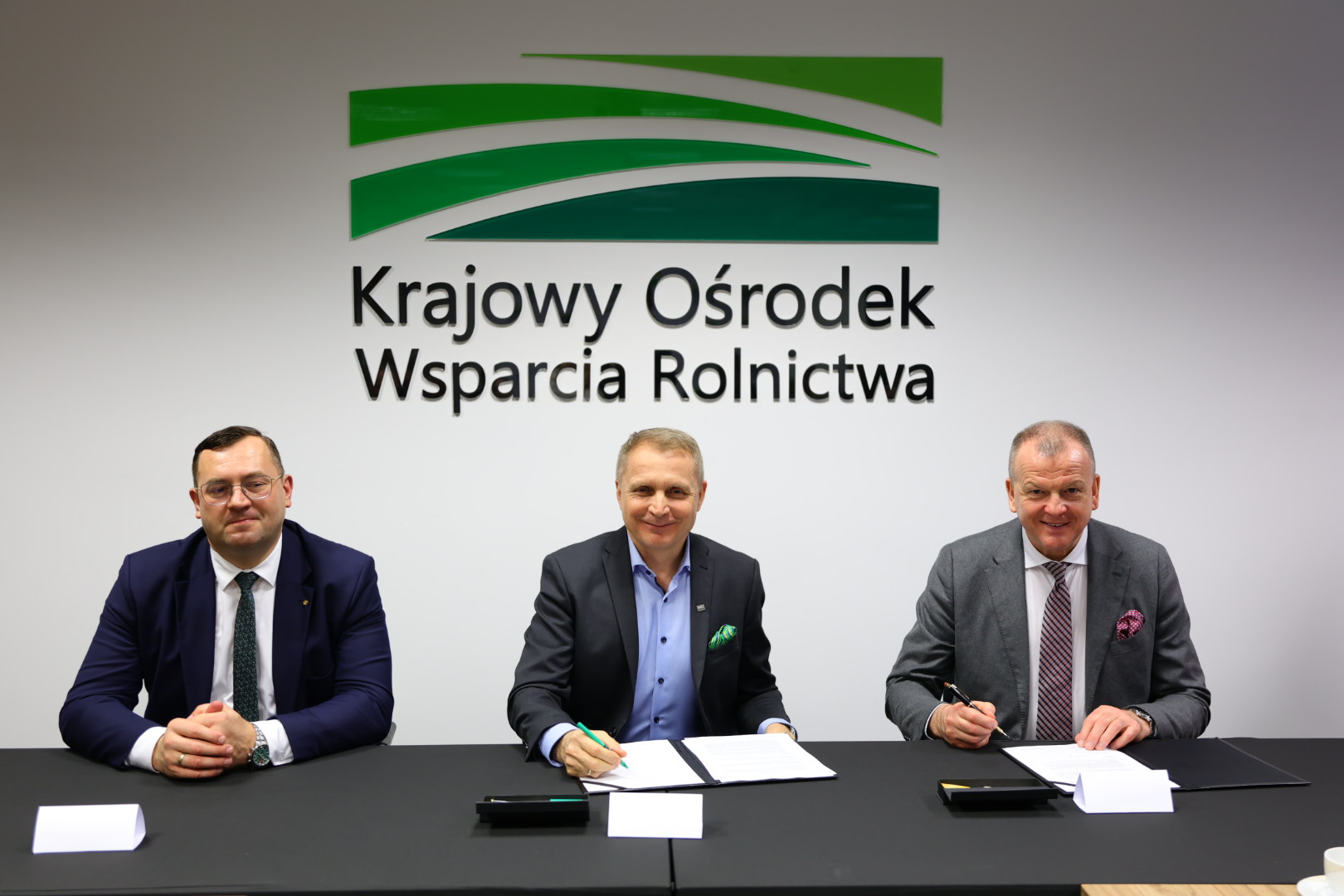
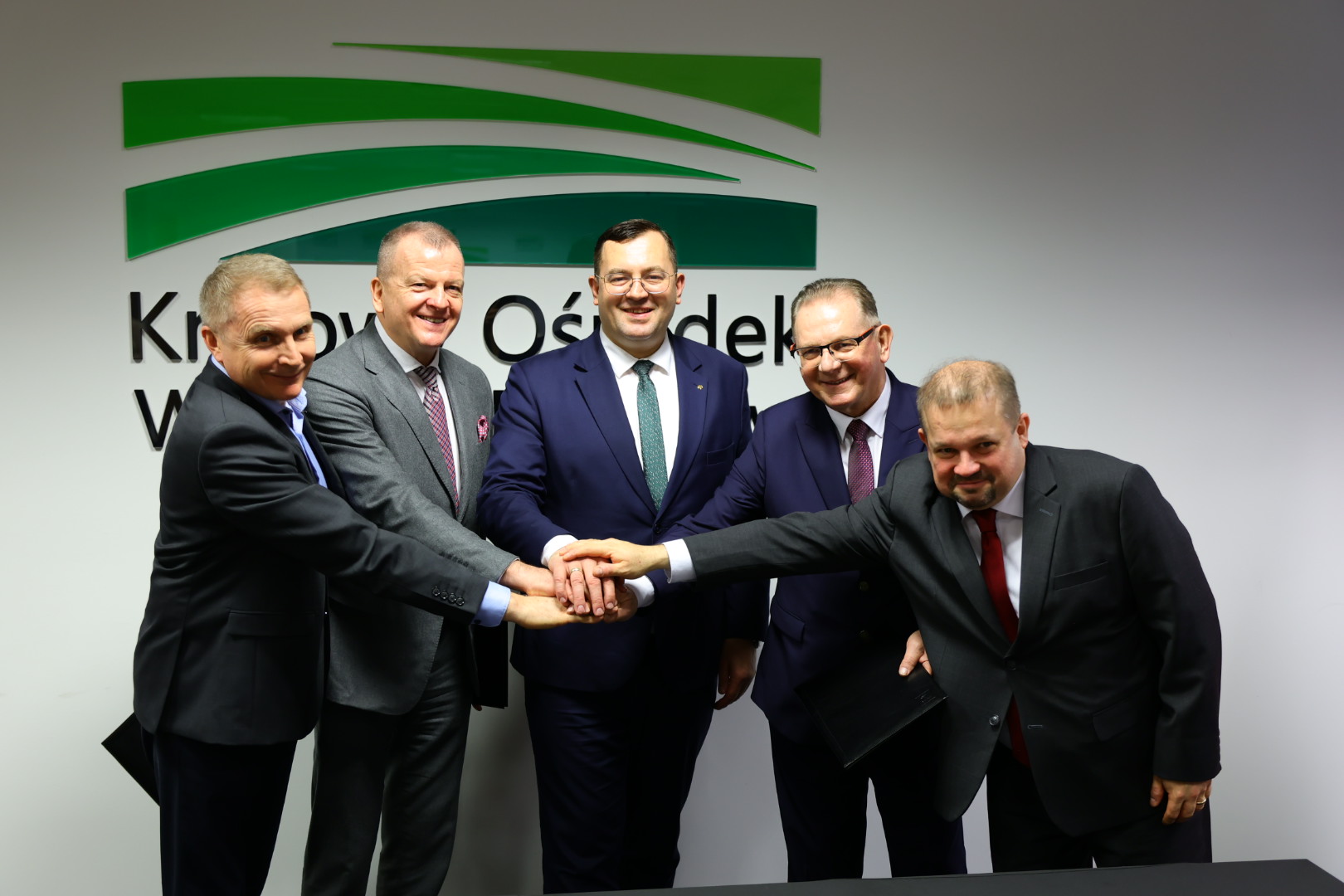
On 12th February 2026, ORLEN and KOWR signed a cooperation agreement that will not only facilitate energy transformation but will also set new directions for the development of Polish agriculture.
Stefan Krajewski, Minister of Agriculture and Rural Development, who was present at the signing of the agreement, said, “The use of assets of the State Treasury, which we have in our resources, is the right thing to do. As Minister of Agriculture and Rural Development, who oversees the activities of KOWR, I expect action to be undertaken to develop Polish agriculture. We have the capacity to create new, stable sources of income for farmers, and this must be done. I'm pleased that this idea will finally be implemented.”
The ORLEN Group was represented by Robert Soszyński, VP for Operations at ORLEN, and Jan Pajek, President of the Board at ORLEN Biometan. On behalf of KOWR, the agreement was signed by Henryk Smolarz, KOWR Director General.
The agreement aims to create new biomethane production sites in locations with high potential for development. The partnership supports the implementation of the ORLEN2035 strategy, including the production of up to 0.24 billion m³ of biomethane annually, which translates to an increase in biomethane production more than a hundred-fold above the declared production target, accelerating the decarbonisation of transport and reducing greenhouse gas emissions.
What is biomethane and what are its possibilities?
Biomethane plants produce biogas, which is then purified to remove carbon dioxide and pollutants such as sulphur and nitrogen compounds. The result is biomethane – a fuel with natural gas parameters that can be injected into gas grids or liquefied into bio-LNG, a renewable fuel for heavy transport.
Biomethane can also be used to produce biohydrogen. One of its significant advantages is its ease of storage. It is noteworthy that the carbon dioxide extracted during production can be used, for instance, in greenhouses.
The perspective of ORLEN
“Innovative energy is a direction we are consistently turning into real projects. Today, almost 70% of our production comes from low- and zero-emission sources. The agreement with KOWR allows us to better utilise the potential of Polish agriculture and effectively scale investments in biogas and biomethane. This cooperation will accelerate the development of a network of biomethane installations that will provide us with stable, clean fuel and contribute to transport decarbonisation. This is an investment in the independence, competitiveness, and long-term development of the Polish economy,” said Robert Soszyński, VP for Operations at ORLEN.
“The agreement with KOWR gives us access to key resources and partners in agriculture, allowing us to carry out projects across the country. In cooperation with farmers, we will process waste and residues from agricultural production into fuel for energy, heating, and transportation. Our investments will truly contribute to the reduction of emissions and create lasting value for our partners and us,” admitted Jan Pajek, President of the Board at ORLEN Biometan.
Benefits for agriculture and local communities
“The implementation of the KOWR-ORLEN agreement, beyond making a tangible contribution to energy transformation as well as to reducing emissions, opens up new prospects for Polish agriculture. It carries significant economic and ecological potential, creating real development opportunities for local communities – both entrepreneurs and farms,” emphasised Henryk Smolarz, KOWR Director General.
Successful collaboration, resulting from the synergy between local communities, KOWR and ORLEN, is expected to yield positive results for all parties. Joint efforts will significantly strengthen the development of the biogas and biomethane market – a key element of the ORLEN2035 strategy aimed at increasing energy independence and achieving climate goals.
“Investments in renewable energy sources help strengthen local energy and financial security. Biogas and biomethane plants create new jobs – both during the investment implementation and operation phases – as well as additional, stable sources of income for farmers who supply substrates. These investments increase revenues for municipal budgets and support the development of a local circular economy,” noted Director Henryk Smolarz.
The partnership covers the management of agricultural waste and its use in bioLNG production, which will directly support the achievement of the National Indicative Target at the ORLEN Group. The parties pledge to implement modern, zero-emission biomethane technologies and further develop renewables.
Specific investments and goals until 2035
By 2035, the ORLEN Group plans to source up to 0.24 billion m³ of biomethane annually to meet the National Indicative Target. These activities are consistent with the strategy of developing low- and zero-emission energy sources and increasing the share of renewable gases in the energy mix. One of the key initiatives in this area is the development of biomethane infrastructure by ORLEN Biometan. Construction of the plant in Głąbów (Warmian-Masurian Voivodeship) is currently being finalised. It will be the first biomethane plant in the ORLEN Group and the first in Poland equipped with a biomethane liquefaction facility, enabling the production of bioLNG. The plant is expected to produce approximately 7 million m³ of biomethane annually.
The company also operates three agricultural biogas plants: in Konopnica (Łódź Voivodeship), Wojny-Wawrzyńce (Podlaskie Voivodeship), and Buczek (Kuyavian-Pomeranian Voivodeship), with capacities ranging from 1.2 to 2.0 MW. The process of transforming the installations into modern biomethane plants is beginning in all locations.
Cooperation with farmers and raw materials for production
The installation benefits not only the company but also local farmers. Each biomethane plant requires 80,000 to 100,000 tonnes of substrate per year to operate – primarily waste and residues from agriculture and the agri-food processing industry.
The most commonly used include: slurry, manure, silage and green fodder, beet pulp, distillery residue, animal by-products, straw, fruit and vegetable waste.
ORLEN Biometan, as part of the ORLEN Group, systematically strengthens its leading position in the biomethane industry in Poland, carrying out investments supporting the construction of a modern, distributed green gas production system, in line with the ORLEN2035 strategy.
The role of KOWR in the development of renewable energy sources
The National Support Centre for Agriculture (KOWR) plays a key role in promoting renewable energy sources in Polish agriculture. The activities of KOWR focus on promoting energy self-sufficiency in rural areas through education and campaigns aimed in particular at representatives of local governments, local entrepreneurs, farmers interested in RES investments, community leaders, local associations, and residents of rural and urban-rural municipalities, including children.