
Electricity storage – Strand “Battery”

 Project title
Electricity storage – Strand “Battery”
 Name of Beneficiary/Beneficiaries
InnBat sp. z o.o.
 Name of programme
Smart Growth Operational Programme
 Competition
Electricity storage
 Project value
PLN 4,988,650.00
 Funding value
PLN 4,988,650.00
 Project delivery period
From 1 August 2021 to 31 December 2023
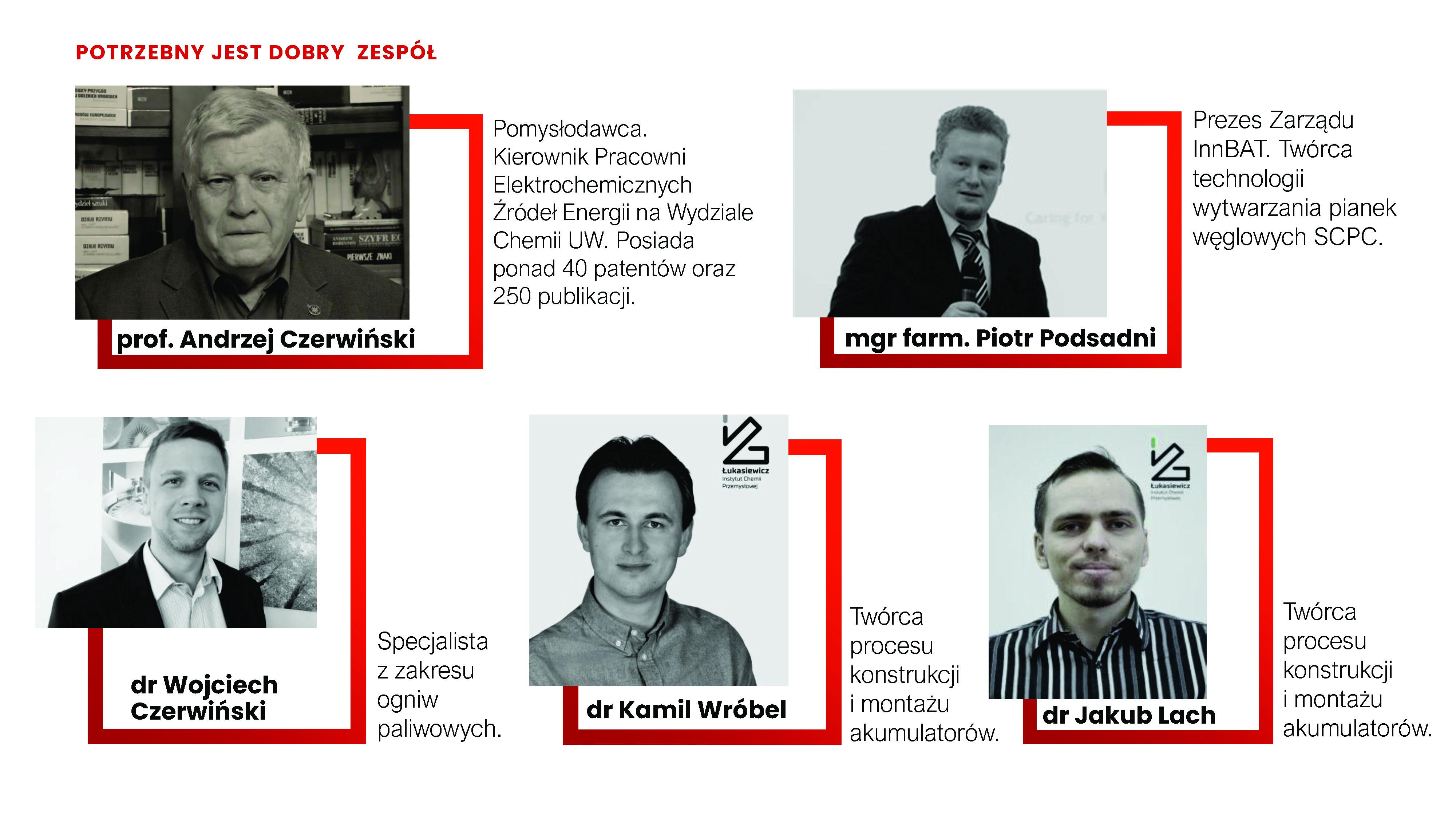
Meet our team
Materials
Polscy naukowcy chcą wyeliminować bateryjne bolączki - WysokieNapiecie.plWhat problem does our project solve?
Good conditions for the production of energy from wind or solar energy do not always occur during periods of high energy demand, e.g. during reduced demand from industry on holidays or when domestic prosumers are at work during the day. These surpluses could be managed by energy storage and used later.
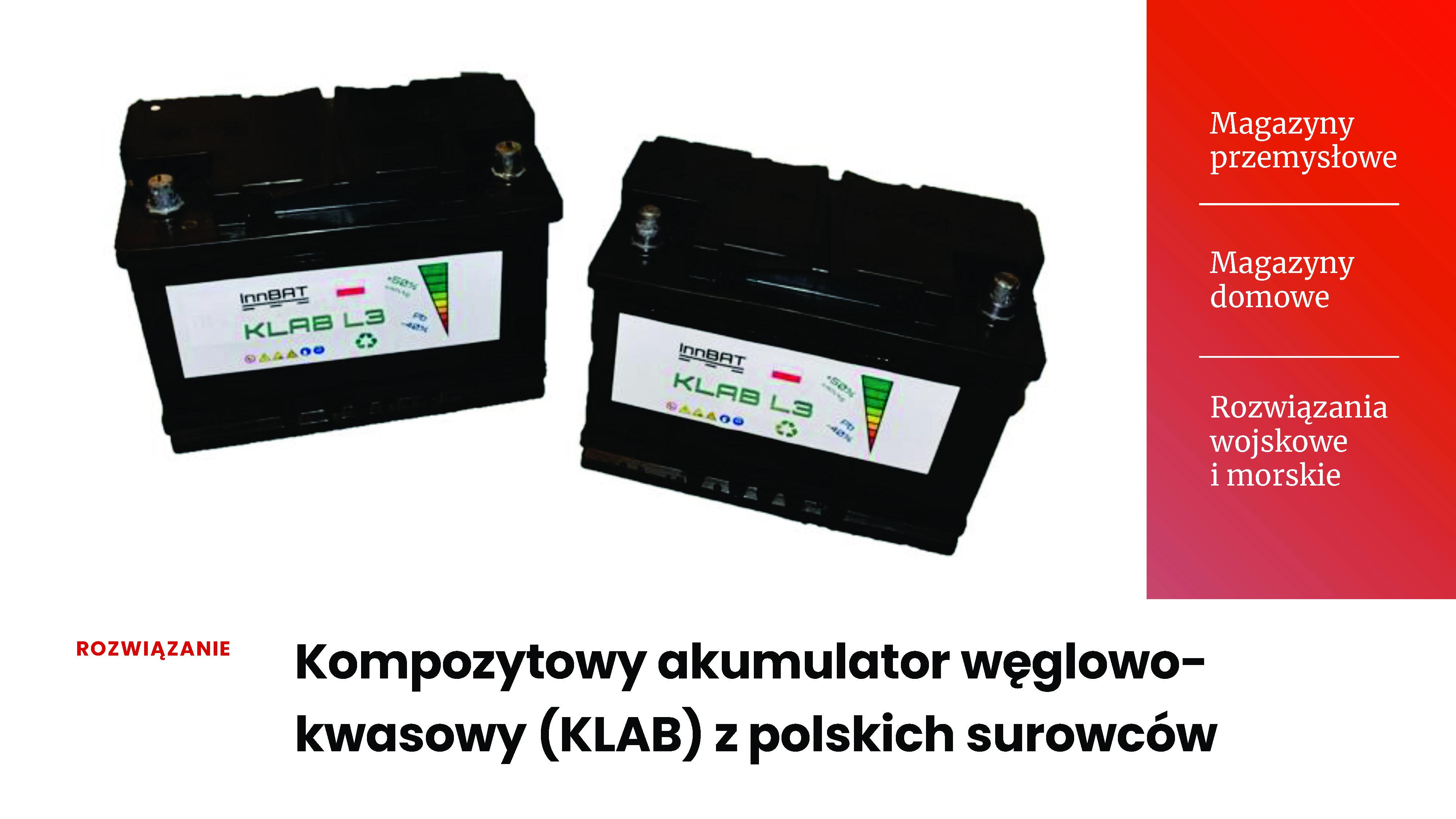
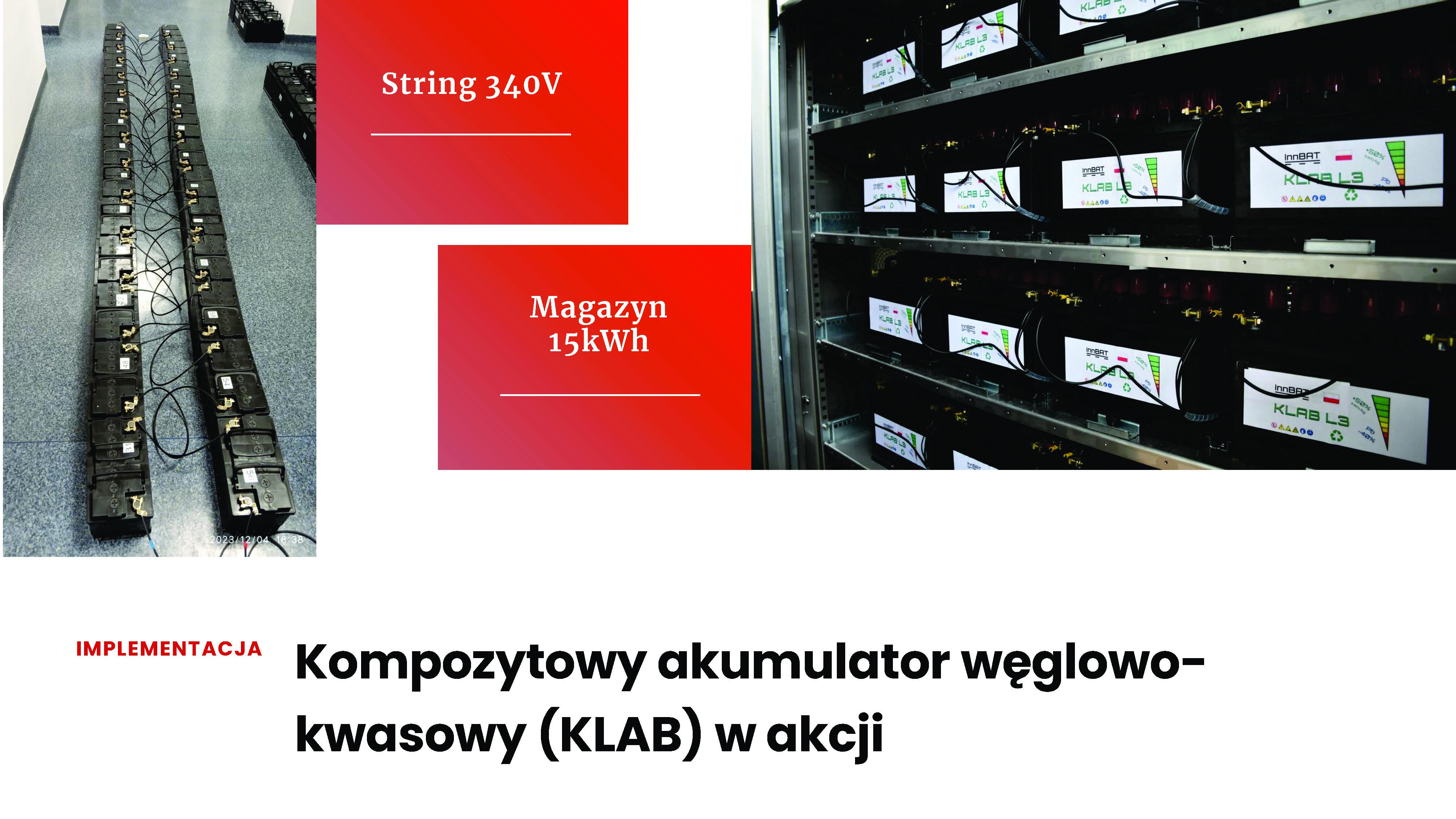
The KLAB carbon-acid battery technology developed by InnBAT involves replacing some of the lead components with specially developed conductive porous carbon. This has reduced lead consumption in the battery by approx. 40% and increased the stored energy density (Wh/kg) by approx. 50% at the same time generating lower production costs (approx. 50 $/kWh) compared to conventional lead-acid batteries. These costs are several times lower than the energy prices of lithium-ion batteries. KLAB batteries also have a high service life (e.g. eight years of continuous operation with photovoltaic panels) and low energy loss during their storage in a charged state (approx. 2% per month). They can operate over a wide temperature range (-35 to +55 oC ). All KLAB materials and components are available and manufactured domestically. The batteries can be recycled with an efficiency of almost 100% together with classic lead-acid batteries, for which there has already been an organised collection and recycling system in the country for several decades. Since the beginning of 2024, a 15 kWh energy storage system demonstrator powered by 10 kW photovoltaic panels has been installed at the University of Warsaw's Faculty of Chemistry with KLAB batteries.
Who will benefit from the project's results?
The developed battery is made from raw materials available in Poland (e.g. coal, sulphur and lead) and has the potential to be used in domestic energy storage, storage for industrial use or for balancing electricity grids. It is safe to use and environmentally friendly. It will boost the country's energy independence and security. This will positively impact the development of the battery industry in the country, and the new battery can be widely exported.
What was the biggest challenge for us in implementing the project?
Finding and convincing a manufacturer to work with us on the project.
Our advice to other Applicants
Establish cooperation with a manufacturing facility as early as possible.