
Feed Me, Mom. Innovative Human Milk Fortification Technologies for Preterm Infants
29.09.2026
Ksawery - 390 grams. Faustyna - 350 grams. Michalina - 315 grams. Doctors are saving ever smaller babies. Yet for these tiny infants to grow and develop healthily, they require highly specialized care, including appropriate nutrition. In a project supported by the National Centre for Research and Development, innovators from Poland and Switzerland are joining forces to develop an infant feeding system tailored to the individual needs of preterm babies. Funding for this endeavor comes from the Swiss-Polish Cooperation Programme.

The technology currently under development will be suitable for use in hospitals and human milk banks. Its creators hope to achieve broad commercialization of the solution.
“When I think about innovations developed under the auspices of the National Centre for Research and Development, I am fascinated by the origins of these ideas, the people behind them, and the purpose of the technologies being created. The same is true of this Polish-Swiss project, which deserves support because of its significant social impact. I encourage everyone to learn about its origins and look behind the scenes of this remarkable undertaking, whose success depends on the combined efforts of representatives of science, medicine, and industry from Poland and Switzerland,” says Prof. Jerzy Małachowski, Director of the National Centre for Research and Development.
The project “PreciousHMFstudy – Innovative Technologies for Personalized Human Milk Fortification in Preterm Infant Care: From Industrialization to Clinical Validation” was initiated by Dr. Zina Yudina, representing the Swiss partner of the initiative, Babylat. Trained as a biochemist, she previously conducted research at several universities in different countries. This scientific background helped her transform an initial idea into a functioning technological concept. The idea for the company, and later for the international project, emerged from her own experience as a breastfeeding mother who was simultaneously pursuing an active professional career.
“During my short maternity leave, I wanted to store as much expressed milk as possible without filling up the entire freezer. My initial concept was therefore a simple, single-step device for breastfeeding mothers that would gently remove water, reduce the volume of milk intended for storage, and at the same time preserve its valuable proteins and fats,” recalls Zina Yudina. “One of the leading neonatologists then encouraged me to apply the same principle to a much more urgent medical need: enabling hospitals to prepare human milk-derived fortifiers for extremely preterm infants using either the mother’s own milk or donor milk.”
The entrepreneur soon learned that most neonatal intensive care units still rely on bovine-derived milk fortifiers. Human milk-derived products are expensive and difficult to obtain. It became clear that a technology based on mothers’ milk could have significant clinical applications. Thus, the journey of Babylat began.
Swiss-Polish Cooperation
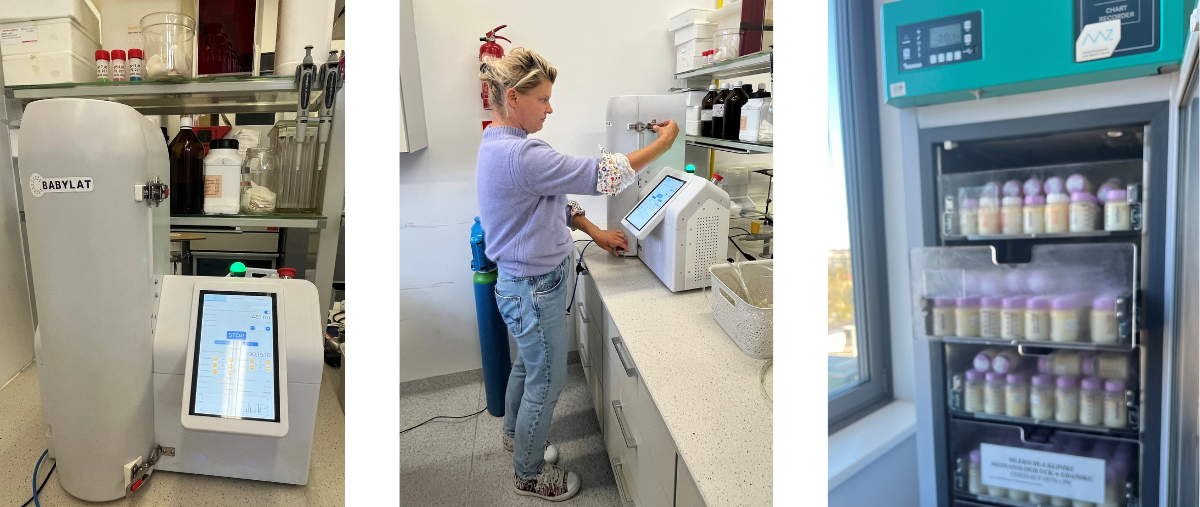
Dr. Zina Yudina from Switzerland demonstrates the Babylat Enricher prototype in operation.
The PreciousHMFstudy project is supported by the Swiss Contribution to reducing economic and social disparities in the EU and from the state budget through the National Centre for Research and Development”. It was selected for implementation under the Swiss-Polish Cooperation Programme within the Research and Innovation Programme, Applied Research, Call 2025.
The total value of the project exceeds PLN 4.4 million, with PLN 3.6 million in funding.
The work, which commenced in the first quarter of 2026, requires the integration of expertise in milk processing technology, microbiological and technical validation, neonatology, and the development of analytical methods.
The first challenge, therefore, was to assemble the right team whose competencies would complement one another. Things moved quickly. Zina Yudina invited Dr. Hab. Edyta Malinowska, Professor at Gdańsk University of Technology (GUT), from the Department of Food Chemistry, Technology and Biotechnology, as well as Radosław Papis from the Polish technology company PREMS LLC, which specializes in the development of medical and analytical devices. To ensure the necessary clinical and neonatology expertise, the consortium was subsequently expanded to include the Medical University of Gdańsk.
“My acquaintance with Zina Yudina began through social media. We quickly discovered that our scientific experience and interests complemented one another. Zina had already been working on a device for producing human milk fortifier and was searching for partners with the necessary research expertise. She invited me to join the initiative, which ultimately led to the establishment of the Polish-Swiss consortium,” confirms Dr. Hab. Edyta Malinowska, Professor at Gdańsk University of Technology. “In turn, I invited the team from the Medical University of Gdańsk, whose expertise in neonatology was essential for developing the clinical component of the project.”
As a result, the project now includes all the major disciplines required to bring the prototype to the stage of clinical evaluation: food technology, microbiology, engineering, analytical sciences, and neonatology. The distribution of tasks reflects the specific expertise of each consortium member.
“The Polish-Swiss partnership combines Babylat’s technology and product development experience with Poland’s strong scientific, engineering, and clinical expertise. Gdańsk University of Technology is responsible for technical and preclinical validation, the Medical University of Gdańsk contributes neonatology and clinical expertise, while PREMS is developing a human milk composition analyzer,” notes Dr. Zina Yudina.
In her view, Poland is an exceptionally suitable location for advancing research on personalized fortification of human milk. One key reason is that the Polish Ministry of Health directly supports hospitals in purchasing equipment for the collection and storage of human milk, recognizing human milk nutrition as an important component of healthcare. In many countries, such public support remains uncommon.
“This makes Poland an excellent partner not only for carrying out the current research project but also potentially for Babylat’s future pilot activities and the early commercialization of the solution,” predicts the Swiss entrepreneur.
Woman at the Helm of the Project
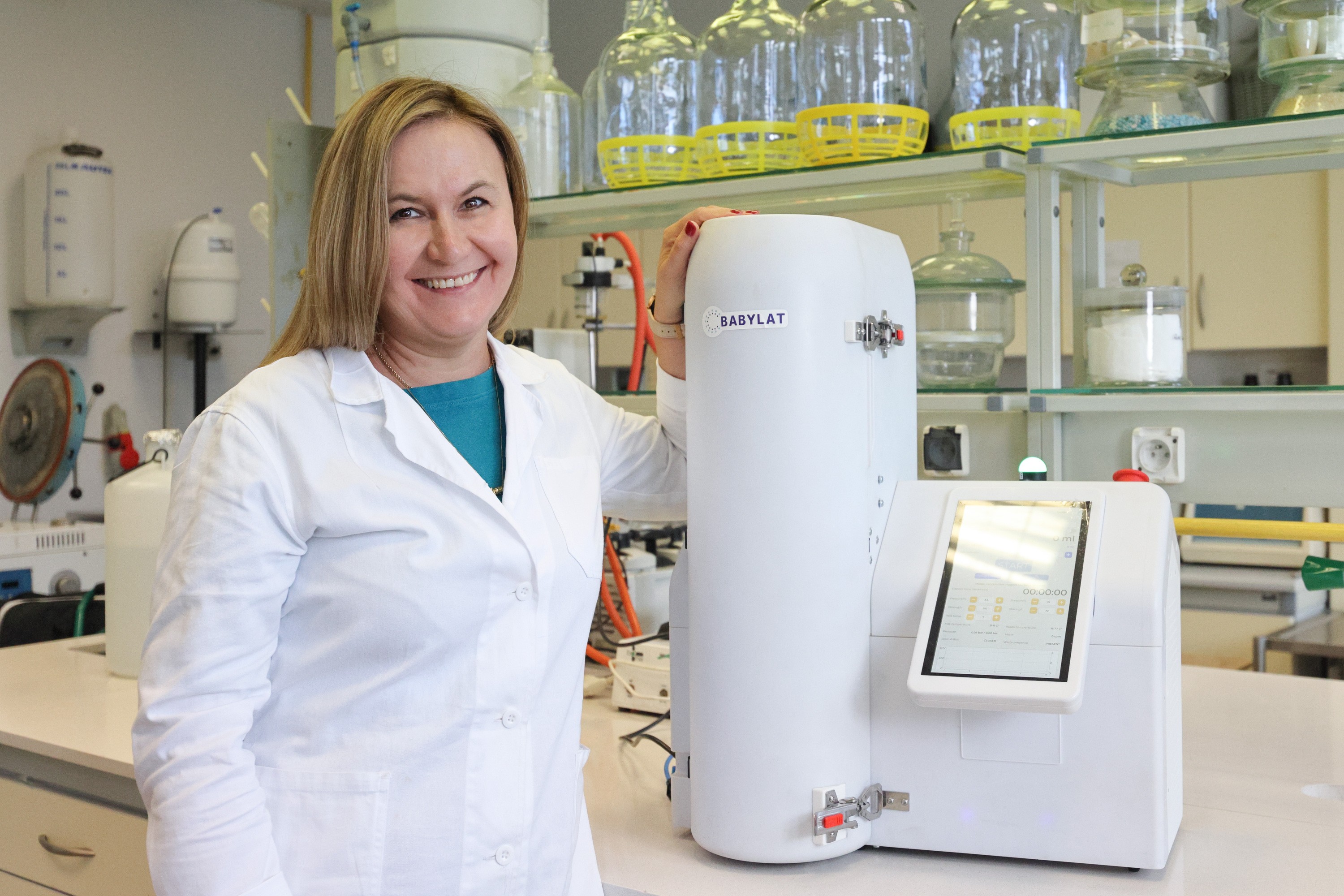
Dr. Eng. Edyta Malinowska, Associate Professor at Gdańsk University of Technology, specializes in food and nutrition technology as well as chemical technology.
The principal investigator of “PreciousHMFstudy” is Dr. Hab. Eng. Edyta Malinowska, Professor at Gdańsk University of Technology (GUT). The researcher considers perseverance to be her most important character trait.
“My daughters would probably say that at times it even becomes sheer determination. When I see purpose in what I am doing, I do not give up easily, even if the road to the goal turns out to be longer and more difficult than I expected. In scientific work, this is especially important because research rarely proceeds exactly according to plan,” she points out.
Professor Malinowska’s greatest scientific passion is finding methods of food preservation and processing that ensure microbiological safety while retaining as many natural, biologically valuable components as possible. The researcher from Gdańsk focuses on the application of high-pressure technologies, first in food product research and now primarily in studies concerning human milk.
“This passion was instilled in me by the late Professor Ilona Kołodziejska, my doctoral supervisor and later my closest scientific collaborator. It was thanks to her that I became interested in the possibilities of using high pressure in food technology. Professor Kołodziejska also taught me curiosity, diligence, and the importance of never settling for the first and simplest answer,” recalls Dr. Hab. Eng. Edyta Malinowska.
When Professor Malinowska’s interests began to focus on human milk, the technology she had worked on for years gained a new dimension. It became a tool capable of helping preserve both the safety and the extraordinary biological value of food intended for the most vulnerable patients, preterm infants.
“I continue to develop my interests by combining microbiology and food technology and by working with specialists from other fields, including neonatology and engineering. It is precisely at the intersection of different disciplines that questions most often arise which lead to truly interesting and much-needed research,” she observes.
She greatly values working in an international environment. Between 2022 and 2024, the researcher maintained close cooperation with the National Centre for Research and Development while leading the project “Storage of human milk in unfrozen state under high pressure-subzero temperature conditions - new method of preservation (HumMilkPres)”, which received PLN 869,200 in funding from the EEA and Norway grants.
Although the two projects address different research problems, the experience gained during HumMilkPres has proved highly valuable for the work currently underway.
“In HumMilkPres, we focused primarily on milk storage and preservation technologies, seeking process conditions that would ensure microbiological safety while preserving the biologically valuable components of milk as effectively as possible. This enabled us to deepen our expertise in assessing the microbiological safety, composition, and biological properties of human milk, as well as the effects of processing technologies on its quality. We are still working with the same exceptionally complex and variable biological material. The knowledge we gained helps us plan research appropriately, anticipate potential technological challenges, and select methods for evaluating the quality and safety of products intended for preterm infants,” explains Professor Malinowska.
The specialist in chemical technology, food technology, and nutrition has no doubt that the invitation from Zina Yudina to join the collaboration came at the perfect moment. The topic aligned perfectly with the research already being carried out at Gdańsk University of Technology on human milk and the impact of technological processes on its safety, composition, and biological properties.
What ultimately convinced her to join the project was the combination of an urgent clinical need related to preterm infant nutrition, Babylat’s innovative concept, and the expertise of the Polish partners.
What Do Preterm Infants Need? Thinking Beyond Standard Approaches
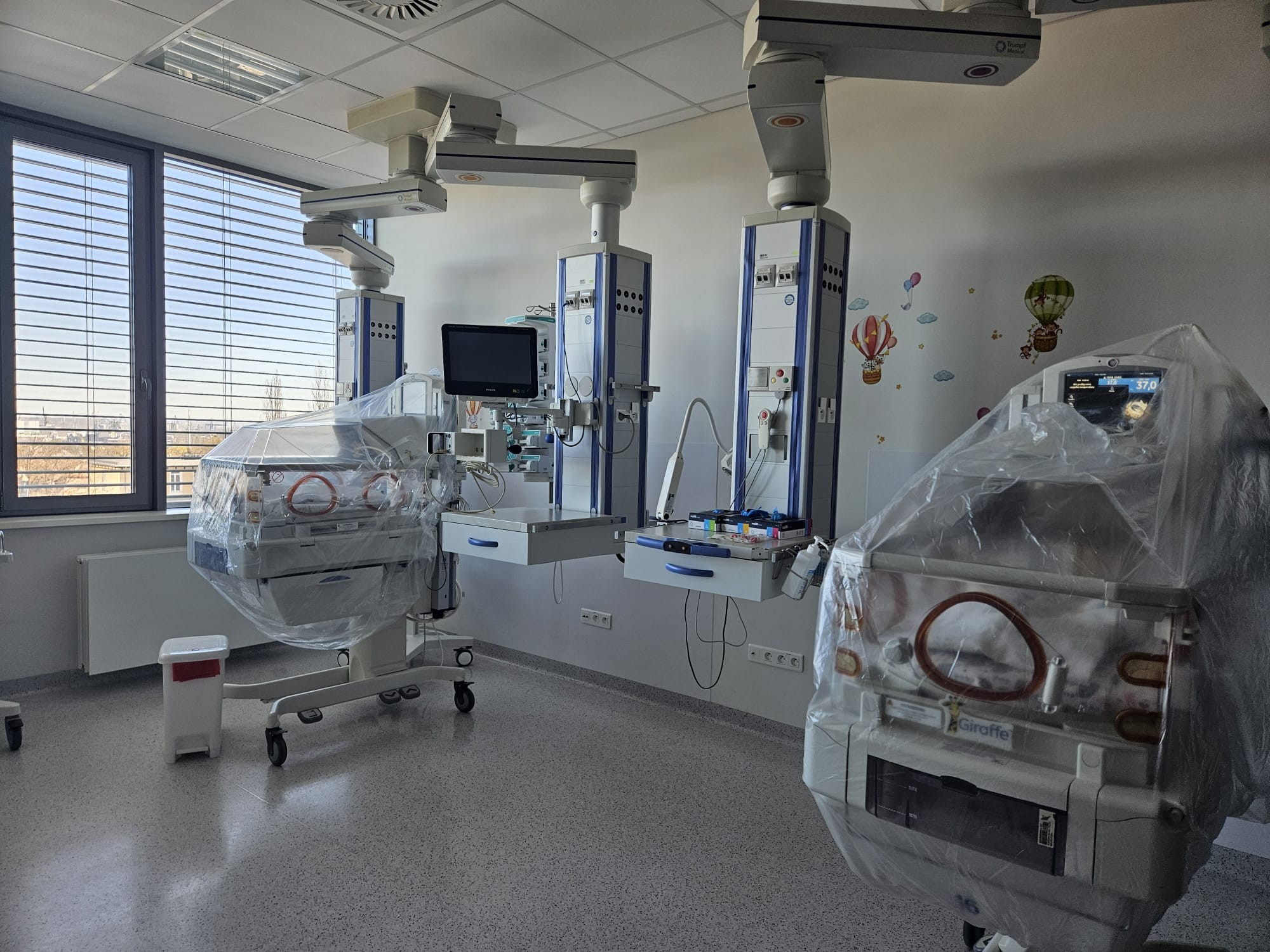
Neonatal intensive care units at the Department of Neonatology, University Clinical Centre in Gdańsk.
The Polish-Swiss team aims to solve the problem of the mismatch between the composition of human milk and the exceptionally high, individual nutritional needs of preterm infants.
Human milk is the best possible food for these babies, but its composition naturally changes and does not always provide sufficient amounts of protein, energy, and other nutrients required for proper growth. At the same time, every infant’s nutritional requirements depend on factors such as gestational age, body weight, and clinical condition.
Preterm infants, especially those with a birth weight below 1.5 kg, face a significant risk of growth restriction and serious early-life complications, including necrotizing enterocolitis. Experts emphasize that appropriate nutritional support is essential for both survival and healthy development.
“Today, human milk is most often fortified according to a standardized scheme using commercial fortifiers derived from cow's milk ingredients, without precise knowledge of the composition of a portion of milk. This can result in both under-supply and over-supply of nutrients. We want to develop a system that allows rapid assessment of milk composition, adjustment of the level of fortification to the needs of an individual preterm infant, and the use of a safe fortifier derived from human milk. Our goal is not to replace a mother’s milk but to use its potential as precisely and safely as possible,” explains the principal investigator.
What makes this approach innovative? Rather than focusing on a single device, the researchers are developing several interconnected components that together form a comprehensive personalized nutrition system for preterm infants. The system will include a rapid human milk composition analyzer, a method for determining the required level of fortification and a device capable of producing human milk-derived fortifier. Another novel aspect of the project is the integration of technology development with comprehensive quality and safety assessment of the human milk fortifier itself.
“We want to create a solution that is safe, reproducible, and suitable for use in hospital settings, allowing us to move away from the ‘one-size-fits-all’ approach toward nutrition that is better tailored to each individual child,” says Professor Malinowska.
The rationale for such personalized fortification lies in the biological variability of human milk. As the researcher explains, the protein, fat, and energy content of every mother’s milk differs slightly. It also changes throughout lactation and even between individual portion of milk. At the same time, preterm infants differ in gestational age, body weight, growth rate, and clinical status. Standard fortification, however, is generally based on average milk composition values and fixed doses of fortifier. As a result, there is no guarantee that an infant is actually receiving the appropriate amount of protein and energy.
“Analyzing a specific portion of milk and adjusting fortification according to the current needs of the infant reduces this uncertainty. The aim is to supplement nutritional deficiencies as precisely as possible while maintaining human milk as the foundation of feeding,” explains the principal investigator.
From Concept to Implementation
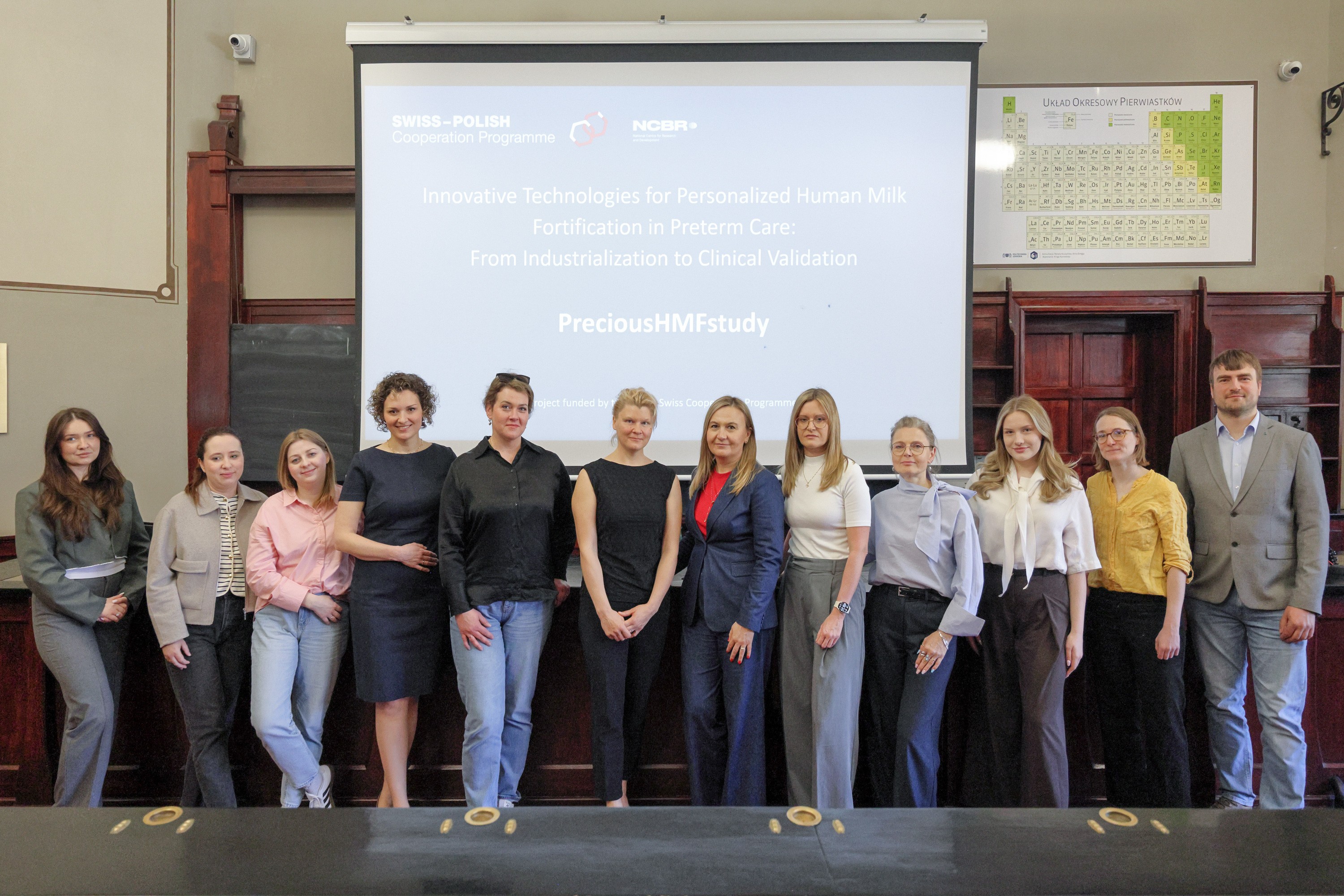
The PreciousHMFstudy project team during the project kick-off meeting at Gdańsk University of Technology. From left to right: Katarzyna Mazur, Marcela Krajewska, Kamila Refermat, Joanna Jassem-Bobowicz, Sylwia Narkowicz, Zina Yudina, Edyta Malinowska, Barbara Kusznierewicz, Dorota Martysiak-Żurowska, Natalia Wilczek, Magdalena Chmara, and Radosław Papis.
The first task facing the Polish and Swiss innovators is to refine the individual components of the system and demonstrate that they can work together safely and consistently. This includes further development of the Babylat Enricher, which produces human milk fortifier, development of a human milk composition analyzer, determination of optimal fortifier production conditions, comprehensive evaluation of the resulting fortifier and development of a method for selecting the appropriate level of fortification. This entire strategy will subsequently undergo pilot testing in clinical settings.
If everything proceeds according to plan, the next objective will be further development and implementation of the technology in hospitals and human milk banks, followed by commercialization.
“We want our solution to enable local preparation of human milk fortifier, reducing healthcare facilities’ dependence on ready-made products and complex supply chains. However, the most important outcome we are striving for is better adaptation of nutrition to the needs of preterm infants, particularly those born with very low birth weight,” emphasizes Professor Malinowska.
The project also provides an opportunity for expanding the competencies of team members and doctoral students, producing high-quality scientific publications, and disseminating the knowledge generated through the research.
Through Hardship to the Stars
Work is progressing simultaneously across three work streams. The Swiss partner is developing the Enricher, a device designed to produce human milk-derived fortifier. Babylat is preparing the technology for clinical application. This includes refining the device's design and filtration system, ensuring process reproducibility, and adapting the equipment to the functional and hygiene requirements of the hospital environment. The team must ensure that the device is easy to use, safe, reliable, capable of being cleaned and sterilized, and suitable for everyday use by hospital staff.
The Polish technology partner, PREMS LLC, is developing a rapid analyzer of human milk composition. Its purpose will be to determine the content of the most important nutrients, enabling the level of fortification to be adjusted based on the composition of a specific portion of milk.
Research using the Enricher prototype has also begun. The team from Gdańsk University of Technology is responsible, among other things, for evaluating the device's performance, determining reproducible process parameters, preparing procedures, and characterizing the composition, quality, microbiological safety, and biological properties of the resulting product.
"We conduct our experiments under conditions that closely resemble future clinical use: we work with human milk, apply preparation and thawing procedures consistent with hospital practice, and carefully observe both the behavior of the milk and the performance of the device. Among other things, we assess the filtration and mixing processes, the stability of process parameters, the accuracy of product yield measurements, and the potential formation of fat aggregates. It is meticulous work, but every observation contributes to improving the prototype and developing a safe and reproducible procedure," reports the principal investigator.
Asked whether everything is proceeding according to plan, the researcher does not hide her satisfaction. Laboratory work certainly comes with challenges and breakthroughs, but these are precisely what make it so engaging.
"Our work is progressing, although working with a prototype constantly reminds us that research and technology development are a lesson in humility. During the first experiments, practical issues emerged that could not have been predicted during the design phase alone. Thanks to ongoing collaboration between the team testing the device and those responsible for its development, we were able to analyze each step of the process and introduce the necessary modifications. Recently, we succeeded in conducting a complete experiments from start to finish. It was an important milestone for the team and an excellent example of the value of close cooperation between technologists, engineers, and researchers," adds Dr. Hab. Eng. Edyta Malinowska, Professor at Gdańsk University of Technology.
Once the conditions for the entire technological process have been established, the team will proceed with the systematic production of the milk fortifier and develop a comprehensive characterization of the product.
"We will assess, among other things, its nutritional composition, microbiological safety, biological properties, and the reproducibility of successive batches. At the same time, work will continue on the analyzer and on methods for determining the appropriate level of fortification based on the composition of a specific portion of milk. The next stage will be the preparation of pilot clinical study involving preterm infants," announces the researcher.
These trials will be conducted by the Medical University of Gdańsk. Even now, neonatologists are helping to define the requirements that the entire system must meet, and they play a decisive role in assessing its usefulness in hospital practice. In this way, the entire team is working to ensure that the project results in a solution that is genuinely beneficial for the care of preterm infants.
We Do It for Children and Their Families
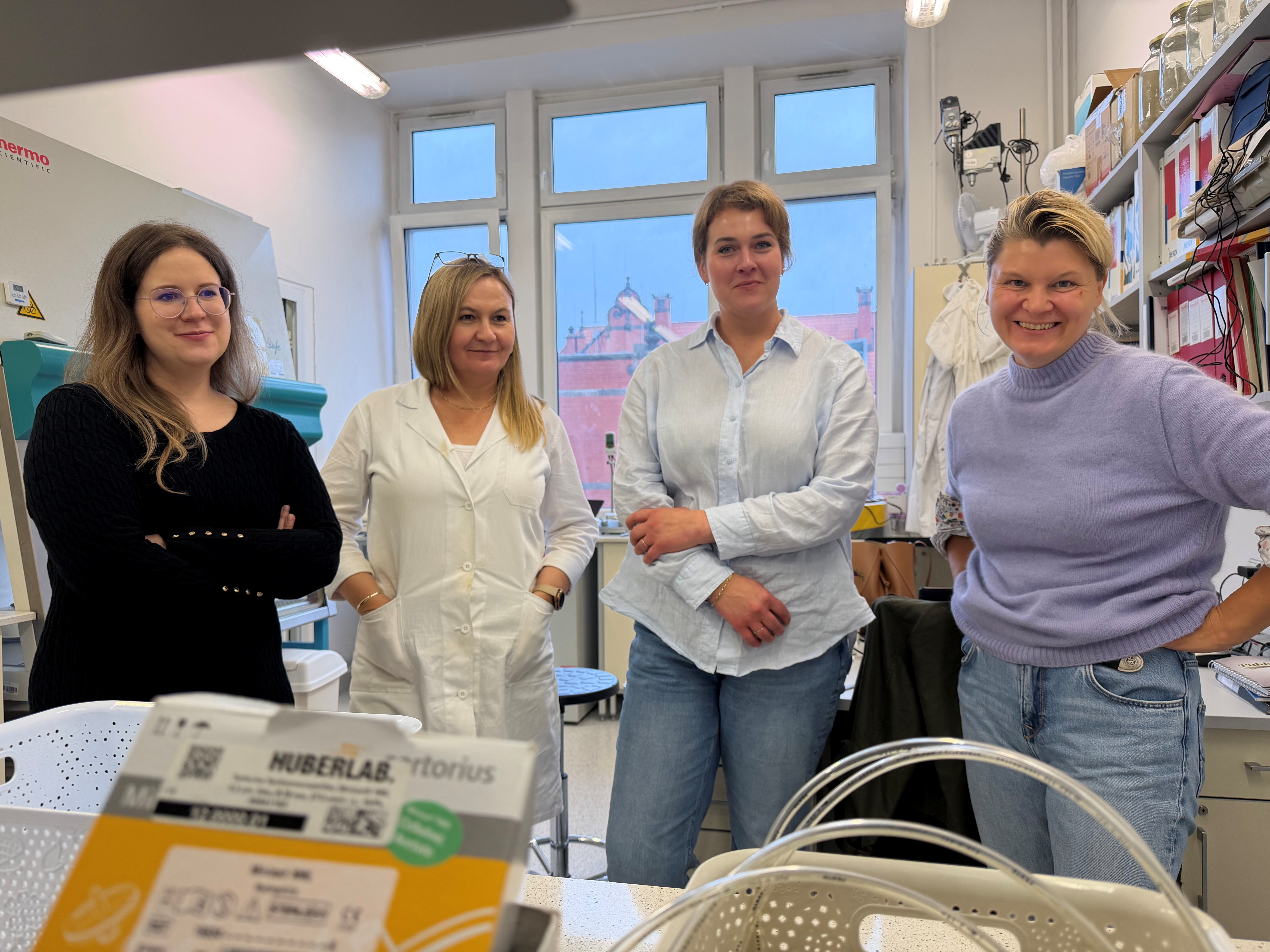
From left: Izabela Drążkowska (MUG), Edyta Malinowska (GUT), Sylwia Narkowicz (MUG), and Zina Yudina (BabyLat).
The direct beneficiaries of the project outcomes will be preterm infants, particularly those born with very low birth weight. More precise adjustment of protein, energy, and other nutrient intake to their individual needs will help support proper growth and development while maintaining human milk as the foundation of their nutrition.
The project team is also deeply committed to disseminating the results of their work, not only within the scientific and clinical communities, but also among parents of preterm infants and patient organizations. The innovators’ work is important for families of premature babies because better-tailored nutrition may help reduce some of the potential health burdens associated with prematurity. Neonatologists, dietitians, and human milk bank personnel may gain access to a tool that supports decision-making based on the actual composition of milk rather than solely on average values. For hospitals, the success of the project would mean the possibility of locally producing human milk fortifier, reducing dependence on commercially available products.
“For me, the greatest success,” says Professor Edyta Malinowska, “would be if the project contributed to a lasting change in preterm infant nutrition practices and became the starting point for further international cooperation and future joint research. My dream is that, in the future, this approach could be implemented in neonatal units and human milk banks, first in Poland and later abroad, and that it would not be available only to the largest and best-equipped centres. This technology should be practical, feasible for implementation in hospital settings, and usable by healthcare professionals,” she adds.
The photographs documenting the implementation of the PreciousHMFstudy project are published courtesy of Professor Edyta Malinowska of Gdańsk University of Technology