
ThermOS – Thermal Optimal System

 Project title
ThermOS – Thermal Optimal System
 Name of Beneficiary/Beneficiaries
ConnectPoint Sp. z o.o.
 Name of programme
Smart Growth Operational Programme, off-competition project, Measure 4.1.3
 Competition
Heat and Cold Storage – Strand 2 – Office Building
 Project value
PLN 2,555,000.00
 Funding value
PLN 2,555,000.00
 Project delivery period
from 2 October 2021 to 14 December 2023
Meet our team
Paweł Uznański – Project Manager, Project Team Coordinator
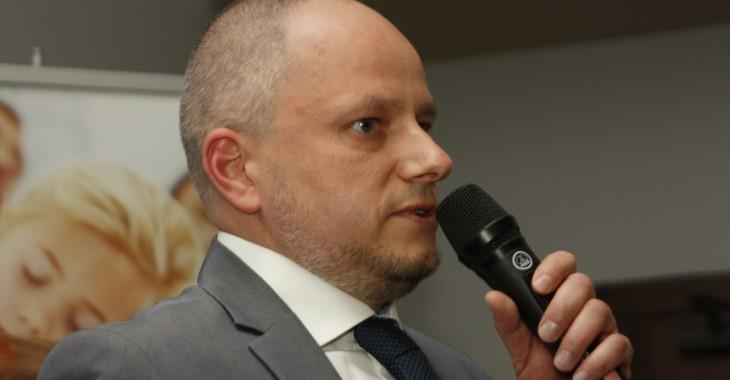
dr hab. inż. Sebastian Dudzik – member of the Project Team, communication aspects, automation, programming
Marek Zając – member of the Project Team, technological solutions, programming, analytics, prediction
dr inż. Adrian Trząski – member of the Project Team, thermodynamic calculations, analytics
See the results of our work
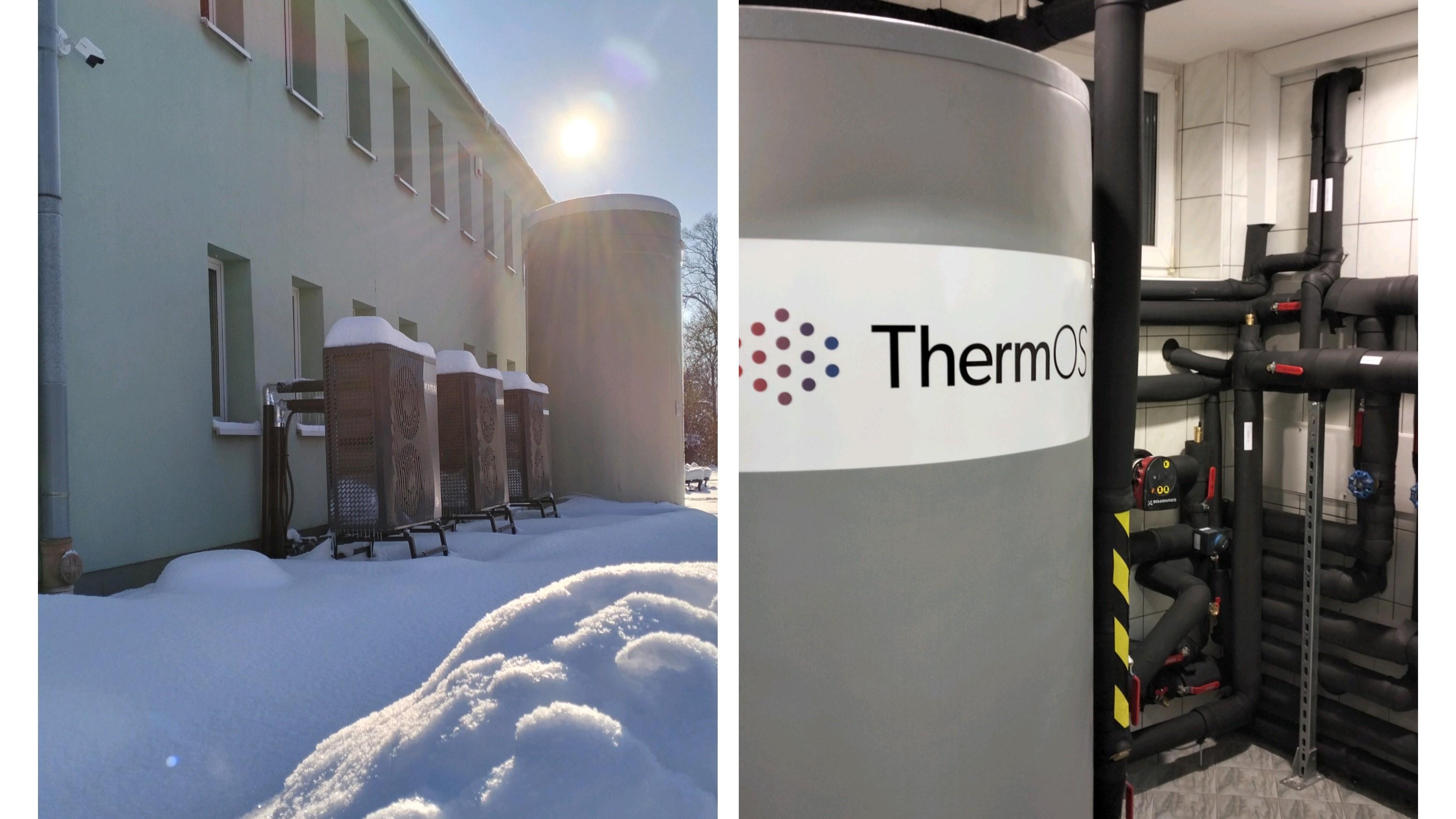
During the heating season, the new RES heat source provides heat for the building:
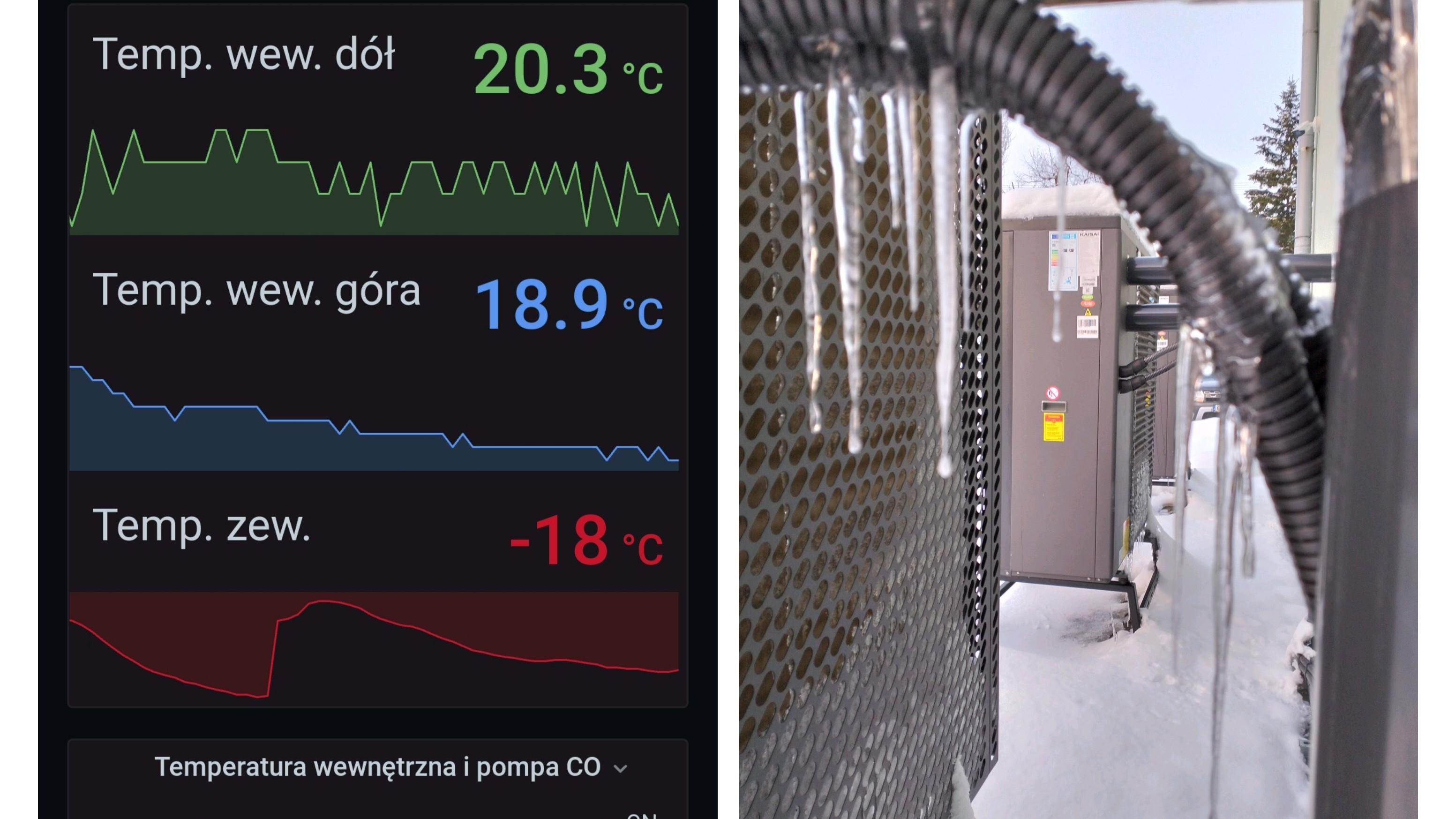
Legenda:
Temp. wew. dół – Int. temp. bottom
Temp. wew. góra – Int. temp. top
Temp. zew. – Ext. temp.
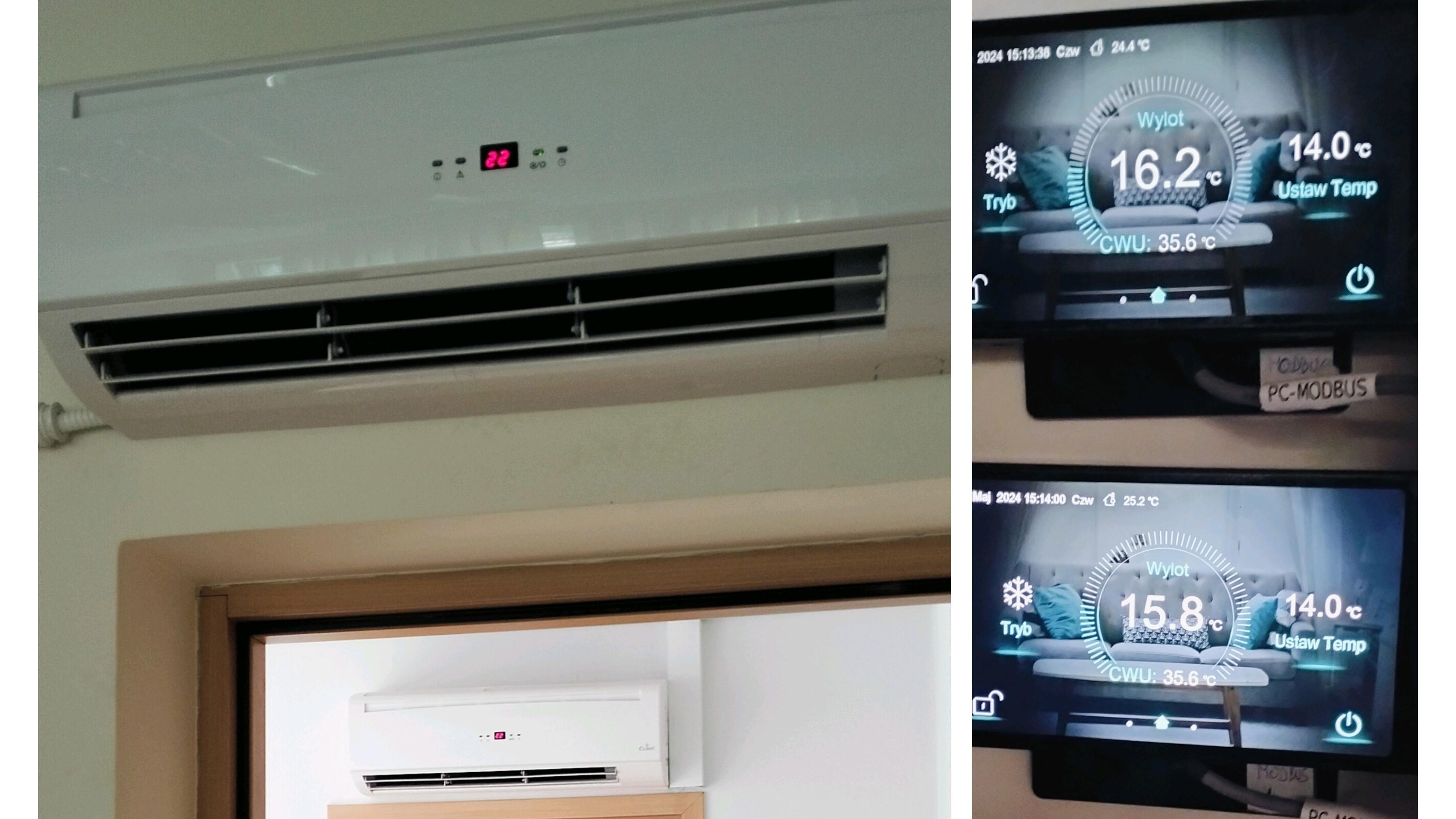
On the other hand, when the heating season is over, the cooling function is switched on and the photovoltaic energy is used to produce chilled water:
ThermOS system performance analytics and control application are very important:
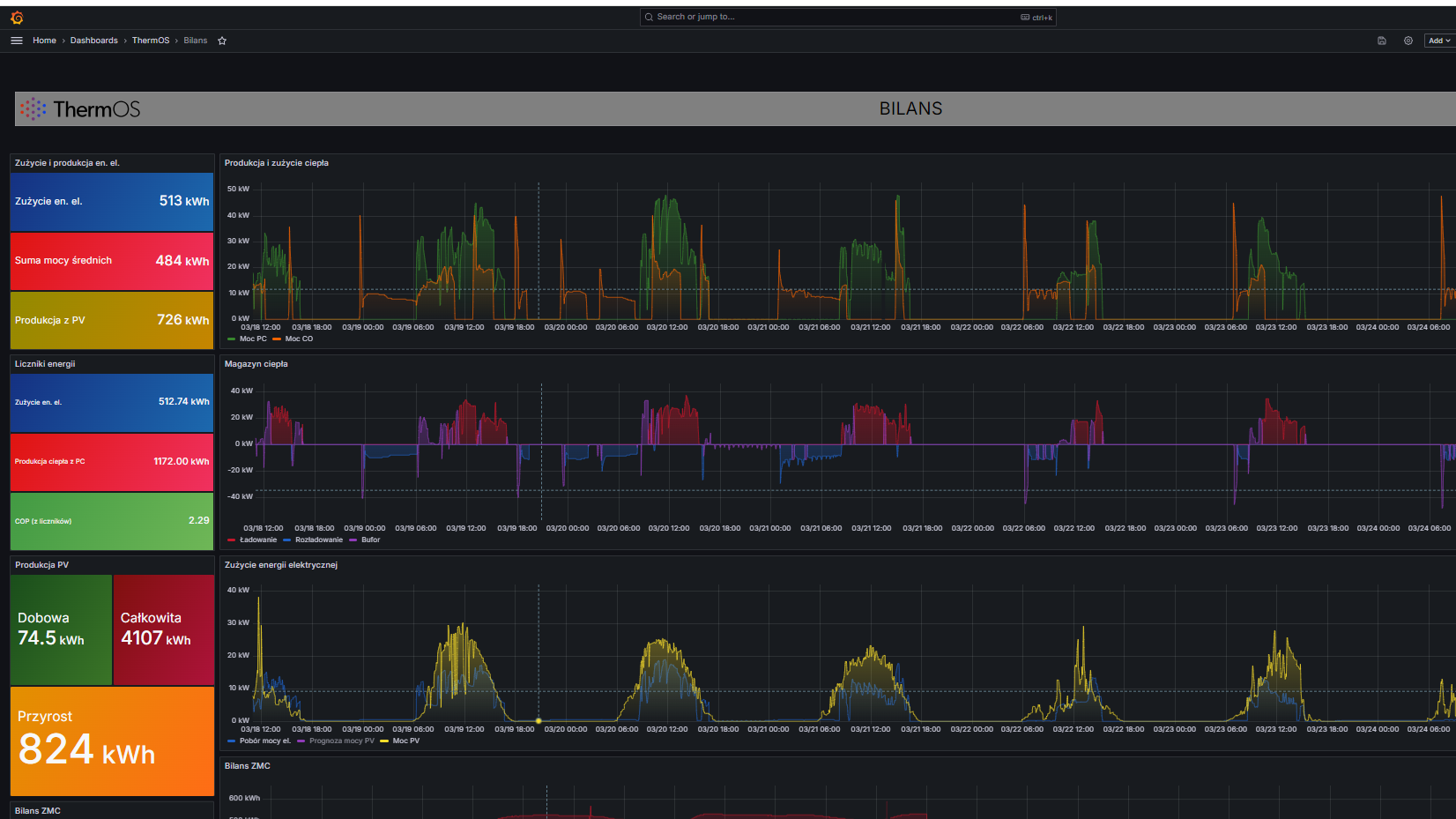
Legenda:
Bilans - Balance
Zużycie i produkcja en. el. - Electricity consumption and production
Zużycie en. el. - Electricity consumption
Suma mocy średnich - Total average power
Produkcja z PV - Production from PV
Liczniki energii – Energy meters
Zużycie en. el. - Electricity consumption
Produkcja ciepła z PC - Heat production from HP
COP (z liczników) - COP (from meters)
Produkcja PV – PV production
Dobowa - Daily
Całkowita - Total
Przyrost - Increase
Bilans ZMC – ZMC balance
Produkcja i zużycie ciepła - Heat production and consumption
Moc PC – HP power
Moc CO – CH power
Ładowanie - Charging
Rozładowanie - Discharging
Bufor - Buffer
Zużycie energii elektrycznej - Electricity consumption
Pobór mocy el. - Electrical power consumption
Prognoza mocy PV – PV power forecast
Moc PV – PV power
What problem does our project solve?
ThermOS, the Thermal Optimal System, was developed as part of the Research and Development Project "Heat and Cold Storage". In the course of conceptual and design work, assumptions and complete tender documentation were developed for a complex technological system for the supply and storage of heat and cold. According to the main intention of the project, the concept of the System construction is to ensure maximum use of individually produced energy (RES) and minimise operating costs, i.e. purchase of electricity from an external grid. The System is intended to stably ensure the thermal comfort of the building and the safety of use.
The developed technology is versatile and scalable, and fills a market gap in the field of heat and cold storage for small commercial and service buildings, and small office buildings. Its application will also be possible in public facilities or hotels, as well as in residential buildings.
The most important element of the Project is the heat and cold storage system, in the form of a two-stage system: internal heat/cold buffer + external heat/cold storage. Such a system is an extension of common technologies on the market for buffering the operation of heat pumps, using internal tanks that store and stabilise the operation of the system. The production of heat or cold, depending on seasonal needs, based almost 100% on heat pump operation, is now a common and effective way of ensuring thermal comfort in a building. However, it is only the combination of heat pump technology, photovoltaics and optimal energy storage that yields the expected results in terms of economics and increased thermal independence. At the same time, it makes it possible to partially compensate for the instability and weather dependency of renewable energy sources.
Who will benefit from the project's results?
We also anticipate great interest in the solution from building owners or those planning to invest in photovoltaic installations.
The ThermOS system may be an expected solution for facilities with a high demand for domestic hot water and hot water for technological processes, where consumption, due to the mode of operation, is postponed, e.g. to late evening hours, when there is no PV energy. The technology could be an interesting solution for energy cooperatives, energy clusters and the industry, given the urgent need to optimise the production, consumption and distribution of different energy fluxes, both within large island systems and distributed systems feeding into a common (electric power supply or district heating) network.
What was the biggest challenge for us in implementing the project?
Implementation of the Project in the second phase, i.e. construction of the Demonstrator in Kraków, under high time pressure and during the ongoing heating season. The implementation period was due to factors beyond ConnectPoint's control, however the need to carry out work on a functioning heating system in a building in use, was completed successfully.
Our advice to other Applicants
Proper planning of the consecutive steps/stages of implementation and skilful identification of potential risks, while indicating possible solutions in emergencies, is the key to successful closure of the Project.