
Young Designer

 Project title
Young Designer
 Name of Beneficiary/Beneficiaries
University of Warsaw
 Name of programme
Knowledge Education Development Operational Programme
 Competition
Third Mission of the University
 Project value
PLN 280,186.77
 Funding value
PLN 271,601.34
 Project delivery period
from 1 June 2020 to 31 December 2023
Meet our team
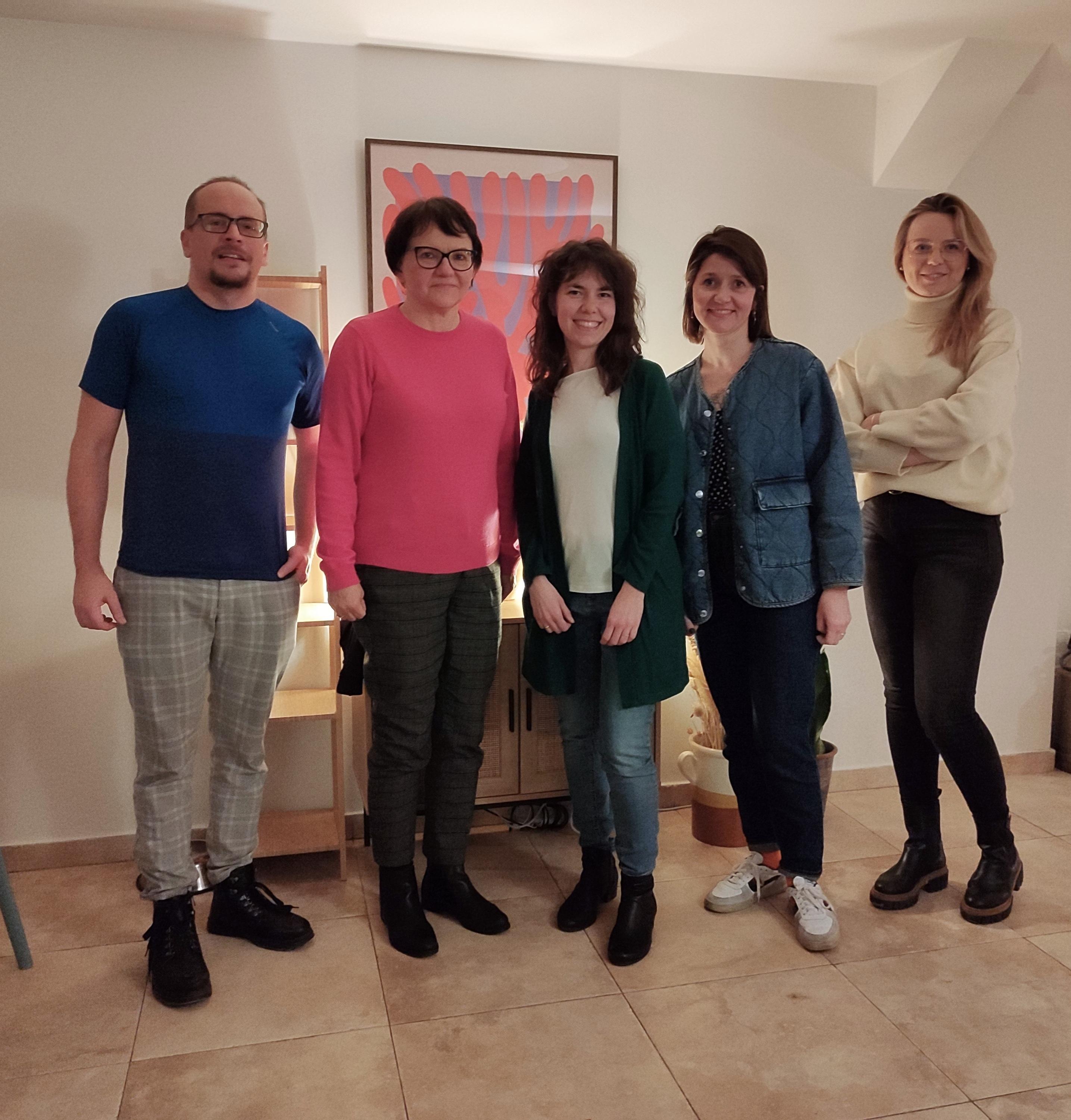
prof. Małgorzata Żytko
Role: Project manager
Bio: Educator, researcher at the Faculty of Education, University of Warsaw, member of ATEE (Association for Teacher Education in Europe) and PTP (Polish Pedagogical Society).
Scientific interests: psychological, pedagogical, and social aspects of child development and education, supporting the professional development of teachers, and designing and implementing innovative educational solutions for primary schools. Author of numerous publications, coordinator of research under national and international grants.
dr Maciej Słomczyński
Role: Chief methodologist, designer and developer of the hybrid game.
Bio: Methodologist and trainer with over 20 years of experience and an interdisciplinary education. For the past 15 years, he has been a lecturer at the Open University of the University of Warsaw, specialising in the popularisation of science, receiving awards in 2021, 2022, and 2023. He is currently researching the use of generative AI models in problem-based learning.
mgr Karolina Prus-Wirzbicka
Role: methodologist, co-author of the project concept, teacher
Bio: trainer, early childhood education teacher, has been working for six years with the Faculty of Mathematics, Informatics and Mechanics, Faculty of Education, University of Warsaw, conducting methodical and practical classes for future teachers. Author of educational materials and textbooks (CEO, Szkoła z Klasa, PWN Wydawnictwo Szkolne, Mac Edukacja).
mgr Ewelina Gorczyca
Role: methodologist, teacher
Bio: Educator, early education teacher, trainer. Since 2019, she has conducted methodological and practical classes at the Faculty of Education, University of Warsaw. Author of educational materials (textbooks, lesson scenarios, online courses) in the field of mathematical education and cognitive science. Methodologist for teaching at an international primary school. Coordinator and expert in e-learning at the Center for Citizenship Education.
mgr Joanna Rezmer
Role: teacher
See the results of our work
Materials
Our Facebook PageWhat problem does our project solve?
The main goal of the project was to effectively implement teaching methods and tools that engage students during the learning process, achieving planned outcomes in hybrid project classes. This resulted in solutions being implemented under the university's third mission, supporting local communities. The project has contributed to the development of competences adapted to the needs of the labour market, the economy, and society. The developed curricula were implemented in primary schools as extracurricular activities aimed at fostering educational and cultural engagement, developing students' key competencies, and familiarising them with new technologies such as 3D printing, NFC technology, and laser engraving.
Who will benefit from the project's results?
The project results are of value to various target groups:
teachers: designing and implementing their own hybrid classes that enable high levels of student engagement and effective achievement of educational objectives.
students: testing games and materials developed as part of the project—implementing a designed game (with both physical and electronic components), enabling them to enjoy interactive and engaging play.
academics: the opportunity to test the effectiveness of new methodological solutions, which will contribute to the development of knowledge on effective teaching methods in remote education.
What was the biggest challenge for us in implementing the project?
The biggest challenge in implementing the project was related to the recruitment of participants and organising the work. Coordinating schedules and ensuring appropriate alignment of timetables proved to be complicated, especially with the varying availability of participants. Additionally, collecting the necessary documentation and effectively supervising the parents of students required a lot of precision and dedication. All these elements had to be in sync to ensure smooth project implementation and to achieve the intended goals.
Our advice to other Applicants
Remote classes for young audiences require careful preparation and should be conducted in small groups to be effective, engaging, and attractive for the younger generation. The optimal approach is to implement a hybrid flipped classroom model (with the last classes held in person). A rotational methodology for remote classes with two instructors proved to be effective, resilient to potential technical issues, and ensured proper class dynamics, maintaining the attention of young participants. This format allows for sessions lasting from one clock hour (60 minutes: 4x15 minutes) or two learning units (90 minutes: 4x22.5 minutes). The personalisation that can be achieved through synchronous remote teaching in small groups, is crucial to meeting the expectations of young audiences, allowing for the adaptation of content to the individual needs and interests of the children.