19 August: World Humanitarian Day
13.08.2026
On World Humanitarian Day we express our gratitude to humanitarian workers. Poland cooperates with them through international and non-governmental organisations, which helps us reach communities that most need urgent support.

For millions of people across the world, humanitarian aid remains the only way to survive. According to the United Nations data, at the end of May 2026 more than 252 million people were in urgent need of humanitarian assistance. The effectiveness of those actions depends directly on their neutral, impartial and independent character, free of any kind of political pressure.
How does Poland provide humanitarian aid?
In response to humanitarian needs, the Ministry of Foreign Affairs finances projects that are implemented by Polish non-governmental organisations in cooperation with local partners.
In 2025, as part of the calls of proposals titled “Humanitarian Aid 2025 for Middle East countries” and “Providing own contributions for the implementation of humanitarian projects financed from sources other than the budget of the Republic of Poland 2025”, around 9.4 mln PLN was allocated for humanitarian aid. In 2026, the ministry allocated more than 19.8 mln PLN under the call for proposals “Humanitarian Aid 2026” to implement more than 16 projects aimed at providing basic food and medical assistance as well as water and shelter.
An important aspect of Poland’s actions in the area of humanitarian assistance is cooperation with the United Nations agendas and the International Committee of the Red Cross. Both organisations have their employees as well as reliable partners working on the ground and can quickly and safely reach those who most urgently need assistance. In 2025, Poland allocated more than 80 mln PLN for humanitarian actions through multilateral channels, and to date in 2026 around 37 mln PLN has been earmarked for this purpose. Polish humanitarian aid is also provided in form of material support. In 2025, we provided material assistance to Vietnam, Ukraine, and Jordan. In 2026, Poland provided help to Lebanon, Venezuela, and Ukraine. Our material support primarily includes medical equipment but also, in case of Ukraine, power generators.
What countries does Polish humanitarian aid reach?
Poland is not indifferent to the suffering and distress of our closest neighbours or to desperate pleas for help from the conflict-torn Middle East. Through actual and systemic support we bring help to the residents of Ukraine, Palestine, Lebanon, Syria, and Sudan.
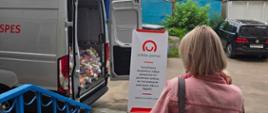
Since the beginning of the full-scale invasion, we continuously support Ukraine, also by providing humanitarian aid. In 2026, in cooperation with, among others, the Salesians of Don Bosco, we have delivered food supplies for those injured as a result of the war. Food aid, including warm meals prepared in modular houses, will reach more than 5 000 people.
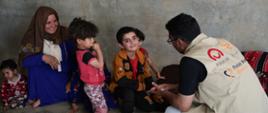
In Syria our aid is provided, among others, through a project implemented by the Polish Medical Mission. Medical and food aid reaches residents of the Idlib Governorate, around 30 % of whom are internally displaced persons as a result of the 14-year-long civil war.
Background
Celebrated on 19 August, World Humanitarian Day was established by the General Assembly of the United Nations to pay tribute to 22 humanitarian aid workers who died in a tragic terrorist attack in the United Nations outpost in Baghdad. Humanitarian aid workers remain exposed to mortal danger. According to OCHA data, 326 humanitarian aid workers were killed in 21 countries in 2025, and in the last 3 years the numbers reached 1 000 people. This makes the 10th anniversary of the Security Council resolution on healthcare in armed conflict, which we celebrate this year, resonate even more powerfully. It also presents an opportunity to firmly condemn attacks on hospitals, medical rescue workers, and medical transport. In the face of an unprecedented rise in threats to aid workers, Poland reiterates the unconditional obligation to respect international humanitarian law.